

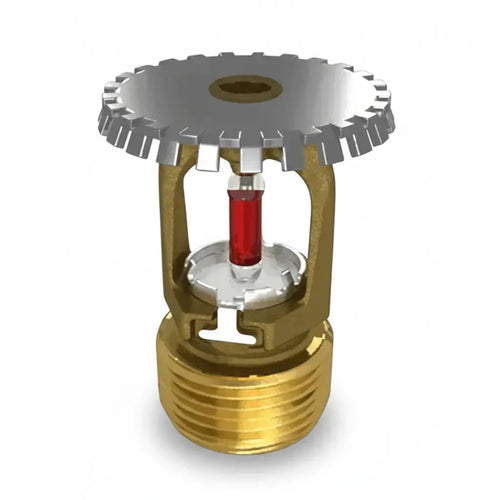


Fire Sprinkler Escutcheon: How to Choose the Right Fit in 2026
The fire sprinkler escutcheon that looks like a perfect match may not fit the sprinkler assembly. A similar finish or diameter isn’t enough to verify compatibility.
If you’re replacing damaged trim, it’s understandable to focus on appearance and measurements. But the escutcheon can also be part of the sprinkler’s listed installation, so choosing the wrong type may affect the fit or listed conditions. Identify the escutcheon type and the fit details to check before ordering, and use the sprinkler manufacturer’s documentation to confirm compatibility.
This guide explains how one-piece and split escutcheons differ, what to compare across the sprinkler and ceiling or wall assembly, and how to distinguish cosmetic wear from a possible compatibility issue. It also covers why recessed and flush-style assemblies call for particular care, and what to consider if the original escutcheon is discontinued. With the right information in hand, you can source a replacement with fewer ordering mistakes.
Key Takeaways
- Match a fire sprinkler escutcheon to the sprinkler’s manufacturer and exact model, not appearance alone.
- Use the sprinkler’s orientation and mounting arrangement to narrow down the right trim configuration.
- Check the finished opening and documented trim compatibility before ordering a replacement.
- Visible damage or a loose fit may call for closer attention. Distinguish cosmetic wear from a possible installation mismatch.
- Keep sprinkler identification and manufacturer documentation together to make sourcing the right component more straightforward.
What Is a Fire Sprinkler Escutcheon, and What Does It Do?
A fire sprinkler escutcheon is trim surrounding a sprinkler where it meets a finished ceiling or wall. It covers the visible gap around the sprinkler’s passage through that surface and gives the installation a cleaner appearance. It isn’t the sprinkler head, and it doesn’t control water flow or trigger sprinkler operation.
Quotable definition: An escutcheon is the finish trim around a sprinkler penetration, not the sprinkler itself. Its shape and fit need to suit the sprinkler and its mounting arrangement. A neat-looking ring isn’t necessarily the right replacement if it doesn’t match the assembly’s intended trim.
Where does the escutcheon sit in a sprinkler assembly?
The sprinkler head projects through an opening in the finished surface. The escutcheon sits around it at that surface, covering the edge of the opening without taking the place of the sprinkler, its fittings, or other installation details. For a broader overview of how individual components fit into a fire sprinkler system, see the system-level explanation.
The visible arrangement varies with how the sprinkler is mounted. A ceiling-mounted sprinkler and a wall-mounted sprinkler meet different surfaces and orientations, so trim that fits one arrangement may not suit another. Treat the escutcheon as a component selected for the assembly, not as a universal cover for any opening.
Escutcheon, cover plate, and sprinkler guard: what is different?
An escutcheon is trim around the sprinkler at the finished surface. A cover plate is used with certain sprinkler configurations, including concealed arrangements, and is a distinct component rather than another name for any trim ring. A sprinkler guard serves a separate purpose: it protects the sprinkler from physical impact and isn’t decorative trim.
Terminology and component arrangements can vary by sprinkler model. That can make a part that looks similar misleading during replacement. Use the manufacturer’s documentation to identify the correct component and understand how it belongs with the sprinkler. Don’t substitute a guard, cover plate, or generic-looking ring for the specified trim, and don’t treat an escutcheon as a substitute for approved installation details.
How Fire Sprinkler Escutcheons Differ by Type and Installation
Escutcheon names can describe different arrangements, and terminology isn’t always consistent across manufacturers. Start with the sprinkler’s installation instructions rather than assuming that a trim piece labeled “flat,” “adjustable,” or “recessed” will fit every assembly. The right configuration depends on the sprinkler model, its orientation, and how it sits in relation to the finished surface.
Visual similarity alone doesn’t establish compatibility: two escutcheons can look alike but differ in how they fit or in whether they’re specified for a sprinkler assembly.
What is the difference between a flat and adjustable escutcheon?
A flat escutcheon generally describes trim that sits against the finished surface, while an adjustable configuration is designed to accommodate a position specified for a particular sprinkler arrangement. These labels aren’t enough to confirm fit on their own. Manufacturers may define configurations differently, so rely on the exact model documentation for the correct terminology and installation details.
The finished surface matters, too. If its position leaves the sprinkler set differently from the documented arrangement, trim that appears suitable may not fit as intended. Don’t infer an adjustment range or rely on a generic dimension. Use the model-specific instructions.
| Configuration described | What to verify |
|---|---|
| Flat | Whether the manufacturer specifies this trim for the sprinkler model and finished-surface arrangement. |
| Adjustable | The documented configuration and how it relates to the sprinkler’s installed position. |
| Recessed | Whether the sprinkler instructions call for recessed trim or a particular assembly arrangement. |
Do ceiling and wall installations use the same escutcheon?
Not necessarily. A ceiling-mounted sprinkler and a wall-mounted sprinkler have different orientations and may use different trim arrangements. Even within one mounting location, the sprinkler model and its specified installation affect which escutcheon is appropriate. Match the trim to the sprinkler’s exact installation instructions, not only to the opening or visible finish.
Identification details can help narrow the search. Record the manufacturer and model, along with the sprinkler’s orientation and any markings you can read. Temperature rating is another detail shown in sprinkler identification materials. Review our guide to fire sprinkler head temperature ratings as part of that process. Use the manufacturer’s documentation to confirm how the identified sprinkler and trim are intended to work together.
Keep those details close while comparing fire sprinkler escutcheon options. Clear product descriptions and model-specific documentation make it easier to rule out lookalike parts that don’t match the installation. For a convenient place to browse fire-protection hardware, visit Fire Protection Parts.
How to Check Fire Sprinkler Escutcheon Compatibility Before Ordering
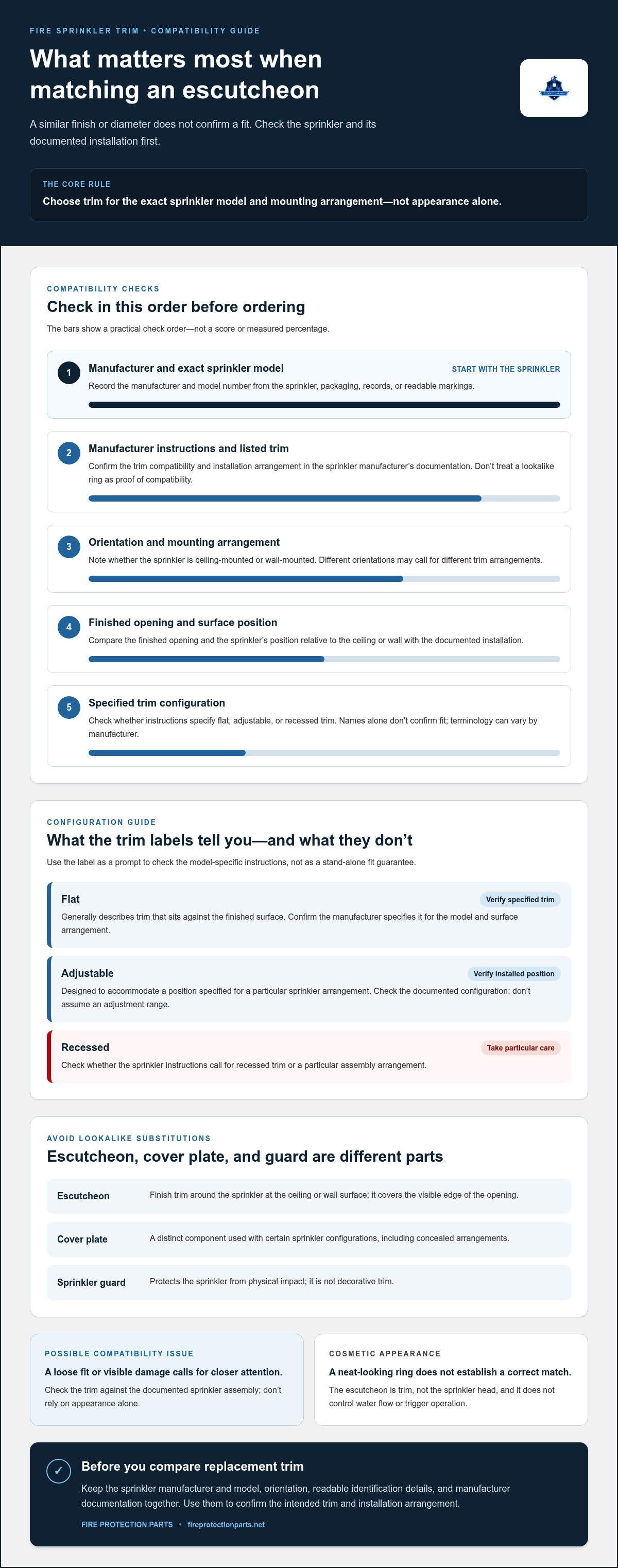
A reliable match starts with the sprinkler, not the trim’s appearance. Before ordering, gather identifying details and compare them with the sprinkler manufacturer’s installation instructions and listing information. Use this checklist to reduce guesswork:
- Identify the manufacturer and exact model. Record the name and model number from the sprinkler, packaging, records, or other legible markings. Don’t assume a similar-looking head uses the same trim.
- Note the sprinkler orientation. Record whether it’s installed at the ceiling or wall and how it’s positioned. The mounting arrangement affects which trim configuration the instructions specify.
- Identify the escutcheon configuration. Compare the existing trim with the model documentation. Don’t rely on labels such as “flat” or “adjustable” without checking how the manufacturer describes the required arrangement.
- Check the finished opening and surface position. Compare the opening around the sprinkler and the trim’s intended placement with the documented installation. A similar-looking opening alone doesn’t confirm a fit.
- Verify documented trim compatibility. Use the manufacturer’s instructions and listing information to confirm the trim is intended for the specific sprinkler and installation. If these details don’t align, pause rather than forcing or substituting a component.
What information should you identify before selecting replacement trim?
Keep the manufacturer, exact model, orientation, and any legible identifying markings together. Then compare the installed arrangement and existing trim with the applicable manufacturer documentation. The existing piece can help identify what’s in place, but it isn’t proof that it’s the correct component. For general sourcing context, see this sprinkler head parts and escutcheon identification guide.
Why do listings and installation instructions matter?
Compatibility and approval apply to specific products and installation conditions, not just a broad component category. Look for the exact sprinkler and trim details in the manufacturer’s documentation. References to UL or FM Approvals are relevant only when documentation confirms the particular component. Follow applicable requirements and the authority having jurisdiction (AHJ). Don’t infer code acceptance from appearance or a seller’s general description.
If the paperwork is unclear or the existing arrangement doesn’t match the instructions, don’t alter, force, or substitute trim to make it fit. Resolve the identification and compatibility question before ordering. Clear product details make comparison more dependable, and fire-protection parts sourcing is easier when the sprinkler model and installation information are ready.
When Should a Fire Sprinkler Escutcheon Be Replaced?
A trim piece that’s damaged, corroded, loose, or visibly mismatched deserves attention. These signs don’t prove the sprinkler itself has failed, but they can indicate that the escutcheon no longer fits as intended or that the surrounding installation needs review. Don’t dismiss a problem just because the sprinkler still looks intact.
Use this quick check to decide what to do next:
- Damage: Look for cracks, bends, missing pieces, or gaps that weren’t present before.
- Corrosion: Note rust or other visible deterioration on the trim.
- Looseness: Observe whether the escutcheon has shifted or no longer sits as expected. Don’t push or reposition it to test the fit.
- Mismatch: Compare the visible arrangement with the sprinkler’s model-specific installation information. Trim that sits unevenly or appears different from the specified arrangement needs investigation.
A surface blemish may be cosmetic, while a loose or mismatched part may raise a question about fit or installation. A visual check can’t determine whether the sprinkler or system is affected. If the sprinkler appears damaged, obstructed, disturbed, or incorrectly positioned, have the concern assessed by a qualified fire-protection professional.
Can a damaged or loose escutcheon be ignored?
No. A visibly loose or damaged escutcheon should be investigated promptly, even though cosmetic damage alone doesn’t establish that the sprinkler has failed. Record what you see and compare it with the manufacturer’s documentation, but don’t use appearance as a diagnosis. If there’s any concern about the sprinkler, its position, or the system, seek qualified fire-protection service rather than attempting a correction.
What should you never do during a replacement?
Don’t move, modify, or obstruct a sprinkler head. Don’t paint, cut, bend, force, or reposition sprinkler components as an improvised way to make trim fit. These actions can interfere with the documented installation and may create a larger problem than the original cosmetic issue. Work involving an active sprinkler system must follow applicable professional and safety requirements.
Replacement isn’t a reason to improvise. Confirm the sprinkler identity and trim arrangement against manufacturer information before sourcing a part. If you’re comparing fire-protection hardware, browse fire-protection parts and hardware with the relevant identification details in hand.
Careful sourcing can help you find a component that matches the documented arrangement. Browse fire-protection parts for system hardware and components.
How to Source the Right Fire Sprinkler Escutcheon with Confidence
Good sourcing starts with a clear match between the sprinkler and its documented installation, not with a trim piece that merely looks close. Before comparing options, gather the sprinkler manufacturer and exact model, its orientation and mounting arrangement, the required trim configuration, and the manufacturer’s instructions or listing information. Keep these details together so each candidate component can be checked against the same reference.
Clear product descriptions make that comparison more practical. They help distinguish a documented match from a lookalike and reduce ordering errors, particularly when several trim configurations appear similar. For broader guidance on finding fire-protection hardware, see this overview of sprinkler system components online.
What should a useful escutcheon product description tell you?
Look for the manufacturer, compatible sprinkler models, configuration, and any stated dimensions or finish. Product descriptions may use different terminology, so compare their details with the sprinkler manufacturer’s documentation rather than relying on a category label or product photo alone. Where a specification is missing or ambiguous, don’t fill the gap with an estimate. Use verified details to assess whether the component suits the identified sprinkler and installation.
What are the final checks before placing an order?
Pause for one last comparison. Check that the selected trim matches the sprinkler model, its ceiling or wall arrangement, and the manufacturer’s documented compatibility information. Then review the product description, quantity, and any compatibility notes. A mismatch or unclear detail is a reason to resolve the selection before placing the order, not to plan on forcing or modifying a part later.
- Sprinkler: Manufacturer, exact model, and identifying markings.
- Installation: Orientation, mounting arrangement, and finished-surface position.
- Trim: Configuration and fit details supported by product documentation.
- Order: Description, quantity, and compatibility notes checked against your records.
These checks make sourcing a fire sprinkler escutcheon more deliberate and help keep appearance separate from verified fit. When you’re ready to continue, shop fire-protection components and use your sprinkler details to guide the selection.
Make Your Next Escutcheon Order with Confidence
The right fire sprinkler escutcheon is the one that matches the identified sprinkler and its documented installation, not simply the one that looks similar. Before ordering, verify the manufacturer and model, sprinkler orientation, trim configuration, fit at the finished surface, and applicable product documentation. If the existing trim is damaged or loose, treat it as a reason to investigate rather than assume the sprinkler has failed.
These checks turn a confusing replacement into a more deliberate sourcing decision. Clear product details help you compare components against manufacturer information and avoid relying on guesses about dimensions, finish, or compatibility. Keep the sprinkler’s identification and installation details close as you shop.
Fire Protection Parts is an online retailer for fire-protection hardware and system components, with ordering options for individual and bulk needs. Shop fire-protection components and use your sprinkler details to make a well-informed selection.
Verify the match, then browse Fire Protection Parts for fire-protection components to support your next sourcing decision.
Frequently Asked Questions
What is a fire sprinkler escutcheon?
A fire sprinkler escutcheon is the trim around a sprinkler where it passes through a finished ceiling or wall. It covers the edge of the opening and gives the installation a finished appearance. It’s separate from the sprinkler head and doesn’t control water flow or activation. Its configuration must suit the sprinkler model and mounting arrangement, so appearance alone isn’t enough to identify the correct replacement.
Are fire sprinkler escutcheons universal?
No. Escutcheons aren’t universal, even if two pieces look alike or have a similar finish. The suitable trim depends on details such as the sprinkler’s manufacturer, model, orientation, mounting arrangement, and specified configuration. Check the sprinkler’s installation instructions and product documentation before ordering. A close visual match doesn’t establish that the escutcheon fits the assembly or matches its documented installation conditions.
Can I replace a fire sprinkler escutcheon myself?
Don’t assume replacement is a simple trim change. Some configurations may require sprinkler removal to replace the escutcheon, and work on an active system can involve risks beyond appearance. Don’t loosen, move, or remove the sprinkler head, or force trim into place. Follow the manufacturer’s instructions and applicable requirements, and have a qualified fire-protection professional handle work that affects the sprinkler or system.
What is the difference between a sprinkler escutcheon and a cover plate?
An escutcheon is trim around the sprinkler at the finished surface. A cover plate is a distinct component used with certain sprinkler configurations, such as concealed arrangements. They aren’t interchangeable terms or parts. The sprinkler model’s documentation explains which components belong with its installation. Check that information before sourcing replacement trim, especially if the existing assembly has a plate that sits over or around the sprinkler.
How do I find the right replacement escutcheon for my sprinkler head?
Start by identifying the sprinkler manufacturer and exact model using legible markings, records, or product documentation. Note its orientation and mounting arrangement, then compare the required escutcheon configuration and fit with the manufacturer’s installation instructions and listing information. Check documented dimensions and finish where provided. Don’t guess from a photograph or substitute a similar-looking part if compatibility isn’t established.
Can a fire sprinkler escutcheon be painted?
Don’t paint an escutcheon as an improvised way to match the surrounding surface. The 2026 edition of NFPA 25 identifies escutcheons painted by anyone other than the manufacturer as requiring replacement. Applicable requirements and local adoption can vary, so follow the requirements that govern the system. If the escutcheon has been painted, use the sprinkler documentation to guide replacement selection rather than painting it again.
Does a loose sprinkler escutcheon mean the sprinkler is damaged?
Not necessarily. A loose escutcheon may indicate a trim-fit issue, but it doesn’t by itself prove that the sprinkler is damaged. Don’t push it back, reposition the head, or use a makeshift fix. Look for visible damage, corrosion, or an apparent mismatch without disturbing the assembly. If the sprinkler seems loose, obstructed, or out of position, have a qualified fire-protection professional assess it.

