

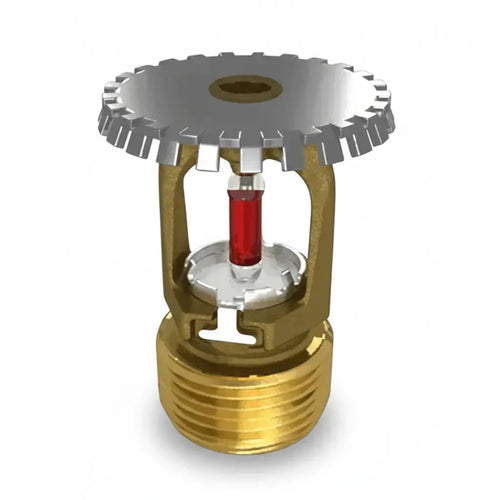


How to Select a Dry Barrel Sprinkler for Cold Areas
A dry barrel sprinkler is not a standard sprinkler with a longer body. It is a listed dry-type assembly designed to keep water out of the exposed barrel until the sprinkler operates. Knowing how to select dry barrel sprinkler assemblies correctly helps prevent freeze damage, impaired protection, failed inspections, and costly replacement work after installation.
Dry sprinklers are commonly used where the sprinkler connection is supplied from a wet-pipe system in a heated area, but the sprinkler itself extends into an unheated space. Typical applications include canopies, loading docks, cold rooms, exterior overhangs, unheated vestibules, and certain refrigerated areas. Selection must be based on the sprinkler's listing, the actual installation geometry, and the system design requirements - not simply the distance from the ceiling to the branch line.
Start With the Hazard and Sprinkler Design
Before choosing barrel length or finish, confirm what the sprinkler is required to protect. The applicable construction documents, hydraulic calculations, sprinkler layout, and adopted code determine the required sprinkler type, response characteristic, temperature classification, coverage, and K-factor.
A dry barrel sprinkler may be available as a pendent, upright, or sidewall model. Pendent dry sprinklers are frequently used where a wet branch line is above a ceiling or insulated deck and the discharge element must extend into a colder area below. Sidewall models can be useful at exterior entries, narrow rooms, or locations where piping cannot be centered above the protected area.
Do not assume that a standard-coverage model can replace an extended-coverage model, or that a quick-response sprinkler can be substituted for a standard-response model. These characteristics affect the sprinkler system design. Select a model that matches the design documents and is approved for the hazard, occupancy, and installation arrangement.
How to Select Dry Barrel Sprinkler Length
Barrel length is often the most misunderstood part of dry sprinkler selection. The correct length is not based on a rough estimate of the distance through a wall or ceiling. It must place the dry sprinkler seal in a protected, heated environment while allowing the sprinkler to sit at the correct finished position below or beside the ceiling.
Manufacturers publish specific measuring instructions for each dry sprinkler series. In many cases, the dimension is measured from the sprinkler inlet or face of the fitting to the desired deflector location. Other models use a defined reference point on the escutcheon, ceiling, or wall. Follow the data sheet for the exact model being quoted or installed.
The barrel must be long enough for the seal and inlet connection to remain in an area maintained above freezing under expected conditions. A seal located in an unheated cavity, exterior wall, or poorly insulated plenum can allow water to enter and freeze inside the barrel. That can damage the sprinkler or prevent proper operation.
At the same time, excessive length is not automatically safer. Dry sprinklers have listed maximum lengths, and longer assemblies may have special installation limits. Some models require a minimum slope toward the fitting so condensation drains from the barrel. Others have orientation restrictions or reduced maximum lengths based on sprinkler position. Always verify the manufacturer’s published limits rather than treating one dry sprinkler model as interchangeable with another.
Measure the Finished Condition
Measure after accounting for all finished materials and connection details. Include ceiling thickness, wall thickness, insulation, framing depth, drop nipples, outlet fittings, and the required escutcheon or cover plate position. A measurement taken before drywall, metal panels, or insulated roof components are installed can produce the wrong barrel length.
For retrofit work, confirm the existing fitting type and its location before ordering. A field measurement and a photo of the existing sprinkler, outlet, and finished surface can prevent an avoidable return or jobsite delay.
Match the Required K-Factor and Coverage
The K-factor determines the relationship between sprinkler pressure and discharge. It is a core hydraulic design value, not a cosmetic product preference. If the plans call for a specific K-factor, use that value unless the system designer confirms an approved alternative and updates the calculations where required.
Dry sprinklers are offered in common K-factors, but model availability varies by manufacturer, orientation, response type, and barrel length. A higher K-factor may support a particular hydraulic design, but it can also affect available pressure, spacing, and the product options available for the installation.
Confirm whether the application requires standard coverage, extended coverage, residential coverage, or a special application sprinkler. Also check the permitted deflector distance below the ceiling, distance from walls, obstruction rules, and spacing limits. A dry barrel sprinkler must be selected as part of the complete sprinkler arrangement, not as an isolated replacement part.
Verify Listing, Approvals, and Temperature Rating
Use recognized, code-compliant products with listings and approvals appropriate to the project. The product data sheet should identify the sprinkler's UL listing, FM approval where applicable, temperature classification, permitted orientation, fitting requirements, and installation limitations.
Temperature rating deserves particular attention in cold-area applications. The sprinkler’s operating temperature must suit the ambient conditions at the sprinkler location and the design requirements for the space. A higher-temperature sprinkler is not a cure for freezing conditions. Freeze protection comes from keeping the barrel dry and locating the seal correctly in a heated area.
Check the local authority having jurisdiction requirements and the edition of NFPA 13 adopted for the project. Existing building conditions, insurer requirements, and project specifications can add requirements beyond the basic product listing. For replacements, match the existing sprinkler’s listed performance characteristics unless the design professional approves a change.
Confirm Connection, Fitting, and Installation Details
Dry sprinklers are typically installed into a specific outlet fitting or fitting arrangement. The inlet connection, thread size, sealing method, and required wrench location must match the manufacturer’s instructions. Do not install a dry sprinkler using a standard sprinkler wrench if the manufacturer specifies a dedicated wrench or a particular wrench flat.
Avoid applying torque to the barrel, deflector, frame, or operating element. Damage may not be obvious, but it can affect sprinkler operation or void the listing. Use the proper wrench, support the piping as required, and follow the manufacturer’s torque and installation guidance.
If the dry sprinkler penetrates a wall, ceiling, or insulated assembly, use the correct escutcheon or cover plate for the sprinkler series. The escutcheon is not only a finish detail. It helps accommodate the listed installation geometry and can affect the appearance and fit at the finished surface.
For dry pendent sprinklers installed from above, confirm required barrel pitch. Condensation inside a dry sprinkler barrel must be able to drain back toward the wet-pipe fitting. A barrel pitched the wrong direction can retain water, creating a freeze risk even when the seal is properly located in a heated space.
Select Materials and Finish for the Environment
Finish selection matters most where sprinklers are visible or exposed to corrosive conditions. White, chrome, black, brass, and painted finishes may be chosen to match architectural requirements, but appearance should not override the approved sprinkler model and temperature rating.
For parking structures, exterior canopies, food-processing spaces, pools, coastal facilities, and other corrosive environments, evaluate whether a corrosion-resistant sprinkler or protective coating is required. The finish must be factory applied and listed for the sprinkler. Never field-paint a sprinkler, cover plate, or operating element.
If the project calls for concealed dry sprinklers, verify that the cover plate is specifically listed with that sprinkler model and that the required activation temperature is correct. Mixing cover plates between brands or series is not acceptable, even if the dimensions appear similar.
Avoid Common Ordering Errors
Most dry sprinkler ordering problems come down to incomplete information. Before requesting a quote or placing an order, have the manufacturer and model preference, sprinkler orientation, K-factor, temperature rating, response type, finish, exact barrel length, inlet thread, and required approval available. Include the application details when the job involves an unusual ceiling, refrigerated space, exterior condition, or replacement of an older sprinkler.
Do not order by overall length alone. Two dry sprinklers with similar-looking barrels can have different measurement reference points, fitting requirements, maximum lengths, and listings. Do not cut, alter, extend, or field-repair a dry sprinkler barrel. A damaged or incorrectly sized assembly should be replaced with the correct listed unit.
For contractors managing active work, early verification is usually less expensive than a return trip. Fire Protection Parts can help source trusted dry sprinkler models and specialized components when you can provide the project specifications and measured installation conditions.
When the installation is unusual, pause before ordering. Confirm the manufacturer's data, coordinate with the system designer when needed, and document the final barrel measurement. That extra check protects the sprinkler system, the schedule, and the people and property the system is there to protect.

