



Power Plant Fire Protection: Design and Equipment Guide
A power plant doesn’t have one fire hazard, so it shouldn’t rely on one protection approach. A fire protection system for power plants is a coordinated set of layers, selected for risks in areas such as turbine halls, transformers, electrical spaces, and energy storage installations.
That complexity makes system choices demanding. Selection must follow the project’s hazard analysis, engineering design basis, applicable codes, and site conditions. Components also need to match approved specifications: sourcing parts is not a substitute for designing the system.
This guide explains the main protection layers and how to compare approaches against project requirements. You’ll learn what to check in the design documents, how detection differs from suppression, and how to source components against documented specifications. Examples include deluge valves, fire protection pipe, seismic bracing, sprinkler-system air compressors, and backflow preventers. The goal is a clearer path from hazard analysis to component procurement, without treating any single product as a complete plant-wide solution.
Key Takeaways
- Start a fire protection system for power plants with hazard analysis, since risks differ across equipment, processes, and site conditions.
- Distinguish detection and alarms from systems designed to control or suppress a fire.
- Compare approaches by hazard match, design assumptions, interfaces, maintenance needs, and operating constraints.
- Verify each component’s manufacturer, model, size, rating, and connection requirements against approved project documents before sourcing.
- Once specifications are established, source fire protection hardware against the design documents. Parts procurement does not replace system design.
Why a Fire Protection System for a Power Plant Must Start with Hazard Analysis
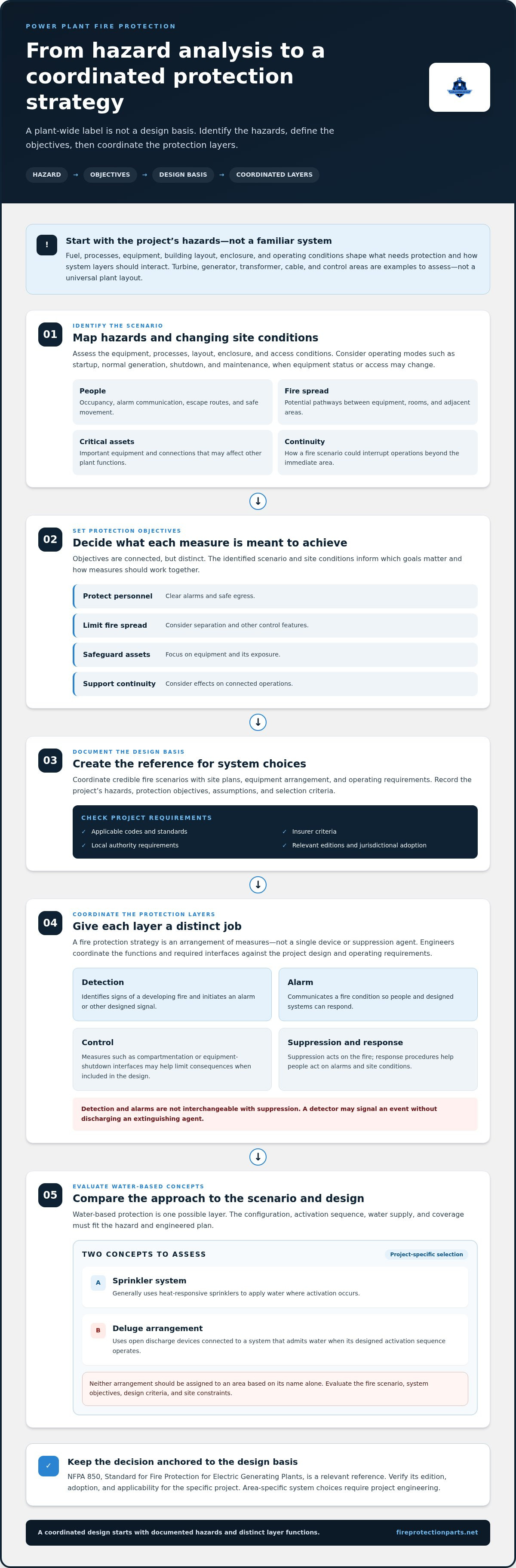
A fire protection system for power plants is not a single device or suppression agent. It is a coordinated arrangement of detection, alarm, control, suppression, and response measures selected to address identified hazards and defined protection objectives. Each layer has a role: detection signals a developing event, control measures can limit its spread, suppression targets the fire, and response procedures help people act on alarms and site conditions.
These objectives are related but distinct. Protecting personnel may call for clear alarms and safe egress. Limiting fire spread may depend on separation or control features. Safeguarding critical assets focuses attention on equipment and exposure, while supporting continuity means considering how an incident could affect connected operations. The broad range of Fire Suppression System types and components is one reason to base choices on the hazard rather than defaulting to a familiar system.
System selection follows documented hazard analysis, not a generic plant label. Fuel, processes, equipment, building layout, enclosure, and operating conditions all influence what needs protection and how the layers should interact. The project may also need to account for different operating modes, such as startup, normal generation, shutdown, or maintenance, when equipment status and access conditions can change.
- People: Consider occupancy, alarm communication, escape routes, and how an incident could affect safe movement.
- Fire spread: Identify potential pathways between equipment, rooms, and adjacent areas.
- Critical assets: Map important equipment and connections whose damage could affect other plant functions.
- Continuity: Examine how fire scenarios could interrupt operations, including beyond the immediate area.
Which plant areas can create different fire protection challenges?
Turbine, generator, transformer, cable, and control areas are useful examples, not a universal plant layout. Each raises different questions about equipment, combustible materials, enclosure, and access. Cable routing, for instance, may create pathways between spaces, while an enclosed room’s dimensions and access points can affect detection and response planning. Treat these as evaluation factors, not automatic instructions to use a particular suppression method. Area-specific choices require project engineering.
What does a plant fire protection design basis establish?
The design basis records the project’s hazards, protection objectives, assumptions, and selection criteria. Engineers coordinate credible fire scenarios with site plans, equipment arrangement, and operating requirements so proposed measures work as an integrated design. The design basis also provides a reference for checking component specifications against the intended system. Verify the applicable codes and standards, insurer criteria, and local authority requirements for the project, including relevant editions and jurisdictional adoption. This documented foundation supports later system comparisons and procurement decisions.
How Detection, Water-Based Protection, and Special Suppression Work Together
A reliable protection strategy assigns different jobs to different system layers. Detection identifies signs of a developing fire and initiates an alarm or other designed signal. Suppression equipment acts to control or extinguish the fire. Control measures, such as compartmentation or equipment-shutdown interfaces, may help limit consequences when included in the design.
Detection and alarms identify and communicate a fire condition; suppression acts on the fire. They are not interchangeable, and one does not automatically replace the other. A detector may signal an event without discharging an extinguishing agent, while a suppression system depends on its specified release or activation arrangement. Engineers coordinate these functions, including required interfaces, against the project design and operating requirements.
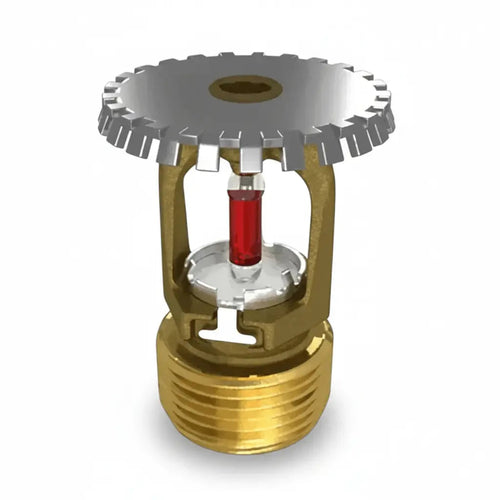
Water-based protection is one possible layer, but its configuration must fit the hazard and engineered plan. Sprinkler systems generally use heat-responsive sprinklers to apply water where activation occurs. A deluge arrangement uses open discharge devices connected to a system that admits water when its designed activation sequence operates. The details, including detection, valve operation, water supply, and coverage, depend on the approved design. Neither arrangement should be assigned to a plant area based on its name alone.
Where do sprinkler and deluge approaches fit?
Engineers evaluate sprinkler or deluge concepts against the identified fire scenario, system objectives, design criteria, and site constraints. Deluge systems may be considered where the design calls for water to discharge through multiple open outlets after activation, but this does not make them a universal choice for power plants. The NFPA 850 Standard for Fire Protection for Electric Generating Plants is a relevant reference. Verify its edition, adoption, and applicability for the specific project. PTR Electric Deluge VXD is a catalog product, not a complete plant protection design or turnkey solution.
When might a project evaluate specialized suppression?
Enclosed rooms or equipment-specific hazards may lead engineers to evaluate specialized suppression alongside water-based options. Agent selection depends on the documented hazard, compatibility with the protected equipment and environment, system interfaces, and project requirements. No agent should be treated as suitable for every plant area simply because it is promoted as versatile.
Evaluate any proposed agent or system against the project’s engineering criteria and applicable requirements. Compare the role each layer serves, then confirm how it connects to detection, alarms, control measures, and operating procedures.
Once engineers establish the component requirements, Fire Protection Parts provides an online source for fire protection hardware, including the PTR Electric Deluge VXD. Match components to the project documents and manufacturer documentation; parts sourcing does not replace system design.
How to Compare Power Plant Fire Protection System Approaches
A useful comparison starts with function, not product labels. Measure each option against the same documented fire scenario and project objectives. The framework below helps teams organize questions for engineering review. It does not replace system calculations, approved plans, or a project-specific determination of suitability.
Detection
Role: Identify a developing fire condition and signal an alarm or designed response.
Evaluate: What hazard must it detect? How does it communicate with alarms and other system interfaces? Could site conditions affect detection or operation?
Water-based protection
Role: Apply water through the configuration specified in the design.
Evaluate: What water-supply and distribution assumptions underpin the design? Are operating conditions, access, and maintenance requirements addressed?
Deluge
Role: Deliver water through open discharge devices when the designed activation sequence operates.
Evaluate: What initiates release? How are the valve, detection, water supply, and control functions coordinated? What does the approved plan require?
Specialized suppression
Role: Address a defined hazard using an agent or system selected through engineering evaluation.
Evaluate: Does the approach match the hazard and equipment? What project requirements, interfaces, operational constraints, and documentation apply?
These are comparison prompts, not rankings. A fire protection system for power plants may combine several approaches, but each element needs a defined purpose and documented interface with the rest of the design.
Which criteria help distinguish one approach from another?
Start with the fire scenario and performance objective: what event is the design addressing, and what outcome is it intended to support? Then trace how the proposed approach connects to alarms, water supplies, control functions, and plant operations. Consider routine access, maintenance tasks, and operating constraints that could affect readiness. Finally, identify the drawings, manufacturer documentation, approvals, and acceptance criteria required for project review. This creates a consistent basis for comparing options without treating a component as proof of system performance.
For component context, review fire protection system components and hardware, then match procurement decisions to approved project documents and specified requirements.
How do codes, standards, and risk guidance fit the comparison?
Use codes and standards as part of project review, not as a substitute for it. NFPA 850 is a relevant reference to investigate for electric generating plants, but its edition, adoption, and applicability should be verified for the facility and project scope. Jurisdictional codes, authority having jurisdiction decisions, insurer criteria, and other project requirements may also affect the design basis. Document which requirements apply and how the engineering design addresses them before finalizing system choices.
What to Verify Before Specifying or Sourcing Plant Fire Protection Components
Procurement accuracy starts with controlled project documents, not a product category name. For a fire protection system for power plants, a component that appears similar to the specified item may still differ in a critical connection, rating, or model. Use this workflow to keep purchasing aligned with the approved design.
- Start with the current approved design documents. Gather drawings, specifications, bills of materials, and approved submittals. Confirm that the documents reflect the project’s latest revisions before creating or releasing a purchase list.
- Reconcile each line item. Compare the bill of materials against the drawings and specifications. Resolve differences in quantity, location, or description through the project’s document-control process rather than making assumptions during ordering.
- Match the exact component requirements. Check manufacturer, model, size, rating, and connection requirements against project documents. For pipe, fittings, valves, and supports, verify compatibility with the documented system arrangement and interfaces.
- Review supporting documentation. Compare product data and manufacturer documentation with requirements established by the project team. Track required approvals, submittals, or traceability records so the purchasing file matches project expectations.
- Keep responsibilities distinct. Procurement sources specified hardware. Engineering approval, installation, commissioning, and inspection are separate project responsibilities handled by the professionals and authorities assigned to them. A purchase record alone does not demonstrate that a complete system is correctly designed or accepted.
Which component details should procurement reconcile?
How should specialized hardware be handled?
Source deluge valves, sprinkler-system air compressors, and backflow preventers only when project documents call for them, and match each item to its exact specified requirements. For dry-system context, review information on air compressors for dry sprinkler systems. Design decisions remain with responsible project professionals; installation and inspection decisions belong to designated professionals and applicable authorities.
Once specifications are established, source fire protection components against the project documents. Clear item matching helps procurement stay aligned with the approved design without confusing parts supply with engineering approval.
Source Fire Protection Parts for Power Plants Against the Approved Design
Once engineers establish project requirements, procurement can focus on matching specified hardware to the approved design. Fire Protection Parts is an online retailer of fire protection components. A catalog item is not automatically approved or suitable for a particular plant application, so let project documents and applicable product documentation guide selection.
For a fire protection system for power plants, buying against an approved bill of materials helps keep the order aligned with design intent. Match each item’s manufacturer, model, size, rating, and connection requirements to the specification. Review relevant product documentation and project submittal requirements before ordering, especially where components connect to other equipment or system interfaces.
Which catalog categories may support specified project needs?
Depending on the approved documents, procurement teams may source control valves, deluge equipment, seismic bracing, sprinkler-system air compressors, and backflow preventers. These are component categories, not recommendations for specific plant areas. Their role and suitability depend on the project’s engineering requirements and documentation.
Viking Plastics CPVC pipe is relevant when the design documents specify compatible CPVC components. Material type alone does not establish that a pipe product is suitable for a particular application. Review the specification and product documentation together; the Viking CPVC fire sprinkler pipe guidance provides additional context for evaluating CPVC requirements.
What are the next steps for a procurement team?
Build a sourcing package from the current approved component list. Include item descriptions, required quantities, applicable manufacturer and model details, documentation requirements, and delivery coordination needed for the project schedule. Keep revisions controlled so buyers and reviewers are working from the same approved information. If a proposed item differs from the specification, route that discrepancy through the project’s established review process rather than substituting based on appearance or a broad category match.
Keep responsibilities clear. Procurement locates and orders components against specified requirements. Engineering approval, system design, installation, commissioning, and inspection remain with the responsible project professionals and authorities. Sourcing hardware supports the project, but does not determine whether a complete system meets its design objectives.
With approved requirements in hand, browse fire protection parts and hardware to locate specified components. A precise order begins with precise documents, then follows them through product selection and documentation review.
Carry the Approved Design Through Procurement
Keep procurement records aligned with the project as drawings and approved component lists change. A clear record of selected manufacturers, models, and documentation gives the team a useful reference for later purchasing decisions and helps prevent outdated specifications from being treated as current. For a fire protection system for power plants, disciplined sourcing supports the design without taking the place of engineering decisions.
Fire Protection Parts offers online sales for individual and bulk orders, with fire protection hardware categories and products such as Viking Plastics CPVC pipe and PTR Electric Deluge VXD. Use approved project requirements to guide component selection, then review documentation against those requirements before ordering.
Browse fire protection parts and hardware to locate components for your project’s approved specifications. Start with the current component list and match each product to its specified requirements.
Frequently Asked Questions
What fire protection system is used in a power plant?
Power plants may combine fire detection and alarms with water-based protection and specialized suppression, rather than rely on a single system. The design depends on facility hazards, engineering criteria, and requirements that apply to the project. A control room and a fuel-handling area, for example, can raise different protection questions. Engineers determine the configuration from documented scenarios and objectives; no one arrangement is right for every generating facility.
Why do power plants need different fire protection systems for different areas?
Plant areas can differ in equipment, combustible materials, enclosure, access, and operating conditions. A cable route, for instance, may present a different fire scenario from a room with electrical control equipment. Hazard analysis helps engineers assess potential fire development and consequences, then set area-specific objectives. These examples illustrate factors to evaluate; they are not universal instructions to use a particular detector or suppression method in a given area.
Does NFPA 850 apply to every power plant fire protection system?
NFPA 850 is a reference associated with fire protection for electric generating plants, but that does not establish that a particular edition governs every facility or system. Applicability depends on project scope, jurisdictional adoption, authority requirements, and other applicable criteria. Verify the current edition and how the authority having jurisdiction and project documents address it. The engineering basis should identify which requirements actually apply.
What is the difference between a sprinkler system and a deluge system in a power plant?
A sprinkler system and a deluge system are distinct water-based arrangements. In a sprinkler arrangement, individual sprinklers operate according to the design when exposed to activation conditions. A deluge arrangement uses open discharge devices supplied after its designed activation sequence. Components and operation depend on engineered plans. Do not infer suitability from an area name, such as a turbine hall, or select either arrangement without project-specific documents and engineering review.
Can one fire suppression agent protect an entire power plant?
No. A single suppression agent should not be assumed to protect every plant area. Electrical equipment, fuels, materials, enclosures, and operating needs can create different hazards, so selection must follow hazard analysis and design criteria. A broad marketing description, including claims of multi-class capability, does not establish suitability for a specific installation. Use approved engineering documents, product documentation, and applicable project requirements to evaluate the proposed agent and its interfaces before procurement.
What should be checked before ordering fire protection components for a power plant?
Reconcile each item with the latest approved drawings, specifications, and bill of materials. Confirm the exact manufacturer, model, size, rating, connection type, quantity, and required documentation. A matching nominal size alone, for example, may not establish that a valve or fitting meets the specified connection or rating. Compatibility and acceptance criteria belong to project review. Component sourcing is separate from engineering design, field installation, commissioning, and inspection.
Can Fire Protection Parts design or install a power plant fire protection system?
Fire Protection Parts sells fire protection hardware and equipment online. For a power plant project, use approved specifications to identify components and compare product documentation with required manufacturer and model details. Engineering decisions and field work remain with the responsible project professionals and authorities, keeping parts procurement distinct from decisions about system design, installation, and acceptance.

