



Air Maintenance Device: What It Is, Why It’s Needed & How It Supports Dry Pipe Sprinkler Systems
Maintaining proper air pressure is one of the most critical aspects of dry pipe fire sprinkler systems. Unlike wet pipe systems, which are filled with water at all times, dry pipe systems rely on pressurized air or nitrogen to hold water back until a fire event occurs. This design prevents freezing in cold environments and ensures water is only introduced when needed.
Maintaining that cushion is not as simple as inflating a tyre. Small leaks, temperature fluctuations, and atmospheric changes can cause pressure to drift, leading to catastrophic system failures or "false trips." This is where the air maintenance device (AMD) becomes an indispensable component of modern fire protection design, ensuring that dry pipe sprinkler air pressure remains within the precise parameters required for safety and compliance.
This blog explores what an air maintenance device is, why it is essential for dry pipe and preaction systems, and how it differs from traditional air compressors.
What Is an Air Maintenance Device?
An air maintenance device is a specialized pressure-regulating assembly designed to automatically manage the air supply in a dry pipe or preaction system. It ensures that the system remains within the recommended operating range, preventing both under-pressurization (which can cause false alarms) and over-pressurization (which can damage valves and components).
Unlike a standard manual valve or a general-purpose regulator, an AMD is engineered specifically for fire protection. It acts as a sentry, monitoring the system’s internal pressure and introducing small, controlled amounts of air from a high-pressure source (like a compressor or nitrogen generator) whenever a drop is detected.
In a dry pipe sprinkler system, the AMD is the bridge between the air supply and the dry pipe valve. Its primary role is to ensure that the air pressure remains high enough to keep the water-clapper shut, but low enough to allow for rapid water delivery should a sprinkler head activate.
Professionals favor AMDs over standard compressors for their precision in fire protection applications, where consistent dry pipe sprinkler air pressure is non-negotiable for compliance and performance.
Why Dry Pipe Sprinkler Systems Need Air Pressure
To understand the necessity of an AMD, one must understand how a dry pipe system function. Unlike wet systems, the piping in these environments is filled with pressurized air or nitrogen rather than water. This air pressure holds a mechanical valve (the dry pipe valve) closed against the force of the city water supply.
If the dry pipe sprinkler air pressure drops too low due to a slow leak, the water pressure will overcome the valve's mechanical advantage, causing it to "trip." If this happens when there is no fire, it results in a "false trip", filling the pipes with water that must then be drained, a process that is both costly and labor-intensive, and which increases the risk of internal pipe corrosion.
Conversely, if the pressure is too high, it may delay the time it takes for water to reach the fire. Stable, regulated pressure is the only way to ensure system integrity. Without reliable pressure management, dry pipe systems can become costly to maintain and prone to malfunction.
Air Maintenance Device vs Air Compressor
While both air maintenance devices and air compressors are involved in supplying air, their roles differ significantly:
Purpose-built regulation vs continuous supply
AMDs regulate pressure precisely, while compressors provide raw air volume, often introducing excess pressure and moisture into the system.
Risk management
Compressors alone can cause over-pressurization if not paired with an AMD, potentially damaging valves. In contrast, an AMD maintains precise pressure, reducing the risk of over-pressurization and improving system longevity.
Efficiency
AMDs are more energy-efficient than air compressors as they are designed specifically for pressure regulation, not continuous air supply. AMDs reduce unnecessary cycling, improving energy efficiency and extending system life.
In summary, compressors provide the air, but AMDs ensure it is delivered safely and correctly.
Core Components That Support Air Pressure Management
Building a reliable AMD fire protection setup requires a combination of high-quality hardware tailored to the specific needs of the facility. These components include:
Dedicated Air Compressors for Fire Protection
In many installations, dedicated air compressors designed specifically for fire protection systems are used to support air pressure requirements without introducing excessive moisture or pressure. These are not the loud, vibrating units found in auto shops; they are often Quiet 1/4 HP 135 Gal Air Compressors that provide the necessary volume while maintaining a low profile in mechanical rooms.
Tank-Mounted Air Maintenance Devices
Tank-mounted AMDs sit atop air receiver tanks, using mechanical regulators to maintain setpoint pressure while filtering out humidity that could corrode pipes. They minimize valve cycling, preserving the dry pipe valve's seat and reducing maintenance calls. Tank-mounted air maintenance devices are commonly used to regulate air pressure while limiting moisture entry into the system, helping maintain long-term reliability, like the Tank-Mounted Air Maintenance Device AMD-1.
Air Maintenance Devices for Dry Pipe Sprinkler Systems
Specialized AMDs designed for dry pipe applications provide precise pressure control and compatibility with system monitoring. They help systems remain within recommended operating ranges without unnecessary cycling. The Air Maintenance Device for Dry Pipe Sprinkler System exemplifies this functionality, ensuring dependable operation in critical environments. These units often feature bypass valves for quick filling during initial setup and sensitive regulators for long-term maintenance.
How an Air Maintenance Device Works in a Fire Event
It is a common misconception that an AMD might interfere with a system’s ability to put out a fire. In reality, it is designed to get out of the way, as explained below:
Normal operation vs alarm condition
During normal operation, the AMD maintains steady air pressure in the system. When a sprinkler head opens due to heat, the pressure drops rapidly. The AMD slowly "tops off" the system to compensate for minor leaks, keeping the dry pipe valve closed.
Pressure release and water delivery sequence
When a sprinkler head melts, a large volume of air escapes. The AMD’s internal orifice is intentionally small; it cannot replace air as fast as the open head releases it. The AMD then allows this pressure drop to occur naturally, triggering the dry pipe valve to release water into the piping and allow it flow.
Why component quality matters
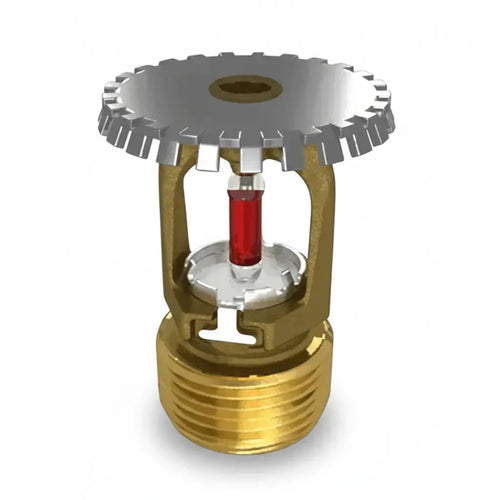
Over time, sprinkler heads can become corroded or painted over. Using reliable, code-compliant parts reduces risk and ensures long-term system performance. Ensuring high-quality, listed components are used during repairs is vital for maintaining system certification. Quality fire sprinkler system parts resist wear, ensuring reliability.
Why proper pressure management matters during activation
The AMD’s restriction ensures it doesn't accidentally "fight" the pressure drop that the system needs to activate. It ensures the system behaves exactly as designed during emergencies by allowing water to reach the fire fast, minimizing damage and risk.
Code & Compliance Considerations (High-Level)
In the United States, fire protection standards (such as those outlined by the NFPA) generally require that any dry pipe system supplied by a constant air source, such as a dedicated compressor or a shop air line, must utilize a listed air maintenance device.
Compliance is not just about installation; it is about maintenance. Always follow manufacturer specs for sizing and installation, and schedule regular inspections to verify gauges, valves, and restrictors. Compliance hinges on documented maintenance proving the AMD keeps air pressure in safe bounds.
Common Issues Caused by Improper Air Pressure Control
Failure to utilize or maintain a proper air maintenance device often leads to:
False Trips
Sudden water entry into dry pipes, leading to mold or frozen pipes, damages property and disrupts operations.
Corrosion and moisture build-up
Excess moisture introduced by improper compressors accelerates pipe deterioration.
Increased maintenance costs
Compressors that run too often will burn out prematurely. Also, frequent valve repairs and system resets lead to increased facility maintenance costs.
Frequently Asked Questions
Q: What does an air maintenance device do in a fire sprinkler system?
It automatically regulates and maintains the correct air pressure in the piping to keep the dry pipe valve closed, while also preventing the air supply from interfering with the system’s operation during a fire.
Q: Is an air maintenance device required for dry pipe systems?
Yes, for systems using compressors above minimal output thresholds, per NFPA guidelines.
Q: Can an air compressor replace an air maintenance device?
No. A compressor is the source of the air; the AMD is the controller. Using a compressor without an AMD can lead to dangerous pressure fluctuations.
Final Thoughts
An air maintenance device may be a small component in the grand scheme of a building’s infrastructure, but it is the lynchpin of a dry pipe system’s reliability. By ensuring that dry pipe sprinkler air pressure remains stable, these devices protect the system from mechanical wear and ensure it is ready to perform when it matters most.
Maintaining proper air pressure is essential to the performance and reliability of dry pipe fire sprinkler systems, and air maintenance devices play a critical role in achieving that balance.

