



Alarm Bells and Horn Strobes for Fire Alarm Systems
What if the alarm people hear is only part of the warning they need? Choosing alarm bells and a horn strobe means understanding the difference: a bell provides audible notification, while a horn strobe combines an audible horn with a flashing light. That visual signal can alert people who may not hear the sound. The right arrangement depends on the space, the alarm function, and applicable placement requirements.
It’s reasonable to expect an alarm to be clear wherever people may need to respond. This guide explains what horn strobes do, where they’re typically installed, and how NFPA 72 informs strobe placement. It also covers the factors that determine when a sprinkler alarm needs a sign, so the audible and visual warnings are understood in context.
This overview explains device roles, mounting considerations, and the factors that shape notification coverage. Whether you’re planning a new system or reviewing an existing layout, use it to understand the decisions involved and identify which fire-protection components fit the project.
Key Takeaways
- Understand how audible alarms and flashing visual signals work together to alert people.
- Identify the placement factors that affect where horn strobes belong in a building.
- Learn how NFPA 72 informs strobe positioning and coverage decisions.
- See how signs can clarify sprinkler alarm notifications and support a clear response.
What Is the Strobe on a Fire Alarm?
A fire alarm strobe is a visual notification appliance that flashes during an alarm. It can operate alone or alongside an audible device, giving occupants another way to notice an emergency.
Strobe Purpose and Visual Alerts
A strobe’s flashing light provides a visible warning when an audible alarm may go unnoticed. In a horn strobe, the light works with the horn to provide both visual and audible notification. Fire alarm strobes are commonly used in public and common-use areas, including hallways, restrooms, conference rooms, and classrooms.
Sound levels also depend on the space. For public-mode audible notification, NFPA 72 calls for at least 15 dB above average ambient sound. In sleeping rooms, the level must be at least 75 dBA or 15 dB above average ambient sound, whichever is greater. These figures help explain why one sound setting may not suit every room.
Strobe Models and Types
Choose between a visual-only strobe and a combination horn strobe based on the notification needs of the area. Then consider the device’s voltage and candela rating. The appropriate strobe output depends on the room and placement.
Voltage options include 12V and 24V. Match the selected device to the fire alarm system’s requirements, and consider whether a visual-only or combined audible-and-visual unit suits the application. Costs depend on the device type, its specifications, and the project’s quantity and system requirements, so there is no single price that applies to every setup.
Bells Versus Horn Strobes
A fire alarm bell provides an audible warning. A horn strobe combines an audible horn with a flashing light, adding a visual alert. Bells and horn strobes can be used together on one fire alarm circuit when the system is designed for both devices and their electrical requirements are compatible.
Common problems include a device that doesn’t sound or flash, or an alert that’s difficult to notice. The remedy depends on the fault. Check for issues with system power, wiring, device compatibility, or obstructions that affect sound or light. A qualified fire alarm technician can diagnose system faults and restore proper notification.
Horn strobe installation locations
Place each horn strobe where its sound and flashing light can reach the intended occupants. The right location depends on the building layout, occupancy, alarm system design, and applicable local requirements. A corridor junction, for example, may need different coverage planning from an enclosed room.
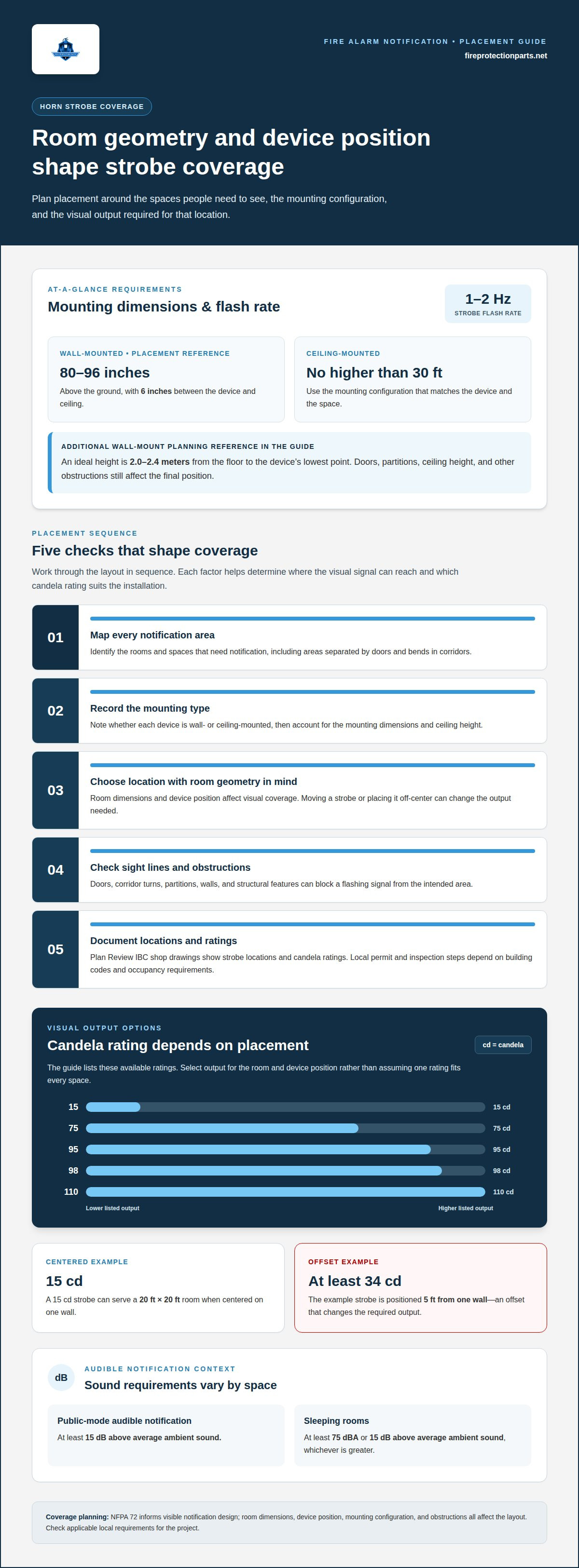
For wall mounting, an ideal height is 2.0 to 2.4 meters from the floor to the device’s lowest point. This range helps establish a consistent starting point for layout planning. Ceiling height, doors, partitions, and other obstructions still affect the final position and visibility of the strobe.
Map the spaces that need notification before choosing device locations. Include rooms separated by doors, bends in corridors, and areas where walls could block a flashing signal. A clear line of sight matters: a device hidden behind a structural feature may not provide an effective visual alert throughout the intended area.
How do you install and wire a fire alarm bell or horn strobe? Follow the fire alarm system design and the device manufacturer’s instructions, and connect only compatible appliances to the notification circuit. After installation, test audible and visual functions as part of the system commissioning process.
Placement also affects the strobe’s candela selection. Required visual coverage depends on the device’s position and the space it serves, so moving a device can change the rating needed. For example, an offset from a wall may call for a different candela rating than a centered installation. Coordinate device locations with the building plan and applicable requirements.
For a project taking shape, review the alarm bell and horn strobe options alongside the planned locations. Matching device type and placement early helps keep the system layout coherent and supports clear notification across the spaces it serves.
NFPA 72 strobe placement requirements
NFPA 72 informs visible notification design, but room dimensions and device position affect coverage. The strobe’s flash rate is 1-2 Hz. Its candela rating must suit the space and placement, rather than follow one rating for every room.
Available ratings include 15, 75, 95, 98, and 110 candelas. For example, a 15 cd strobe can serve a 20 ft. by 20 ft. room when centered on one wall. In an offset example, a strobe 5 ft. from one wall requires at least 34 cd. These examples show why moving a device can change the needed output.
Mounting position also matters. Wall-mounted strobes are placed between 80 and 96 inches above the ground, with 6 inches between the device and ceiling. Ceiling-mounted strobes should be no higher than 30 feet. Apply the configuration that matches the device’s mounting type, then consider room geometry and obstructions.
What strobe flash rate and candela rating are required for fire alarm notification? The flash rate is 1-2 Hz; candela depends on room size and location. Ratings such as 15, 75, 95, 98, or 110 cd are options, while placement examples show that offset positioning may require a higher output.
In the United States, permit and inspection steps depend on local building codes and occupancy requirements. For Plan Review, IBC shop drawings show strobe locations and candela ratings. This gives reviewers specific layout information, not just a device list.
Use a practical sequence: map each notification area, note wall or ceiling mounting, then select locations and ratings for the layout. Check that the drawing reflects room dimensions and device offsets. A corridor turn or partition can affect visibility, while ceiling height can affect mounting choices. These details help align the system plan with NFPA 72 placement considerations and applicable local requirements.
Sprinkler alarm horn-strobe and sign combinations
A sprinkler alarm horn strobe combines audible and visual notification, while a sign can clarify what the signal means. Keep their roles distinct: the device alerts occupants, and clear wording can identify the sprinkler alarm or direct attention to response instructions. Whether a sign is required depends on the building and fire code provisions that apply to the location.
Choose the audible output for the space, not just the device label. Some listed fire alarm devices produce 86 to 91 dBA at 10 feet; another listed device produces 80 dBA at 10 feet. An example horn rated at 95 dBA at 10 feet could produce 89 dBA at 20 feet. Distance and room conditions affect how clearly occupants hear an alarm.
For outdoor locations, described strobe-and-siren combinations produce 100 dBA at 10 feet. A sign can support recognition where visitors may not know what a sprinkler alarm indicates. Use concise, legible wording and place it where people can read it alongside the notification appliance. Avoid treating a sign as a substitute for audible or visual alarm coverage.
Visual output also matters. ADAAG sets a minimum strobe intensity of 75 cd, while 75 to 110 candela is recommended for large lobbies or long corridors. Listed devices may comply with ADA requirements and UL 464, UL 1638, and UL 1971. Select the appliance and sign as parts of one communication plan, accounting for room use, visibility, ambient sound, and the alarm’s purpose.
Before choosing a combination, identify whether the installation is indoors or outdoors, what occupants need to recognize, and how far the signal must carry. Then align the device selection and sign wording with the building’s applicable requirements. Browse the alarm notification device options to compare components for your sprinkler alarm setup.
Fire Protection Parts
Fire Protection Parts helps customers source components for broader fire-protection and sprinkler system projects. After planning alarm notification, coordinate it with the system’s other equipment and project requirements. Available components include CPVC pipe for fire protection, residential fire pump systems, deluge equipment, seismic bracing, sprinkler-system air compressors, and antifreeze for fire protection.
These products address different system needs, so the right fit depends on the project design. A residential fire pump system, for example, serves a different purpose from sprinkler piping or seismic bracing. Keeping those roles clear helps you identify which components belong in the project plan without treating them as substitutes for alarm devices.
For questions about fire-protection system components, contact Fire Protection Parts.
Make Your Next System Decision With Confidence
Use the project’s notification plan to guide device selection and coordinate it with the wider fire-protection system. Consider how occupants will receive the alert, how the building is used, and how the equipment fits the system design. Clear decisions can make procurement and coordination more straightforward.
Fire Protection Parts offers related fire-protection equipment, including Viking Plastics CPVC Pipe for Fire Protection, Residential Fire Pump Systems, and PTR Electric Deluge VXD. These components serve different roles, so match each selection to the project requirements rather than treating one product as a substitute for another.
As you finalize choices about alarm bells and a horn strobe, keep device selection connected to the building plan and the system’s other components. For help with the next step, contact Fire Protection Parts. A clear plan puts you in a stronger position to move forward with confidence.
Frequently Asked Questions
What Is a Horn Strobe and Why Is It Important?
A horn strobe pairs an audible horn with a flashing visual alert, giving occupants two ways to receive an emergency warning. This can be useful where background noise makes an audible signal harder to notice or where someone may not hear it. For example, a visible signal in a shared work area can supplement the sound and help communicate that occupants should respond.
What are alarm bells and horn strobes used for in fire alarm systems?
Alarm devices notify building occupants of a fire alarm or other emergency through sound, light, or both. A bell provides an audible signal, while a horn strobe combines sound with a flashing visual cue. In a building with separate rooms and shared spaces, the system design determines which appliance type serves each area and how signals coordinate across notification zones.
What are the NFPA 72 requirements for fire alarm audible and visual notification appliances?
NFPA 72 addresses audible and visual notification, including audibility, visibility, placement, and coordination. Evacuation horns use the three-pulse Standard Audible Emergency Evacuation Signal, and horns within a notification zone are synchronized. Sound measurements use meters meeting ANSI S1.4a Type 2 requirements. The applicable design must account for occupancy and the spaces served, rather than relying on one device setting throughout.
How do you choose and size alarm bells and horn strobes for a building?
Start with the building layout, room uses, ambient sound, mounting positions, and the fire alarm system’s electrical requirements. Then match appliance type and output to each space, accounting for doors, partitions, and distance from the device. A device suited to an open lobby, for example, may not provide equivalent notification in enclosed rooms. The system design should coordinate device loads and coverage.
What are the best brands of fire alarm bells and horn strobes?
There isn’t one best brand for every building. Choose devices compatible with the fire alarm system and appropriate for the environment and notification design. Compare the specific model’s listing and technical documentation with project requirements. A brand name alone doesn’t establish suitability: the device’s approved use, electrical characteristics, sound output, and visual performance all matter for the intended application.
What permits, inspections, and local codes apply to fire alarm notification devices in the United States?
Permits and inspections depend on local building codes and occupancy requirements. For Plan Review, IBC shop drawings show strobe locations and candela ratings; placement must also meet applicable local requirements.

