



Choosing NFPA Compliant Sprinkler Parts
A sprinkler system can fail a review over something as small as the wrong coupling, the wrong escutcheon, or a replacement head that does not match the original listing. That is why buying nfpa compliant sprinkler parts is not just a purchasing task. It is a code, performance, and liability decision that affects inspections, repairs, and long-term system reliability.
For contractors, facility teams, and commercial buyers, the challenge is rarely finding a part that looks right. The challenge is finding the right part for the system, the hazard, the environment, and the applicable standard. In fire protection, similar is not the same, and low-cost substitutes often create expensive problems later.
What makes sprinkler parts NFPA compliant?
Strictly speaking, NFPA standards do not “approve” individual products in the way a testing agency does. NFPA sets the installation, inspection, testing, maintenance, and performance rules for the system. The part itself typically needs to be selected, installed, and applied in a way that aligns with the applicable NFPA standard, while also meeting listing and approval requirements from agencies such as UL or FM when required by the project.
That distinction matters. When buyers talk about nfpa compliant sprinkler parts, they usually mean components that are suitable for use in systems designed and maintained under standards such as NFPA 13, NFPA 14, NFPA 20, and NFPA 25. They also mean products that carry the proper listings, match the system design, and comply with local authority requirements.
In practice, compliance comes down to a combination of factors. The part must be the correct type for the application, it must be installed according to its listing and manufacturer instructions, and it must fit the overall system design. A sprinkler head, valve trim component, flexible drop, dry pendent, gauge, switch, or backflow accessory can all be compliant in one setting and incorrect in another.
NFPA compliant sprinkler parts start with the system type
The first question is not brand or price. It is system type. Wet, dry, preaction, and deluge systems all place different demands on components, and parts that work in one assembly may be unsuitable in another.
A dry system, for example, may require air maintenance devices, dry valve trim, compressors, and sprinklers selected for freeze protection concerns. A wet system in a conditioned commercial space may call for a much simpler replacement path, but temperature rating, response type, finish, thread size, and deflector orientation still matter. In corrosive or washdown environments, material selection becomes more critical, and that affects whether a standard replacement is actually acceptable.
This is where many purchasing errors begin. A buyer sees the same nominal size or connection and assumes compatibility. But compliant selection depends on the full application, not one visible spec.
Why listings and approvals matter
NFPA standards rely heavily on listed equipment being used as intended. That means the product should be tested and listed for the exact function it performs. A butterfly valve for fire protection service is not interchangeable with a general industrial valve just because the dimensions match. Likewise, a sprinkler must match its listed orientation, temperature rating, K-factor, and response characteristics.
UL and FM are the marks many buyers look for first, and for good reason. They help confirm that the component has been evaluated for fire protection use. But even then, the listing has to match the application. A listed product used outside its listing can still create a compliance issue.
For that reason, submittal review and replacement sourcing should always go beyond the label. Check the manufacturer data, the intended service, pressure rating, installation criteria, and any system-specific limitations.
Common parts that require closer review
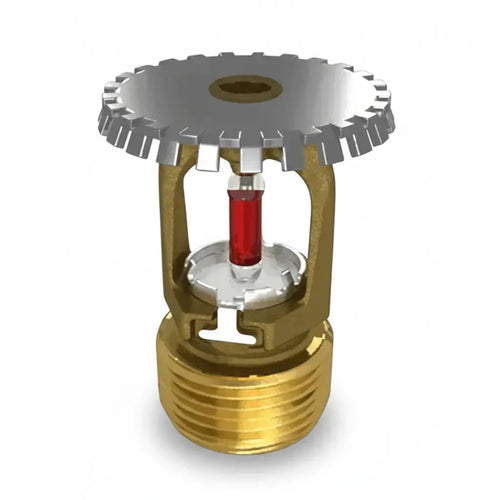
Some categories create more trouble than others because they appear straightforward but have a lot of hidden detail. Sprinklers are the obvious example. Matching frame style, K-factor, orientation, finish, thread type, temperature rating, and response classification is essential, especially for replacement in existing systems.
Valves are another category where exactness matters. Supervisory status, trim configuration, end connection, pressure class, and approvals all affect whether a replacement is acceptable. The same goes for backflow devices and related accessories, where local code adoption and testing requirements may add another layer.
Dry pendent sprinklers deserve special attention. Barrel length, unheated space exposure, ceiling construction, seal details, and listed installation method all come into play. A quick substitution can create both a code issue and a performance issue.
Gauges, switches, fittings, and hangers may seem less complex, but they still need to meet the requirements of the system and jurisdiction. Even when a part is not highly specialized, using a fire protection-rated component from a trusted manufacturer is the safer path.
How to evaluate compatibility before you buy
The fastest way to avoid delays is to verify five things before placing an order: the exact part function, the manufacturer and model series if replacing existing equipment, the listing or approval requirement, the physical connection details, and the environmental conditions.
That sounds basic, but in the field it is where most time gets lost. A replacement sprinkler may be delayed because the finish was overlooked. A valve order may stall because the end connection was assumed. A trim component may arrive and still not fit because the existing assembly changed over time.
Photos of the installed part, nameplate information, project submittals, and original equipment data all help. For retrofit work, especially on older systems, having a supplier that can help cross-reference parts is often more valuable than simply finding the lowest online price.
New construction vs. replacement work
New construction gives buyers more control. You are usually working from approved plans, submittals, and a known bill of material. Replacement work is less forgiving. Existing conditions may not match documentation, and prior repairs may have introduced non-matching components.
That is why replacement sourcing often needs a tighter review process. If the original part is obsolete, the right answer may be an approved replacement from the same manufacturer, a listed successor model, or a broader change that brings the assembly back into compliance. It depends on the component and the authority having jurisdiction.
The risk of cheap substitutes
Fire protection buyers already know this, but it is worth stating plainly: not every lower-cost part is a value. In life safety systems, cheap substitutes can lead to failed inspections, rejected installations, warranty disputes, and return trips that erase any upfront savings.
The bigger cost is uncertainty. If a part has unclear documentation, questionable listing status, or inconsistent manufacturing quality, it introduces risk into a system that is supposed to perform under emergency conditions. That is why most experienced contractors stick with recognized manufacturers and suppliers that understand fire protection applications.
A dependable source should be able to confirm specifications, identify compatible options, and help with hard-to-find parts without pushing generic replacements that create problems later. That is especially important on commercial projects where schedule pressure can tempt buyers to take shortcuts.
Sourcing NFPA compliant sprinkler parts without slowing the job
Speed matters, but speed without accuracy creates rework. The best purchasing process balances both. Start with exact equipment identification whenever possible. Confirm listing and approval requirements early. Check lead times on specialty items such as dry sprinklers, trim assemblies, and brand-specific replacement parts before they become schedule-critical.
For buyers managing multiple project types, it also helps to standardize around trusted brands when the design allows it. That can simplify replacement stocking, technician familiarity, and submittal handling. Brands such as Viking, Reliable, Potter, General Air Products, Zurn Wilkins, and Ames are often chosen because they are familiar, supported, and built for the fire protection market.
If a part is difficult to identify or appears obsolete, get support before ordering. A knowledgeable distributor can often save days by confirming whether a direct replacement exists or whether another listed option is appropriate. Fire Protection Parts serves buyers who need that kind of practical support, especially when a project depends on getting the correct component the first time.
Documentation is part of compliance
The part itself is only one piece of the job. Compliance also depends on documentation. Product data sheets, listings, approval information, installation instructions, and maintenance records all help support acceptance and future service.
For contractors, good documentation makes closeout cleaner and inspection conversations easier. For facility teams, it improves future replacement accuracy and reduces guesswork during maintenance. Over the life of a system, that recordkeeping can be as valuable as the original purchase decision.
The safest buying approach is simple: treat every sprinkler system component as part of a listed, code-driven assembly, not as a generic hardware item. When you source carefully, verify compatibility, and stick with trusted fire protection products, you protect the schedule, the inspection, and the people depending on that system to work when it counts.

