

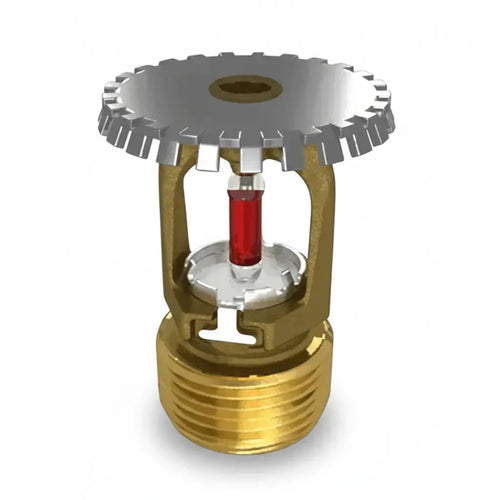


Commercial Fire Sprinkler Parts Online: A 2026 Buyer’s Guide
A sprinkler component can look right in a product photo and still fail to match the system. When sourcing commercial fire sprinkler parts online, compare the specified system type, material, dimensions, and connection details before ordering. A mismatch can leave a project with the wrong part or an incomplete order.
Commercial systems rely on components working together, and product descriptions do not always make it easy to compare an item with project documents. Start with the system requirements, then check each part against them. If a product detail is missing or conflicts with the specifications, flag it for technical review rather than guessing.
This 2026 buyer’s guide explains how to identify the component categories a project calls for, compare product information, and check compatibility before ordering. It covers what to review in product pages and manufacturer documentation, including system application, materials, dimensions, and connections. You’ll also learn how to organize related items, such as CPVC pipe, seismic bracing, air compressors, backflow preventers, dry pendent sprinklers, and anti-freeze, into an order that reflects the project requirements. A consistent verification process helps reduce unsuitable substitutions and procurement gaps while keeping design review, applicable requirements, and qualified installation central to the work.
Key Takeaways
- Start with the project’s system design and documents to identify the relevant component categories.
- Compare commercial fire sprinkler parts online using consistent details, including material, dimensions, connections, application, and documentation.
- Assess CPVC pipe, dry pendent sprinklers, air compressors, backflow preventers, and seismic bracing according to their role in the project.
- Use schedules, manufacturer references, existing labels, and approved submittals to support part identification and quantity checks.
- Review the full order for specification mismatches, missing items, and unsupported substitutions before purchase.
What commercial fire sprinkler parts does a project need?
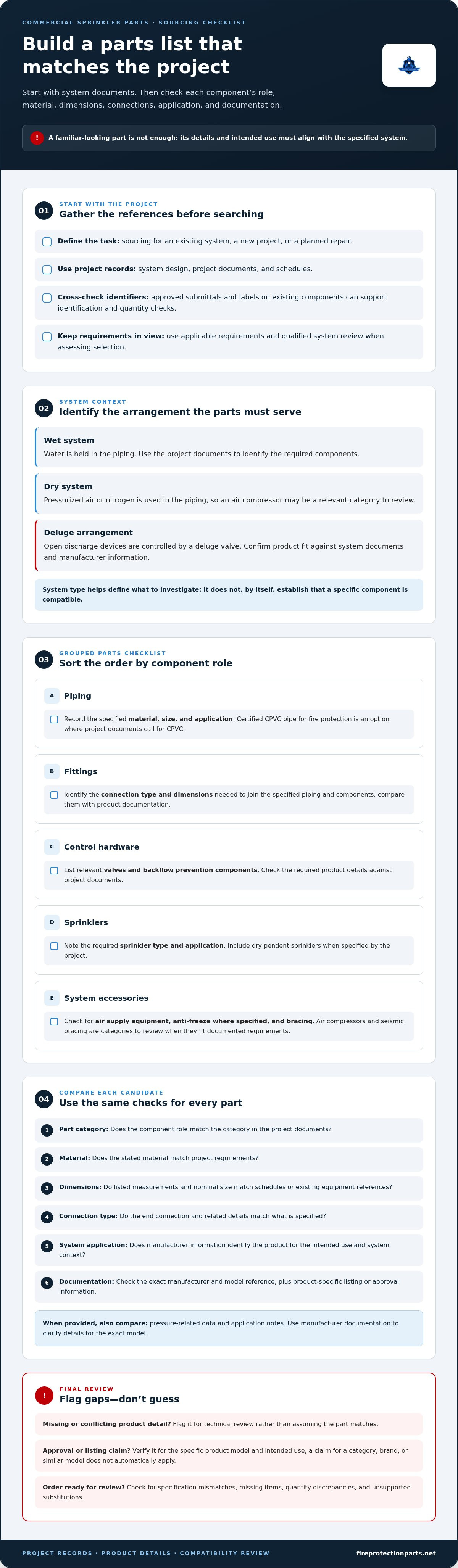
Begin with the task: sourcing components for an existing sprinkler system, a new project, or a planned repair. The parts list depends on the system design and application, project documents, and governing requirements. A familiar-looking part is not enough. Its material, dimensions, connections, and intended use must align with the specified system.
A component overview can help organize procurement, but it is not design advice or a replacement for qualified system review. For background on common arrangements and components, see the Fire Sprinkler System Wikipedia overview. Use project documents and manufacturer documentation to assess product-specific compatibility.
How do commercial sprinkler system types affect parts selection?
Wet systems hold water in the piping. Dry systems use pressurized air or nitrogen in the piping, so an air compressor may be a relevant category to review. Deluge arrangements use open discharge devices controlled by a deluge valve. The PTR Electric Deluge VXD is one product example. These system differences help define what to investigate, but they do not specify an exact component. Check the system documents and manufacturer information before deciding that a part is compatible.
Which component groups belong on a sourcing checklist?
Sort requirements into groups before searching for commercial fire sprinkler parts online. A category-based list makes it easier to spot missing components and compare products on the same basis.
- Piping: Record the specified pipe material, size, and application. Certified CPVC pipe for fire protection is an option where the project documents call for CPVC.
- Fittings: Identify the connection type and dimensions needed to join the specified piping and components. Match those details to product documentation.
- Control hardware: List relevant valves and backflow prevention components. For backflow preventers, check the required product details against the project documents.
- Sprinklers: Note the required sprinkler type and application. Include dry pendent sprinklers when the project specifies them.
- System accessories: Check for air supply equipment, anti-freeze where specified, and bracing. Air compressors for sprinkler systems and ASC seismic bracing are categories to review when they fit the documented requirements.
Use schedules, approved submittals, and existing component labels to identify requirements. For each candidate, compare its material, dimensions, connections, system application, and documentation with the project records. For a broader overview of component categories and sourcing considerations, see the commercial sprinkler component sourcing guide from Fire Protection Parts. Keep design review and applicable requirements central to final selection.
How to compare commercial fire sprinkler parts online
Product pages can make similar components look interchangeable. Use the same comparison criteria for each candidate: match it to the project documents, then review the product details. A shared category or nominal size does not establish compatibility. Material, connections, application, and product-specific documentation can all affect whether a part suits the intended system.
Build a comparison list for each part under review:
- Part category: Record the component’s role and the category specified in the project documents.
- Material: Compare the stated material with the project requirements.
- Dimensions: Check listed measurements and nominal size against schedules or existing equipment references.
- Connection type: Match the specified end connection and related details.
- System application: Confirm that the manufacturer identifies the product for the intended use and system context.
- Documentation: Record the manufacturer references and any product-specific listing or approval information.
Which listing details help establish component fit?
Start with the exact manufacturer and model reference. Compare it with project schedules and labels on existing equipment, then review dimensions, end connections, material, pressure-related data, and application notes where provided. Product pages help with initial comparison; manufacturer documentation can clarify details for the exact model. If a detail is missing or inconsistent, flag it for technical review instead of assuming the product matches.
How should buyers assess approvals and documentation?
First identify the project specifications and applicable authority requirements. The NFPA 13 Standard for Sprinkler Systems provides a reference for sprinkler system requirements, but project documents and applicable requirements guide selection. Distinguish a specific, documented listing or approval claim from general marketing language. Check the claim for the exact model and intended application.
Approval status must be verified for the specific product and its intended use. A claim associated with a product category, brand, or similar model does not automatically apply to the item being considered.
Do not treat a near match as an approved substitution. Use an alternative only when the project documents and applicable requirements support it, with the necessary technical review. This check is central to purchasing commercial fire sprinkler parts online without relying on assumptions. To compare product categories and documentation as you build a project list, browse the fire protection parts catalog.
Which commercial sprinkler parts fit different project needs?
Choose components for the role they serve in the documented system, not because a category seems broadly suitable. Material, application, and compatibility must align with project documents and manufacturer requirements. Ask which part matches this system and its specified use, rather than which part seems best in general.
When should a project include CPVC pipe or fittings?
CPVC pipe may be relevant when project documents specify it for the system application. Before adding it to an order, confirm the pipe’s intended use and product requirements. Fittings must also correspond to the specified piping and connection details. A similar size or material description alone does not establish a match. For focused selection considerations, see the Viking CPVC fire sprinkler pipe buyer’s guide.
When do air supply, backflow, or seismic components matter?
Air compressors are a relevant category for dry sprinkler systems that require an air supply. Select one based on project requirements and product documentation rather than assuming a compressor suits every dry system. Backflow preventers and seismic bracing are also project-dependent. Their inclusion and specific requirements should follow the system documents and applicable product requirements.
- Air compressors: Review these for dry-system applications where air supply equipment is specified.
- Backflow preventers: Consider these where the project calls for backflow prevention, then verify the product details for the intended use.
- Seismic bracing: Match bracing components to the project’s documented requirements. The seismic bracing compliance and safety guide offers additional context.
- Dry pendent sprinklers: Review this category when the specified application calls for dry pendent sprinklers, and check the exact product documentation.
These categories serve different functions and are not interchangeable. Keep each product reference beside the relevant project requirement so the reason for the selection is clear. Manufacturer documentation is essential for checking intended application and compatibility. Online selection can help organize procurement, but it does not replace design review or qualified installation.
How to prepare a complete commercial fire sprinkler parts order
A reliable order starts before you add products to a cart. Gather the project records, identify each required component, and keep confirmed requirements separate from assumptions. This makes it easier to find missing items and avoid substitutions that are not supported by project documents.
What information should buyers gather before ordering?
Bring together the project specifications, equipment schedules, approved submittals, manufacturer references, and useful labels from existing components. For each item, record the system type, intended application, model reference, connection details, and required quantity. Current manufacturer documents can help resolve product-specific identification questions. For repair-focused sourcing, the fire protection repair parts guide offers additional context.
How can buyers reduce omissions and unsuitable substitutions?
Use this sequence to prepare the order:
- 1. Collect project documents. Assemble the specifications, schedules, approved submittals, and relevant equipment records.
- 2. Identify required parts. List each component and note its intended system location and application.
- 3. Verify specifications. Match model references and product details against project records and current manufacturer documentation. Mark unresolved or inconsistent details for technical review.
- 4. Reconcile quantities. Compare each line-item quantity with the schedule or documented project need. Keep required accessories distinct from optional items.
- 5. Review the order. Check that every selected item corresponds to a documented requirement before completing the purchase.
Do not treat an accessory as required simply because it appears alongside a related product. Likewise, do not assume two components are interchangeable because they share a category name. Record assumptions separately so they do not quietly become order requirements.
A complete order matches documented requirements, not just product category names. This final check helps organize individual or bulk purchases of commercial fire sprinkler parts online while keeping design review and qualified installation central to the work.
Once your list is organized, browse fire protection parts for your order and compare relevant product information with your project records.
Source commercial fire sprinkler parts online with confidence
Once your requirements are organized, Fire Protection Parts’ online store lets you source fire protection equipment through individual or bulk purchases. The catalog can help you coordinate related categories in one order, while each selection remains tied to project documents and product specifications. An online catalog is a starting point, not a substitute for technical review.
What can buyers source through Fire Protection Parts?
Relevant catalog categories include Viking Plastics CPVC pipe for fire protection, ASC seismic bracing, and air compressors for sprinkler systems. Buyers can also review backflow preventers and dry pendent sprinklers when those components fit the documented system application. Compare product pages and manufacturer documentation to check exact model references, dimensions, connections, and other product-specific details.
Use the categories to organize the parts list, not to assume every item belongs in every project. A dry-system requirement may lead you to review air supply equipment, for example, while a project specification may call for a particular pipe material or bracing component. The relevant documents determine what is appropriate. Confirm required quantities and intended use before placing items together in an order.
What are the next steps for placing an informed order?
Make one final pass through your project list. Compare every line with the exact product specifications, model reference, intended system location, and required quantity. Separate confirmed selections from unresolved details, and do not treat a category match as proof that a component is suitable. Buyer guides can add technical context for topics such as CPVC pipe or seismic bracing, but final selection must follow governing project documents and applicable requirements.
This process makes sourcing commercial fire sprinkler parts online more manageable without taking shortcuts on compatibility. It also helps keep related components together in an individual or bulk purchase and makes gaps easier to catch before checkout. Product selection remains part of a larger safety process that includes design review and qualified installation.
With your requirements in hand, browse commercial fire sprinkler parts and compare relevant catalog categories with your project list. Review the exact product information before ordering to ensure the purchase reflects the system’s documented needs.
Make Your Next Sprinkler Parts Order with Confidence
A dependable order starts with project requirements, not a product category alone. Identify the components the system calls for, compare exact specifications and documentation, then review quantities and accessories before checkout. This repeatable process helps reduce mismatches and procurement gaps when sourcing commercial fire sprinkler parts online.
Fire Protection Parts supports online individual and bulk purchases, with commercial categories that include CPVC pipe, seismic bracing, air compressors, and backflow preventers. Choose components according to project documents and applicable requirements, and use manufacturer information to verify product details. Online selection supports procurement, but it does not replace design review or qualified installation.
Have your project list ready? Browse commercial fire sprinkler parts and compare relevant categories with your documented requirements. Review each item before checkout to help move forward with a more complete order.
Frequently Asked Questions
Can commercial fire sprinkler parts be purchased online?
Yes. Fire Protection Parts sells fire protection hardware and system components through its online store, with individual and bulk purchasing available. Depending on project requirements, buyers can review categories such as CPVC pipe, seismic bracing, air compressors, backflow preventers, and dry pendent sprinklers. Before ordering, compare exact product information with project documents and manufacturer references. Online purchasing makes sourcing convenient, but it does not replace design review or qualified installation.
How do I know whether a sprinkler component is compatible with my system?
Compare the exact manufacturer and model, material, dimensions, connection details, and intended application with project documents and existing equipment references. A matching category or nominal size alone does not prove compatibility. Review current manufacturer documentation for product-specific details, including any applicable listing or approval claims. If information is missing or conflicts with the project specifications, do not guess. Have the discrepancy reviewed before selecting or substituting a component.
What information should I have before ordering commercial sprinkler parts?
Gather the project specifications, equipment schedules, approved submittals, and available manufacturer or model references. Record the system type, intended application, connection details, and required quantity for each component. Existing equipment labels can help identify replacement parts, but compare those references with current manufacturer documentation. A clear list lets you check each item against system requirements and separate confirmed selections from assumptions before adding products to an order.
Are commercial and residential fire sprinkler parts interchangeable?
Not automatically. A component’s suitability depends on its exact specifications, intended application, and system requirements. Similar appearance or a shared product category does not establish that a residential part is appropriate for a commercial system, or vice versa. Compare the model and manufacturer documentation with project documents and applicable requirements. Treat any proposed cross-application as a technical selection that needs qualified review, not as a simple like-for-like replacement.
Do online fire sprinkler parts need to meet NFPA requirements?
Parts must be selected in line with project specifications and the requirements applicable to that system and location. NFPA standards provide important guidance, but the edition and requirements relevant to a project depend on governing documents and jurisdiction. Review any listing or approval claim for the exact product and intended use, and do not rely on general marketing language. Online product selection does not replace design review or confirmation of applicable requirements.
How can I identify a replacement fire sprinkler component?
Start with the existing component’s label, manufacturer, model reference, and available product markings. Compare these with equipment schedules, approved submittals, and current manufacturer documentation. Check the details relevant to the part, such as dimensions, material, connections, and intended application. For sprinkler components, do not rely on appearance alone. If identification is incomplete or inconsistent with project records, pause the selection and have the detail reviewed before ordering.
Can I substitute a similar-looking sprinkler part if the original is unavailable?
Do not substitute based on appearance alone. A similar-looking part may differ in material, connection, dimensions, application, or documented approval status. Use an alternative only when project documents and applicable requirements support the substitution, with appropriate technical review. Compare the exact product documentation and model details before ordering. If the replacement cannot be matched to system requirements, leave the selection unresolved rather than treating visual resemblance as proof of compatibility.

