



Sprinkler System Components Online: The 2026 Professional Sourcing Guide
A single non-compliant fitting can transform a life-saving fire suppression system into a liability that fails when it's needed most. When you search for sprinkler system components online, the sheer volume of results can be dangerous if you don't know how to distinguish between a garden-grade valve and an NFPA-rated lifesaver. It's a risk no facility manager or contractor should take. High-stakes safety requires hardware that is verified and built for the rigors of fire protection.
We understand that deciphering the 2025 editions of NFPA 13 or the significant 2026 updates to NFPA 25 feels like a full-time job. You need parts that meet the highest safety standards without the guesswork of a generic hardware store. This guide will help you master the essential components of professional fire suppression so you can source hardware with total confidence. We'll provide a clear checklist of fire-rated parts and show you exactly how to identify code-compliant hardware that protects your property and your people.
Key Takeaways
- Differentiate between UL-listed fire suppression hardware and generic plumbing to ensure your system meets strict safety certifications.
- Master the infrastructure of the fire riser room, including the critical role of backflow preventers and main control valves.
- Identify the correct sprinkler head orientation—pendent, upright, or sidewall—to ensure precise discharge for your facility's layout.
- Learn how to verify professional vendor credentials when sourcing sprinkler system components online to guarantee adherence to the latest NFPA codes.
- Explore specialized solutions for high-hazard or freezing environments, such as deluge valves and dedicated air compressors.
Understanding Fire Sprinkler Systems: More Than Just Pipes
A fire sprinkler system is far more than a series of pipes hidden behind a ceiling. It is a highly engineered, integrated network designed for the sole purpose of life safety. Unlike standard plumbing, which manages water for convenience, a suppression system is a dormant protector that must activate flawlessly under extreme heat. Every component in this network must work in unison to detect, control, and extinguish a fire before it becomes uncontrollable.
Searching for sprinkler system components online often leads users toward lawn irrigation websites. This is a dangerous trap. While both systems move water, the materials are fundamentally different. Irrigation parts are designed for low-pressure, outdoor use. Fire-rated hardware, however, must withstand high-pressure surges and intense thermal stress. Using an unrated part in a life-safety system isn't just a mistake; it's a code violation that can lead to system failure and legal liability. Reliability in fire protection is verified through UL (Underwriters Laboratories) and FM (Factory Mutual) certifications. These labels prove that a component has undergone rigorous testing to ensure it won't fail during a crisis. If a part lacks these marks, it has no place in your riser room or ceiling grid.
Life Safety vs. Irrigation: Why Ratings Matter
Fire protection hardware utilizes temperature-sensitive glass bulbs and fusible links that activate at specific thermal thresholds. These aren't manual valves you turn on for a lawn. They are automatic triggers. Sourcing sprinkler system components online requires a strict focus on high-pressure ratings and material science. For example, fire-rated CPVC, like Viking Plastics, is engineered to maintain its integrity during a fire, unlike standard PVC which can melt or release toxic fumes. Installing non-compliant parts can void insurance policies and prevent you from obtaining necessary occupancy permits. Safety isn't a place to cut costs with generic alternatives.
The Anatomy of a Code-Compliant System
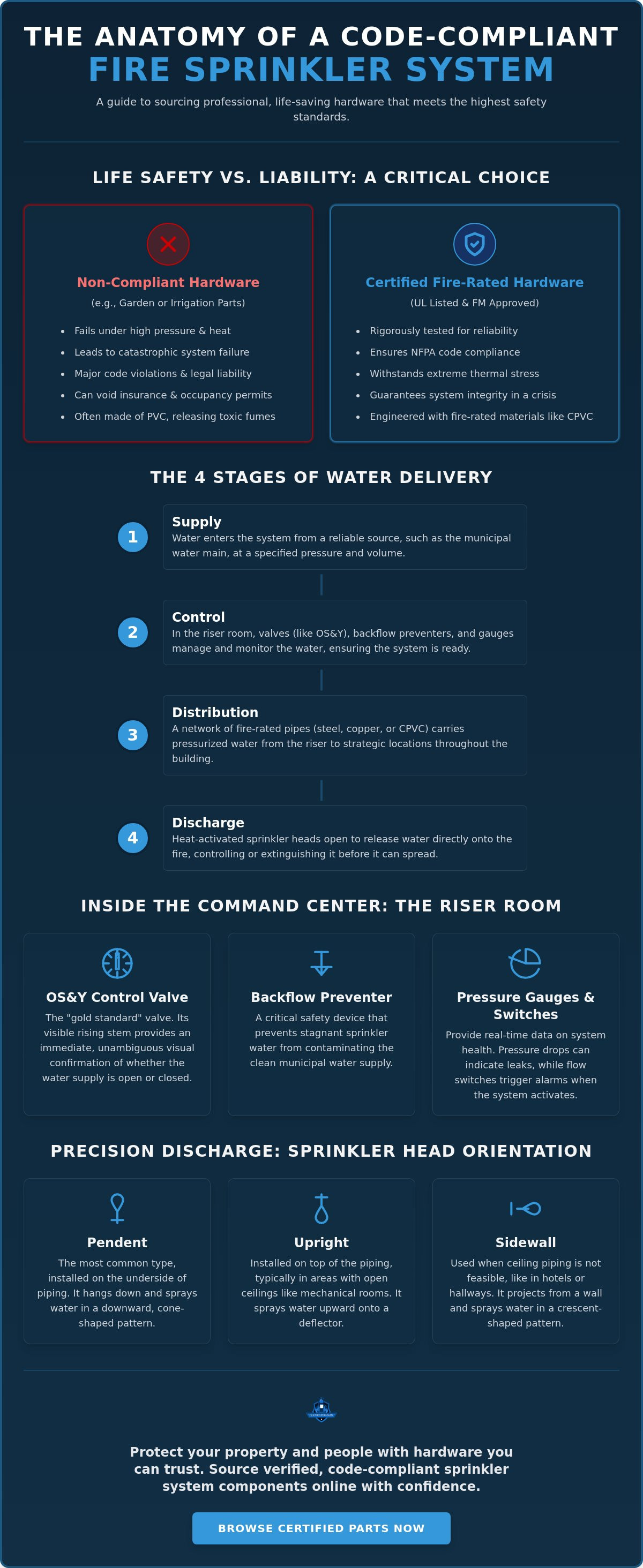
A functional system moves water through four critical stages: supply, control, distribution, and discharge. It begins at the municipal water main, enters through a backflow preventer, and is managed in the riser room. From there, it travels through fire-rated piping to the individual sprinkler heads. Maintaining this integrity requires specialized fire protection parts online that are specifically designed for system repairs. Each stage must be verified to meet NFPA 13 standards to ensure the water reaches the fire with the necessary pressure and volume. This methodical approach to hardware ensures that your building remains a protected environment.
Essential Infrastructure: Risers, Valves, and Piping
The fire riser room serves as the command center for your entire suppression network. It is where the municipal water supply transitions into a managed life-safety system. Within this space, a series of gauges and flow switches provide real-time data on system health. High-precision pressure monitoring is non-negotiable. Even a minor drop in pressure can indicate a leak or a closed valve that could compromise performance during an emergency. When sourcing sprinkler system components online, professionals prioritize these monitoring tools to ensure the system remains pressurized and ready for action.
Modern infrastructure relies on a blend of mechanical reliability and material science. The transition from the water main to the distribution pipes requires a methodical layout that allows for both routine testing and emergency shutoff. Every component within the riser room must be accessible and clearly labeled to meet the NFPA 13 standard. This ensures that in the event of a system activation, the source of the water flow is easily identified and managed by first responders or facility staff.
Control Valves: The Gatekeepers of Water
Control valves are the primary guardians of your water supply. For inspectors and facility managers, the os&y valve (Outside Screw and Yoke) is the gold standard because it offers a clear visual indicator of the valve's status. If the threaded stem is visible, the valve is open; if it's retracted, the water is shut off. This simple mechanical design prevents accidental shutoffs that could lead to catastrophic system failure. While OS&Y valves are common for interior risers, Post Indicator Valves (PIV) are typically utilized for exterior wall mounts or underground mains. Selecting the correct fire protection control valves ensures that your maintenance remains manageable and your emergency responses are decisive.
Viking Plastics CPVC: Modern Piping Solutions
Modern installations have shifted toward lightweight, high-durability materials to combat the labor-intensive nature of traditional black steel. Viking CPVC fire sprinkler pipe has become a preferred choice for residential and light commercial projects. Unlike metal piping, CPVC is naturally resistant to corrosion and microbiologically influenced corrosion (MIC), which can create internal obstructions over time. Contractors find that sourcing CPVC fittings and sprinkler system components online simplifies the procurement process. The solvent-cement welding method is faster and cleaner than threading steel, allowing for a more efficient installation timeline. You can explore our full range of code-compliant piping solutions to find the right materials for your next project.
Sprinkler Heads and Discharge Hardware: Precision Engineering
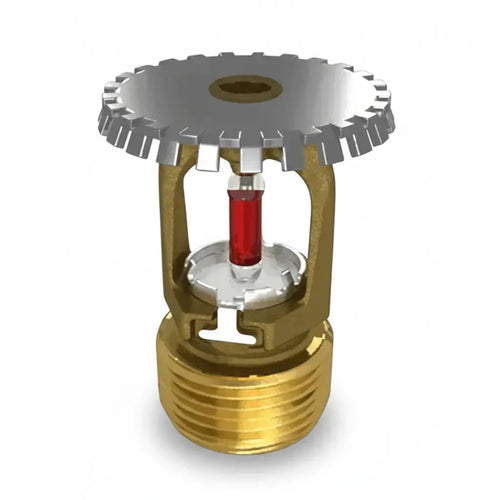
Every sprinkler head is a calibrated device designed to activate only when a specific thermal threshold is reached. Unlike irrigation nozzles that rely on manual or electronic timers, fire sprinkler heads are single-use, heat-activated triggers. They are the final point of defense in a suppression network. When you source sprinkler system components online, you aren't just buying hardware; you're procuring a life-safety sensor. These components must adhere to strict U.S. fire sprinkler system regulations to ensure they perform reliably under the stress of a developing fire.
The mechanics of activation involve either a heat-sensitive glass bulb or a fusible metal link. The Response Time Index (RTI) measures how quickly these elements react to heat. A lower RTI indicates a "fast response" head, typically used in residential settings to prioritize life safety. Standard response heads are more common in commercial or high-piled storage environments where controlling the fire's spread is the primary goal. Beyond the internal mechanics, the system's appearance is maintained by escutcheons and cover plates. While these parts look decorative, they serve the functional role of sealing ceiling penetrations and ensuring the head sits at the correct depth for proper spray distribution.
Choosing the Right Orientation
Orientation is determined by the piping layout and the building's architecture. Pendent heads hang down from the piping and are the most common choice for finished ceilings with concealed pipes. Upright heads sit on top of the pipe, often found in mechanical rooms or warehouses where the piping is exposed. Sidewall heads are engineered to mount on a wall, projecting water in a crescent pattern across a room. This is the standard for hotel rooms and narrow hallways. To ensure an exact match during maintenance, always locate the Sprinkler Identification Number (SIN). This 5-6 character code stamped on the deflector is the only way to verify the head's specific flow characteristics and pressure ratings when ordering replacements.
Temperature Ratings and Identification
The glass bulb inside a sprinkler head is color-coded to indicate its activation temperature. For example, an orange bulb typically triggers at 135°F, while a red bulb is rated for 155°F. Precise fire sprinkler head temperature ratings are essential because installing a head with the wrong activation point can lead to either accidental discharge or a fatal delay in suppression. In environments like commercial kitchens or industrial attics, high-temperature heads with yellow, green, or blue bulbs are required to prevent false activations from ambient heat. Selecting the correct rating ensures your system remains dormant until a genuine emergency occurs.
Specialized Components for System Longevity
Standard fire suppression systems face environmental threats that can compromise their life-saving potential. In unheated parking garages or cold storage facilities, water-filled pipes are a liability due to freezing risks. High-hazard environments like chemical plants require more than just standard discharge. When professionals look for sprinkler system components online, they must account for these environmental stressors. Protecting a building means selecting hardware that survives long-term exposure to the elements while remaining ready for a split-second activation.
Dry Pipe and Deluge Essentials
Dry pipe systems replace water with pressurized air or nitrogen until the system triggers. This prevents pipe bursts in freezing temperatures. An air compressor for dry pipe sprinkler is vital to maintain this pressure and prevent accidental discharge. If the air pressure drops too low, the dry pipe valve will trip, flooding the system prematurely. For high-hazard zones, electric deluge valve fire suppression systems offer an even more aggressive response. These systems use open sprinkler heads and a dedicated valve that releases a massive volume of water simultaneously across a large area. Maintaining these systems requires air maintenance devices that regulate pressure and prevent moisture buildup. Under the 2026 edition of NFPA 25, these valves now require more rigorous annual internal inspections to ensure reliability.
Seismic Bracing and Structural Support
Integrity during a disaster extends beyond fire. In earthquake-prone regions, building movement can snap rigid piping, rendering the suppression system useless. ASC Seismic Bracing provides the necessary flexibility and support to keep the network intact during structural shifts. Compliance with the 2025 edition of NFPA 13 requires specific hardware, including all-thread rod and specialized beam clamps, to secure the piping to the building's frame. You can consult our seismic bracing for sprinkler systems guide for a breakdown of high-risk zone requirements.
For wet systems in marginally cold areas, specialized anti-freeze solutions are an alternative to full dry-pipe conversions. These must be fire-rated and properly concentrated to ensure they don't become a fuel source. Every specialized part contributes to a system that doesn't just meet code but exceeds it for decades. You can find all these sprinkler system components online through our specialized fire protection inventory to ensure your facility remains protected regardless of the environment.
Sourcing Sprinkler System Components Online: Efficiency and Reliability
Centralizing your e-commerce needs through a professional partner ensures that your project timelines stay on track. Contractors who purchase sprinkler system components online often find they can manage multiple job sites with greater precision by having parts delivered directly to the field. Trusted brands like Viking, PTR, and ASC aren't just labels; they represent a commitment to life safety. By choosing a specialized vendor, you eliminate the risk of receiving unrated hardware that could fail an inspection or, worse, fail during a fire. Professional sourcing is about removing doubt and replacing it with verified performance.
Verifying Compliance in E-commerce
A reputable online store provides more than just a checkout button. Look for detailed spec sheets and submittal data provided directly on the product page. This transparency allows you to verify that the parts meet current NFPA standards before they ever arrive at the job site. Expert customer support is another hallmark of a professional retailer. If you're struggling to identify a specific replacement head or a compatible valve, a seasoned professional can guide you to the exact match. This level of technical assistance is what separates a life-safety partner from a generic warehouse.
Why Professional Sourcing Beats Big-Box Retail
General hardware stores and big-box retailers cater to standard plumbing and irrigation needs. They rarely stock the specialized hardware required for fire suppression, such as OS&Y valves or fire-rated CPVC. The greatest risk in procurement is the temptation to use a "similar" part from a plumbing aisle. While a standard PVC fitting might look like its fire-rated counterpart, it lacks the thermal resistance and pressure rating required by code. Specialized fire stores carry the inventory that general retailers ignore, ensuring your system remains fully compliant. You can browse our full catalog of professional fire protection parts to secure the hardware your facility deserves.
Building a Future of Uncompromising Safety
Building a reliable fire suppression system requires more than just following a blueprint. It demands a commitment to using hardware that has been tested to the point of failure and proven to perform. You now have the professional tools to distinguish between standard plumbing and high-pressure, fire-rated components. From identifying the correct SIN on a deflector to selecting the right seismic bracing for high-risk zones, every choice you make strengthens your building's defense.
Sourcing sprinkler system components online doesn't have to be a gamble. By prioritizing authorized distributors and technical documentation, you ensure your facility remains fully compliant with the latest NFPA standards. We take the guesswork out of procurement with an expert-vetted inventory designed for professionals who refuse to compromise on quality. As an authorized distributor of Viking and ASC Engineered Solutions, we provide technical spec sheets for all critical components to guarantee your peace of mind. The right hardware is the difference between a minor activation and a catastrophic loss. Secure your facility with code-compliant components at Fire Protection Parts today. Your commitment to excellence is the ultimate safeguard for your property and its occupants.
Frequently Asked Questions
Can I use standard PVC pipe for a fire sprinkler system?
No, standard PVC pipe is not permitted in fire suppression systems. It lacks the thermal resistance required to maintain integrity during a fire and can release toxic fumes if it melts. You must use fire-rated materials like Viking Plastics CPVC, which is specifically engineered to meet NFPA standards. Using unrated plumbing parts is a code violation that jeopardizes life safety and insurance coverage.
How do I identify which fire sprinkler head I need to replace?
You can identify a replacement head by locating the Sprinkler Identification Number (SIN) stamped onto the deflector. This unique 5-6 character code identifies the manufacturer, orifice size, and response type. When ordering sprinkler system components online, matching the SIN is the only way to ensure the replacement head provides the exact discharge pattern and pressure requirements of your original design.
What is the difference between a wet pipe and a dry pipe sprinkler system?
A wet pipe system is constantly filled with water and activates immediately when a head reaches its temperature threshold. In contrast, a dry pipe system is filled with pressurized air or nitrogen. When a head triggers in a dry system, the air escapes first, allowing the dry pipe valve to open and flood the network with water. This prevents pipes from bursting in unheated areas.
Why do fire sprinkler heads have different colored liquids in the bulbs?
The colored liquid inside the glass bulb indicates the specific temperature at which the sprinkler will activate. For instance, orange bulbs indicate a 135°F rating, while red bulbs signify 155°F. These colors allow inspectors to quickly verify that the correct heads are installed in specific environments. Matching these ratings is critical to preventing accidental discharge or a dangerous delay in response.
Is an air compressor required for all fire sprinkler systems?
No, air compressors are only required for dry pipe and pre-action systems. These systems rely on constant air pressure to keep the main water valve closed. If you're managing a standard wet pipe system in a climate-controlled building, a compressor isn't necessary. However, for dry systems, a dedicated compressor is a vital component for maintaining system pressure and preventing nuisance trips that flood the pipes.
What are the essential components found in a fire riser room?
A standard fire riser room contains the backflow preventer, the main control valve, and water flow switches. It also houses the system's pressure gauges and the main drain valve. These components allow for the monitoring and testing required by the 2026 edition of NFPA 25. High-hazard systems may also include deluge valves or specialized fire pump controllers within this centralized control space.
How often do fire sprinkler system components need to be replaced?
Replacement schedules vary by component type and environmental exposure. Standard response sprinkler heads are typically tested or replaced after 50 years, while fast-response residential heads may require testing after 20 years. Pressure gauges must be replaced or recalibrated every five years per NFPA standards. Always check for corrosion or physical damage, which requires immediate replacement regardless of the component's age.
Can I buy fire sprinkler heads online for residential use?
Yes, you can purchase residential fire sprinkler heads online, but they must be UL-listed and specifically rated for residential applications. Residential heads are designed for life safety and have a faster response time than many commercial models. When sourcing sprinkler system components online, verify that the head matches the temperature rating and K-factor specified in your system's original design documents to maintain compliance.

