

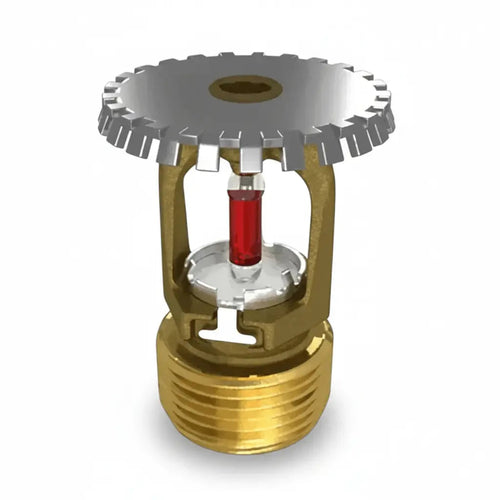


Electric Deluge Valve: A Professional Buying Guide for 2026
Choosing an electric deluge valve starts with understanding what it controls, not just comparing valve features. In a deluge system, the valve holds water back until a release signal reaches the control equipment. When actuated, it opens and allows water into the system piping, where it can discharge through open sprinklers or nozzles.
When sourcing this critical fire-protection component, focus on actuation, system requirements, and product documentation. Keep the valve separate from downstream sprinkler-drop parts: wet-drop components connect or mount sprinklers, but they do not perform the valve’s water-release function.
This guide explains the typical release sequence and the specifications to organize before sourcing, including actuation details, ratings, trim configuration, and product-specific documentation. It also explains how related wet-drop components fit into a system without treating them as valve substitutes. Use the checklist to evaluate the PTR Electric Deluge VXD against your project requirements and identify the separate components your design calls for.
Key Takeaways
- Use the project documents to anchor valve selection to the engineered system and approved design.
- Compare the electric deluge valve’s release method, connections, materials, trim, and accessories against documented requirements.
- Keep detection and releasing controls distinct from the valve’s mechanical role in controlling water flow.
- Identify wet-drop parts as sprinkler mounting and connection components, not substitutes for system-control valves.
- Follow a clear sourcing sequence: confirm the design, match specifications, verify each item, then source the required components.
What an Electric Deluge Valve Does in a Fire-Protection System
An electric deluge valve is a system-control component that prevents water from entering a deluge piping network until the valve is actuated. Once open, it allows water into the piping and out through the system’s open sprinklers or nozzles. The valve controls water release for the protected area. It is not an individual sprinkler head or a fitting that connects one.
This distinction matters when selecting a valve. Because it is part of an engineered fire-protection arrangement, the right choice depends on the system design and its approved documentation. A general label such as “electric release” does not establish that a valve suits a particular application. Use the design drawings and product submittals to match the valve arrangement, release controls, and related system components.
Start by identifying what the valve is intended to control, how its release is arranged, and which product details the approved design specifies. That keeps purchasing focused on functional requirements instead of assumptions based on a product category name. Individual heads, drops, hoses, and mounting brackets may also be part of the installation, but they perform different jobs.
How an electric release fits into the system
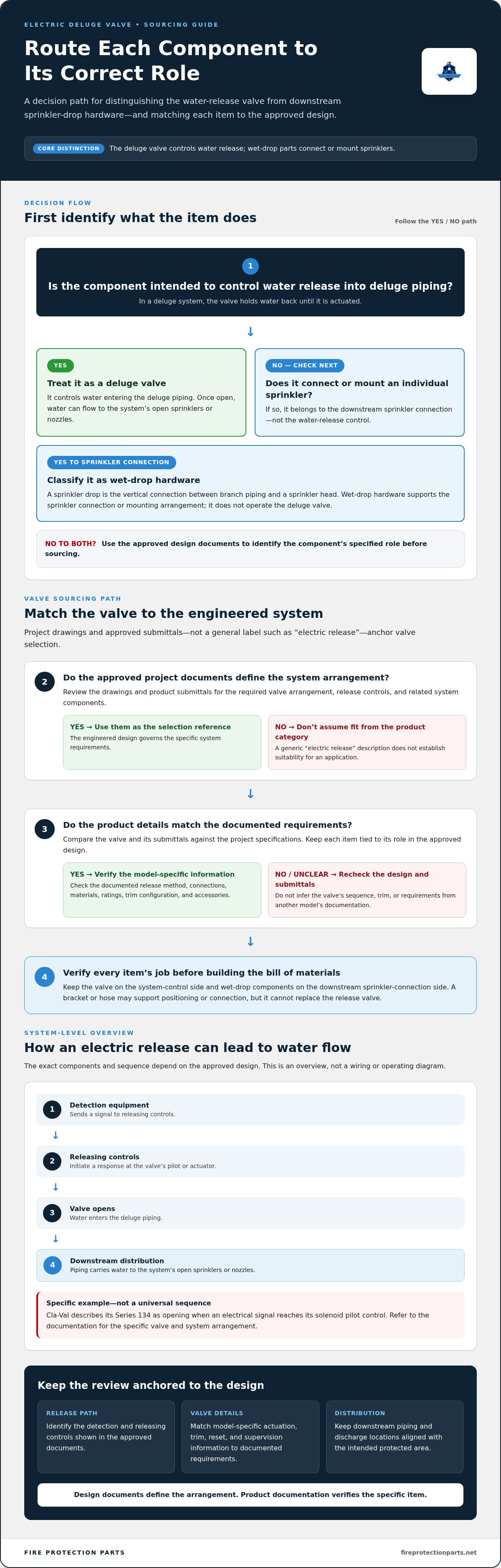
In a typical electric-release arrangement, a detection system sends a signal to releasing controls. Those controls may operate an electrical component in the valve’s release trim, allowing the main valve to open and water to enter the deluge piping. The exact components and sequence depend on the approved design, so use this as a system-level overview rather than a universal operating description.
Cla-Val describes its Series 134 as opening when an electrical signal reaches its solenoid pilot control. This example shows how a solenoid-pilot arrangement can connect electrical release to mechanical water control. It does not define the controls, trim, or sequence for every electric deluge valve. Refer to the documentation for the specific valve and system arrangement when reviewing those details.
Deluge valve versus wet sprinkler drop
A sprinkler drop is the vertical connection between branch piping and a sprinkler head. Wet-drop hardware supports the sprinkler connection or mounting arrangement. It does not detect a fire, operate releasing controls, or control the main flow of water into deluge piping.
Keep this distinction clear when building a bill of materials. The deluge valve belongs to the system-control side; a drop belongs to the downstream sprinkler connection. A bracket or hose may support positioning or connection, but it cannot replace the release valve. Choose each component for its documented role in the engineered design, then compare its specifications with the relevant system documents. This helps catch category mismatches before sourcing begins.
How Electric Deluge Valve Release and System Requirements Work
Electric release uses an electrical signal to initiate a designed sequence that opens a deluge valve and admits water to the system piping. This is an overview, not a wiring or operating diagram. Detection equipment, releasing controls, valve trim, and downstream distribution work together, but their exact arrangement depends on the approved system design.
What happens when the release signal is received?
At a high level, detection equipment sends a signal to releasing controls. Those controls initiate a response at the valve’s pilot or actuator, and the valve opens to admit water into the piping. Cla-Val describes its Series 134 as using an electrical signal to a solenoid pilot control. That is one specific example, not a template for every electric-release system.
For the selected model, use its technical documentation to establish the actual sequence, reset procedure, and supervision details. Do not infer them from the phrase “electric release” or apply one manufacturer’s instructions to another valve.
Why system design and application govern selection
The hazard and system layout shape the required arrangement. Design documents define relevant flow requirements, piping distribution, and discharge locations. Qualified design and installation professionals establish system-specific requirements. Buyers should use those project specifications rather than selecting a valve size, pressure rating, or trim configuration on their own.
Use the project’s approved drawings and submittals as the selection reference. The NFPA 13 Standard for the Installation of Sprinkler Systems is a relevant standard for sprinkler-system installation guidance. The applicable design documents still govern the specific system arrangement and requirements.
Review how the valve’s documented operating details relate to the rest of the system. Water entering the valve outlet is only one part of the intended response. Piping routes, open sprinklers or nozzles, and discharge locations determine how water reaches the protected area. These downstream arrangements are application-specific, so evaluate the valve as part of the design rather than in isolation.
Use this practical review sequence:
- Trace the release path. Identify the detection and releasing controls shown in the approved documents, then follow how their signal initiates valve operation.
- Match the valve documentation. Compare model-specific actuation, trim, reset, and supervision information with the design requirements.
- Keep distribution in view. Confirm that the specified downstream piping and discharge arrangement align with the intended protected area.
This sequence separates the valve’s mechanical water-control role from the control equipment that initiates release. It also prevents assumptions based on a generic label from turning into purchasing decisions. For sprinkler connections shown downstream, wet-drop sprinkler components are a separate product category from the release valve.
Electric Deluge Valve Buying Checklist: What to Compare
Begin with the project documents, not a product label. The approved design defines the application, valve arrangement, required ratings, and submittals needed for review. Use it as the baseline for comparing products. If a catalog description appears to match but its supporting details do not, pause and resolve the gap instead of filling it with assumptions.
Record each requirement alongside the value shown in the product documents, its source, and its review status. This makes differences visible and gives the design team a clear record to resolve.
Requirement: Application and valve arrangement. Documented value: Project-specific description. Source: Approved drawings or submittal. Approval status: Matched, open, or unresolved.
Requirement: Size, pressure, and connections. Documented value: Values stated for the exact model. Source: Product data sheet and project documents. Approval status: Matched, open, or unresolved.
Requirement: Release method, materials, trim, and accessories. Documented value: Model-specific details. Source: Manufacturer documentation. Approval status: Matched, open, or unresolved.
Requirement: Listing or approval. Documented value: Product-specific status and intended application. Source: Applicable approval record. Approval status: Verified, open, or unresolved.
Which specifications should buyers document?
Record the required size, pressure, connection type, materials, and configuration exactly as stated in the project documents. Compare those requirements with the manufacturer’s data for the specific model. Similar model names do not guarantee identical specifications.
Also establish whether releasing devices, trim, and controls are included or specified separately. Product configurations can differ, so verify the contents and arrangement in the relevant documentation. If a required value is missing or two documents conflict, flag the issue for resolution through the project’s design process before procurement.
How to compare approvals and product documentation
Match any listing or approval evidence to the exact product and its intended application. A manufacturer’s data sheet, installation instructions, and product-specific approval records serve different purposes. Review them together rather than relying on a single broad statement.
General NFPA guidance or a retailer’s statement about listed products does not establish a specific model’s approval status. Review the individual item’s marks and supporting records. For the PTR Electric Deluge VXD, as for any specified valve, use applicable product documentation for actuation details, ratings, trim, and listing information.
Keep related components in their proper categories. A sprinkler drop may support a sprinkler connection, but it cannot replace a specified control valve. Compare each item against its own role and requirements, then resolve every open entry before treating the selection as complete.
Avoid Confusing Deluge Valves with Wet-Drop Components
These parts occupy different positions and serve different functions in a sprinkler layout. An electric deluge valve controls water admission into the system. A wet drop connects branch piping to a sprinkler head and supports its connection or mounting arrangement. Treating them as interchangeable can leave a bill of materials with the wrong component for the job.
Use the approved layout to identify each item’s location and purpose. This guide to sprinkler system components can also help distinguish the categories involved in sourcing a system.
| Component | Position and function | What it does not do |
|---|---|---|
| Deluge valve | System-control point that admits water into deluge piping when actuated. | It does not position or connect an individual sprinkler head. |
| Wet-drop bracket | Mounting hardware used as part of a sprinkler arrangement. | It does not control release from the deluge valve. |
| Wet-drop hose or drop connection | Connection component between piping and a sprinkler, as defined by the product and design. | It does not replace a control valve or its release arrangement. |
When a wet-drop bracket or hose may be relevant
Wet-drop products are relevant when the project calls for sprinkler mounting or connection hardware downstream of the control valve. A bracket, flexible hose, or drop nipple hose may appear in the parts schedule, but the approved layout and product documentation define its exact role and required details.
Compare dimensions, connection details, and hose variants against the specifications for the exact product. Do not infer fit or compatibility from a similar name or appearance. Keep code and application claims tied to the documentation for the specific item.
Common sourcing mistakes to prevent
A familiar category name is not a complete specification. Before ordering, match the item to the project’s stated dimensions and connection details. If the documents do not align, resolve the discrepancy through the project’s design process rather than assuming a substitute will fit.
- Do not mistake a bracket, flexible hose, or drop nipple hose for a deluge valve.
- Do not infer suitability for cold, high-pressure, or specialized applications from a generic product description.
- Do not treat a wet-drop connection as evidence that the sprinkler or valve arrangement is compatible.
Keep the boundary clear: valve requirements belong to the release-control design, while wet-drop requirements belong to the specified sprinkler connection or mounting arrangement. For components in that second category, browse wet-drop sprinkler components and match each item to its documented role in the project.
How to Source the Right Valve and Related Wet-Drop Parts
Keep valve procurement and sprinkler-drop sourcing as separate tasks within one coordinated order. The electric deluge valve must match the engineered system and its product documentation. Wet-drop parts serve a different role: they provide mounting or connection options for sprinklers shown in the layout. Fire Protection Parts offers the PTR Electric Deluge VXD. Use its product documentation for operating details and ratings rather than inferring them from its name.
Use this sequence to keep each purchase tied to the project:
- Confirm the design. Review the approved project documents to identify the specified valve arrangement and the sprinkler connections or mounting hardware required downstream.
- Match documented specifications. Compare each product with its relevant project requirements and manufacturer documentation. Keep valve ratings and configuration separate from drop dimensions and connection details.
- Verify each item. Check exact product information, including configuration and any applicable product-specific approvals. Resolve missing or conflicting details through the project’s design process.
- Source components by function. List the valve, release controls, piping, drops, and brackets as distinct procurement lines. This makes substitutions and omissions easier to spot.
Standout Wet Drop collection products to compare
For mounting options, compare the FH120 Rapid Installation Bracket in its listed 24 in. and 48 in. variants, and the Adjustable Open Bracket T3 in its listed 16 in., 24 in., 30 in., and 48 in. variants. Match the selected variant to the project documents and its product listing. A similar bracket size does not necessarily suit the same layout.
For connection options, review the Flexhead Tall Hose by its listed lengths and 1/2 in. or 3/4 in. variants. The FlexHead Elbow Hose is another option to compare, with its exact variant shown in the listing. These are sprinkler mounting and connection components, not control valves. Base fit and intended use on the documentation for each specific item.
A practical final sourcing sequence
Before finalizing the order, check each line against the project documents and the manufacturer’s specifications. Confirm that valve documentation supports the specified valve, while each drop or bracket matches the sprinkler connection or mounting requirement. Do not merge the categories simply because the parts appear together in a system schedule.
For broader context on organizing component purchases, the guide to fire protection parts and hardware for system repairs offers a related sourcing perspective.
Once the valve is specified separately, browse Wet Drop mounting and connection components to compare relevant sprinkler hardware against the project’s documented requirements.
Put Your Sourcing Plan into Action
Turn the approved design into a procurement record that remains useful through review and ordering. Keep the valve’s product documents with its own line item, and record the selected sprinkler mounting or connection parts separately. This makes substitutions easier to evaluate and helps prevent a downstream component from being mistaken for a control device.
Fire Protection Parts serves professional buyers sourcing fire-protection components, including the PTR Electric Deluge VXD. Use the valve’s product documentation for its specifications, and treat Wet Drop bracket and flexible-hose products as separate mounting and connection choices. This distinction gives your team a clearer basis for reviewing each item against the project requirements.
Ready to source the sprinkler-side components as a separate part of the package? Browse Wet Drop sprinkler mounting and connection components. Document each electric deluge valve and downstream part for its intended role to keep the sourcing process organized.
Frequently Asked Questions
What is an electric deluge valve?
An electric deluge valve is a fire-protection control valve that admits water into deluge piping after an electrical release sequence. Its job differs from a sprinkler head’s: the valve controls water entering the system, while the heads or nozzles are discharge points. Treat the valve as one part of a designed arrangement, not as a standalone replacement for other system components.
How does an electric deluge valve open?
Typically, detection equipment sends a signal to releasing controls, which initiate a response at the valve’s release mechanism. The valve then opens and allows water into the connected piping. The exact components and order of operation depend on the approved design. Check the model’s documentation for its operating sequence, reset method, and supervision details rather than assuming these are the same across valves.
What is the difference between an electric deluge valve and a preaction valve?
Both valve types control water entering piping, but the downstream discharge arrangement differs. Deluge systems use open nozzles, so opening the valve can send water through the zone’s open outlets. Preaction systems use closed sprinklers that still need to operate individually after the valve opens. The actual controls and sequence depend on the system design, so identify the specified system type before sourcing a valve.
Can a wet sprinkler drop replace an electric deluge valve?
No. A wet sprinkler drop is connection or mounting hardware for a sprinkler, not a water-control valve. A flexible hose or bracket may form part of a sprinkler’s connection arrangement, but it cannot initiate release or control water entering deluge piping. Keep drops and valves on separate procurement lines, and match each item to its function in the project documents.
What information do I need before selecting an electric deluge valve?
Start with the project’s approved design documents and identify the intended application, valve arrangement, required ratings, and connection details. Also gather specifications for materials, release method, trim, and any separate controls or accessories. The model’s data sheet and installation documents should support comparison. If a required value is missing or conflicts with another project document, resolve it through the design process before ordering.
Are electric deluge valves UL Listed and FM Approved?
Fire Protection Parts offers fire-protection components that are UL Listed and FM Approved. For an electric deluge valve, review the exact product documentation and approval records to identify its applicable listing and intended application. Match those records to the project requirements rather than assuming that every model or configuration has the same status.
What parts are included in a Wet Drop collection?
The Wet Drop collection includes sprinkler mounting and connection components, including bracket and flexible-hose products. These parts serve the sprinkler-side arrangement, not the deluge valve’s release function. Use each product listing to compare dimensions, connection information, and variants with the project requirements. Do not assume that a particular part is included with a valve.
Does Fire Protection Parts install electric deluge valves?
Fire Protection Parts sells fire-protection components, including the PTR Electric Deluge VXD, and does not provide on-site installation. Installation services are arranged separately between the customer and the recommended installation partner, Fire & Life Safety Consultants. Fire Protection Parts facilitates that connection. Use the valve’s product documentation for its specified components and requirements, and keep equipment sourcing distinct from installation work.

