

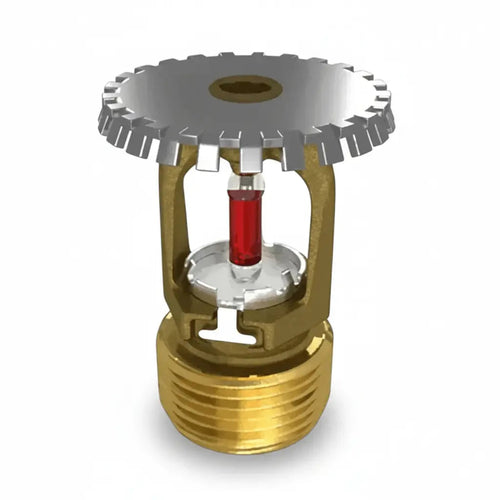


Fire protection system for hazardous materials storage: choose suppression
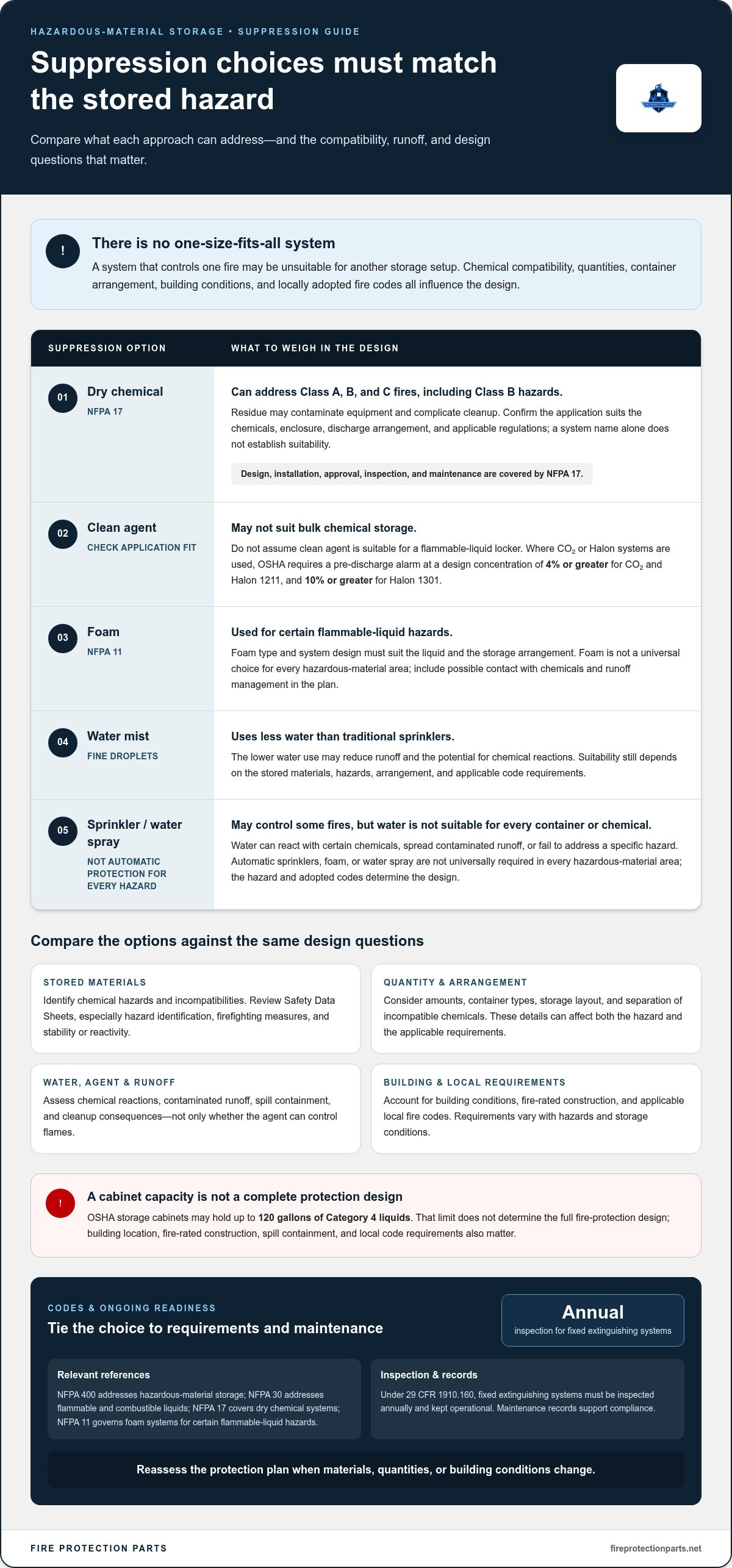
The obvious choice isn’t always the right one: clean agent isn’t automatically suitable for a flammable-liquid locker. A fire protection system for hazardous materials storage should match the stored materials and applicable codes. Dry chemical can be effective against Class B fires, while clean-agent systems may not suit bulk chemical storage. There is no single suppression rule for every locker; requirements depend on the hazards, quantities, and local fire codes.
A standard sprinkler or extinguisher may seem like straightforward protection, but chemicals can react with suppression agents or create hazardous runoff. The system must account for more than flames. Stored materials, the storage setup, and building conditions all matter.
This guide explains how to compare dry chemical, clean agent, foam, water mist, and sprinkler protection, and outlines relevant U.S. requirements. It also covers how flammable and reactive materials shape fire risk, and how detection, system actuation, ventilation, and interlocks contribute to a safer storage plan.
Key Takeaways
- Match suppression to the chemicals, storage arrangement, and fire hazards, rather than choosing a system by default.
- Assess how sprinkler water or other suppression agents could interact with stored materials and affect spill containment.
- Review the applicable fire codes and hazardous-material requirements when planning storage protection.
- Coordinate detection, system actuation, and ventilation so the controls respond as a connected safety plan.
- Reassess fire protection when materials, quantities, or building conditions change.
1. Does a chemical storage locker legally require a fire suppression system?
There isn’t one national rule requiring suppression in every chemical storage locker. Requirements depend on the chemicals, quantities, building conditions, and applicable local fire codes. NFPA 400 addresses hazardous-material storage, including quantity limits and separation rules. OSHA’s 29 CFR 1910.106 addresses workplace storage of flammable and combustible liquids. These requirements help determine whether a locker needs a fixed system and what protection approach fits its hazards. A fire protection system for hazardous materials storage must reflect the actual storage conditions, not just the locker’s label.
Start with an accurate inventory. Record each chemical’s name, quantity, container type, and storage location. Review each Safety Data Sheet, focusing on hazard identification, firefighting measures, and stability or reactivity. This can reveal incompatible chemicals, flammable-liquid hazards, or agents that could cause a dangerous reaction. Update the inventory when materials or quantities change, since these changes can affect the fire-protection plan.
Match suppression to the identified hazard. NFPA 17 covers dry chemical extinguishing systems, including design, installation, approval, inspection, and maintenance. NFPA 11 governs foam systems used for certain flammable-liquid hazards. Foam type and system design must suit the liquid and storage arrangement. Dry chemical can address Class A, B, and C fires, but residue may contaminate equipment and complicate cleanup. Include those consequences in the response plan.
A pre-engineered dry chemical option, such as the MONARCH system, still needs a suitable design basis. Its intended application must align with the chemicals, enclosure, discharge arrangement, and applicable regulations. A system name alone doesn’t establish suitability for every locker. According to the Occupational Safety and Health Administration, CO2 and Halon 1211 systems require a pre-discharge alarm at a design concentration of 4 percent or greater. For Halon 1301 systems, the Occupational Safety and Health Administration requires that alarm at a design concentration of 10 percent or greater.
Storage limits and building construction also matter. OSHA storage cabinets may hold up to 120 gallons of Category 4 liquids, according to the Occupational Safety and Health Administration. That cabinet limit doesn’t determine the full fire-protection design. Building location, fire-rated construction, spill containment, and applicable local code requirements also affect the decision. A fire-rated chemical storage building can help limit fire spread, while containment planning addresses released liquids and suppression runoff.
Document the inventory, Safety Data Sheet findings, design basis, and maintenance needs. Revisit the records after inventory changes or building modifications. This information helps determine whether a fire protection system for hazardous materials storage is needed and which approach suits the locker. The decision should connect identified hazards with compatible suppression, building protection, and a workable response plan.
2. Can a standard water sprinkler protect hazmat storage containers?
A standard water sprinkler may control some fires, but it is not automatically suitable for every hazardous-material container. Water can react with certain chemicals, spread contaminated runoff, or fail to address a specific hazard. A compliant design starts with the chemical inventory, container arrangement, building conditions, and applicable fire codes.
In the United States, relevant requirements include NFPA 1, NFPA 30, NFPA 400, OSHA rules, and locally adopted fire codes. Environmental obligations can also involve the Resource Conservation and Recovery Act for hazardous waste and EPCRA reporting for hazardous chemicals. The International Fire Code applies where adopted locally, alongside state and local amendments.
NFPA 30 provides safeguards for storing, handling, and using flammable and combustible liquids. NFPA 400 addresses hazardous materials, including storage quantities and separation rules. The locally adopted International Fire Code can add enforceable provisions for hazardous-material storage. Together, these rules inform the protection concept, but the materials and storage configuration determine the relevant design.
Automatic sprinklers, foam, or water spray are not universally required in every hazardous-material area. Their use depends on the hazard class, quantity, container type, storage layout, and adopted code requirements. Foam suits certain flammable-liquid hazards when its type and design basis match the liquid. Water mist uses fine droplets and less water than traditional sprinklers, which may reduce runoff and the potential for chemical reactions.
Flammable liquids, gases, oxidizers, and toxic materials need protection matched to their distinct hazards. Separate incompatible chemicals and account for ignition sources, vapor release, temperature, and spill control. Permits and hazard assessments follow applicable local requirements and the facility’s materials and quantities. Fixed extinguishing systems must be inspected annually and kept operational under 29 CFR 1910.160; maintenance records support compliance.
After discharge, contain runoff and identify whether water, foam, or another extinguishing agent contacted hazardous chemicals. RCRA governs hazardous-waste management, so cleanup planning should address classification, collection, storage, and disposal of contaminated materials. Installation and maintenance costs depend on the system type, protected area, water supply, controls, inspections, and agent replacement. No single price applies to every design.
Determine the required system by documenting each material, its quantity, container, and storage location, then reviewing its Safety Data Sheet. Compare those hazards with NFPA 30, NFPA 400, OSHA rules, and local code provisions. Finally, evaluate suppression compatibility, runoff containment, building conditions, and inspection needs together before selecting protection.
3. Fire risks from flammable and reactive hazardous materials
Fire risk changes with the liquid’s flash point, the amount stored, and how containers are arranged. According to the Occupational Safety and Health Administration, flammable liquids have a flashpoint at or below 199.4 °F (93 °C). A facility should record each product’s identity, quantity, container type, and Safety Data Sheet details before choosing storage and protection measures.
Use the applicable liquid classification when planning storage. Class I flammable liquids have flash points below 100°F (37.8°C); Class II liquids have flash points between 100°F and 140°F (37.8°C and 60°C); Class III liquids have flash points above 140°F (60°C). These flash-point differences affect ignition risk and the fire-protection approach. Don’t confuse these classes with OSHA cabinet categories, which use separate labels.
NFPA 30 provides safeguards for storing, handling, and using flammable and combustible liquids. Apply its requirements to the actual application, including closed containers, dispensing areas, and hazardous-waste accumulation points. A waste container holding solvent-soaked materials presents a different exposure than sealed drums. Include the facility layout, ignition sources, ventilation, and spill containment in the storage plan.
Quantity, container type, and building layout influence the hazard together. More liquid can increase the potential fire load, while container materials and closures affect leakage and vapor release. A tightly arranged storage area can restrict access and change how heat or fire spreads. OSHA storage cabinets may hold up to 60 gallons of Category 1, 2, or 3 flammable liquids, according to the Occupational Safety and Health Administration.
An incompatible suppression agent can intensify a reaction, spread burning liquid, or create contaminated runoff. Water may be unsuitable for some reactive chemicals, while foam must match the flammable-liquid hazard and system design. Review each Safety Data Sheet’s firefighting measures and incompatibility information. Compare those details with the proposed suppression agent, discharge method, and secondary-containment plan.
Separate incompatible materials to reduce the risk of a dangerous reaction. Keep flammable liquids away from oxidizers and other incompatible chemicals, and maintain clear access to extinguishers and exit routes. Ventilation can limit vapor buildup, but it must suit the stored chemicals and facility design. For hazardous waste, identify potential ignition sources and plan for safe handling of released or contaminated materials.
Before changing storage, document the liquid classes, quantities, container types, and building arrangement. Reassess the fire-protection plan when inventory or dispensing activity changes. These steps help align NFPA 30 safeguards with the facility’s actual flammable-liquid and reactive-material risks.
4. Automatic detection, actuation, and ventilation interlocks
An engineered protection sequence connects detection, alarms, suppression, and ventilation controls. A detector identifies a developing hazard, the control panel evaluates the signal, and assigned devices respond. In a chemical storage room, the sequence should reflect the stored materials and selected suppression agent. A mismatch can delay response or trigger ventilation changes that worsen vapor movement.
Choose detection based on the hazard being monitored. Heat or smoke detection can support fire response, while gas or vapor detection can identify a developing release. Detector placement matters: airflow, shelving, containers, and room geometry affect whether a sensor detects a hazard. Document each detector’s purpose and the control-panel action it initiates.
Map each cause-and-effect step before the system operates. For example, a confirmed fire signal may activate an alarm, close selected dampers, and initiate suppression. A gas alarm may instead trigger a ventilation response without releasing a fire agent. The sequence must avoid conflicting commands, such as activating suppression while ventilation continues to carry the agent away.
Ventilation helps control vapor buildup, but it must suit the chemical and room design. Evaluate exhaust paths, replacement air, discharge locations, and how airflow could carry vapors toward ignition sources. For flammable-liquid storage, OSHA rules address electrical equipment in inside storage rooms, including Class I, Division 2 hazardous locations for certain categories. The area classification should inform equipment selection.
Explosion-proof ventilation and climate controls must match the classified area and stored materials. Select fans, motors, sensors, and control devices suited to the location’s electrical hazards. Temperature controls can help maintain conditions required for sensitive materials, but must not create ignition sources or interfere with alarms. Corrosive chemicals also affect equipment enclosures, wiring, and detector placement.
Explosion suppression serves a different purpose from ordinary fire suppression. A pressure-detection system can identify a rapid pressure increase and discharge an agent to limit escalation. It must be engineered for the process, enclosure, and hazard, rather than treated as a substitute for fire sprinklers or vapor control.
Test the full sequence during commissioning and after system changes. Verify detector signals, alarms, control-panel logic, damper positions, fan response, and suppression-release interfaces. Record expected and observed results. Inspections should also identify blocked airflow, damaged wiring, relocated containers, or changes to the chemical inventory that could undermine the engineered response.
Keep the response plan clear for staff. Label the purpose of alarms and interlocks, explain evacuation actions, and train employees on what not to reset or override. A reliable design makes each transition clear: detection signals the hazard, controls manage ventilation, and suppression activates only according to the approved sequence.
5. Fire risks in hazardous-material storage
A fire can start before flames reach stored chemicals. A leaking container may release flammable vapor, while a nearby ignition source can turn that vapor into a fast-moving fire. Map the full sequence: release, vapor movement, ignition, fire growth, and potential exposure to adjacent materials. This risk path helps shape suppression, containment, and emergency procedures.
NFPA 30 identifies safeguards for flammable and combustible liquids, while NFPA 400 addresses hazardous-material storage quantities and separation. Use those frameworks to assess the actual layout, not just the room’s contents. For example, dispensing solvent beside stored oxidizers creates different concerns from sealed, separated containers. Keep incompatible materials apart to reduce the chance of a dangerous chemical reaction.
Pay attention to factors that can intensify or spread a fire. Vapor buildup, damaged packaging, poor housekeeping, and ignition sources can turn a small release into a larger incident. An automatic system may detect heat or smoke and trigger an alarm or suppression sequence. Its effectiveness depends on suitable detection, coverage, and an agent compatible with the stored hazard.
Suppression choices have trade-offs. NFPA 17 covers dry chemical systems, which can be effective against Class A, B, and C fires. Dry chemical residue can complicate cleanup and contaminate nearby equipment. Foam is used for certain flammable-liquid hazards when the foam type and design basis fit. Water mist uses fine droplets to cool fires, but chemical compatibility and runoff still matter.
Plan for the area around the storage as well as the containers. NFPA 1 includes rules related to flammable-material storage and requires orderly storage that doesn’t interfere with sprinkler locations. Keep exits clear, avoid blocking detection or discharge paths, and consider how spill containment will handle suppression runoff. Isolation valves can help prevent flames from spreading to connected equipment.
Emergency readiness also depends on upkeep. Under 29 CFR 1910.160, fixed fire-extinguishing systems must be inspected annually and kept operational. Monthly visual checks can include cylinder gauges, seals, nozzle caps, discharge paths, and pull stations. After building modifications or inventory changes, review whether detection, suppression, and containment still match the hazard.
Turn this risk review into a written action plan: document chemicals and locations, identify ignition sources, confirm agent compatibility, and assign response steps. For relevant fire-protection components, explore fire protection system components as you plan the safeguards for your facility.
Fire Protection Parts: Viking Plastics CPVC Pipe for Fire Protection
Fire Protection Parts can help you source fire-protection components for your project’s selected system design. For sprinkler piping, consider Viking Plastics CPVC Pipe for Fire Protection. Residential Fire Pump Systems and Air Compressors for Sprinkler Systems address other system needs, while PTR Electric Deluge VXD is for deluge-system applications. The right components depend on the protection approach and project requirements.
Use your hazard assessment and system design to guide product selection. This keeps purchasing aligned with the intended fire-protection approach, rather than treating a component as a substitute for a complete design. Contact Fire Protection Parts to discuss the components relevant to your project.
Build the Next Step Into Your Protection Plan
Turn the hazard assessment into a clear purchasing brief. Record the intended application, system design requirements, and components needed to keep selections aligned as the project progresses. A fire protection system for hazardous materials storage depends on compatible components working within the overall design, not on a single product chosen in isolation.
Fire Protection Parts offers Viking Plastics CPVC Pipe for Fire Protection, Residential Fire Pump Systems, and PTR Electric Deluge VXD. These components serve different system applications, so use your project requirements to determine what belongs in your plan.
Keep the decision practical: define the system need, identify the relevant component category, and source products that fit the project. Explore fire protection products as you prepare your next step. With a well-defined plan, you can move forward with greater clarity and confidence.
Frequently Asked Questions
Is dry chemical or clean agent better for a flammable liquid locker?
Dry chemical is often more relevant to assess for a flammable-liquid fire than clean agent, which may not suit bulk chemical storage. The right choice depends on the liquid, enclosure, and system design. For example, consider whether dry chemical residue would create cleanup or equipment concerns. Compare the Safety Data Sheet’s firefighting guidance with the agent’s intended application before selecting a system.
Can a standard water sprinkler protect hazmat storage containers?
Sometimes, but a standard water sprinkler is not automatically appropriate for hazardous materials. Water can react with certain chemicals or carry contamination beyond the storage area. A facility storing water-reactive materials should consider compatibility and runoff containment in its protection design. Water mist uses less water than traditional sprinklers, but its suitability still depends on the chemical hazard and system design basis.
Does a chemical storage locker legally require a fire suppression system?
Not every locker has the same suppression requirement. Applicable local fire codes, stored materials, quantities, and building conditions shape the decision. NFPA 400 addresses hazardous-material storage, while OSHA’s 29 CFR 1910.106 addresses workplace storage of flammable and combustible liquids. For a specific locker, use its inventory and storage arrangement to determine which code provisions apply and what protection they require.
How often does a fixed system need inspection?
Under 29 CFR 1910.160, fixed fire-extinguishing systems must be inspected annually and kept in operating condition. Monthly visual checks can help identify issues between inspections, including damaged seals, obstructed nozzles, or blocked discharge paths. Keep a record of findings, corrective work, and system changes. After a building modification or inventory change, review whether the system still fits the hazards and layout.
Which fire suppression agents are compatible with different hazardous materials and chemical classes?
Compatibility depends on the specific chemical and fire scenario, not just its broad class. Dry chemical can be effective against Class A, B, and C fires; foam is used for certain flammable-liquid hazards when its type and design suit the liquid. Water mist cools with fine droplets, while clean agents may not suit bulk chemical storage. Review each Safety Data Sheet’s firefighting guidance and incompatibilities.
What fire detection, alarm, ventilation, and spill containment systems are required for hazardous materials storage?
There is no single package of controls for every storage area. Chemical hazards, room layout, and suppression method determine suitable detection, alarms, ventilation interlocks, and containment. For example, a flammable-vapor alarm may need a defined response coordinating exhaust and suppression controls. Plan containment for both chemical releases and suppression runoff, and document how staff should respond to alarms or system activation.
How do local fire codes and authority having jurisdiction requirements vary by location?
Requirements vary with locally adopted fire codes and amendments, as well as the materials, quantities, storage configuration, and building conditions. Review applicable local provisions when planning protection.

