



Fire Protection System for Solar Panel Manufacturing: Codes
A fire protection system for solar panel manufacturing must account for both the facility and any photovoltaic (PV) systems on site. In the United States, the core framework includes the National Electrical Code (NEC), including Articles 690 and 705, the International Fire Code (IFC), including Section 1205, and applicable local building codes.
That code framework is only the starting point. Electrical faults, hot work, production equipment, and energy storage create distinct fire hazards, so protection should reflect how the facility operates and where risks arise.
This guide explains which codes apply, how detection and monitoring can help flag developing problems, and what suppression technologies contribute when a fire starts. It also clarifies how electrical safety requirements inform practical protection decisions, helping facility teams identify relevant standards and components before planning or upgrading fire protection.
Key Takeaways
- Map electrical, fire, and local building requirements to the facility’s PV equipment and energy storage; the National Fire Protection Association identifies its 2023 edition of NFPA 855 for stationary energy storage systems.
- Plan detection and monitoring around the facility’s equipment, processes, and potential fault locations so developing hazards can be identified and acted on.
- Match suppression and extinguishing measures to the fire risks and equipment in each area, including hazardous chemical and flammable gas storage.
- When selecting fire protection piping components, consider Fire Protection Parts CPVC Pipe for Fire Protection as part of a system designed for the facility’s needs.
Applicable electrical, fire, and local building codes
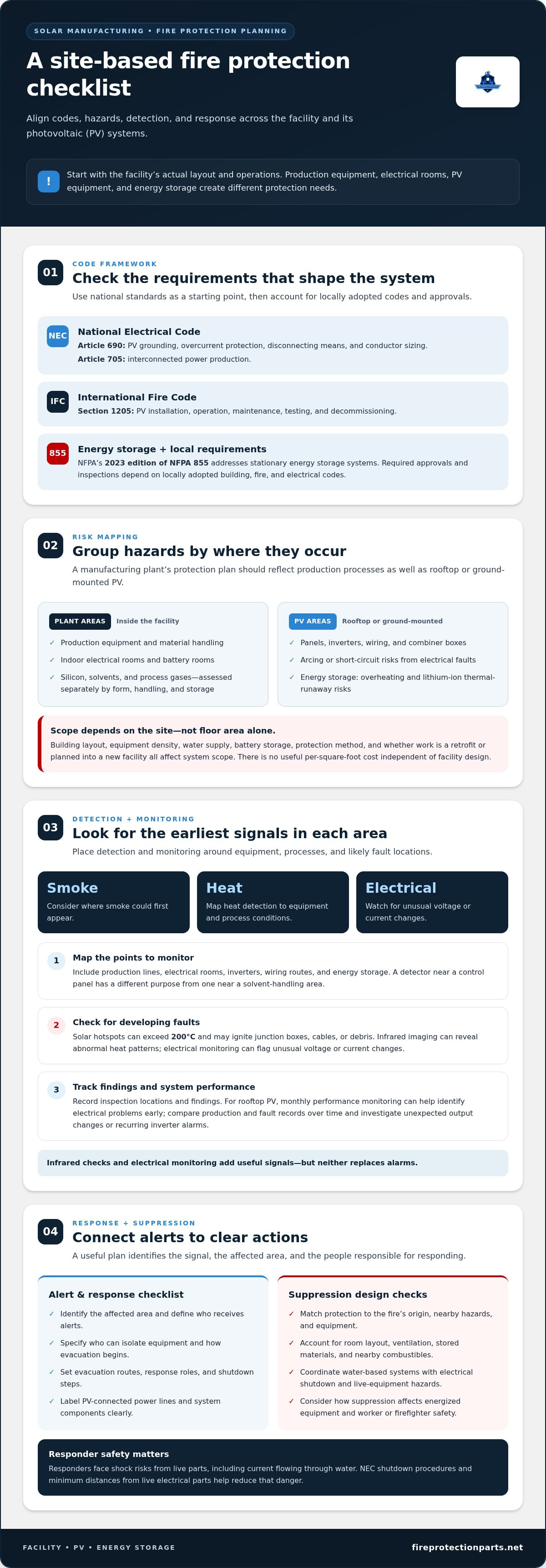
In the United States, rooftop photovoltaic (PV) work must align with the National Electrical Code (NEC), International Fire Code (IFC), and local building codes. NEC Article 690 covers PV grounding, overcurrent protection, disconnecting means, and conductor sizing. Article 705 addresses interconnected power production. IFC Section 1205 covers PV installation, operation, maintenance, testing, and decommissioning. According to the National Fire Protection Association, the 2023 edition of NFPA 855 addresses stationary energy storage systems.
Manufacturing plants combine production equipment, material handling, indoor electrical rooms, and storage areas. Solar farms focus more on outdoor arrays, inverters, wiring, and combiner boxes. A plant’s fire protection plan therefore considers production processes alongside rooftop or ground-mounted PV. Required approvals and inspections depend on locally adopted building, fire, and electrical codes. Commissioning and testing can be part of a PV system’s lifecycle.
There is no useful per-square-foot cost independent of a facility’s design. Building layout, equipment density, water supply, battery storage, and the protection method all affect system scope. Retrofit work can also differ from protection planned into a new facility. Floor area alone does not describe the hazards or system requirements.
Manufacturing hazards depend on materials and processes. Silicon, solvents, and process gases should be assessed separately based on their form, handling, and storage. Electrical faults in PV panels, inverters, wiring, or combiner boxes can cause arcing or short circuits. Lithium-ion energy storage introduces overheating and thermal-runaway risks. Battery and electrical rooms need protection matched to their equipment and hazards, including consideration of how suppression affects energized equipment.
Infrared checks can help detect hotspots, while electrical monitoring can help identify developing faults. Solar hotspots can exceed 200°C and may ignite junction boxes, cables, or debris. Emergency plans should set evacuation routes, assign response roles, and identify shutdown steps. Clear building labels should mark PV-connected power lines and system components. Responders face shock risks from live parts, including current flowing through water; NEC shutdown procedures and minimum distances from live electrical parts help reduce that danger.
Fire detection and monitoring systems
A fire protection system for solar panel manufacturing needs detection tailored to the facility’s processes and equipment. Map production lines, electrical rooms, inverters, wiring routes, and energy storage. Then identify where smoke, heat, or electrical anomalies could first appear. A detector near a control panel serves a different purpose from one near a solvent-handling area. These measures support renewable energy production while protecting workers, buildings, and equipment.
Solar hotspots can exceed 200°C and may ignite junction boxes, cables, or accumulated debris. Infrared imaging can reveal abnormal heat patterns during equipment checks, while electrical monitoring can flag unusual voltage or current changes. Neither method replaces alarms. Instead, they add useful signals that help teams recognize a developing fault and respond before fire can spread. Recording inspection locations and findings makes changes easier to track.
Monitoring should connect clear indicators to clear actions. For example, a temperature alert near an inverter should identify the affected area and explain how staff should report it. A fire protection system for solar panel manufacturing should distinguish fire signals from equipment faults, giving operators useful information to share with responders. Plant procedures should specify who receives alerts, who can isolate equipment, and how evacuation begins. Clear roles reduce confusion during an incident.
For rooftop PV, monthly monitoring of system performance can help identify electrical problems early. Compare production and fault records over time, and investigate unexpected changes in output or recurring inverter alarms. Ground-mounted arrays also need organized wiring and equipment records, especially where multiple circuits serve separate buildings. National and local requirements inform system design, but sensor placement must also reflect the site’s layout and operating hazards. A fire protection system for solar panel manufacturing should link sensors, monitoring, alarms, and response procedures. For related planning, explore fire protection components.
Fire suppression and extinguishing technologies
Suppression should address the fire’s origin, nearby hazards, and equipment that must remain safe. In a manufacturing plant, an electrical cabinet, production line, and battery room each present different conditions. A suppression system can trip live equipment offline to extinguish a fire at its origin and help prevent spread. Isolation and alarm protocols should specify what shuts down and who responds.
Water-based systems can control fires in suitable areas, but energized electrical equipment requires careful coordination. Discharge must not expose workers or firefighters to electrical hazards. Design should account for shutdown procedures, access routes, and the effects of water reaching sensitive components. Suppression measures should also reflect stored materials, room layout, ventilation, and the potential for fire to ignite nearby combustibles.
Cleanrooms, production lines, and high-bay warehouses need protection suited to their distinct layouts. Cleanroom design must consider airflow and sensitive processes; production-line protection should account for machinery and materials; warehouse measures should address storage arrangements and responder access. In each area, select detection, suppression, and shutdown protocols that limit fire growth without creating avoidable hazards.
Good installation planning coordinates suppression equipment with structural features, utilities, and production operations. Keep control points accessible and identify how alarms reach staff. The facility’s emergency plan should explain evacuation, equipment isolation, and when workers must leave intervention to firefighters. Regular system checks can reveal blocked discharge paths, damaged components, or room-use changes that affect protection.
PV-related fires present an added challenge: firefighters may encounter live electrical parts even after arriving on scene. Clear labels, accessible disconnects, and established shutdown protocols help responders understand the system. Protection measures should also account for the possibility that an electrical fault continues to energize equipment before isolation. Coordinating suppression with detection, electrical shutdown, and evacuation helps limit exposure and support a controlled response.
What fire protection requirements apply to hazardous chemical and flammable gas storage in solar manufacturing?
Solar manufacturing can involve solvents, process gases, cleaning agents, and battery materials, each creating a different fire scenario. A flammable liquid spill can form vapors near ignition sources, while leaking gas can accumulate where ventilation is poor. Start with a current inventory identifying each material, its location, container, and process use. Safety data sheets help teams understand the hazards and handling conditions of specific products.
Storage planning should separate incompatible materials and protect containers from damage during routine handling. For example, keep forklift routes clear of gas-cylinder storage and locate solvent containers away from hot work. Use ventilation and leak detection suited to the material and room conditions. Mark storage areas clearly, and keep exits, alarms, and isolation controls unobstructed. These measures help staff identify a release and limit exposure before it escalates.
Suppression choices must reflect the fuel and equipment involved. A water-based system may suit surrounding building hazards, but may not control every chemical or gas fire. Match the method to the materials, electrical equipment, room design, and likely release conditions. Coordinate alarms with ventilation and process shutdowns so the response does not unintentionally spread vapors or feed a fire. Keep emergency procedures clear for operators and responders.
Applicable permits, storage limits, separation distances, and inspection duties depend on the materials, quantities, building design, and locally adopted fire and building codes. A plant using solvents in production may face different code considerations from one storing compressed process gases. Include the hazard inventory in design reviews, then document storage changes, maintenance, and staff training. Reassess protection when processes or chemical inventories change. Clear records help teams explain the basis for storage, detection, suppression, and emergency procedures.
Fire Protection Parts: Viking Plastics CPVC Pipe for Fire Protection
Fire Protection Parts is a practical source for piping components when your fire protection design calls for them. Its Viking Plastics CPVC Pipe for Fire Protection offering can support planning for sprinkler piping, alongside components such as the PTR Electric Deluge VXD and ASC Seismic Bracing. Match each component to the system design, facility conditions, and applicable code requirements. Product selection supports a broader protection plan; it does not replace engineering, installation, or required approvals.
Use the facility’s hazard assessment and system plans to identify where piping components fit, including areas affected by production conditions or storage needs. For product information related to your project, visit Fire Protection Parts.
Turn Your Protection Plan Into the Next Project Step
A fire protection system for solar panel manufacturing should evolve with the facility. As production lines, stored materials, or building layouts change, revisit how the protection plan fits current operations. Bring the design basis, equipment schedule, and hazard inventory together before selecting components. This ties procurement to the project’s actual requirements rather than isolated product choices.
Fire Protection Parts offers Viking Plastics CPVC Pipe for Fire Protection, Residential Fire Pump Systems, and the PTR Electric Deluge VXD. These products can support component planning when they match the system design and facility needs. Reviewing requirements and selecting components as part of a coordinated plan helps teams move from code research toward an actionable project plan.
For a next step, contact Fire Protection Parts to discuss fire protection components for your project. A clear plan puts your facility in a stronger position to protect people, equipment, and production as operations move forward.
Frequently Asked Questions
What fire protection codes and standards apply to solar panel manufacturing facilities in the United States?
Key references include NFPA 70, also called the National Electrical Code, NEC Articles 690 and 705, International Fire Code Section 1205, and locally adopted building codes. For facilities with stationary energy storage, the National Fire Protection Association identifies its 2023 edition of NFPA 855. Together, these references cover PV electrical design, interconnected power production, fire safety, and storage-related planning.
What sprinkler and suppression systems are suitable for solar cell production areas and chemical storage?
Suitability depends on the materials, equipment, room layout, and likely fire scenario. A sprinkler system may protect general production areas, while sensitive equipment or specific chemical hazards may need a separate suppression approach. For example, a solvent storage area and an electrical control room present different risks. Coordinate the selected system with detection, shutdown procedures, and safe access for responding staff.
What fire risks and suppression considerations apply to lithium-ion battery storage at solar manufacturing facilities?
Lithium-ion batteries can overheat and experience thermal runaway, creating a fire risk that differs from ordinary equipment fires. NFPA 855’s 2023 edition addresses stationary energy storage systems, according to the National Fire Protection Association. A facility plan should account for battery location, detection, equipment isolation, and responder access. Keep storage records current so changes in battery type or configuration prompt a review of protection measures.

