

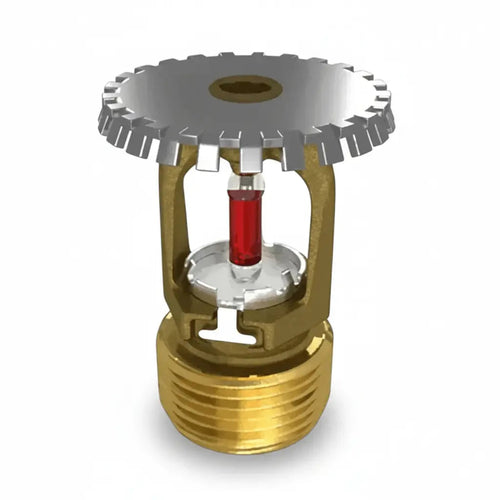


Fire protection system for welding areas: Clear combustibles
A fire protection system for welding areas starts with clearing combustibles at least 35 feet in all directions from the worksite, according to the Occupational Safety and Health Administration (OSHA). If materials can’t be moved, protect them with suitable fire-resistant covers or shielding, and cover nearby openings or cracks so sparks can’t pass into adjacent areas.
Keeping the area clear is a critical first step, but a safe hot-work setup also requires checking the floor, nearby surfaces, and the paths sparks could travel. Small gaps and hidden combustibles can turn routine welding into a fire hazard.
This guide explains how to manage combustible materials, prepare and inspect the work area, and understand relevant hot-work standards and extinguisher placement. Use these steps to reduce preventable hazards before welding begins and keep the worksite orderly throughout the job.
Key Takeaways
- Move combustible materials at least 35 feet in all directions from hot work, according to the Occupational Safety and Health Administration (OSHA), and address openings where sparks could travel.
- Plan for an accessible 10lb dry chemical extinguisher within the work area, and keep its location clear during welding.
- Assess whether fixed suppression suits the welding area by considering its layout, hazards, and existing fire protection.
- Installation costs depend on the system design and site conditions; understand these factors before planning a project and selecting components such as fire-protection CPVC pipe.
3. What NFPA standards cover fire protection for welding areas and hot work?
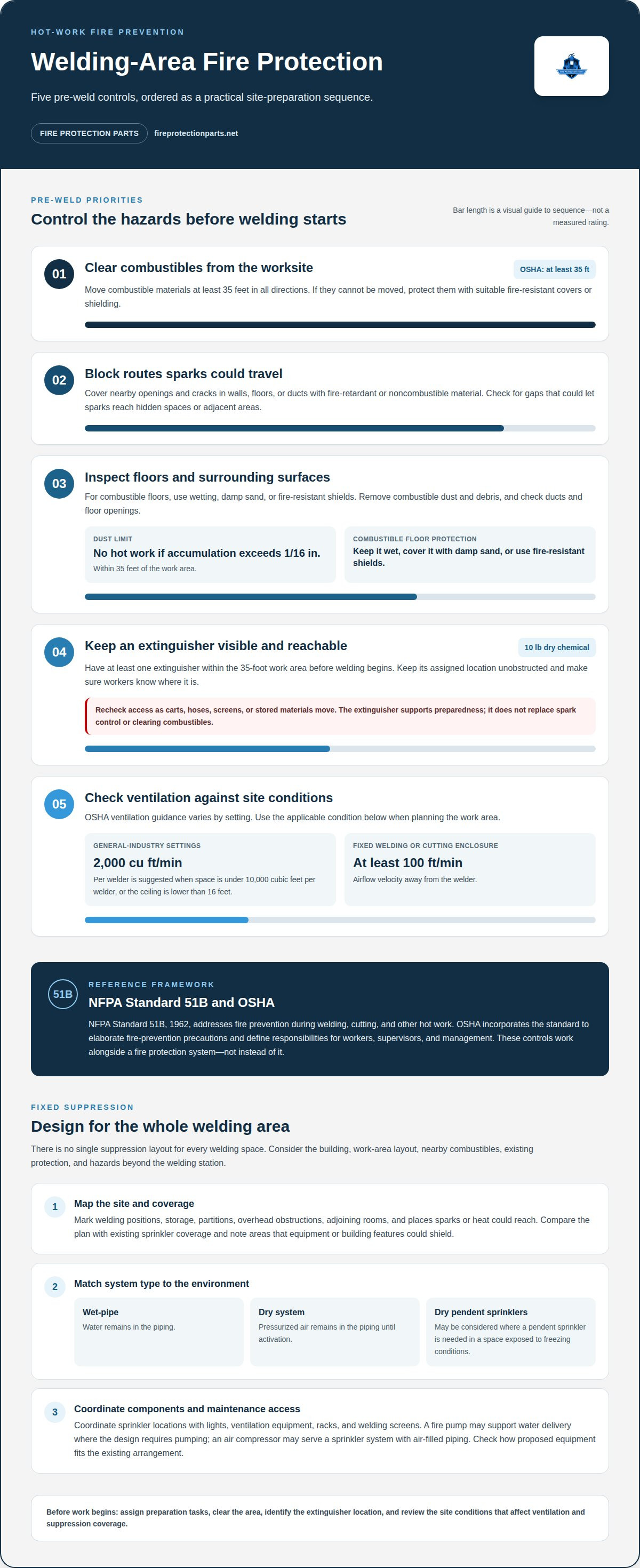
NFPA Standard 51B, 1962, addresses fire prevention during welding, cutting, and other hot work. OSHA incorporates this standard to elaborate basic and special fire-prevention precautions and define responsibilities for welders, cutters, supervisors, and management. That makes it a practical reference for assigning tasks before work begins. A fire protection system for welding areas works alongside those controls, not instead of them.
Start with the worksite. Combustible materials should be moved at least 35 feet in all directions from the worksite, according to the Occupational Safety and Health Administration (OSHA). If materials cannot be relocated, protect them with suitable fire-resistant covers or shielding. Cover openings and cracks in nearby walls, floors, or ducts with fire-retardant or noncombustible material. These barriers help stop sparks from reaching hidden spaces or adjacent areas.
Check the floor and surrounding surfaces before welding starts. Combustible floors used for welding or cutting should be kept wet, covered with damp sand, or protected by fire-resistant shields. Remove combustible dust and debris from the work area. Hot work is not allowed where dust accumulation exceeds 1/16 inch within 35 feet of the work area. Include ducts and floor openings in the check, since sparks can pass through gaps and ignite material out of sight.
Ventilation also belongs in the hot-work plan. In general-industry settings, mechanical ventilation at 2,000 cubic feet of air per minute per welder is suggested when there is less than 10,000 cubic feet of space per welder or the ceiling is lower than 16 feet, according to the Occupational Safety and Health Administration (OSHA). For a fixed welding or cutting enclosure, OSHA specifies airflow sufficient to maintain a velocity away from the welder of at least 100 linear feet per minute. Record the site conditions, assign each preparation task, and clear the area before work begins.
4. What fire extinguishers are suitable for welding areas, and where should they be placed?
A designated hot-work area should have access to at least one 10lb dry chemical fire extinguisher within the 35-foot work area. Keep it ready before welding begins, rather than bringing it in after work starts. This gives workers a known extinguisher location if a fire starts during welding or cutting.
Choose a visible, unobstructed location near the work area. Workers should be able to reach the extinguisher without moving equipment, stepping around stored materials, or entering the immediate hazard. Avoid placing it where welding screens, carts, hoses, or stacked supplies could hide or block access. A clearly marked location helps the crew find it quickly.
Before work begins, identify the extinguisher’s location during the hot-work briefing. Make sure workers know how to reach it and can recognize whether it is ready for use. Keep the route clear as the job progresses. For example, if a welding cart moves during the task, confirm it hasn’t blocked the extinguisher or made it difficult to approach.
Include the extinguisher in area-preparation checks. Confirm it remains in its assigned place, is visible, and has no obvious physical damage. Follow the equipment instructions and site procedures for use and maintenance. A portable extinguisher is one part of fire preparedness; it doesn’t replace clearing combustibles, controlling sparks, or preparing the surrounding area.
After welding stops, keep the extinguisher accessible while securing the work area. Sparks can reach nearby materials, including items behind screens or around equipment. A final walk-through can help workers spot developing hazards and keep the route to the extinguisher clear. Clear roles and accessible equipment make the response plan easier to follow under pressure.
4. What sprinkler or other fixed fire suppression systems are recommended for welding areas
There is no single suppression layout suited to every welding space. The right design depends on the building, work area, nearby combustibles, and hazards beyond the welding station. A sprinkler system may be part of the solution, but its coverage and components must fit the space it protects. Consider the welding bay and its surroundings as connected fire-protection zones, not isolated equipment locations.
Start with a site plan. Mark welding positions, storage areas, partitions, overhead obstructions, and adjoining rooms. Note where sparks or heat could reach materials outside the immediate work zone. Then compare the plan with existing sprinkler coverage and identify areas that equipment or building features could shield. This review helps determine whether the current arrangement suits the work layout or needs a design assessment.
System type matters. A wet-pipe sprinkler arrangement keeps water in its piping, while a dry system uses pressurized air in the piping until activation. Dry pendent sprinklers may be considered where a pendent sprinkler is needed in a space exposed to freezing conditions. Selection depends on the building’s environment and system design, not simply on the presence of welding. Coordinate sprinkler locations with lights, ventilation equipment, racks, and welding screens to avoid unintended obstructions.
Review supporting components as part of the same design decision. A fire pump system may support water delivery where the design requires pumping, while an air compressor may serve a sprinkler system with air-filled piping. Confirm how proposed equipment fits the existing arrangement before specifying components. Changes to a welding bay can affect coverage, piping routes, and future maintenance access. Fixed suppression complements controls such as clearing combustibles and keeping an extinguisher accessible; it does not replace preparation for each hot-work task.
When combustibles cannot practicably be relocated from welding or cutting work, OSHA requires protecting them with flameproofed covers or shielding them with metal or asbestos guards or curtains. This requirement provides an alternative to relocating combustibles and specifies how materials that remain must be protected during the work.
4. How much does it cost to install fire protection for a welding area?
Costs depend on the work area and the protection it needs. A welding bay with existing sprinkler coverage may require a different scope from a space needing new piping, additional sprinkler heads, or a revised water supply. System design, site layout, and building conditions shape the budget. Compare estimates for the same project scope so differences reflect actual work rather than missing components.
Begin by listing the equipment and conditions that affect the design. Record the welding area’s dimensions, ceiling and wall layout, existing sprinkler coverage, and nearby storage or production zones. Note whether the space is exposed to freezing conditions, as that can influence system choices. For example, a design using dry pendent sprinklers differs from one serving a conditioned interior. Accurate site details help prevent major scope changes later.
Next, divide the estimate into clear categories. Ask for details on design and engineering, piping and sprinkler components, water-supply equipment, installation labor, and work needed to adapt existing systems. Then identify exclusions, such as changes to surrounding areas or building infrastructure. A line-item breakdown makes it easier to see whether an estimate covers the complete welding zone or only selected components.
Existing infrastructure can affect the amount of new work. A system with a usable water supply and accessible piping may need fewer modifications than one requiring rerouting or additional equipment. Access matters too: ceiling obstructions, operating machinery, and restricted work zones can change the installation plan. Anti-freeze protection may be relevant in areas exposed to freezing conditions. Treat these factors as design inputs, not assumptions.
Before setting a budget, compare the proposed coverage with the welding area plan and confirm that the estimate describes the same scope. For a project involving piping, include fire-protection pipe components in the planning discussion. A clear scope helps connect the system design, selected components, and installation work without relying on a price figure detached from site conditions.
Fire Protection Parts: Viking Plastics CPVC Pipe for Fire Protection
Fire Protection Parts offers reliable CPVC pipe solutions for fire protection projects that include specialized plastic piping in the planned system. Select piping to match the system design and building needs; a material choice is not a substitute for a complete fire-protection plan. Consider how the pipe fits the intended sprinkler arrangement and other specified components. Projects requiring water-supply or system-support components may also call for Residential Fire Pump Systems or Air Compressors for Sprinkler Systems. Confirm component choices against the project design before procurement. Contact Fire Protection Parts to discuss fire-protection components for your project.
Make the next project decision with confidence
Before changing a welding area, bring the facility manager, fire-protection designer, and operations team into the same planning conversation. A shared plan connects daily work practices with the building’s fixed protection, helping prevent a moved workstation or new equipment from creating an overlooked gap. Treat each layout change as a reason to review how the space is used and how its protection supports that use.
A well-planned fire protection system for welding areas is designed around the actual worksite, not assumptions. Keep the design discussion focused on the building, operating conditions, and components that fit the project. This gives decision-makers a practical basis for coordinating procurement and moving the plan forward.
For help identifying fire-protection components for your project, contact Fire Protection Parts. A clear, coordinated next step can help your team approach the work with greater confidence.
Frequently Asked Questions
What fire protection systems are required for welding areas in the United States?
In the United States, OSHA incorporates NFPA Standard 51B, 1962, for hot-work fire-prevention precautions and role responsibilities. A designated hot-work area should have access to at least one 10lb dry chemical extinguisher within the work area. Coordinate portable equipment with the building’s fixed protection. For example, relocating a welding station beneath a ceiling obstruction can affect how existing sprinkler coverage serves that zone.
How should welding areas be separated from combustible materials and protected with welding curtains or blankets?
Move combustibles at least 35 feet in all directions from hot work. If relocation isn’t practical, protect them with flameproofed covers or shield them with metal guards or curtains. Before starting, identify combustible items that can be removed and those requiring shielding. Also look for nearby openings or cracks where sparks might pass into another area, and cover them with fire-retardant or noncombustible material.

