

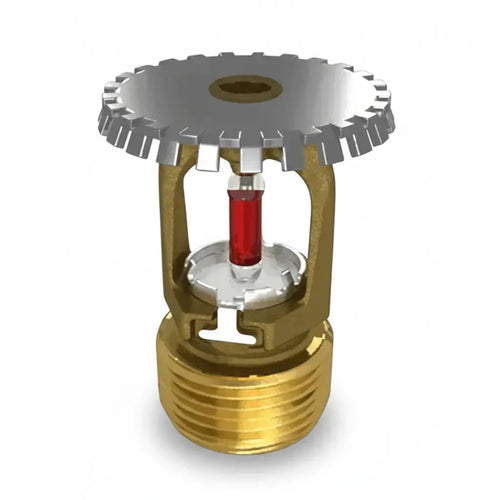


Fire Sprinkler Spare Head Cabinet Checklist: Avoid Common Code Violations
A fire sprinkler spare head cabinet can look stocked and still have a critical gap if its contents don’t match the sprinklers installed in the building. Don’t just count heads. Confirm that the spare types and required tools match the system and the requirements enforced locally.
If you’re unsure what belongs in the cabinet, or whether an older inventory is still accurate, check before relying on it. Requirements can depend on the adopted code edition and local direction, so general guidance may not answer what applies at your property.
Use this checklist to spot missing or mismatched items before an inspection or maintenance review. Compare the cabinet with system records, verify sprinkler and wrench compatibility, and take questions to a qualified fire-protection professional or your Authority Having Jurisdiction (AHJ). The aim is an inventory you can verify, not guesswork.
Key Takeaways
- Check that the fire sprinkler spare head cabinet contents match verified system records, including sprinkler type, orientation, and temperature rating.
- Confirm applicable requirements and any uncertainty about replacement tools with the responsible sprinkler professional or your AHJ.
- Check that the cabinet is clearly identified and accessible, and note missing labels, damage, obstructions, or signs that its contents have changed.
- Follow a consistent process: locate system records, inspect the contents, verify compatibility, document findings, and escalate unresolved gaps.
- Use this checklist as a readiness aid, not as a substitute for required inspections, maintenance, or professional judgment.
Fire sprinkler spare head cabinet checklist: what it is and why readiness matters
A cabinet can be present and labeled but still not be ready for use. Its value depends on whether the replacement sprinklers and applicable tools inside match the system they’re intended to support.
Cabinet readiness means verified, system-compatible replacement sprinklers and applicable tools are stored, identified, and available for use by qualified personnel. An empty cabinet or one with unverified contents doesn’t establish readiness. A Fire sprinkler system relies on sprinklers suited to its design. Check replacement components against reliable system information, not appearance alone.
Compatible spares and the correct tools can support timely maintenance when a sprinkler needs replacement. Requirements aren’t universal: the adopted code edition, system design, and AHJ direction can affect what’s required. Confirm what applies at the property before treating a general checklist as a compliance determination.
What belongs in a spare sprinkler head cabinet?
Start with system records and the sprinklers actually installed. Replacement heads should match relevant system details, such as type, orientation, and temperature rating. If records are missing, unclear, or inconsistent with the installed equipment, ask a qualified sprinkler professional to verify the inventory.
Check the tools as well. A sprinkler wrench may be specific to a manufacturer or sprinkler type, so don’t assume a similar-looking wrench is interchangeable. Verify the applicable tool against system documentation or with a qualified professional. Don’t assume a universal inventory quantity; check locally adopted requirements and AHJ direction.
Who should use this cabinet readiness checklist?
Facility managers can use the checklist to review records and identify questions before coordinating maintenance or an inspection. Contractors can compare installed sprinklers with system documentation and check replacement-part compatibility. Record uncertainty rather than guessing. A mismatch in type, rating, or tool calls for verification before ordering or relying on a spare.
This checklist supports professional review. It doesn’t replace required inspection, testing, or maintenance, and it doesn’t authorize unqualified personnel to replace sprinklers. Use it to organize known information, flag gaps, and direct code or system-design questions to the responsible sprinkler professional or AHJ.
Verify spare sprinkler heads and tools against the installed system
A spare head isn’t a reliable match just because it looks like the sprinkler on the ceiling. Similar-looking models can differ in ways that matter to system compatibility. Before counting a replacement as usable stock, compare it with system documentation and ask a qualified sprinkler professional to confirm uncertain details.
Choose replacements according to system specifications, and get professional verification when compatibility is uncertain. This matters especially when records are incomplete, sprinkler identification is hard to read, or a previous replacement may have changed the system’s configuration.
Match each spare head to documented system characteristics
Use installation records and verified identification details as your starting point. Compare each stored sprinkler with the documented equipment, checking type, orientation, temperature rating, and other relevant markings. For example, don’t assume a spare with a different orientation or temperature rating is suitable just because its shape looks similar.
- Record identifying details on the installed sprinklers and in available system documents.
- Compare those details with each spare, noting missing or conflicting information.
- Ask a qualified professional to resolve uncertainty before selecting a replacement.
Temperature rating is one detail to verify, not guess. For background on how ratings are described, see this guide to fire sprinkler head temperature ratings. Use the system’s verified specifications to decide whether a spare is compatible.
If you need to source a replacement, review sprinkler heads and system parts from Fire Protection Parts. Confirm compatibility with the installed system before ordering.
Check that the correct sprinkler wrench is available
A wrench that fits one sprinkler may not be suitable for another. Compatibility can depend on the sprinkler’s model and design, so check the manufacturer documentation and have a qualified professional verify the tool against the installed equipment.
Flag a wrench for review if it’s missing, damaged, or difficult to identify. Don’t substitute an improvised tool or assume a wrench is suitable based on appearance. A tool that doesn’t match can compromise the replacement process or damage the sprinkler. Keep the verification result with the system records so future cabinet reviews have a dependable reference.
Record which spares and tools were verified, which need follow-up, and who confirmed them. This makes open questions visible and helps prevent an uncertain item from being treated as an approved replacement.
Check cabinet location, condition, labeling, and access
Correct contents are useful only if responsible personnel can find and identify them. Include the cabinet’s location and physical condition in each readiness review. Compare its placement with system documentation, and check local requirements or AHJ direction before deciding whether the location or setup is acceptable.
Don’t assume there’s one mounting height, sign format, or cabinet design that applies everywhere. System documentation, locally adopted requirements, and AHJ direction determine what’s appropriate. If these sources don’t agree or don’t clearly address the cabinet, ask the responsible sprinkler professional or AHJ rather than relying on a general rule of thumb.
Keep cabinet access and identification clear
Check whether staff can find and reach the fire sprinkler spare head cabinet without moving stored items, equipment, or other obstructions. A cabinet hidden behind supplies or blocked by temporary storage may be difficult to access when needed. Confirm that its label clearly identifies its purpose to the building personnel responsible for system readiness.
- Confirm the cabinet is in the location shown in the system documentation, if specified.
- Check that it can be reached and opened without shifting nearby items.
- Look for missing, damaged, or unclear identification labels.
If the documented location is unclear, or you’re unsure whether the identification meets local expectations, record the question and raise it with the responsible professional or AHJ. Don’t assume a particular sign or placement is required. For facility personnel and property managers who also oversee physical security, mechanical room locks, or padlock hardware across their properties, Lockpick Pros provides helpful guides and equipment insights.
Inspect cabinet condition and protect stored components
Look for visible damage, moisture, contamination, or other conditions that could affect stored sprinklers or tools. Check for missing labels, disorganized contents, and signs that items have been moved or removed. Keep approved components identifiable, and flag anything whose identity or condition is uncertain for professional review.
A visual check can reveal issues that a head count won’t catch. For example, moisture inside the cabinet or a damaged package may warrant follow-up even if the expected items appear to be present. Don’t treat an unclear or potentially affected component as ready for use until it’s been assessed.
Document what you observe, including access problems, cabinet damage, missing identification, and disturbed contents. Route concerns through the building’s maintenance process and track them until reviewed. This creates a clear record for the next readiness check while leaving code interpretation and corrective-action decisions with the appropriate professional or AHJ.
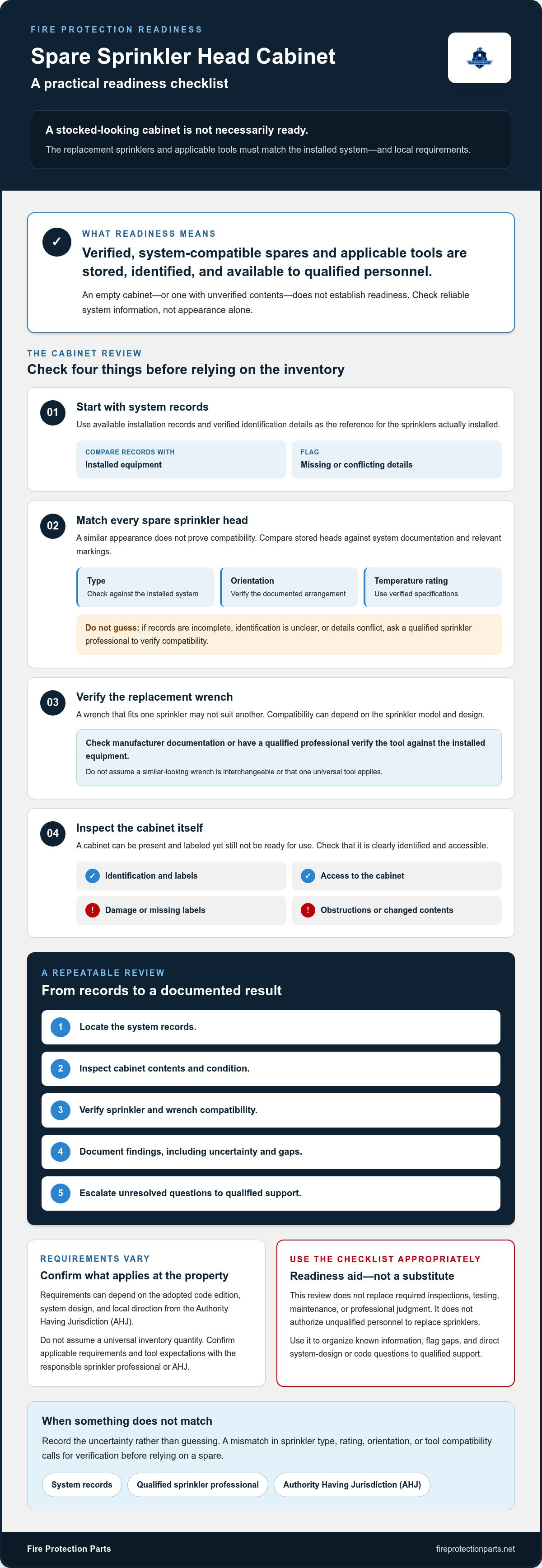
Use a repeatable checklist to document cabinet readiness
A repeatable review makes changes easier to spot and unresolved questions easier to hand off. Use the same sequence each time, comparing findings with current system records rather than relying on memory. This process helps organize a fire sprinkler spare head cabinet review, but doesn’t replace required inspections, testing, or maintenance.
Follow five checks without guessing at code requirements
- Locate the records. Gather system documentation and relevant inspection or maintenance records. Note whether they identify the installed sprinklers and the cabinet’s expected contents.
- Inspect the cabinet. Check that it’s identifiable, accessible, and in the documented location. Look for damage, moisture, missing labels, or disturbed contents.
- Compare contents. Record the sprinkler heads and tools present. Note anything missing, damaged, difficult to identify, or inconsistent with the records.
- Verify compatibility. Compare available identification details with verified information about the installed system. Refer uncertain sprinkler or tool matches to a qualified professional.
- Document and escalate. Record findings and direct questions about applicable requirements to the responsible sprinkler professional or Authority Having Jurisdiction (AHJ).
Don’t use this sequence to determine code requirements from a general rule of thumb. Applicable requirements can depend on the adopted code, system documentation, and AHJ direction. For broader context on components used in system repairs, see this guide to fire protection parts and hardware for system repairs.
Keep a useful record and close identified gaps
Make the review understandable to the next person. Following site procedures, record the reviewer, review date, cabinet location, observed gaps, and person responsible for follow-up. Be specific: “wrench identification needs professional verification” gives a clearer action than “check tools.”
Track open items through the building’s established maintenance process. Once a concern has been addressed, note what changed and have the responsible professional verify corrective work and any related documentation updates. If a requirement or replacement choice remains uncertain, keep it marked unresolved until the appropriate professional or AHJ provides direction.
For replacement components, review fire protection parts and system components, then confirm compatibility with the installed equipment and applicable requirements before ordering.
Resolve spare head cabinet gaps with qualified, code-aware support
Not every finding needs the same response. A label that needs updating may be a straightforward maintenance item under site procedures. A mismatch between cabinet contents and system records, uncertainty about the adopted code, or a question about replacement selection calls for qualified review. Separate observations from decisions: document what you found, then take technical questions to the responsible sprinkler professional or Authority Having Jurisdiction (AHJ).
Know when a professional or AHJ must confirm the answer
Escalate unclear local requirements, missing system records, and conflicting information about the installed sprinklers. Don’t choose or install a replacement based only on appearance, or assume a similar-looking head is interchangeable. A qualified professional can assess compatibility against system documentation; the AHJ can clarify applicable local requirements. Verify corrective actions and record updates against approved system information and relevant local direction.
Keep the issue open until it’s resolved. If a cabinet contains an unidentified sprinkler or available documents disagree about its characteristics, record the discrepancy and request verification rather than treating the part as ready for use. This gives the next responsible person a clear trail and avoids turning an assumption into a replacement decision.
Source verified replacement components carefully
Once the correct part has been identified, compare its relevant markings and product documentation with the verified system requirements before ordering. If compatibility remains uncertain, pause and ask the responsible professional to review it. Product listings can help identify available components, but retailer information doesn’t approve a part for a specific system or replace professional review.
A retailer can be a parts source, not a substitute for installation, inspection, or code interpretation. Fire Protection Parts is an online retailer of fire-protection hardware and system components, including sprinkler heads and other system parts. Confirm the match first; then browse fire-protection parts and system components if a verified replacement is needed.
For every fire sprinkler spare head cabinet gap, identify the finding, document what’s uncertain, and send the question to the right authority. That keeps inventory decisions separate from code and system-design judgments, while helping ensure replacements are selected against verified information.
Make your next cabinet review a confident one
A reliable fire sprinkler spare head cabinet is more than a place to store replacement heads. Its contents should match verified system information, the correct tools should be accounted for, and the cabinet should remain identifiable and accessible. Document what you find, then take questions about compatibility, code interpretation, or unresolved gaps to the responsible sprinkler professional or AHJ.
Once a replacement part has been verified for your system, browse fire-protection parts and system components. Fire Protection Parts is an online retailer serving contractors, facility managers, and homeowners with fire-protection hardware and system components. Confirm product details and compatibility before ordering.
Verify rather than guess. A clear record and the right professional review can help you move forward with greater confidence.
Frequently Asked Questions
What should be in a fire sprinkler spare head cabinet?
A fire sprinkler spare head cabinet should contain replacement sprinklers compatible with the installed system, along with the applicable sprinkler wrenches. Check system records and verified sprinkler identification for details such as type, orientation, and temperature rating. Required inventory depends on applicable requirements, so don’t assume a universal quantity or that similar-looking heads will work. Confirm uncertain contents with a qualified sprinkler professional and check local requirements with the AHJ.
How many spare sprinkler heads are required in a cabinet?
Under the NFPA 13 stock quantities described in this guide, systems with fewer than 300 sprinklers require at least 6 spares; systems with 300 to 1,000 require at least 12; and systems with more than 1,000 require at least 24. These figures may not settle every facility’s requirements. Confirm the adopted code edition, system details, and any AHJ or facility-specific requirements before setting the cabinet inventory.
Does a spare sprinkler head cabinet need a wrench?
It needs the applicable wrench or wrenches required for the installed sprinkler types and locally adopted requirements. Under the 2026 edition of NFPA 25, a manufacturer-specified wrench is required for each sprinkler type installed. The edition enforced can vary by jurisdiction, so verify what applies with the AHJ or responsible sprinkler professional. Don’t use an improvised or unverified substitute.
Can I use any spare sprinkler head as a replacement?
No. A spare must be verified as compatible with the system, including relevant characteristics such as sprinkler type, orientation, and temperature rating. Two heads that look alike may not be suitable substitutes. Compare identification details with system documentation, and have a qualified sprinkler professional confirm an uncertain match before ordering or replacement. Don’t select a sprinkler based only on appearance or a general product description.
Where should a fire sprinkler spare head cabinet be located?
Use the location identified in the system documentation and check applicable local requirements or AHJ direction. The cabinet should be identifiable and accessible to responsible building personnel, without stored items or equipment blocking it. Don’t assume a universal mounting height, sign format, or placement rule. If records don’t specify a location, or the current location raises questions, ask the responsible sprinkler professional or AHJ to clarify.
How often should a spare head cabinet be checked?
Follow the building’s established maintenance and documentation procedures, along with applicable requirements. Review the cabinet when coordinating maintenance or inspection activities, and after a spare has been used or contents may have changed. Check that items remain identifiable, accessible, and consistent with system records. Record the review and unresolved concerns. Ask the responsible sprinkler professional or AHJ if you’re unsure whether a specific review frequency applies.
Does owning a spare head cabinet guarantee code compliance?
No. A cabinet alone doesn’t confirm that its contents, tools, location, or documentation meet applicable requirements. Readiness depends on compatibility with the installed system, the code edition adopted locally, and relevant AHJ direction. Use a checklist to identify and document gaps, then refer questions about code interpretation, system design, or replacement selection to the responsible sprinkler professional or AHJ. A checklist supports review, but doesn’t replace required inspection or maintenance.

