

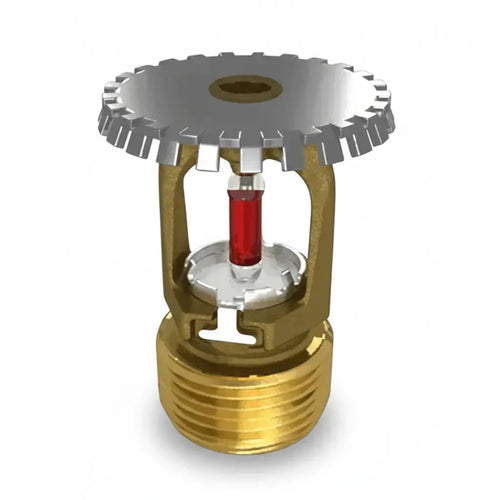


Fire Sprinkler Head Temperature Ratings: The Complete 2026 Guide
What if the very system designed to save your building ends up causing its most expensive disaster? Selecting the wrong fire sprinkler head temperature ratings can lead to accidental discharges that cause thousands in water damage without a flame in sight. It's a high-stakes balancing act between life safety and property protection. You need a system that activates the moment a fire starts, yet remains perfectly stable under normal high-heat conditions like those found in commercial kitchens or uninsulated attics.
We know the pressure of a looming fire marshal inspection and the confusion that comes with decoding NFPA color schemes. You want to be certain your facility meets the latest 2026 standards without second-guessing every glass bulb or fusible link. This guide provides the professional assurance you need to master temperature classifications and ensure code compliance. We will walk through the 2025 NFPA 13 standards, clarify the 35 degree buffer rule, and provide a clear roadmap for identifying and selecting the right hardware for every environment.
Key Takeaways
- Learn how to balance life safety response times with the prevention of costly accidental discharges by mastering fire sprinkler head temperature ratings.
- Identify the mechanical differences between frangible glass bulbs and fusible links to choose the right activation mechanism for your specific environment.
- Decode the 2026 NFPA 13 color-coding system to quickly verify if your current sprinklers are Ordinary, Intermediate, or High temperature rated.
- Determine the required distances from HVAC registers and kitchen heat sources to prevent nuisance activations and maintain full code compliance.
- Master the use of Sprinkler Identification Numbers (SIN) to ensure every replacement part matches the original engineering specifications and safety standards.
What Are Fire Sprinkler Head Temperature Ratings?
A fire sprinkler head temperature rating is the specific thermal threshold at which a sprinkler's heat-sensitive element fails, triggering the release of water. It isn't a suggestion or a broad range; it's a precision-engineered fail point. Every fire sprinkler is designed to remain dormant until the air surrounding it reaches this exact limit. This ensures the system only activates when a legitimate fire threat exists, balancing the need for rapid life-safety intervention with the absolute necessity of preventing accidental water damage.
Modern fire protection relies on two primary activation methods to achieve these ratings. Frangible glass bulbs use a heat-sensitive liquid that expands and shatters the glass at a set temperature. Alternatively, fusible links utilize a specialized metal solder that melts to release the water seal. The 2026 industry standards, rooted in the 2025 edition of NFPA 13, prioritize specific fire sprinkler head temperature ratings based on the occupancy hazard of a space. A warehouse with high-piled storage requires a different thermal response than a residential bedroom or a commercial kitchen.
The Science of Thermal Sensitivity
Thermal sensitivity is measured by the Response Time Index (RTI). This value describes how quickly the operating element absorbs heat from the surrounding air. Quick Response (QR) heads have a low RTI, meaning they activate faster to suppress fire and cool the ceiling air, which is vital for life safety in residential settings. Standard Response heads have a higher RTI and are often used in industrial applications where containment is the priority. Accuracy depends on the maximum expected ceiling temperature. NFPA 13 mandates that a sprinkler's rating must be at least 35°F (19°C) higher than the highest ambient temperature recorded at the ceiling. If your ceiling reaches 100°F during a summer afternoon, an ordinary 135°F head is at risk of a nuisance discharge.
Why Rating Accuracy Matters for Property Owners
Using the wrong rating is a liability you can't afford. An accidental discharge can cost thousands in remediation, equipment replacement, and lost operational time. Beyond the immediate mess, insurance providers often scrutinize fire sprinkler head temperature ratings during claims. If a head was installed with a rating too low for the environment, or if it was too high to react in time to a real fire, you may face significant legal and financial hurdles. Proper rating selection eliminates doubt. It ensures the system stays dry during routine high-heat operations while remaining ready to act the moment a true emergency occurs. Reliability in fire protection is built on these precise thermal calculations.
Activation Mechanisms: Frangible Bulbs vs. Fusible Links
The physical component that holds back the water in a sprinkler head is known as the operating element. While all fire sprinkler head temperature ratings serve the same purpose, the hardware used to achieve those ratings differs significantly. Choosing between a frangible glass bulb and a fusible link depends on the specific hazards of your facility, such as vibration levels, corrosive atmospheres, and the required speed of activation. Each mechanism offers distinct advantages for maintaining code compliance and operational reliability.
How Frangible Glass Bulbs Work
Frangible bulbs are the most common activation method in 2026, especially for residential and office settings. These small glass ampules are filled with a heat-sensitive liquid, typically an alcohol-based solution or glycerin. As a fire heats the air, the liquid expands. Once the internal pressure exceeds the glass's strength, the bulb shatters and releases the seal. The response speed is largely determined by the bulb's diameter. A 3mm bulb is standard for Quick Response heads, while a 5mm bulb is typically used for Standard Response applications. During routine inspections, look for the small air bubble inside the bulb. If the bulb is completely full or significantly discolored, it may have leaked and requires immediate replacement to maintain your system's integrity.
The Mechanics of Fusible Link Sprinklers
Fusible link sprinklers utilize a mechanical assembly held together by a eutectic solder. This specialized metal alloy is engineered to transition from a solid to a liquid at a precise temperature. When the solder melts, the two metal plates pull apart, allowing the water to flow. Because these links are made of durable metal, they are often the preferred choice in industrial racks or high-vibration environments where a glass bulb might be at risk of accidental breakage. They are also highly effective in commercial kitchens where grease and high ambient heat are common. Many facility managers choose links for their ruggedness, ensuring they have the right fire protection components to withstand harsh conditions without compromising safety.
Maintenance for both types in 2026 focuses on cleanliness and physical condition. Dust, paint, or corrosion can act as insulation, delaying the activation of the heat-sensitive element. Whether you use bulbs or links, the fire sprinkler head temperature ratings will only be accurate if the hardware is free of debris. In high-corrosion areas like chemical plants or coastal facilities, look for wax-coated or specially plated links designed to resist environmental degradation. Reliability starts with choosing the mechanism that best fits the physical reality of your building. This choice ensures your system remains dormant when it's supposed to and reacts instantly when it must.
Deciphering the NFPA 13 Temperature Classification Table
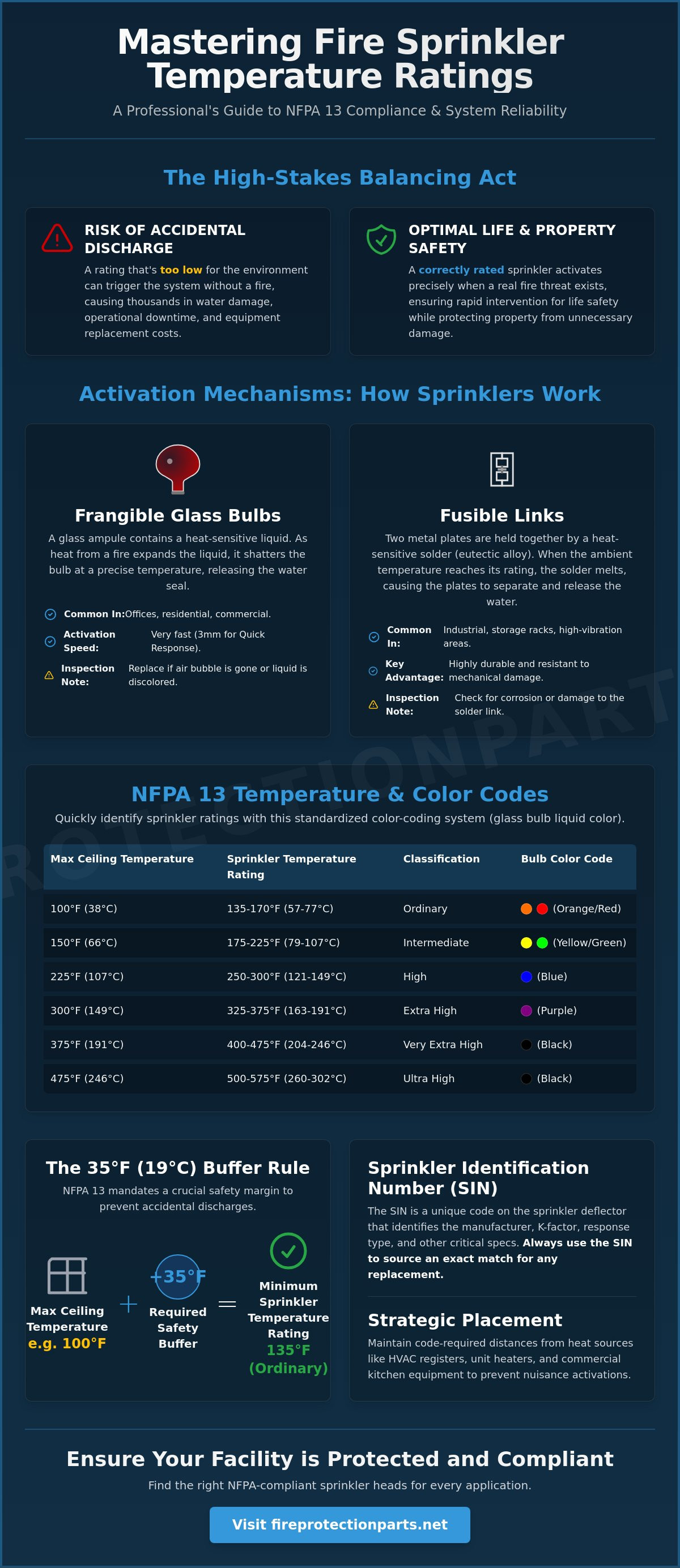
Understanding the NFPA 13 classification table is essential for any facility manager or contractor. It isn't just about the activation point. It's about the environmental limits of the hardware. The 2025 edition of NFPA 13, which governs 2026 installations, organizes fire sprinkler head temperature ratings into specific tiers. Each tier corresponds to a Maximum Ceiling Temperature. This is the highest ambient temperature the ceiling is expected to reach under normal conditions. Following the 35 degree buffer rule is mandatory. If your ceiling hits 100°F, you cannot use a head rated lower than 135°F. Proper selection eliminates the risk of a system failing because it was overwhelmed by daily ambient heat.
The universal color-coding system allows for rapid identification during inspections. For glass bulbs, the color of the liquid inside tells the story. For fusible links, the color is typically applied to the link arms or the frame itself. Use this quick reference to verify your hardware:
- Ordinary: 135°F to 170°F (Orange or Red bulb; Uncolored or Black link)
- Intermediate: 175°F to 225°F (Yellow or Green bulb; White link)
- High: 250°F to 300°F (Blue bulb; Blue link)
- Extra High: 325°F to 375°F (Purple bulb; Red link)
Ordinary vs. Intermediate Ratings
Ordinary ratings are the industry standard for most residential and commercial occupancies like offices, homes, and hotel rooms. You'll recognize these by their orange or red glass bulbs. However, these standard ratings are often insufficient for spaces with fluctuating temperatures. Uninsulated attics, commercial kitchens, and areas directly adjacent to HVAC registers require Intermediate ratings. These heads are identified by yellow or green bulbs, or white fusible links. Moving from an orange bulb to a yellow one provides the necessary thermal headroom to prevent accidental discharge in spaces where the sun or machinery might push ceiling temperatures above 100°F.
High and Extra High Temperature Classifications
For manufacturing floors, boiler rooms, and high-heat industrial zones, Ordinary and Intermediate heads are simply too sensitive. High temperature classifications utilize blue bulbs or blue-painted links. If the environment is even more volatile, Extra High ratings use purple bulbs or red links. In specialized 2026 industrial applications, you might even see Very Extra High or Ultra High heads, which can handle temperatures up to 650°F. These are marked with black bulbs and green or orange links. These specialized fire sprinkler head temperature ratings are designed for durability. They ensure that suppression only begins when a fire is actually present, not just because the facility is operating at peak capacity. Always check the frame for stamped temperature data to verify the color code matches the engineered requirements of your specific hazard zone.
Strategic Placement: Matching Ratings to Heat Sources
Strategic placement is the final safeguard against nuisance activations. It isn't enough to select the correct fire sprinkler head temperature ratings based on room type; you must also calculate the proximity to specific heat producers. Heat doesn't just come from fires. It radiates from HVAC registers, lighting fixtures, and industrial machinery. NFPA 13 requires installers to measure the straight-line distance from the edge of a heat source to the sprinkler head. This measurement ensures that the ambient temperature around the head never violates the 35 degree buffer rule. Miscalculating this distance by even a few inches can lead to a catastrophic water release during routine building operations.
Luminaires and HVAC registers are often overlooked. A standard recessed light fixture can create a localized pocket of heat that exceeds 100°F. If an ordinary rated head is placed too close, it will eventually fail. Similarly, HVAC vents blowing hot air during winter months can trigger a sensitive glass bulb. For these reasons, intermediate heads are often required within a three-foot radius of most ceiling-mounted heat sources. While residential standards like NFPA 13D and 13R offer some flexibility for aesthetic placement, the underlying physics remains the same. You must account for every heat-producing element in the room.
Kitchen and Cooking Area Requirements
Kitchens are the most volatile environments for fire suppression systems. Range tops and ovens produce intense radiant heat and steam that can easily fool a standard sprinkler. To prevent nuisance trips, NFPA mandates a minimum distance from the edge of the cooking surface. For ordinary temperature heads, this distance is typically 18 inches, while intermediate heads can often be placed as close as 9 inches. In commercial settings, the logic shifts toward fusible links. Commercial hoods require specific link ratings that can withstand the constant high-heat cycles of a professional line. Precision here is vital. You want the system to ignore a boiling pot of water but react instantly to a grease fire.
Attics, Crawlspaces, and Concealed Areas
Attics and concealed spaces present a unique challenge because of solar gain. In summer months, an uninsulated roof can push attic temperatures well above 130°F. This makes intermediate fire sprinkler head temperature ratings a requirement rather than an option. These areas also frequently utilize dry pendent sprinkler heads to prevent pipe bursts in cold climates. Because these heads often sit in unconditioned spaces, they must be rated to handle the peak summer heat of the attic while remaining ready for winter protection. If you are installing hardware directly under an uninsulated roof deck, always default to an intermediate or high rating to account for radiant roof heat.
Ensuring your system is properly configured requires the right hardware and professional expertise. If you need to upgrade your facility's protection, buy certified fire sprinkler components that meet the latest 2026 safety standards.
Identifying and Sourcing Replacement Sprinkler Heads
Precision is the only acceptable standard when it involves system maintenance. When a head is damaged or reaches its service life limit, you must adhere to the "Like-for-Like" rule. This mandate requires that any replacement exactly matches the original fire sprinkler head temperature ratings and performance characteristics. Changing a rating without a documented change in occupancy or a new hydraulic calculation is a code violation. It compromises the engineered response time of the entire system. To ensure a perfect match, you need to look beyond the color of the bulb and examine the physical data stamped into the hardware itself.
The most reliable way to identify a sprinkler is the Sprinkler Identification Number (SIN). This four to seven-digit alphanumeric code is typically found on the deflector. The SIN is a unique fingerprint that tells you the manufacturer, the K-factor, the orientation, and the response type. Once you have the SIN, you can verify the temperature rating by looking at the frame arms or the deflector. Most modern heads have the temperature clearly stamped, such as "155°F / 68°C". If the stamp is illegible, the color-coding system discussed in previous sections serves as your secondary verification. When you are ready to restore your system's integrity, you can buy fire sprinkler heads online to find exact matches for both residential and commercial applications.
The Identification Checklist
Before ordering parts, perform a physical audit of the existing hardware. This prevents the common mistake of installing a standard response head where a quick response head is required. Use this checklist for absolute verification:
- Bulb or Link Color: Match the liquid color or the paint on the link to the NFPA 13 classification table.
- Deflector Data: Locate the temperature rating and the SIN stamped into the metal.
- Response Type: Confirm if the bulb is 3mm (Quick Response) or 5mm (Standard Response).
To eliminate any doubt during this process, cross-reference your findings with our Fire Sprinkler Head Identification Guide. This resource helps you navigate the subtle differences between manufacturers and vintage models.
Ensuring Compliance and Reliability
Reliability depends on the physical purity of the operating element. You must never paint, coat, or plate a sprinkler head. Even a thin layer of overspread from a ceiling renovation can insulate the bulb, significantly altering the fire sprinkler head temperature ratings and delaying activation. If a head is painted, it is considered non-compliant and must be replaced immediately. NFPA 25 also requires building owners to maintain a stock of spare heads and a dedicated sprinkler wrench on-site. This ensures that if a head activates or is damaged, the system can be returned to service without delay.
Always source your hardware from trusted industry leaders like Viking or Tyco to ensure adherence to UL and FM standards. These brands provide the professional-grade durability required for long-term protection. For a quick visual tool to keep in your riser room, consult our Fire Sprinkler Head Temperature Rating Reference Guide. It includes a printable chart that simplifies the identification of every color code and classification tier used in 2026.
Secure Your Facility with Precision Protection
Mastering the science of fire sprinkler head temperature ratings is more than a simple compliance check. It's a fundamental step in protecting your property from both fire and the high costs of accidental water damage. By correctly identifying SIN data and matching hardware to specific environmental heat loads, you eliminate the guesswork that leads to system failure or nuisance trips. You've now gained the expert knowledge needed to navigate the 2026 standards with professional confidence.
Maintaining a safe, code-compliant building requires hardware you can trust. We provide an extensive, in-stock selection of Viking and Tyco hardware trusted by contractors nationwide. Every component is engineered for reliability and long-term performance in the most demanding environments. Shop Code-Compliant Fire Sprinkler Heads at Fire Protection Parts to find the exact NFPA-compliant components your system requires. Take control of your building's safety today and ensure your protection is never compromised. Your peace of mind starts with the right choice.
Frequently Asked Questions
What is the most common temperature rating for a residential fire sprinkler?
The most common temperature rating for residential fire sprinklers is 155°F, which falls under the "Ordinary" classification. These heads are designed to activate quickly enough to save lives in living areas while remaining stable at standard room temperatures. They are typically identified by a red glass bulb or an uncolored fusible link.
Can I change the temperature rating of my sprinkler head myself?
You shouldn't attempt to change the temperature rating of a sprinkler head yourself. Fire suppression systems are precisely engineered based on hydraulic calculations and occupancy hazards. Replacing a head with a different rating without professional recalculation can lead to delayed activation or accidental discharge. Always hire a licensed fire protection contractor to ensure the system remains code-compliant.
What happens if I install a sprinkler head with a rating that is too low?
Installing a sprinkler head with a rating that is too low significantly increases the risk of an accidental discharge. If the ambient ceiling temperature gets too close to the activation point, the heat-sensitive element may fail during routine operations. This results in massive water damage and system downtime. Proper fire sprinkler head temperature ratings must always maintain a 35°F buffer above the maximum ceiling temperature.
How do I know if my sprinkler head has a frangible bulb or a fusible link?
You can identify the activation mechanism through a simple visual inspection. A frangible bulb head features a small glass ampule filled with colored liquid. A fusible link head uses two metal plates held together by a specialized solder. While both are reliable, glass bulbs are common in offices and homes, while links are often used in industrial or high-vibration environments.
Do different colors of sprinkler heads mean different things?
Yes, the color of the glass bulb or the paint on the link indicates the specific temperature rating. This universal coding system allows inspectors to verify compliance at a glance. For example, red bulbs indicate Ordinary ratings, while blue bulbs signify High ratings. Misinterpreting fire sprinkler head temperature ratings can lead to improper maintenance or safety failures.
What temperature rating is required for a fire sprinkler in an attic?
Attics generally require an Intermediate temperature rating, typically between 175°F and 225°F. Because uninsulated roofs can trap significant solar heat, Ordinary heads are prone to nuisance trips in these spaces. Using a yellow or green glass bulb ensures the head won't activate just because of a hot summer day while still providing protection in a real fire.
Does the size of the glass bulb affect the temperature rating?
The size of the glass bulb doesn't determine the temperature rating, but it does dictate the response time. A 3mm bulb is used for Quick Response heads, while a 5mm bulb is for Standard Response. Both sizes can be engineered for the same temperature, but the thinner bulb shatters faster when that thermal threshold is reached.
Why are some sprinkler heads uncolored or black?
Fusible link sprinklers with an Ordinary rating are typically uncolored or painted black on the link arms. This follows the NFPA 13 color-coding standard for heads rated between 135°F and 170°F. If you see a black bulb in a glass-style head, however, it indicates a Very Extra High rating, designed for specialized industrial processes reaching up to 475°F.

