



Fire Sprinkler System Components: A Complete Guide to How They Work Together
A fire sprinkler system is often the most critical line of defense in the high-stakes world of fire protection. However, these systems are far more than just a network of pipes and water. They are sophisticated, integrated assemblies of mechanical and electronic parts designed to detect, contain, and potentially extinguish a fire before it can threaten the structural integrity of a building or the lives of its occupants.
For fire protection contractors, facility managers, and property owners in the U.S., understanding the specific fire sprinkler system components is essential. Proper knowledge of these parts ensures that systems remain compliant with National Fire Protection Association (NFPA) standards and function reliably during an emergency.
This blog details all that facility managers and property managers need to know about the fire sprinkler system, why it is important and how it can be utilised.
What Is a Fire Sprinkler System?
A fire sprinkler system is a critical fire protection component designed to detect and suppress fires in their early stages. It is an active defence network that detects heat from a fire and unleashes water to suppress it, often before the fire spreads and/or before firefighters arrive.
The fire sprinkler system consists of a reliable water supply system, providing adequate water pressure and flow rate to a water distribution piping network, onto which fire sprinklers are connected. This system is typically integrated with fire alarms and connected to a dependable water supply.
There are distinct differences between the two major types of fire sprinkler systems: the residential fire sprinkler components and the commercial fire sprinkler systems.
-
Residential Fire Sprinkler
Residential systems focus on life safety and are often integrated into the domestic water supply or smaller dedicated tanks. They are typically smaller in scale, designed to protect single-family homes or apartments.
-
Commercial Fire Sprinkler
Commercial systems often cover large facilities with multiple zones that deal with higher pressure requirements and entail more complex monitoring.
Regardless of the scale, sprinkler heads integrate with fire alarm control panels and water supply systems, ensuring that activation triggers both water discharge and alarm signalling for evacuation.
Core Fire Sprinkler System Components Explained
Every part of a sprinkler system serves a specific, calculated purpose. If one component fails or is improperly maintained, the reliability of the entire system is compromised.
The components include the following:
-
Water Supply & Fill Valves
The water supply is the lifeblood of the system. Whether sourced from a municipal main or a private gravity tank, the water must be consistently available and pressurized. In many suburban or rural residential applications, where municipal pressure might be insufficient, large storage tanks are utilized. In residential fire sprinkler setups that rely on storage tanks, fill valves play a critical role in maintaining consistent water levels.
Components such as residential tank fill valves are designed to support proper water management within these systems, ensuring that the tank is always replenished and ready for discharge.
-
Sprinkler Heads
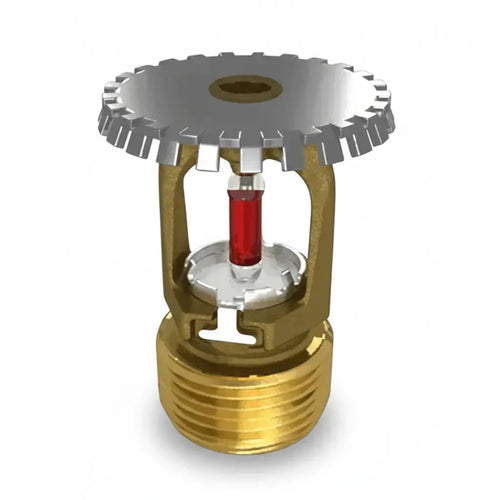
The stars of the show, fire sprinkler heads include heat-sensitive elements like glass bulbs or fusible links that burst at set activation temperatures (e.g., 155°F-286°F). Standard response sprinkler heads suit most areas; quick-response variants react faster in high-risk zones, spraying patterned water shields up to 16 feet wide.
Sprinkler heads are heat-activated devices designed to discharge water directly over a fire. Standard response sprinkler heads, commonly rated around 175°F, are widely used in many commercial and residential applications. The VK154 Standard Response Sprinkler Head – 175 Degree exemplifies this reliable design.
-
Control Valves & Floor Control
Assemblies of control valves regulate water flow into sprinkler systems, allowing for isolation during maintenance or emergencies. Floor control assemblies combine shut-off valves, drains, and monitoring switches. These assemblies simplify inspection and testing, especially in multi-level buildings. Drain assemblies allow controlled water release during maintenance, while monitoring switches provide system status updates.
Floor control assemblies combine shut-off valves, drains, and monitoring switches into a single unit, making inspection and maintenance more efficient in multi-level buildings. An example is the Model FCA2 Floor Control Assembly with Ball Valve, Drain & Potter Switch.
-
Fire Alarm Control Panels
While the mechanical components handle the water, the electronic components handle communication. When a fire sprinkler head activates, the resulting flow of water triggers a flow switch, which sends a signal to the building's central "brain”.
Fire alarm control panels act as the central monitoring point for fire protection systems, receiving signals from sprinkler flow switches and initiating alerts when activation occurs. This integration ensures that the fire department is notified automatically and that building occupants are alerted via sirens and strobes.
How Fire Sprinkler Components Work Together During a Fire
The effectiveness of a fire sprinkler system is found in its sequence of operations, as explained below:
-
Heat activation sequence
A fire starts, and the rising heat reaches the ceiling. Once the temperature hits the specific activation temperature rating of the closest sprinkler head (e.g., 175°F), that specific head activates. -
Water flow and pressure control
Water discharges immediately onto the fire. The control valves and fill valve systems regulate water pressure, ensuring effective discharge. This change in water pressure and the movement of water through the piping network trigger a water flow switch. -
Alarm signaling and system response
The flow switch alerts the fire alarm control panel. The panel then activates the building’s notification appliances and may signal a remote monitoring station. This alarm triggers alerts for occupants and responders to evacuate the building. The system continues to discharge water, cooling the surrounding area and preventing the fire from jumping to other rooms, while the control valves ensure the rest of the building's system remains pressurized.
Residential vs Commercial Fire Sprinkler Components
Commercial systems are generally more robust and include specialized fire sprinkler system parts like dry pipe valves for dry pipe systems (used in unheated warehouses) or pre-action systems (common in data centers). Commercial codes often require more rigorous monitoring of water pressure and valve positions.
Residential systems, governed by NFPA 13D or 13R, are streamlined for cost-effectiveness and ease of maintenance in a home environment. They may use plastic piping (like CPVC) and simpler fill valves for water storage, focusing primarily on allowing residents enough time to escape.
In terms of component scale and redundancy, commercial systems demand more frequent inspections and detailed monitoring due to higher occupancy and risk.
Inspection, Testing & Maintenance Considerations
Regular inspection and testing are vital to ensure reliability and compliance of the fire sprinkler system. Issues to be considered include:
-
Importance of regular inspections
This provides guidelines for inspection intervals and testing requirements. NFPA 25 mandates quarterly checks to ensure and maintain the quality of the equipment. -
Code compliance (NFPA references at a high level)
Control valves, sprinkler heads, and alarm panels must be inspected for wear or damage. Quality fire sprinkler system parts resist wear. Also, over time, sprinkler heads can become corroded or painted over. Ensuring high-quality, listed components are used during repairs is vital for maintaining system certification.
Why Component Quality Matters
Over time, sprinkler heads can become corroded or painted over. Using reliable, code-compliant parts reduces risk and ensures long-term system performance. Ensuring high-quality, listed components are used during repairs is vital for maintaining system certification. Quality fire sprinkler system parts resist wear, ensuring reliability.
Frequently Asked Questions
-
Q: What are the basic components of a sprinkler system?
The primary components include the water supply, a piping network, control valves, fire sprinkler heads, alarm valves, and a fire alarm control panel for monitoring. -
Q: What are the 4 components of fire protection?
The four fundamental components include detection (smoke or heat detectors), suppression (fire sprinkler heads and control valves), notification (fire alarm control panels and notification appliances), and water supply (including fire pumps and jockey pumps to maintain pressure). -
Q: What are the main components of a fire sprinkler system?
The primary components include the water supply, a network of piping, control valves, fire sprinkler heads, and a fire alarm control panel for monitoring. -
Q: Do all fire sprinkler systems require a fire alarm panel?
While some basic residential systems (NFPA 13D) may not require a full alarm panel, most commercial and multi-family residential systems require one to monitor water flow and tamper switches per building code. -
Q: How often should sprinkler system components be inspected?
Generally, visual inspections should occur monthly or quarterly, with more rigorous mechanical testing performed annually by a certified fire protection professional.
Final Thoughts
A fire sprinkler system is a masterpiece of safety engineering where every part, from the smallest fill valve to the central control panel, plays a lifesaving role. By investing in quality parts and adhering to strict maintenance schedules, property managers and contractors can ensure that these systems are always ready when needed most.
Understanding how fire sprinkler system components function together helps ensure systems are designed, maintained, and operated to provide reliable fire protection.

