



How Fire Sprinklers Work: A Complete Guide to Systems & Benefits 2026
Fire sprinklers are essential elements in the design of fire protection systems, aimed at detecting and controlling fires early to protect lives and property. These devices automatically respond to the heat generated by a fire, releasing water to suppress flames before they escalate. Unlike fire alarms that only alert occupants, fire sprinklers actively combat fires by targeting affected areas directly. Each sprinkler head operates individually, activating only when its heat-sensitive element reaches a specific temperature. This localized response minimizes water damage by containing application to the fire zone. While automatic sprinkler heads dominate modern systems, some setups include manual or open orifice sprinklers for specialized needs, providing flexibility in fire protection strategies.
What Are Fire Sprinklers and How Do They Work?
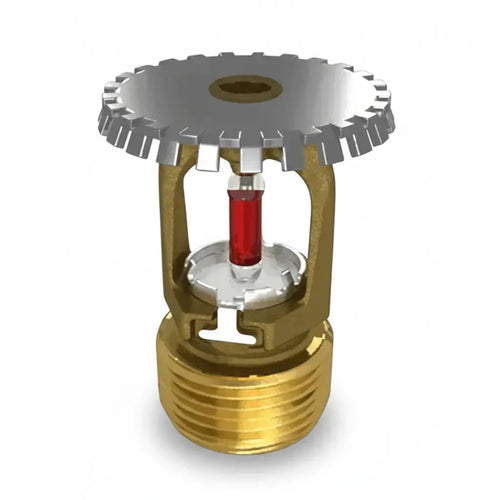
Fire sprinklers are devices integrated into fire protection systems designed to detect and suppress fires through automatic water discharge. Their primary purpose is to control or extinguish fires at an early stage, limiting damage and allowing safe evacuation. The mechanism relies on heat-sensitive elements—typically glass bulbs filled with liquid or fusible links—that break or melt when exposed to specific temperatures around a fire. Once triggered, the sprinkler head opens, releasing water stored in the connected piping network. This water sprays over the fire area, helping to cool flames and reduce smoke spread. Notably, each sprinkler head functions independently; one sprinkler’s activation does not trigger the entire system. This individuality ensures that water release targets the precise area of heat activation without unnecessary water usage. Some sprinkler heads work automatically, while others require manual activation or remain open to discharge continuously in special applications.
Key Components of a Fire Sprinkler System
A fire sprinkler system consists of several crucial components working together to deliver timely fire suppression. Central to the system are the sprinkler heads, equipped with heat-sensitive elements such as glass bulbs or fusible links that activate under high temperatures. These heads contain deflectors, designed to break incoming water into a spray pattern optimized for fire suppression. Water is supplied through a network of pipes connected to a reliable water source, often a municipal supply or dedicated fire pump. Valves control water flow, enabling maintenance or emergency shutdown without compromising system integrity. Alarm connections are integrated to notify building occupants and emergency services upon activation, supporting rapid response efforts. Collectively, these parts ensure the fire sprinkler system operates seamlessly—detecting fire, delivering water exactly where needed, and signaling alarms for safety assurance.
Types of Fire Sprinklers Explained
Fire sprinkler systems come in four main types, each tailored to different environments and risk profiles: wet pipe, dry pipe, pre-action, and deluge systems. Wet pipe systems are the most common, continuously filled with water and activating rapidly when heat triggers a sprinkler head. Dry pipe systems keep pipes filled with pressurized air or nitrogen, releasing water only after the system detects a fire, ideal for freezing conditions. Pre-action systems combine features of wet and dry types, requiring a detection event before flooding pipes with water, often used in spaces where accidental water discharge must be minimized. Deluge systems have open sprinkler heads connected to a water supply that floods pipes instantly when activated by a separate fire detection system, suited for high hazard areas. A specialized subset, ESFR (early suppression fast response) sprinklers, is designed to deliver large water volumes quickly, controlling high-challenge fires in warehouses. Quick response sprinklers activate faster than standard heads, providing superior fire control and occupant safety in sensitive environments.
Understanding the 3 Times Rule for Fire Sprinklers
The '3 times rule' is a guiding principle in fire sprinkler layout, ensuring adequate coverage and spacing for effective fire suppression. It dictates that sprinklers must be placed so that the distance between heads does not exceed three times the radius of spray coverage from each sprinkler, preventing gaps in protection. This spacing ensures overlapping spray patterns to cover the entire protected area uniformly. For instance, if a sprinkler’s water spray radius is 6 feet, adjacent sprinklers should be no more than 18 feet apart. This rule balances sufficient water distribution against over-saturation, optimizing system efficiency and cost. Understanding and applying the 3 times rule helps designers create layouts that comply with safety standards while minimizing installation complexity. Typical installation patterns often follow grid or triangular arrangements based on this principle, ensuring every zone benefits from reliable, overlapping sprinkler protection.
Benefits of Installing Fire Sprinklers in Buildings
Installing fire sprinklers in buildings offers substantial safety advantages by quickly suppressing fires and reducing risks to occupants and emergency responders. Their fast activation curtails fire spread, often extinguishing flames before they grow out of control, which significantly limits property damage. From a financial perspective, buildings equipped with fire sprinklers commonly enjoy lower insurance premiums and enhanced code compliance, reflecting broader industry confidence in these systems. Regulatory frameworks, such as those developed by the National Fire Protection Association (NFPA), endorse fire sprinklers as a cornerstone of fire safety, backed by decades of proven performance. Real-world data underscore these systems' role in saving lives and reducing reconstruction costs after fires. Given the technical nuances in selecting, designing, and maintaining sprinkler systems—especially products featuring durable construction, corrosion resistance, and integrated alarm switches—it is advisable for facility managers and safety professionals to consult experienced fire protection experts. Professional guidance ensures tailored solutions that align with building requirements and maximize system effectiveness over time.
Enhancing Fire Safety through Strategic Sprinkler Implementation
Understanding how fire sprinklers function and the components involved empowers building stakeholders to make informed decisions about fire protection investments. Different types of fire sprinkler systems serve distinct needs, from common wet pipe configurations to advanced ESFR models used in challenging environments. The 3 times rule offers a practical approach to optimal sprinkler spacing, ensuring comprehensive coverage without waste. Beyond compliance, the adoption of fire sprinklers translates directly into reduced fire damage, lower insurance costs, and greater occupant safety. Integrating durable, high-quality components like corrosion-resistant valves and automatic air vents enhances system reliability. For those responsible for commercial or industrial properties, professional consultation is an essential step to balance performance, code adherence, and budget considerations—leading to fire protection systems that truly safeguard life and assets.

