

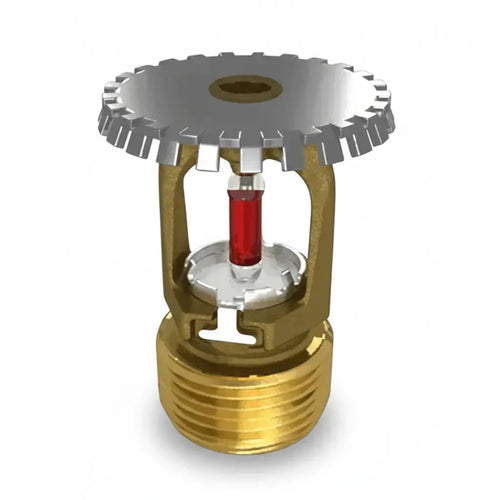


Replacement Fire Sprinkler Head Identification Guide (2026)
A fire sprinkler head is more than just hardware; it's a precisely engineered life-safety device where "close enough" is never an option. You likely know the frustration of staring at a corroded deflector or a concealed cover plate, fearing that ordering the wrong component will lead to a failed inspection or a compromised system. It's a high-stakes guessing game that no facility manager or contractor wants to play. Professional fire sprinkler head identification is the only way to eliminate that doubt and maintain the hydraulic integrity of your building.
We understand that technical jargon like K-factors and response types can make procurement feel overwhelming. This guide simplifies the process by showing you exactly how to find the SIN code, interpret temperature bulb colors, and navigate the latest NFPA 25 2026 requirements for escutcheons and legacy heads. You'll learn how to identify any model accurately so you can order the correct replacement part and restore your peace of mind immediately.
Key Takeaways
- Master the use of the Sprinkler Identification Number (SIN) to ensure every replacement maintains the hydraulic integrity and safety of your system.
- Learn professional fire sprinkler head identification techniques using glass bulb color codes and markings to determine precise temperature ratings.
- Discover the "Push, Pull, or Twist" method for safely accessing concealed heads and identifying legacy equipment hidden behind cover plates.
- Understand the critical 2026 NFPA 25 updates regarding listed escutcheons and why matching the original manufacturer is mandatory for code compliance.
- Gain the expertise to distinguish between response types and K-factors, allowing you to order the correct replacement parts with total confidence.
Why Precise Fire Sprinkler Head Identification is Vital for Safety
Precision is the foundation of fire suppression. A fire sprinkler system is a carefully balanced machine where every component relies on specific hydraulic calculations to function. When a head is damaged, painted, or corroded, the integrity of that balance is at risk. Accurate fire sprinkler head identification is the only way to ensure that a replacement part maintains the system's original design specifications. Replacing a head with a "similar" model is not just a technical error; it is a safety violation that can lead to catastrophic failure during a fire event.
The 2026 edition of NFPA 25 mandates the immediate replacement of any sprinkler head that shows signs of leakage, heavy corrosion, or physical damage. This requirement includes heads that have been accidentally painted or loaded with dust, as these obstructions can insulate the thermal element and delay activation. For a foundational fire sprinkler overview, it is helpful to remember that these devices are calibrated to react to specific heat signatures. If the identification is wrong, the response will be wrong. The "close enough" mindset has no place in life-safety systems where seconds determine the difference between containment and a total loss.
Maintaining System Design Integrity
Every sprinkler head possesses a unique "hydraulic signature" known as the K-factor. This value determines the water discharge density at a specific pressure. If you install a head with an incorrect K-factor, you risk either starving the fire of necessary water or dropping the pressure so low that other heads in the zone cannot activate. Thermal sensitivity is equally critical. Mixing Quick Response (QR) and Standard Response (SR) heads in the same compartment is a major code violation. QR heads activate faster to protect life; SR heads are often designed for high-heat industrial environments. Mismatching these response types can cause "skipping," where the first head to activate cools the surrounding air, preventing adjacent heads from ever opening.
Code Compliance and Liability
Property owners and facility managers face significant liability if a fire system fails due to incorrect parts. Insurance providers and Fire Marshals look for exact-match replacements during annual inspections. Mastering fire sprinkler head identification ensures that your facility remains compliant and that your safety file contains accurate records of every Sprinkler Identification Number (SIN) on the premises. Keeping a detailed log of these SINs speeds up the approval process and eliminates the guesswork during maintenance cycles. When you provide an exact match, you prove to inspectors that you prioritize verification over compromise.
Decoding the SIN: The Master Key to Identification
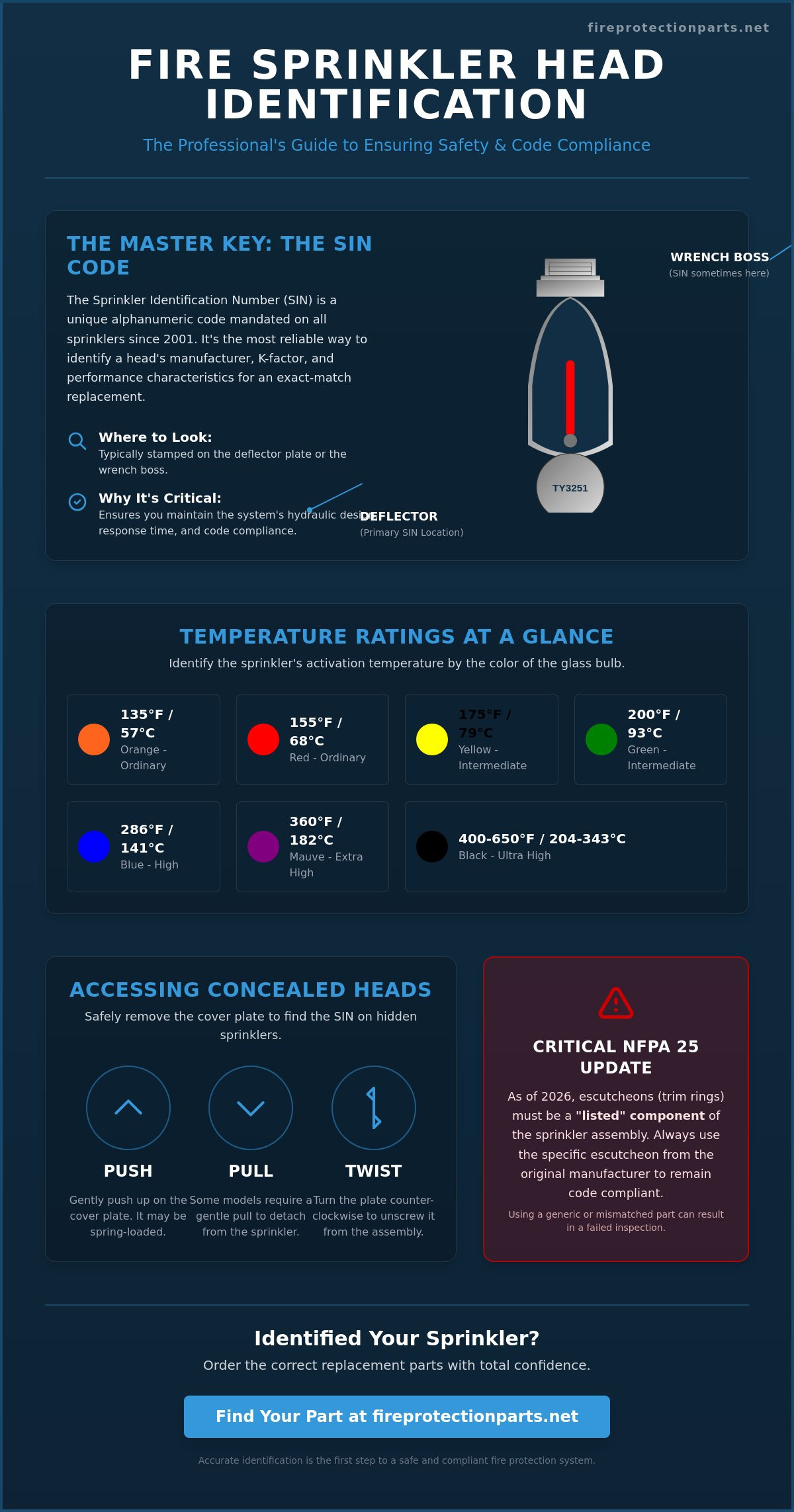
The Sprinkler Identification Number (SIN) is the most reliable tool in your arsenal for professional fire sprinkler head identification. It's a 4 to 7 digit alphanumeric code that acts as a unique fingerprint for the device. Before this system existed, identifying a head required measuring orifice sizes and cross-referencing grainy catalogs. Now, this simple stamp provides everything you need to know about the manufacturer, model series, and hydraulic performance. Since December 31, 2000, NFPA 13 has mandated that every sprinkler head must carry this mark.
Finding the code is usually straightforward if the head is accessible. You'll typically find it stamped into the deflector, which is the metal plate at the tip of the head designed to disperse water. If it's not on the deflector, check the "wrench boss," the flat portion of the frame where a wrench attaches during installation. These characters aren't just random; they reveal the specific orifice size, K-factor, and intended orientation of the head. If you're struggling to read a corroded stamp, a quick wipe with a damp cloth or a high-resolution photo with your phone can often reveal the hidden text.
Reading the Deflector Markings
For pendent and upright heads, the SIN is almost always on the face of the deflector. Sidewall heads might have the code on the side or the top depending on the manufacturer's design. Along with the SIN, you'll often see the K-factor, the rated activation temperature, and logos for UL or FM Global approvals. It's helpful to remember that the SIN has been mandatory on all fire sprinklers manufactured since 2001. If you're looking at a head without one, you're likely dealing with a legacy model that may be approaching its 50-year service limit under NFPA 25 rules.
Manufacturer Code Cheat Sheet
The first one or two letters of the SIN identify the manufacturer. Knowing these prefixes helps you narrow down your search in seconds:
- VK: Viking. You'll see this on series like the VK302 or VK462.
- TY: Tyco. This prefix is found on common series like the TY-B or TY-FRB.
- RA: Reliable. These stamps are usually very legible on the frame or deflector.
- V: Victaulic. A single-letter prefix often paired with 3 or 4 digits.
- SS: Senju. These are frequently found in residential systems or concealed architectural designs.
Once you've secured the SIN, you've eliminated the risk of a mismatched replacement. You can then source certified fire protection components that align perfectly with your system's original hydraulic design. This simple verification step ensures your building stays compliant and your occupants stay protected.
Visual Identification: Bulbs, Links, and Temperature Ratings
Visual cues provide an immediate secondary verification when the SIN is difficult to read or hidden behind a cover plate. While the SIN remains the master key, understanding the physical characteristics of a head prevents costly ordering errors. Professional fire sprinkler head identification relies on a combination of color coding, bulb size, and frame orientation. These features aren't for aesthetics; they indicate the precise thermal sensitivity and spray pattern required for your building's hydraulic design. Adhering to Fire sprinkler safety standards ensures that every component performs exactly as the system designer intended, preventing the dangerous "skipping" effect caused by mismatched response types.
Thermal elements are the most recognizable visual indicators. Most modern heads use a small glass bulb filled with a temperature-sensitive liquid. As the ambient temperature rises, the liquid expands until the bulb shatters, releasing the water seal. The color of this liquid is a universal language for temperature ratings. If your system uses fusible links instead of bulbs, the identification process involves reading the temperature stamped directly onto the metal leaf. Swapping a high-temperature head for an ordinary-temperature model can lead to accidental activations, while the reverse could delay fire suppression until it's too late.
The Glass Bulb Temperature Scale
The color-coding system is standardized across all major manufacturers to ensure clarity during maintenance and replacement. Ordinary temperature heads, typically rated between 135°F and 170°F, feature Orange or Red bulbs. These are the most common sights in offices and residential units. Intermediate zones, such as mechanical rooms or areas near heat sources, require Yellow (175°F) or Green (200°F) bulbs. For high-heat industrial environments or commercial kitchens, you'll find Blue (250-300°F), Purple (325-375°F), or even Black bulbs for ultra-high temperature protection. Always verify the color against the original design to avoid code violations.
Frame and Deflector Styles
Orientation is another critical factor in fire sprinkler head identification. Pendent heads point down from the piping, while Upright heads sit on top of the pipe to protect the deflector from debris. Installing a pendent head in an upright position will ruin the spray pattern and leave the area unprotected. You must also distinguish between Standard and Extended Coverage deflectors. Extended coverage heads have larger, specially shaped deflectors designed to throw water over a wider area. If you're working in unheated spaces like parking garages or freezers, you'll likely encounter Dry Pendent Sprinklers. These feature a specialized long barrel that keeps water out of the freezing zone until activation. Matching the finish-whether it's Chrome, White, or Brass-is also essential for maintaining both corrosion resistance and the architectural intent of the space.
How to Identify Concealed and Legacy Sprinkler Heads
Visible heads are easy to read, but identifying a concealed unit or an aging legacy model requires a more methodical approach. In many modern commercial and residential spaces, the head is tucked inside a recessed cup and hidden by a decorative cover plate. Effective fire sprinkler head identification in these scenarios starts with safely removing that plate to access the SIN or manufacturer markings. This process must be handled with extreme care; any physical impact on the thermal element could cause an accidental activation and significant water damage.
Once you expose the head, use a high-powered flashlight to peer into the cup. You're looking for the same SIN mentioned earlier, which is usually stamped on the deflector or the frame. If the plate itself is damaged or missing, the 2026 edition of NFPA 25 is very specific: you must replace it with a listed component from the original manufacturer. If a listed match is no longer available, the entire sprinkler assembly must be replaced to maintain code compliance. This ensures the plate falls away at the correct temperature, allowing the head to deploy as designed.
Step-by-Step: Removing Cover Plates
Accessing the head requires identifying the plate's attachment method. Start by turning the plate counter-clockwise; many are threaded and will unscrew easily. If the plate spins but doesn't lower, it's likely a "push-on" style. In this case, apply gentle, even downward pressure around the edges to release the friction tabs. Never use screwdrivers or pliers to pry a plate off. These tools can slip, striking the sensitive glass bulb or fusible link inside. If the plate is stuck due to ceiling paint, call a professional rather than risking a system discharge.
Identifying Pre-SIN Hardware
If your building was constructed before 2001, you'll likely encounter legacy heads that lack a standardized SIN. Identifying these requires looking for embossed manufacturer logos on the frame, such as the Viking "V" or the Tyco "T." You'll also need to measure the thread size, which is typically 1/2-inch or 3/4-inch NPT. For these older models, using a K-factor gauge helps determine the orifice size. Keep in mind that under the 2026 NFPA 25 standards, sprinklers in dwelling units that have been in service for 50 years or more must be replaced or tested. If you discover a legacy head that is approaching this limit, it's time to plan for a system-wide update.
When you've identified the specific requirements of your concealed or legacy system, you can buy certified fire sprinkler components to ensure your facility remains safe and compliant. Don't leave your protection to chance by using unverified parts.
Sourcing Your Replacement Sprinkler Heads and Accessories
Successful fire sprinkler head identification is only half the battle. Once you've confirmed the SIN and temperature rating, the focus must shift to procurement from a source that prioritizes verification over convenience. Buying from unauthorized or third-party marketplaces puts your facility at risk of receiving counterfeit or non-UL-listed components. These unverified parts may fail to activate during a fire or discharge prematurely, leading to catastrophic water damage. A code-compliant repair requires parts that maintain the original hydraulic design and manufacturer certifications without compromise.
Maintaining your system also involves adhering to the mandatory "Spare Head Cabinet" rule. NFPA 25 requires buildings to keep a stock of spare sprinklers and the corresponding wrenches on-site. This isn't just a suggestion; it's a critical requirement for restoring protection immediately after a discharge or a failed inspection. The 2026 edition of NFPA 25 clarifies that you must have one manufacturer-specified wrench for every type of sprinkler installed in your building. If you identify a head but don't have the matching wrench in your cabinet, your system is technically non-compliant. Professional procurement ensures you have the exact tools needed for a safe, damage-free installation.
Required Accessories for a Complete Install
A replacement is rarely just about the head itself. You must also secure the matching trim to ensure the assembly functions as a listed unit. Finding the correct escutcheon is vital. Whether you need a recessed, adjustable, or flat style, the 2026 standards mandate using listed components from the original manufacturer. If a listed escutcheon for an older head is no longer available, you must replace the entire sprinkler assembly. This strict rule prevents the use of "generic" trim that might hinder the head's deployment. Additionally, consider if your environment requires head guards. In high-traffic areas like warehouses or gymnasiums, these metal cages protect sensitive glass bulbs from accidental impact without disrupting the spray pattern.
Why Order from Fire Protection Parts?
We act as a mission-driven partner for facility managers and contractors who value unwavering reliability. We provide direct access to industry-leading brands like Viking and Tyco, ensuring every part you receive meets the highest safety standards. Our inventory includes specialized solutions such as Dry Pendent Sprinklers for freezing environments and residential fire pump systems. We understand that every hour a system is "on test" or impaired is an hour of vulnerability. That's why we prioritize efficient communication and fast shipping to get your system back online quickly.
Our team offers the professional assurance you need to eliminate doubt. If you're struggling with a difficult identification, our experts can help verify your findings before you commit to a purchase. We don't just sell parts; we provide the peace of mind that comes with knowing your building is protected by genuine, code-compliant hardware. Ready to replace? Browse our full inventory of Fire Sprinkler Heads here.
Securing Your System with Accurate Identification
Precision in fire protection isn't a luxury; it's a code requirement. Mastering fire sprinkler head identification through SIN codes and visual cues ensures your life-safety systems remain hydraulically balanced. By matching exact manufacturer specifications for K-factors and response types, you eliminate the legal and physical risks of unverified replacements. Whether you're managing modern concealed heads or navigating the 50-year replacement rules for legacy hardware, the correct part is the only way to guarantee performance.
As an authorized retailer of Viking and Tyco components, we provide the NFPA code-compliant hardware you need to restore your system's integrity. Our team offers expert technical support to help you verify parts before you buy. This professional assurance allows you to proceed with confidence and eliminate any doubt regarding your facility's safety. Making the right choice now prevents system failure later.
Identify and buy your replacement fire sprinkler heads at Fire Protection Parts. Take the guesswork out of your maintenance routine and ensure your building is protected by the best equipment available today.
Frequently Asked Questions
Where is the SIN number on a fire sprinkler head?
The SIN is typically stamped directly onto the deflector or the wrench boss of the frame. You'll see a 4 to 7 digit alphanumeric code starting with a manufacturer prefix like VK or TY. If the head is installed in a ceiling, you may need a flashlight or a high-resolution camera to read the characters clearly. This number is the most critical component of fire sprinkler head identification for modern systems.
What does a red glass bulb in a sprinkler head mean?
A red glass bulb indicates an "Ordinary" temperature rating, most commonly 155°F (68°C). This is the standard activation temperature for most residential and commercial office environments. The bulb contains a heat-sensitive liquid that expands and shatters the glass at that specific thermal threshold. Always verify this color against your system's design documents to ensure a compliant replacement.
Can I replace a standard response head with a quick response head?
No, you cannot swap response types because it violates NFPA 13 and NFPA 25 standards. Quick response heads have a thinner thermal element designed for life safety; standard response heads are often used for property protection. Mixing them in the same compartment can cause "skipping," where the faster head cools the air and prevents the slower head from activating. This error compromises the entire system's effectiveness.
How do I identify a fire sprinkler head without a SIN number?
For legacy heads manufactured before 2001, look for embossed manufacturer logos on the frame or deflector. You must measure the orifice size and the NPT thread size to find a compatible match. Because these older models lack a SIN, fire sprinkler head identification requires cross-referencing manufacturer catalogs. Keep in mind that NFPA 25 2026 rules require testing or replacement for dwelling unit heads in service for 50 years.
Do all fire sprinkler heads have the same thread size?
No, fire sprinkler heads come in different thread sizes, with 1/2-inch and 3/4-inch NPT being the most common in standard systems. Industrial or high-flow systems might use 1-inch NPT connections. Using the wrong thread size makes it impossible to install, but forcing a fit can damage the piping. Always verify the thread dimensions against the original manufacturer's technical data sheet before ordering.
What happens if I use the wrong fire sprinkler head replacement?
Using the wrong head can lead to hydraulic failure, insufficient water flow, or delayed activation during a fire. It also results in an automatic failure during fire marshal inspections. If the K-factor is incorrect, the water discharge density won't meet the design requirements for that zone. This mistake creates significant liability for property owners and can lead to a total loss of property or life.
How do I remove a concealed fire sprinkler cover plate?
Most concealed cover plates are removed by turning them counter-clockwise or by applying gentle downward pressure if they are a "push-on" style. Never use tools like pliers or screwdrivers, as they can slip and strike the sensitive thermal element inside. If the plate is stuck due to paint or corrosion, it is safer to contact a professional. Replacing a damaged plate requires a listed match from the original manufacturer.
How can I tell the difference between a 3mm and 5mm glass bulb?
The difference is visible in the thickness of the glass tube. A 3mm bulb is significantly thinner and is used for Quick Response (QR) sprinklers. A 5mm bulb is thicker and indicates a Standard Response (SR) head. This physical size determines how quickly the head reacts to heat. Because they have different thermal sensitivities, you must never install a 5mm bulb where a 3mm bulb was originally specified.

