



The Complete Guide to Fire Protection Parts: Sourcing for Compliance and Safety in 2026
In a fire protection system, the smallest fitting is just as critical as the main pump. A single non-compliant component can turn a life-saving asset into a liability. You likely already know that staying ahead of shifting NFPA standards is a constant challenge, especially with the 2026 updates now in full effect. It's frustrating to hunt for a specific replacement sprinkler head only to wonder if it meets current local codes or if it will even fit your existing piping. This Complete guide to Fire Protection Parts will eliminate that doubt by helping you master the complexities of suppression and detection hardware.
Professional assurance comes from knowing your hardware is verified and ready for service. You need a clear path to sourcing parts that satisfy both the inspector and your safety requirements without the headache of compatibility errors. This guide provides a definitive look at the essential components required for modern systems, including Viking Plastics CPVC pipe, residential fire pump systems, and ASC seismic bracing. We will walk through the latest 2026 regulatory changes and provide a reliable framework for procuring high-quality, certified hardware quickly. By the end of this article, you will have the confidence to select the right components for any system.
Key Takeaways
- Understand the critical importance of UL Listing and FM Approval to ensure your system meets the most recent 2026 life safety standards.
- Use this Complete guide to Fire Protection Parts to accurately identify specific sprinkler heads and high-performance distribution piping like Viking Plastics CPVC.
- Learn how to safeguard your facility against environmental threats using specialized components such as ASC seismic bracing and reliable anti-freeze solutions.
- Master the use of Sprinkler Identification Numbers (SIN) to simplify the procurement of exact replacement parts and streamline bulk ordering for any project.
The Critical Role of Certified Fire Protection Parts in Life Safety
Fire protection parts are the physical building blocks of building safety. They encompass every device used in suppression, detection, or containment. When you consult this Complete guide to Fire Protection Parts, you'll see that every valve, sensor, and pipe segment must function as a single, cohesive unit. These components don't just sit in a ceiling or behind a wall; they're active participants in a life saving strategy. Sourcing from a Complete guide to Fire Protection Parts ensures you remain compliant with the evolving expectations of 2026, where precision is the standard.
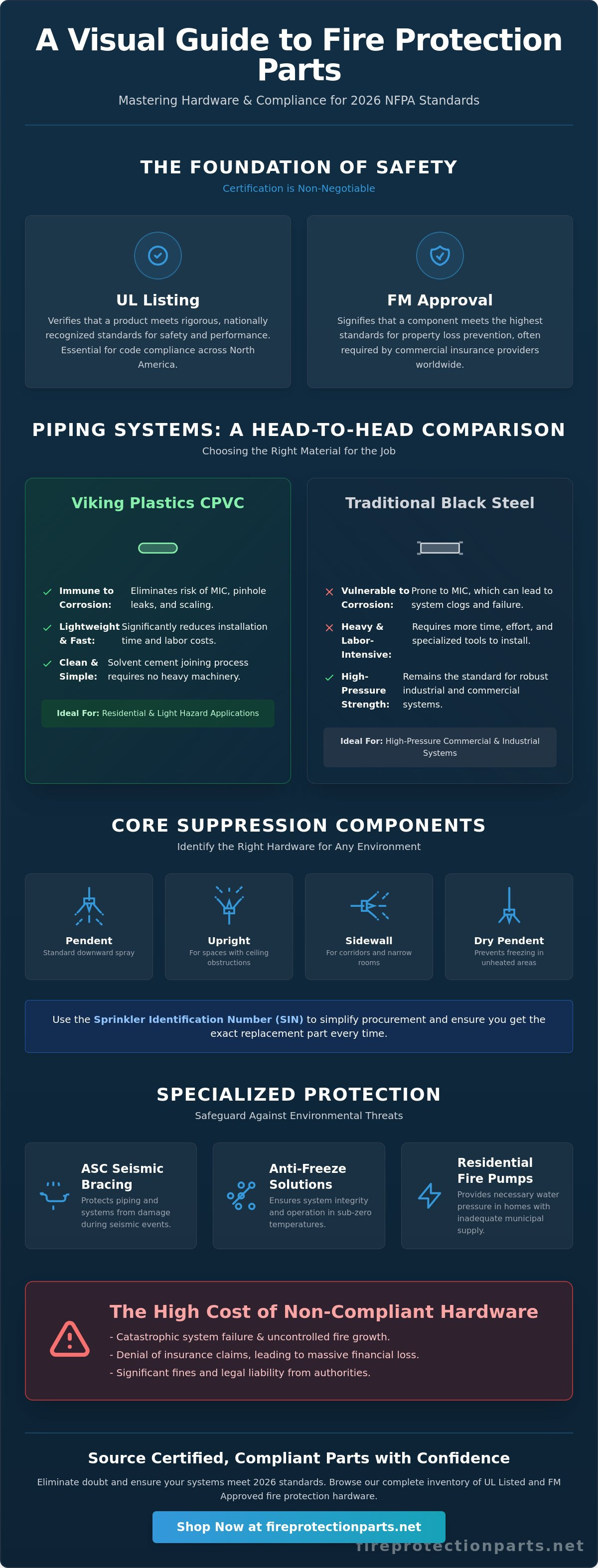
Reliability is verified through UL Listing and FM Approval. These aren't just optional stickers. They are proof of performance. These certifications ensure that a component has been tested under extreme conditions and proven to perform. Without these marks, you aren't just risking a code violation; you're risking system failure. Insurance providers often mandate these certifications to validate coverage, making them essential for both financial and physical security. In the high stakes environment of fire safety, there is no room for unverified hardware.
Effective safety relies on a balance between different strategies. Active Fire Protection (AFP) systems, like sprinklers and alarms, require a manual or automatic trigger to function. These work alongside passive measures like fire rated walls to contain a threat. In 2026, the industry has shifted toward higher precision in part manufacturing. Materials must now withstand more rigorous environmental stressors, ensuring that your hardware doesn't degrade before it's needed. This focus on durability is a direct response to the increasing complexity of modern building environments.
Understanding NFPA Standards for Part Selection
NFPA 13 dictates the strict hardware requirements for installing sprinkler systems. It leaves no room for guesswork. Similarly, NFPA 25 governs the inspection and maintenance of these systems. When a component wears out, you can't simply install any part that fits. Replacement hardware must be verified as equivalent to the original. This is especially vital when distinguishing between wet and dry systems. A valve designed for a wet system may lack the corrosion resistance required for the pressurized air environment of a dry system. Verification is the only way to ensure the system remains functional.
The High Cost of Non-Compliant Hardware
Cutting corners on hardware costs often leads to catastrophic results. If a non-compliant head fails to activate during a thermal event, the delay can allow a fire to grow beyond the system's design capacity. Beyond the physical danger, the legal and insurance liabilities are immense. Using uncertified parts can lead to the denial of insurance claims and significant fines from local authorities. The chain of reliability in fire safety hardware is a continuous link of verified performance that ensures every component responds perfectly when lives are on the line.
Core Suppression Components: Sprinklers, Piping, and Control Valves
Suppression systems are the front line of any safety strategy. This Complete guide to Fire Protection Parts focuses on the physical hardware that delivers water directly to the heat source. Choosing the right sprinkler head is a matter of geometry and environment. Pendent and upright heads are standard for most ceilings, while sidewall heads handle narrow corridors. For areas prone to freezing, dry pendent sprinklers are mandatory to prevent pipe bursts. Every selection must align with current NFPA codes and standards to ensure hydraulic performance and coverage density.
Piping Solutions: Viking CPVC vs. Traditional Steel
Modern contractors increasingly turn to Viking CPVC fire sprinkler pipe for residential and light hazard applications. Unlike traditional black steel, CPVC is immune to Microbiologically Influenced Corrosion (MIC). This eliminates the risk of pinhole leaks and internal scaling that can clog sprinkler heads over time. CPVC fittings are also lighter and faster to install, which significantly reduces labor costs. Steel remains the standard for high pressure commercial risers, but for many 2026 projects, the durability and ease of Viking Plastics make it the superior choice for long term reliability.
Control and Deluge Valves: The System Gatekeepers
Control valves manage the water supply and must remain locked in the open position. OS&Y (Outside Screw and Yoke) valves provide a quick visual confirmation of status; if the stem is visible, the valve is open. Butterfly valves offer a more compact alternative and often include built-in tamper switches for easier monitoring. In high hazard areas, like chemical storage or aircraft hangars, an Electric Deluge VXD system is required. These systems provide rapid, total flooding by triggering all open heads simultaneously upon detection. Regular maintenance is vital. You should inspect valve trim and pressure gauges monthly to ensure the system is ready to activate without hesitation.
Don't overlook the role of backflow preventors. These devices protect your potable water supply from the stagnant water and chemical additives found inside suppression systems. They are a critical point of compliance for local water authorities and must be tested annually. Whether you are retrofitting an older building or starting a new installation, sourcing high quality fire protection components ensures your system is both safe and legal. A professional system starts with parts that don't compromise on quality or certification.
Detection and Monitoring: The Hardware of Fire Alarm Systems
Detection hardware acts as the neural network of building safety. While suppression components like Viking Plastics CPVC pipe provide the physical response, detection devices provide the critical data. A high performance fire alarm system relies on initiation devices to identify threats early. Smoke detectors, heat sensors, and manual pull stations must be positioned strategically to meet 2026 safety requirements. These devices report to the Fire Alarm Control Panel (FACP), the brain of the operation. It processes every signal and triggers notification appliances like horns, strobes, and speakers to facilitate a safe evacuation. This Complete guide to Fire Protection Parts emphasizes that detection is not a standalone system; it's a partner to suppression.
Staying current with NFPA standards for fire protection is essential when selecting these electronic components. The latest standards ensure that every sensor and notification device meets rigorous performance benchmarks. High quality hardware reduces the risk of system failure when every second counts. You don't want to rely on unverified sensors that might fail during a real emergency. Professional grade detection hardware provides the peace of mind that your facility is monitored with total precision.
Bridging Suppression and Detection
Monitoring switches are the vital link between suppression and detection. Waterflow switches notify the FACP immediately when a sprinkler head activates. This allows for a faster response from emergency services. Tamper switches are equally important. They monitor the position of control valves to prevent unauthorized closure. If a valve is closed, the system provides an immediate alert. This integration is crucial for systems like the PTR Electric Deluge VXD. In these high hazard zones, electronic detection must trigger rapid total flooding without delay.
Advanced Detection Technology in 2026
Modern detection technology in 2026 has significantly reduced false alarms. Multi-sensor detectors use a combination of smoke and heat signatures to verify a fire. For warehouses or high ceiling atriums, Aspirating Smoke Detection (ASD) is the preferred choice. It actively pulls air samples into a central sensor for analysis. For retrofits, wireless fire alarm components now offer a code compliant way to protect buildings without the need for invasive conduit. Using this Complete guide to Fire Protection Parts helps you identify which of these advanced solutions fits your specific building layout and hazard level.
Specialized Protection: Seismic Bracing, Anti-freeze, and Air Supply
Beyond the primary suppression and detection hardware, specialized protection components ensure a system survives the environment it's designed to protect. Safety isn't just about water flow; it's about structural integrity and environmental resilience. This Complete guide to Fire Protection Parts identifies the hardware that keeps your system standing and functional when conditions turn extreme. Whether you are facing sub-zero temperatures or seismic activity, your choice of specialized parts determines if your system will perform or fail when it's needed most.
Seismic bracing is a non-negotiable requirement in high-risk geographic zones. ASC Seismic Bracing is engineered to prevent system rupture during an earthquake by securing the piping to the building's structural frame. This Complete guide to Fire Protection Parts highlights that while the water supply is the heart of the system, the bracing and hangers are the skeleton. Hangers and fasteners are the unsung heroes of safety. They must maintain structural integrity under extreme stress, ensuring the system doesn't collapse before it can discharge. In 2026, verification of these components is a standard part of every professional inspection.
Seismic Restraint and Structural Support
NFPA 13 provides strict requirements for seismic bracing installation based on local building codes. Using All Thread Rod (ATR) and specialized hangers allows for necessary structural movement without damaging the distribution piping. Bracing must be rigid enough to hold the pipe in place but flexible enough to move with the building's sway. If your bracing is too rigid, the pipe can snap; if it's too loose, the system can shake itself apart. Precision is required to balance these forces and maintain code compliance.
Environmental Protection for Sprinkler Systems
Winter weather is a major threat to wet-pipe systems. Anti-freeze for fire protection keeps the water within the pipes from expanding and bursting the system in unheated areas. It's vital to select the correct solution for residential versus commercial applications to maintain compliance and avoid chemical reactions with CPVC materials. Dry pipe and pre-action systems avoid the freezing risk but require dedicated air compressors to maintain supervisory pressure. A drop in pressure can cause the system to trip accidentally, leading to significant water damage and downtime. Regular maintenance of these compressors and the use of corrosion-monitoring vents or nitrogen generators will further extend the lifespan of your specialized system hardware.
When you need to secure your installation against environmental hazards, sourcing certified seismic bracing and anti-freeze is the only way to ensure 2026 code compliance. Professional assurance comes from using hardware that has been tested to withstand the worst-case scenario.
Strategic Sourcing: Buying Fire Protection Parts Online in 2026
Sourcing fire protection hardware has moved beyond the local supply counter. In 2026, e-commerce provides the speed required for modern construction and maintenance timelines. However, digital procurement requires a high level of technical literacy to avoid costly compliance errors. This Complete guide to Fire Protection Parts provides the framework for identifying and purchasing components that preserve the integrity of your life safety systems. You shouldn't guess when it comes to hardware that protects lives. You need a partner that understands the technical differences between various suppression and detection models.
Procuring parts online allows for faster fulfillment, but you must verify seller credentials to ensure part authenticity. Authentic hardware comes with the necessary UL and FM documentation required by the Authority Having Jurisdiction (AHJ). When you use this Complete guide to Fire Protection Parts, you're looking for more than just a part number; you're looking for professional assurance. Reliability in the supply chain is just as important as the reliability of the hardware itself. Choosing a dedicated provider ensures you receive components that haven't been compromised by poor storage or handling.
Replacement Part Identification
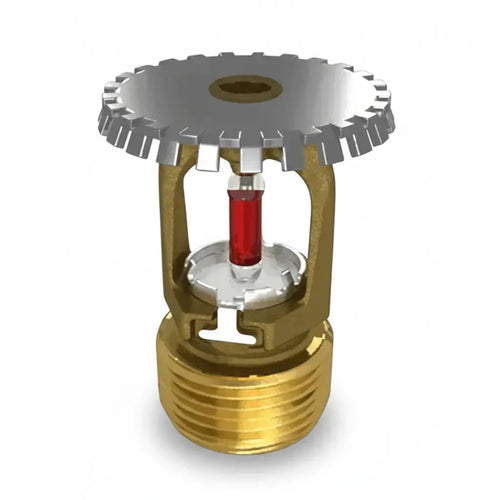
Identifying a replacement sprinkler head starts with the Sprinkler Identification Number (SIN) stamped on the deflector. This alphanumeric code is the key to matching the original manufacturer, orifice size, and thermal sensitivity. You must also verify the temperature rating, which is usually indicated by the color of the glass bulb or a stamp on the frame. If you're replacing a head, you often need to replace the escutcheon or trim kit to ensure a seamless, code-compliant fit. Matching the exact manufacturer model is mandatory for compliance because the system's hydraulic calculations and UL listing are based on the specific performance data of that individual part.
The Advantage of Professional E-commerce Sourcing
Digital sourcing offers a significant advantage for contractors managing complex projects. You can access specialized brands like Viking, ASC, and PTR in a single location without chasing multiple vendors. A professional e-commerce platform provides more than just a checkout button; it offers expert support to help you navigate a complicated Bill of Materials (BOM). This ensures that every item, from Viking Plastics CPVC pipe to PTR Electric Deluge VXD valves, arrives on-site ready for service. Browse our complete catalog of fire protection parts to find the exact components your system requires. Rapid fulfillment and expert guidance eliminate the doubt often associated with online procurement, allowing you to focus on maintaining a safe and compliant facility.
Securing Your Facility for 2026 and Beyond
Fire protection is a field of absolute precision where the smallest valve matters as much as the main pump. We've explored how UL Listed and FM Approved components form the foundation of building safety. From the resilience of Viking Plastics CPVC to the critical role of monitoring switches, every part must work in unison to provide a reliable response. This Complete guide to Fire Protection Parts has highlighted that matching exact manufacturer models isn't just about a physical fit; it's about maintaining the system's legal and physical integrity under pressure.
Procurement shouldn't be a source of doubt or frustration for your team. You need a partner that provides more than just a list of hardware. Our inventory features verified components backed by expert technical support for contractors and facility managers. With nationwide shipping on bulk and individual orders, you can secure your facility quickly and with total confidence. Shop Certified Fire Protection Parts & Hardware to eliminate the guesswork from your safety strategy. Your commitment to excellence deserves hardware that never compromises on quality.
Frequently Asked Questions
What are the main components of a fire sprinkler system?
A fire sprinkler system consists of a reliable water supply, distribution piping, and heat-activated sprinkler heads. Control valves manage water flow, while alarm valves and switches trigger notification devices. This Complete guide to Fire Protection Parts identifies these as the core elements of suppression. Every component must be verified and certified to ensure the system activates correctly during a thermal event.
How do I identify a fire sprinkler head for replacement?
Locate the Sprinkler Identification Number (SIN) stamped on the deflector plate. This alphanumeric code identifies the manufacturer, orifice size, and response type. You also need to verify the temperature rating, which is indicated by the color of the glass bulb or a stamp on the frame. Matching these exact specifications is mandatory to maintain the system's hydraulic design and UL listing.
Is CPVC pipe allowed for commercial fire protection systems?
CPVC pipe is permitted for use in light hazard and residential fire protection applications according to current codes. Brands like Viking Plastics CPVC provide a corrosion-resistant alternative to traditional steel in these environments. It's ideal for hospitals, offices, and multi-family housing. While steel remains the standard for high-pressure commercial risers, CPVC offers significant advantages in durability and ease of installation for specific building types.
What is the difference between an OS&Y valve and a butterfly valve?
An OS&Y (Outside Screw and Yoke) valve uses a threaded stem that moves in and out to provide a quick visual status of whether the valve is open. A butterfly valve uses a rotating disc and is much more compact, making it suitable for tight spaces. Both serve as system gatekeepers. OS&Y valves are often preferred for main service entries, while butterfly valves are common in sectional control.
Why do I need a backflow preventer in my fire suppression system?
A backflow preventer ensures that stagnant water or chemical additives from the fire system don't contaminate the municipal potable water supply. Water authorities mandate these devices to protect public health. They're a critical point of compliance and must be tested annually to ensure they function correctly. Without a verified backflow preventer, your building could face significant fines or water service disconnection.
How often should fire protection parts be inspected or replaced?
Inspection frequencies are determined by NFPA 25, which typically requires annual testing for most system components. Sprinkler heads should be replaced if they show signs of corrosion, loading, or physical damage. Standard response heads are generally tested or replaced after 50 years of service. Consistently referencing a Complete guide to Fire Protection Parts helps you stay ahead of these maintenance cycles to ensure unwavering reliability.
What is seismic bracing and when is it required for fire sprinklers?
Seismic bracing consists of specialized hardware like ASC Seismic Bracing that secures piping to the building's structure to prevent rupture during an earthquake. NFPA 13 dictates when these restraints are required based on the building's geographic location and seismic design category. These components must allow for structural movement while keeping the system intact. They're essential for life safety in high-risk zones.
Can I use any anti-freeze in my fire sprinkler system?
No, you must use a UL-listed anti-freeze solution specifically formulated for fire protection. Using unapproved chemicals can damage system components, especially CPVC piping, or create a fire hazard if the concentration is incorrect. Always verify that the solution is compatible with your specific pipe material and meets current NFPA requirements. Proper anti-freeze ensures wet-pipe systems remain functional in unheated areas during freezing temperatures.

