



The Essential Residential Fire Sprinkler Parts Checklist for 2026
Fire sprinklers reduce the risk of dying in a home fire by 81 percent, yet the difference between life-saving protection and a failed inspection often comes down to a single incorrect component. Finding the right residential fire sprinkler parts shouldn't be a guessing game where safety hangs in the balance. You know that NFPA 13D compliance is the absolute priority for residential safety, but the 2025 code updates and the constant confusion between commercial and residential requirements can make sourcing feel like a significant risk.
This guide provides the professional assurance you need to identify and maintain the critical components required for a modern home safety system. You'll gain total confidence in your compliance strategy and learn how to source high-quality hardware without the typical headaches. We'll walk through the essential 2026 checklist, covering everything from Viking Plastics CPVC pipe to specialized residential pump systems, so you can focus on building protection that lasts. It's time to eliminate the doubt and ensure your installation meets the highest standards of reliability.
Key Takeaways
- Differentiate between complex commercial codes and NFPA 13D standards to ensure your system is purpose-built for residential life safety.
- Navigate the complete checklist of essential residential fire sprinkler parts, including the specific heads and CPVC piping required for 2026 compliance.
- Learn to identify when low domestic water pressure necessitates a residential fire pump and how to properly configure a compact riser assembly.
- Secure your home’s protection by mastering the identification of Sprinkler Identification Numbers (SIN) and maintaining a code-required spare head cabinet.
- Eliminate procurement risks by recognizing the critical importance of UL Listing and FM Approval for every component in your fire protection system.
Understanding Residential Fire Sprinkler Parts and NFPA 13D Standards
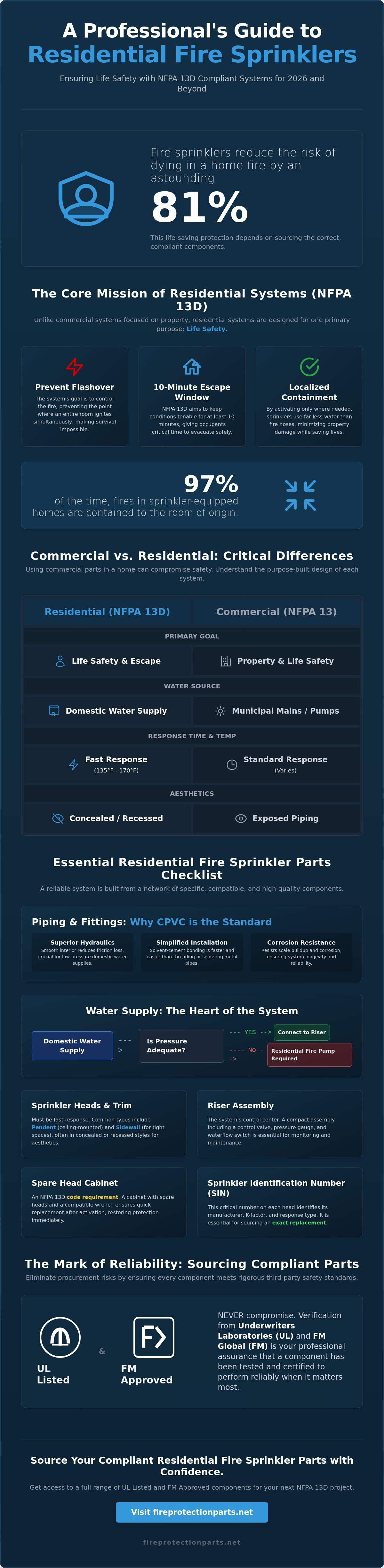
NFPA 13D is the active 2025 standard for protecting one- and two-family homes. It isn't just a set of rules; it's a life-safety framework designed to give occupants time to escape. While commercial systems focus on preserving buildings and inventory, residential systems prioritize people. This distinction dictates the specific residential fire sprinkler parts you must source for a compliant installation. Using commercial-grade hardware in a home environment doesn't just waste money; it can actually compromise the system's effectiveness due to different pressure and activation requirements.
Commercial vs. Residential: Key Hardware Differences
Residential hardware operates under different constraints than industrial setups. Most homes rely on domestic water pressure, which is significantly lower than the municipal mains used in commercial zones. Consequently, residential heads often feature specific orifice sizes and K-factors optimized for these lower flows. Temperature ratings are also tighter, typically ranging between 135°F and 170°F. This ensures the system reacts to a home fire before it becomes unsurmountable. Aesthetics matter too. You'll find that residential parts favor concealed and recessed designs that blend into drywall, unlike the exposed pipes seen in warehouses. These components are designed to be fast-response, activating much quicker than standard commercial variants to combat the rapid heat buildup in smaller living spaces.
The Core Purpose of Home Fire Suppression
The primary mission of fire sprinkler systems in a home is to prevent flashover. Flashover occurs when every surface in a room reaches its ignition temperature simultaneously; it's the point where survival becomes impossible. NFPA 13D aims to keep the environment tenable for at least ten minutes. This window allows families to exit safely. Because these systems activate locally, they use far less water than a fire department hose. This reduces property damage while saving lives. Statistics show that when sprinklers are present, the fire is kept to the room of origin 97 percent of the time. This localized response is only possible when you use verified, high-quality components.
Your choice of residential fire sprinkler parts depends heavily on your water source. Whether you use a multi-purpose system tied to your plumbing or a stand-alone system, the pressure must be verified. If the domestic supply is weak, a residential fire pump becomes a mandatory part of your safety checklist. Every component, from the Viking Plastics CPVC pipe to the backflow preventer, must work in perfect synchronization to meet the 2025 code requirements. Reliability is the only metric that matters when seconds count.
The Essential Residential Fire Sprinkler Parts Checklist
Building a system that meets NFPA 13D Standards requires a meticulous eye for detail. You aren't just buying hardware; you're assembling a life-safety network. This checklist identifies the mandatory residential fire sprinkler parts needed to move from a blueprint to a functional, compliant system. Every component must be verified and compatible to ensure the system performs exactly when it's needed most. Reliability is built into the details.
Piping and Fittings: Why CPVC Wins
For residential applications, CPVC is the clear industry benchmark. It consistently outperforms copper and steel in several critical areas. First, it offers superior hydraulics. The smooth interior surface of Viking CPVC fire sprinkler pipe reduces friction loss. This is vital when you're working with limited domestic water pressure. Second, it's significantly easier to install in tight wall cavities. Unlike metal pipes that require heavy threading machines or soldering, CPVC uses a solvent-cement process. This creates a permanent, leak-proof bond that resists corrosion and scale buildup over decades of service. It's a functional remedy for the challenges of residential retrofits and new builds alike.
Sprinkler Heads and Trim
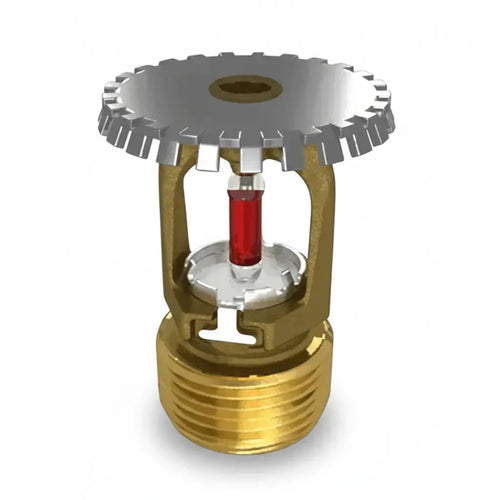
Selecting the right head is a matter of room geometry and physics. Pendent heads hang directly from the ceiling, providing a circular spray pattern. Sidewall heads are the solution for rooms where ceiling access is restricted or aesthetic concerns prevent overhead piping. For many modern homeowners, concealed heads are the premier choice. These sit flush with the ceiling, hidden behind a discreet cover plate. When heat reaches the activation point, the plate drops away, and the head deploys. It's a seamless integration of safety and design.
Every head features a Sprinkler Identification Number (SIN) stamped on the deflector. This code identifies the manufacturer, orifice size, and response type. It's a critical detail for both initial installation and future maintenance. You must also use matching escutcheons or cover plates. These trim pieces aren't just decorative; they ensure the head is positioned at the exact depth required for proper thermal response. Compromising on trim can lead to delayed activation or system failure.
System Monitoring and Alarms
A fire suppression system needs constant monitoring to remain reliable. UL-listed pressure gauges are required to verify that the supply pressure meets the design specifications. Without these, you have no way of knowing if a closed valve or a leak has compromised your safety. Finally, water flow alarms provide the necessary notification to occupants. If you're sourcing residential fire sprinkler parts for a new project, you can browse professional-grade components here to ensure every piece of your system is code-compliant and built for longevity. Accuracy in procurement is the first step toward peace of mind.
Water Supply and Pressure: Fire Pumps and Riser Components
Low water pressure is a common hurdle in residential projects. If the municipal supply can't provide the required flow, the system is useless. This is where specialized residential fire sprinkler parts like fire pumps become essential. Reliability is non-negotiable when you are protecting a family. You need a system that compensates for local infrastructure limitations without occupying the space of an industrial engine room. Sourcing the right pump and riser components ensures your safety network has the power it needs to perform under pressure.
Residential Fire Pump Systems
Residential fire pump systems are engineered for efficiency and tight spaces. These compact units are designed to fit into standard closets or garages, making them ideal for modern home layouts. Electric pumps are the industry standard for residential use. They integrate seamlessly with the home's electrical grid and operate with significantly less noise and vibration than diesel alternatives. Many 2026 models feature integrated self-testing cycles. These systems run periodic diagnostics to verify the motor and impeller are functional, providing professional assurance without requiring manual intervention.
Riser Room Accessories
The riser assembly acts as the control center for your entire installation. It's a compact manifold that houses flow switches, gauges, and valves. Flow switches are the "brain" of the system; they detect water movement and immediately trigger the home's alarm. To simplify mandatory annual inspections, a test and drain valve is a requirement. This part allows you to simulate a head activation and drain the system for maintenance without the risk of property damage. Clear signage is also a code-mandated detail. Every main control valve must be labeled so emergency responders can identify and operate the system during a crisis.
Protecting the home's potable water is another critical priority. Backflow preventers are mandatory residential fire sprinkler parts that keep stagnant water in the sprinkler lines from re-entering your drinking water. Additionally, you must install pressure relief valves to combat thermal expansion. When water within the pipes heats up due to ambient temperatures, the pressure can spike. A relief valve provides a functional remedy, bleeding off excess pressure to prevent pipe or fitting failure. These components work together to ensure your system remains a silent, dependable protector.
Identifying and Replacing Residential Sprinkler Components
Maintaining a life-safety system requires more than a casual glance. You must be able to identify specific residential fire sprinkler parts to ensure any replacement remains code-compliant. Every sprinkler head is a precision instrument. On the deflector, you'll find the Sprinkler Identification Number (SIN), which identifies the manufacturer and performance characteristics. The color of the glass bulb indicates the temperature rating; for instance, an orange bulb typically signifies a 135°F rating, while red indicates 155°F. Never guess these values. Replacing a head with the wrong temperature rating can lead to a system that activates too late or discharges accidentally.
NFPA 13D requires a minimum of three spare sprinklers and a dedicated head wrench to be kept on-site in a cabinet. This isn't a suggestion; it's a mandatory safeguard. If a head is damaged, corroded, or accidentally painted, it must be replaced immediately. Using a standard pipe wrench or pliers is a dangerous mistake. These tools can slip and damage the frame or the sensitive thermal element. You must use the specific manufacturer's wrench designed for that SIN. This ensures the torque is applied correctly without compromising the integrity of the hardware. Precision is the only way to guarantee performance.
The Replacement Workflow
When a head is compromised, your response must be methodical. First, shut down the main water supply and drain the riser completely. Verify the system is fully depressurized before attempting removal. When unscrewing the old head, use steady pressure to avoid cracking the CPVC fittings. Before installing the new component, apply a thread sealant specifically approved for fire protection systems. Using the wrong sealant can cause chemical compatibility issues with CPVC, leading to environmental stress cracking and eventual leaks. A functional remedy today prevents a catastrophic failure tomorrow.
Critical Maintenance Parts
Effective maintenance extends beyond the heads themselves. Corroded or bent escutcheons must be replaced to maintain proper head alignment and thermal response. In colder climates, checking anti-freeze levels is a seasonal priority. If the concentration drops, the water in your pipes can freeze and burst, rendering the system useless. You should also test the flow switch and alarm bell annually to confirm the system still communicates with the occupants during a flow event. The 2026 edition of NFPA 25 now requires that sprinklers in service for 50 years or more must be replaced or tested, so tracking the age of your hardware is vital. If you need to restock your spare head cabinet or source residential fire sprinkler parts for a repair, you can buy professional-grade replacement hardware here to maintain your system's integrity. Reliability is built on these small, disciplined actions.
Sourcing Reliable Residential Fire Protection Hardware
Sourcing the right residential fire sprinkler parts is the final hurdle in securing a home safety system. It's also where many projects face significant risks due to poor procurement choices. Choosing generic or unlisted components from general marketplaces introduces a level of uncertainty that a life-safety system cannot afford. In this industry, "good enough" doesn't exist. You need components that have been engineered to survive extreme conditions and activate with mathematical precision. Reliable sourcing ensures that your installation isn't just a collection of pipes and heads, but a verified shield against disaster.
Why Quality Standards Matter
Third-party verification from Underwriters Laboratories (UL) and Factory Mutual (FM) is the baseline for professional assurance. These organizations subject hardware to rigorous stress tests, ensuring that a residential sprinkler head or a CPVC fitting won't fail under pressure or heat. Counterfeit or unlisted parts lack this verification; they often lead to pinhole leaks or, more catastrophically, a failure to deploy during a fire. Certified parts are the only acceptable option for ensuring the mechanical integrity and legal compliance of a fire safety system. When you use verified hardware, you eliminate the doubt that plagues non-compliant installations.
The Fire Protection Parts Advantage
We provide more than just a list of items; we act as a mission-driven partner in your safety strategy. Our inventory is specifically tailored for both new construction and complex system repairs, focusing on the specialized needs of NFPA 13D systems. If you're struggling to identify an obscure replacement head or need a specific residential fire pump system, our expert support helps eliminate the guesswork. We understand that project timelines are tight, especially when a final inspection is looming. Accuracy in your order prevents costly delays and ensures your system is ready for service the moment it's installed.
Efficiency in procurement means bundling your requirements to ensure total system compatibility. Instead of sourcing pipe from one vendor and heads from another, you can get your Viking Plastics CPVC pipe, backflow preventers, and ASC seismic bracing in a single, coordinated shipment. This streamlined approach simplifies project management and guarantees that every component is designed to work together. You can browse our full catalog of residential fire sprinkler parts to find everything required for a high-performance safety system.
Before the inspector arrives, use this final checklist to verify your installation:
- Confirm all sprinkler heads match the SIN and temperature rating specified in the design plans.
- Verify the spare head cabinet contains the required backup heads and the correct manufacturer's wrench.
- Ensure all CPVC fittings are UL-listed specifically for fire protection use.
- Check that the residential riser is equipped with a functioning flow switch and a calibrated pressure gauge.
- Validate that all control valves have the mandatory emergency signage for first responders.
Secure Your Home with Professional-Grade Protection
Building a reliable safety system requires a commitment to precision. You've seen how NFPA 13D standards dictate every component choice, from specialized residential fire pump systems to the specific temperature ratings of your sprinkler heads. Maintaining a code-compliant spare head cabinet isn't just a regulatory hurdle; it's the difference between a system that stays dormant and one that saves lives when it's needed most. Every detail counts in fire protection.
Choosing the right residential fire sprinkler parts ensures that your safety network remains a silent, dependable protector. We provide UL Listed and FM Approved components that are trusted by fire safety contractors nationwide. Whether you're upgrading a riser assembly or sourcing CPVC for a new build, quality is the only metric that matters. You don't have to navigate these complex requirements alone when you have a mission-driven partner on your side.
Shop Code-Compliant Residential Fire Sprinkler Parts today to secure your project's integrity. You're building more than a fire suppression system; you're providing lasting peace of mind for the families you protect. Take the final step toward a safer, more compliant future.
Frequently Asked Questions
What are the most common residential fire sprinkler parts that need replacement?
Damaged sprinkler heads, corroded escutcheons, and inaccurate pressure gauges are the most frequently replaced residential fire sprinkler parts. These components are often susceptible to environmental wear or accidental physical impact. If a head is accidentally painted or a gauge fails to return to zero, immediate replacement is mandatory to maintain the system's reliability and compliance.
Can I use standard PVC pipe for a residential fire sprinkler system?
No, you cannot use standard plumbing PVC for fire protection systems. Fire suppression requires specialized CPVC, such as Viking Plastics CPVC, which is specifically engineered to withstand high heat and pressure. Standard PVC will melt or fail long before the system can activate, which renders your life-safety network completely useless during a fire event.
Do I need a fire pump for my home sprinkler system?
You need a fire pump if your domestic water supply cannot provide the minimum pressure required by your system's hydraulic design. This is a common requirement in rural areas or homes with small water mains that lack sufficient flow. A residential fire pump system ensures that every head has the necessary power to suppress a fire effectively.
How many spare sprinkler heads are required for a residential system?
NFPA 13D requires a minimum of three spare sprinkler heads to be kept on-site at all times. These must be stored in a dedicated cabinet along with the specific manufacturer’s head wrench. This requirement ensures that if a head is discharged or damaged, the system can be restored to service immediately without waiting for a new shipment.
What is the difference between a pendent and a concealed sprinkler head?
A pendent head hangs below the ceiling with the deflector exposed, while a concealed head is recessed and hidden by a decorative cover plate. Concealed heads are the standard for modern interior design because they sit flush with the ceiling. The cover plate is designed to drop away once a specific temperature is reached, allowing the head to deploy.
Can a homeowner replace their own fire sprinkler head?
While homeowners can purchase residential fire sprinkler parts, local building codes often require a licensed professional to perform the actual replacement. Working on a pressurized fire safety system involves significant risk of water damage or mechanical failure if done incorrectly. You should always check with your local Authority Having Jurisdiction to verify who is legally permitted to perform maintenance.
What does 'UL Listed' mean for fire protection parts?
UL Listed means a product has been tested and verified by Underwriters Laboratories to meet specific safety and performance standards. For fire protection, this certification proves the part can survive extreme heat and function exactly as intended. Using unlisted parts is a violation of building codes and compromises the safety of everyone in the home.
How often should residential fire sprinkler parts be inspected?
Homeowners should perform a visual inspection of their system monthly, but professional inspections are typically required annually under the 2026 edition of NFPA 25. These inspections focus on identifying corrosion, leaks, and obstructed heads that could hinder performance. Regular maintenance ensures that every valve, gauge, and head remains ready for an emergency without compromise.

