



Troubleshooting a Fire System Pressure Switch by Fault Type
A pressure-switch fault isn’t always a switch fault. Troubleshooting a fire system pressure switch starts by separating a problem with the pressure source from a problem with the switch itself. In furnace equipment, poor draft or water in the pressure tube can point to an exhaust issue. In sprinkler systems, a partly closed or faulty control valve can affect water pressure.
That distinction matters. Replacing a switch won’t resolve an upstream pressure problem, while overlooking damaged diaphragms, corroded contacts, or poor switch sensitivity can leave the actual fault unresolved. This guide explains how to distinguish exhaust problems from switch failure and identify diaphragm, contact, valve, and sensitivity issues. It also clarifies which clues apply to furnace pressure switches and which relate to fire sprinkler systems, helping you follow the right troubleshooting path and recognize when a component needs attention.
Key Takeaways
- Separate pressure-source problems from switch failure: water in a furnace pressure tube or poor draft points toward an exhaust issue, while adequate draft with an open switch suggests the switch may be faulty.
- A working diaphragm doesn’t rule out an electrical fault; corroded microswitch contacts can interrupt the signal to the control board.
- A sprinkler control valve that is 20-30% closed can reduce pressure at several sprinkler heads, so valve position matters when diagnosing low pressure.
- Switch sensitivity depends on its pressure threshold and adjustment. Learn which signs can point to an incorrect setting or an overloaded diaphragm spring.
1. Distinguishing exhaust problems from switch failure
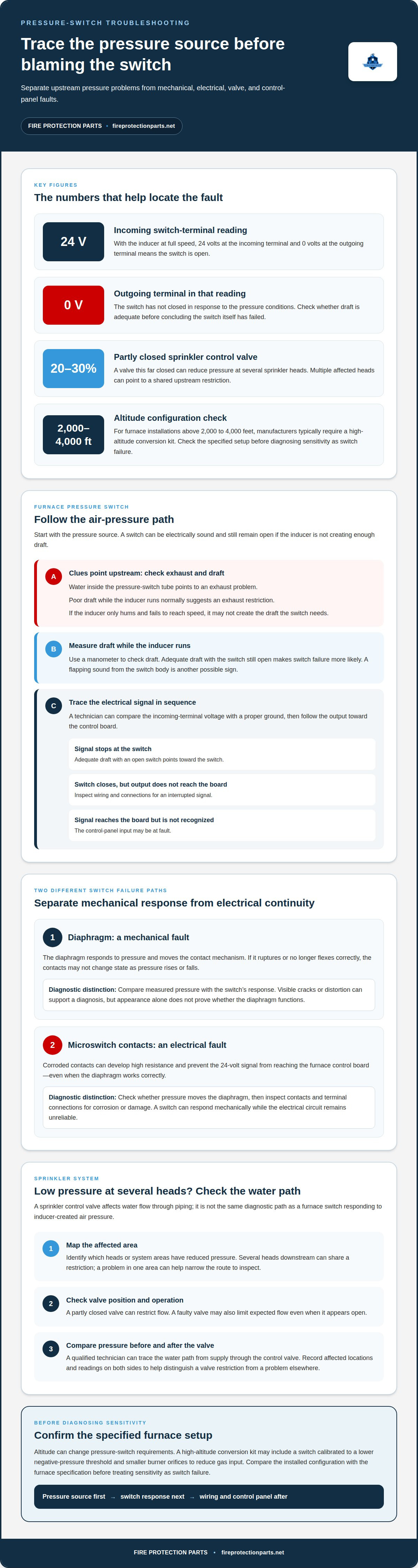
Start with the pressure source, not the switch. In furnace equipment, water inside the pressure-switch tube points to an exhaust problem. Poor draft with the inducer running normally also suggests an exhaust restriction. If the inducer only hums and fails to reach speed, the motor may not be creating the draft the switch needs.
Check draft with a manometer while the inducer runs. Adequate draft with the switch still open makes switch failure more likely. A flapping sound from the switch body is another possible sign of switch failure. These clues help distinguish an exhaust problem from a switch that isn’t responding to sufficient pressure.
Voltage readings can help locate an electrical fault. A technician can check the voltage at the incoming terminal from the control board against a proper ground. With the inducer at full speed, 24 volts at the incoming terminal and 0 volts at the outgoing terminal means the switch is open. If the switch closes but its output doesn’t reach the board, inspect the wiring and connections. If the signal arrives at the board but isn’t recognized, the control-panel input may be at fault.
Troubleshooting a fire system pressure switch starts by tracing the signal through the circuit. Distinguish the switch, wiring, and control panel by measuring each point in sequence. A failed reading at the switch despite adequate draft points toward the switch; an interrupted signal between switch and board points toward wiring. If the signal reaches the board without the expected response, attention shifts to the panel.
Altitude can change the pressure-switch requirements. For furnace installations above 2,000 to 4,000 feet, manufacturers typically require a high-altitude conversion kit. It may include a switch calibrated to a lower negative-pressure threshold and smaller burner orifices to reduce gas input. Compare the installed setup with the furnace’s specified configuration before diagnosing sensitivity as switch failure.
2. Ruptured diaphragms and corroded contacts
A pressure switch can fail mechanically or electrically, and each fault needs different checks. Inside the switch, a diaphragm responds to pressure changes and moves the contact mechanism. If the diaphragm ruptures, it may no longer flex correctly, so the contacts won’t change state as pressure rises or falls. A sound electrical connection alone can’t correct that mechanical failure.
A technician assesses diaphragm response alongside the pressure reaching the switch. If pressure is present but the switch doesn’t actuate consistently, a damaged diaphragm is one possible cause. Cracks, distortion, or other visible damage can support that diagnosis, but appearance alone doesn’t establish whether the diaphragm works correctly. Comparing its switching response with measured pressure helps distinguish a mechanical fault from an upstream pressure problem.
Corrosion creates a different failure path. Electrical microswitch contacts can develop high resistance, preventing the 24-volt signal from reaching the furnace control board even when the diaphragm works correctly. In that case, pressure may move the diaphragm, but the electrical circuit still fails to carry the signal reliably. A switch that responds mechanically can therefore still produce a control fault.
Diagnosis should separate mechanical action from electrical continuity. The technician checks whether pressure moves the diaphragm, then examines the microswitch contacts and terminal connections for corrosion or damage. The signal path is traced through the switch toward the control board to identify where continuity breaks down. This avoids treating every open circuit as a ruptured diaphragm or replacing a functioning switch when corroded contacts are the actual cause.
These faults can produce similar symptoms, but their evidence differs: poor mechanical response points toward the diaphragm, while high resistance at corroded contacts points toward an electrical interruption. Check the switch’s pressure response and contact condition separately; one can fail while the other still operates.
3. Partially closed or faulty valves
In a sprinkler system, low pressure at several heads can originate at a control valve, not a pressure switch. A valve that is 20-30% closed can reduce pressure at several sprinkler heads. That pattern matters: a single switch fault doesn’t explain why multiple heads downstream experience reduced pressure. Identify which heads or system areas are affected before narrowing the cause.
A qualified technician can trace the water path from the supply through the control valve toward the affected area. Valve position is a key first check. A partially closed valve restricts flow through the system, so downstream readings may differ from readings before the valve. Comparing pressure on both sides helps determine whether the restriction starts there or elsewhere.
A faulty valve can also prevent the system from receiving the expected flow, even when it appears open. The technician evaluates how the valve operates and whether pressure changes across it match the symptoms. If several heads share the same downstream section, their combined pattern can help locate the restriction. If the issue appears in only one part of the system, attention can focus on the route supplying that area.
Keep valve-related pressure problems separate from furnace pressure-switch diagnostics. A furnace switch responds to air pressure created by an inducer; a sprinkler control valve affects water flow through piping. The equipment and measurements differ. Treating a sprinkler pressure complaint like a furnace switch fault can direct attention to the wrong component.
Record the affected locations and pressure readings taken before and after the control valve. Those observations help distinguish a restriction at the valve from a problem elsewhere in the water supply or piping. Don’t adjust a system control valve as a diagnostic shortcut; its position affects sprinkler protection. Comparing the valve position, pressure readings, and affected heads gives the technician a focused basis for identifying the fault.
4. Poor pressure-switch sensitivity
A pressure switch must respond at its specified pressure threshold. For a furnace switch, the stated closing threshold may range from -0.10 to -0.50 inches of water column. That range is for furnace equipment, not a universal setting for fire sprinkler pressure switches. For a sprinkler switch, use the pressure setpoint and tolerance specified for its model and application.
How does a fire sprinkler pressure switch work? Pressure changes move an internal diaphragm, which operates electrical contacts and sends a signal to the fire alarm control panel. If the switch is poorly adjusted or its diaphragm spring is overloaded, it may not change state at the intended pressure. For the switch described with an adjustment screw, deflation pressure above 0.70 Mpa indicates the screw is too tight; loosening it reduces spring compression and deflation pressure.
NFPA 72 testing and maintenance should follow the requirements applicable to the installed system, alongside the switch manufacturer’s procedure. A pressure value for furnace equipment shouldn’t be substituted for a sprinkler switch’s specified setting.
Have a licensed fire protection technician handle testing or adjustment when the switch is connected to an active fire alarm or sprinkler system. Electrical diagnosis, pressure measurement, and setting changes can affect system signaling. For safe testing, use the manufacturer’s procedure and suitable test equipment; don’t alter wiring or pressure settings as an informal check.
Bypassing or disabling a pressure switch can prevent the system from reporting a pressure change to the control panel. That can leave a fault or alarm condition unreported, so keep the switch in service during diagnosis.
How much does repair or replacement cost in the United States? The total depends on the diagnosed fault, required replacement parts, labor, and access to the switch; a reliable estimate needs those details. First distinguish a sensitivity adjustment from a failed component, then determine whether repair or replacement is needed. This keeps the response focused on the actual fault.
Fire Protection Parts
Fire Protection Parts helps customers source fire protection equipment when troubleshooting identifies a component or system need. Once a technician has isolated the fault, matching the required equipment to the system is the next practical step. The product range includes heavy-duty CPVC Pipe for Fire Protection, Residential Fire Pump Systems, PTR Electric Deluge VXD, and ASC Seismic Bracing.
These products serve different roles in fire protection systems, so let the diagnosis guide selection. For example, distinguish a pressure-switch issue from a water-supply or piping problem before choosing related equipment. Use the findings to identify what the system actually requires, rather than treating a switch symptom as proof that another component needs replacement.
Contact Fire Protection Parts to discuss the fire protection equipment relevant to your system needs.
Move from diagnosis to a confident next step
A disciplined approach to troubleshooting a fire system pressure switch turns an uncertain symptom into a clearer equipment decision. Before acting, record the diagnostic findings: the affected system area, observed pressure behavior, switch response, and any electrical readings. This helps keep the next step tied to the actual fault rather than an assumption based on one alarm or symptom.
Use that diagnosis to determine whether the system needs a component, a different pressure-related product, or further technical attention. The right choice depends on the system’s design and the evidence gathered during troubleshooting. Avoid changing a setting or bypassing a device simply to clear a fault; maintaining reliable system signaling and protection comes first.
When the diagnosis points to fire protection equipment needs, take the next step with a clear understanding of the issue and the system involved. Contact Fire Protection Parts to discuss your equipment needs. A careful, evidence-led decision helps you move forward with greater confidence.
Frequently Asked Questions
What Are Fire Sprinkler System Pressure Problems?
Sprinkler-system water pressure problems occur when pressure doesn’t match the system’s expected operating condition. A problem may show up as an alarm, an unexpected pressure change, or reduced water delivery at affected outlets. To narrow it down, note whether the issue affects the whole system or one area, and record when the alarm or pressure change occurs. Those details help focus the diagnosis.
What are common causes of a fire system pressure switch trouble or alarm?
Common causes include changing supply pressure, water leakage, a loose electrical connection, damaged wiring, or a switch setpoint that doesn’t suit the system. For example, an intermittent alarm that coincides with visible moisture near wiring calls for checking the electrical enclosure and connections. Record the alarm timing and system conditions, then have a qualified technician assess the switch circuit and related equipment.
How to troubleshoot a fire sprinkler pressure switch step by step?
Use a controlled sequence led by a qualified technician; don’t bypass the switch or alter an active system as a test.
- Record the panel message and the affected system area.
- Review recent system changes or maintenance that could explain the symptom.
- Measure pressure using the switch manufacturer’s procedure and suitable equipment.
- Check the switch circuit, wiring, and panel response.
- Compare results with the device specifications, then document the fault and corrective action.

