



Dry Sprinkler Pressure Maintenance Pump: Buyer's Guide
Could the “pressure maintenance pump for dry sprinkler system” in your project notes refer to a different component than you expect? Dry systems use air-pressure equipment to supervise the piping, while a fire pump serves a water-supply function. Similar-sounding terms can lead to the wrong purchase and complicate installation.
Before you buy, start with the system requirements rather than the shorthand used in a product search. This guide explains how to identify the equipment category your project calls for, distinguish air-pressure maintenance equipment from other pumps, and compare product ratings, listings, and compatibility with approved project documents. It also covers what to check when plans and product information use different terms. Fire Protection Parts carries air compressors and other fire-protection components, but a particular product’s availability or suitability should be confirmed for your project. Review the project specification and applicable requirements before ordering.
Key Takeaways
- Learn why “pressure maintenance pump for dry sprinkler system” can refer to different equipment, and how to clarify whether the requirement concerns air or water pressure.
- Understand the general pressure-maintenance sequence and why the specified air-supply arrangement depends on the system design.
- Use a side-by-side comparison to check equipment function, documented ratings, approvals, and project compatibility.
- Follow a pre-purchase checklist to gather key project documents and resolve unclear specifications before ordering.
- See when a sprinkler-system air compressor may be relevant and how to assess it against the project requirements.
Pressure maintenance pump for a dry sprinkler system: what does the term mean?
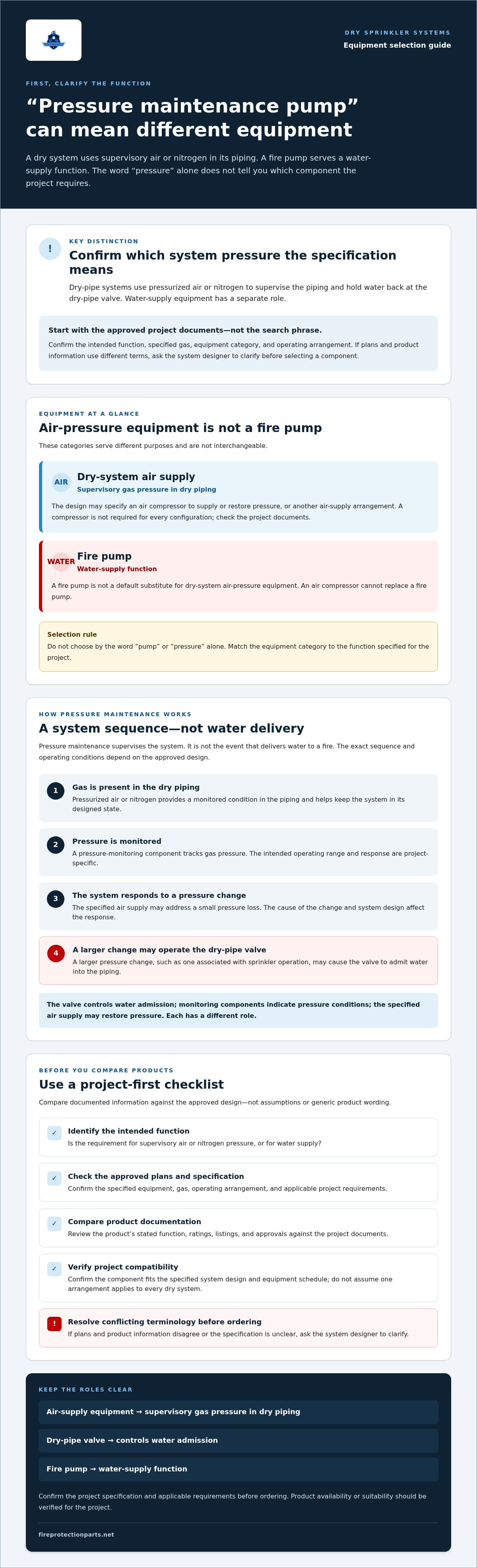
“Pressure maintenance pump for a dry sprinkler system” is a broad search phrase, not the name of one standard component. Depending on the project, “pressure” may mean supervisory air or nitrogen in the sprinkler piping, or water pressure supplied to the fire-protection system. Those functions require different equipment.
Dry-pipe systems use pressurized air or nitrogen to supervise the piping and hold water back at the dry-pipe valve. The system responds to pressure changes according to its design. For background on how dry systems differ from other arrangements, see this overview of Fire sprinkler system types. Check the approved project documents for the system’s gas, equipment, and operating arrangement rather than assuming every dry system is configured the same way.
Start equipment selection by confirming which system pressure the specification addresses. This helps avoid ordering a component that sounds right but serves a different purpose.
Does a dry sprinkler system use a pump or an air compressor?
A dry system’s supervisory gas pressure helps keep the piping in its intended operating condition. The design may specify an air compressor to supply or restore that pressure, but a compressor isn’t required for every arrangement. The project may call for another air-supply setup, and the word “pump” alone doesn’t identify the equipment needed.
Check the approved plans and equipment schedule for the specified function and terminology. If those documents are unclear or use conflicting terms, ask the system designer to clarify before choosing a component.
How is an air-maintenance device different from a fire pump?
Air-pressure equipment and fire pumps serve separate functions. An air compressor or other specified air-supply component relates to supervisory gas pressure in dry piping. A fire pump serves a water-supply function within a fire-protection system. A fire pump isn’t a default substitute for air-pressure equipment, and an air compressor can’t replace a fire pump.
Don’t choose between these categories based on the word “pressure” alone. Verify the intended function and project requirements in the approved documents. If the specification calls for a fire pump, confirm the required equipment with the project team. If it calls for dry-system air-pressure equipment, identify that category before comparing products.
How pressure maintenance works in a dry sprinkler system
Pressure maintenance supervises the system. It isn’t the event that delivers water to a fire. In a dry-pipe system, pressurized air or nitrogen fills the piping while a dry-pipe valve controls the water supply. A pressure-monitoring component tracks the gas pressure. If that pressure changes, the system responds according to its design and the cause of the change.
The specified air-supply arrangement may address a small pressure loss. A larger change, such as one associated with sprinkler operation, may cause the dry-pipe valve to operate and admit water into the piping. The exact sequence and operating conditions depend on the project. Use the approved design documents and manufacturer information, not a generic pressure value or product description, to confirm how a particular system should operate.
An air-supply component helps maintain supervisory gas pressure; the system’s water-delivery function is separate. This distinction matters when you search for a pressure maintenance pump for dry sprinkler system, since the phrase alone doesn’t establish what the equipment is designed to do.
What role does supervisory air pressure play?
Air or nitrogen provides a monitored condition in the dry piping and helps keep the system in its designed state. The system is designed to respond to a pressure change, but the intended operating range and response depend on the project. Confirm them in the approved plans, specifications, and applicable manufacturer documentation. Don’t assume the settings for one system apply to another.
Which components may be involved in pressure maintenance?
Depending on the design, the arrangement may include an air compressor, associated controls, pressure-monitoring components, and a dry-pipe valve. These components have different roles. The valve controls water admission, monitoring components indicate pressure conditions, and the specified air supply may restore pressure. They work together as a system, but they aren’t interchangeable. For additional context on the riser and its operation, consult relevant NFPA material alongside the project documents.
Routine pressure maintenance isn’t the same as system activation, testing, or corrective maintenance. A compressor restoring pressure under normal conditions doesn’t establish that a leak has been resolved or that the system has been tested. Address an unexplained pressure change according to the project’s procedures, with the responsible fire-protection professionals.
For more background on equipment selection, review this dry sprinkler system air compressor guide. If the project specifies an air compressor, you can also browse sprinkler-system air compressors and compare product documentation with the approved requirements before ordering.
How to compare pressure-maintenance equipment before you buy
Begin with the approved project documents, then compare the specified equipment with manufacturer data sheets. A category name or product title doesn’t prove that a component performs the required function or fits the system. A side-by-side check can help identify missing information before you order.
| Compare | What to verify |
|---|---|
| Equipment category | Does the project call for an air compressor, another air-supply arrangement, or water-pressure equipment? |
| Required function | Does the component’s documented purpose match the function specified for the system? |
| Ratings and capacity | Do the manufacturer’s documented operating range and capacity align with project requirements? |
| Approvals | Are the model-specific listings or approvals required by the project documented? |
| Compatibility | Do connections, controls, and electrical characteristics match the design and installation conditions? |
Which specifications should buyers verify?
Check the equipment type, operating range, connections, controls, and electrical supply against the project documents. Review environmental conditions when the specification or manufacturer instructions make them relevant. Confirm any required listing or approval with the responsible design professional and the authority having jurisdiction. Requirements can vary by project, so don’t assume that documentation for one product applies to another model.
Write down unanswered questions before ordering. A similar appearance, familiar label, or matching product title doesn’t establish compatibility. If the data sheet and approved plans use different terminology, ask the project team to resolve the discrepancy instead of making an assumption.
When is an air compressor the relevant product category?
An air compressor may be the right category when the dry-system specification calls for one as part of its air supply. Confirm the required function, then compare the compressor’s documented information with the system design and manufacturer instructions. Fire Protection Parts sells air compressors for sprinkler systems, but check the specific model’s ratings, listings, and compatibility against your project requirements.
For a broader procurement approach, see this guide to sprinkler system component sourcing guidance. Once the project confirms that an air compressor is required, you can browse sprinkler-system air compressors and compare their documentation with the approved requirements.
A pre-purchase checklist for dry sprinkler pressure equipment
Before ordering, confirm what the system requires and match that requirement to the product documentation. Use this checklist to catch unclear terminology, missing details, and mismatched components before they affect procurement or the project schedule.
- Confirm the equipment function. Identify the system type and establish whether the design calls for air-pressure maintenance equipment, such as a specified air compressor, or another category. Don’t assume “pressure maintenance pump for dry sprinkler system” names the component your project needs.
- Collect the project documents. Gather the approved plans, equipment schedules, manufacturer references, and known site requirements. Use current project documents as the basis for selection.
- Verify the specifications. Compare the proposed equipment’s model details, operating requirements, connections, controls, electrical characteristics, and required approvals with the documents. Confirm the characteristics relevant to the project.
- Resolve uncertainties. Flag missing or conflicting information and ask the responsible design professional or supplier to clarify it before purchase. Don’t infer compatibility from a product title or appearance.
- Confirm order details. Check the exact model, quantity, required accessories, and delivery requirements before submitting the order. Verify each detail against the project schedule.
What information should you gather before requesting or placing an order?
Have the approved plans and equipment schedule available, along with manufacturer references and known site requirements. Record the specified function, model requirements, connections, and applicable listing or approval requirements. If a document is incomplete or uses terminology that doesn’t match the product information, keep the question open until the design professional or supplier clarifies it. A written record of the requirement helps reduce guesswork.
What should you verify before installation or replacement?
Before a component is installed or replaced, confirm that it matches the approved documents and the manufacturer’s instructions. Don’t treat a replacement as like-for-like based only on its label or physical similarity. Model details and system requirements still need to align. For background on sourcing parts for repair projects, see this guide to fire-protection parts for system repairs.
Once the required category is confirmed, browse fire-protection system components and compare product documentation with the project requirements before ordering.
Source the specified dry sprinkler components with confidence
The key question is whether the project requires equipment to maintain air pressure or equipment that serves a water-pressure function. Confirm the distinction in the project documents before selecting a component. The phrase “pressure maintenance pump for dry sprinkler system” doesn’t establish the required equipment category or show that a particular product will work with the system.
Once the requirement is clear, compare the selected product’s model-specific documentation with the approved plans, equipment schedule, and applicable project requirements. Check specifications, approvals, and compatibility for the exact item. A general category description alone doesn’t confirm availability or suitability.
How can Fire Protection Parts support your sourcing process?
Fire Protection Parts is an online retailer of fire-protection hardware, including air compressors for sprinkler systems and other system components. The store supports individual and bulk purchases. Confirm availability and project fit for the specific item rather than assuming either. A compressor may be relevant when the project specifies one for its dry-system air supply, but it doesn’t serve a different function simply because its category name sounds similar.
Use product information as part of your comparison, then check the exact model against the project documents. Fire Protection Parts doesn’t provide on-site installation or fire-safety inspections, so coordinate equipment selection and field work with the responsible project professionals.
What is the safest next step if the specification is unclear?
Pause before ordering. Ask the system designer or a qualified fire-protection professional to confirm whether the requirement concerns air or water pressure and to clarify the intended equipment type. Check model details and applicable project approvals with the responsible team. Resolve conflicting terminology in writing so the purchase is based on a clear requirement rather than an assumption.
After confirming the equipment category, review the available product information against the project documents. Browse fire-protection components at Fire Protection Parts, then confirm any unresolved specifications, availability, and compatibility for the specific item before placing your order.
Make your next equipment order with confidence
The right pressure-maintenance equipment depends on the project requirements. First, confirm whether the specification concerns supervisory air pressure or water pressure. Then compare the selected component’s model details, ratings, connections, and required approvals with the approved project documents. The phrase pressure maintenance pump for dry sprinkler system doesn’t confirm the equipment category or its compatibility.
If the specification calls for an air compressor, Fire Protection Parts offers sprinkler-system air compressors and other fire-protection hardware for individual and bulk purchases. Verify availability and suitability for the specific item before ordering.
Browse fire-protection components at Fire Protection Parts and compare the product documentation with your project requirements. If any details remain unclear, confirm them with the system designer or a qualified fire-protection professional first. Once the requirement is verified, you can proceed with a clearer basis for your order.
Frequently Asked Questions
Does a dry sprinkler system need a pressure maintenance pump?
Not necessarily. A dry sprinkler system needs the pressure-maintenance arrangement specified by its approved design. That may include an air compressor or another air-supply setup to maintain supervisory gas pressure. The phrase “pressure maintenance pump for dry sprinkler system” doesn’t identify one standard component. Check the equipment schedule and system documents to determine whether the requirement concerns air pressure or water pressure. Ask the system designer to clarify unclear terminology.
Can an air compressor maintain pressure in a dry sprinkler system?
Yes, an air compressor can maintain supervisory air pressure when the system design specifies one for that role. The compressor and its associated controls must match the project requirements and manufacturer instructions. Don’t assume any sprinkler-system compressor is suitable based on its category alone. Check model details, capacity, electrical characteristics, connections, and required approvals against the approved plans before selecting or ordering equipment.
What is the difference between a pressure maintenance pump and a jockey pump?
The terms can refer to different functions, so check how they’re used in your project documents. A jockey pump generally maintains water pressure in a water-based fire-protection system. Dry-system air-pressure equipment, such as a specified compressor or air-maintenance device, relates to supervisory gas pressure in the piping. These components aren’t interchangeable. Check the equipment schedule and ask the system designer to identify the required pressure and equipment category.
How do I choose an air compressor for a dry sprinkler system?
First confirm that the approved design calls for an air compressor. Then compare the manufacturer’s documentation with the system requirements, including the specified operating range, capacity, controls, electrical supply, connections, and installation environment where applicable. Verify any required model-specific listing or approval with the project team and authority having jurisdiction. A product title or general description alone doesn’t confirm suitability for your system.
Can I replace a dry sprinkler system pressure-maintenance component myself?
Don’t assume replacement is a simple, like-for-like task. The selected component must match the system design, approved project documents, and manufacturer instructions. A different model may have different ratings, connections, controls, or approval details. Have the system designer or a qualified fire-protection professional confirm the correct replacement and coordinate the work. Fire Protection Parts sells components online but doesn’t provide on-site installation or fire-safety inspections.
What information should I have before ordering dry sprinkler equipment?
Gather the approved plans, equipment schedule, manufacturer references, system type, and any known site requirements. Record the required function, model details, connections, controls, and applicable approvals. Also confirm the quantity, accessories, and delivery requirements. If product information conflicts with the project documents or leaves a specification unclear, resolve it with the system designer or supplier before ordering. This helps reduce the risk of selecting a mismatched component.

