



Troubleshooting Fire Sprinkler Systems: A Professional Guide to Diagnostics and Repairs
What if the difference between a routine maintenance check and a $1,000 emergency service call is simply knowing how to identify a failing component before it triggers a system-wide impairment? You likely understand that maintaining fire safety is a non-negotiable obligation. However, the complexity of legacy hardware and the strict 2026 NFPA 25 updates can make even a small leak feel like a looming disaster. The fear of an accidental discharge or a failed fire marshal inspection is real, especially when you're staring at a corroded head and can't find the original manufacturer's specifications.
This guide provides the professional clarity you need to troubleshoot diagnostics, identify exact SIN numbers for common fire sprinkler replacement parts, and restore your system to full code compliance. We'll break down critical failure points, from malfunctioning backflow preventers to the specific maintenance requirements for dry pendent sprinklers and air compressors. By the end of this article, you'll have the knowledge to source verified components and maintain a reliable, safety-conscious system that protects your property and your peace of mind. We move quickly from identifying the problem to presenting a functional remedy that ensures long-term performance.
Key Takeaways
- Master a systematic approach to diagnostics to differentiate between minor maintenance needs and critical system impairments.
- Spot early warning signs of failure, such as sediment build-up on sprinkler heads or weeping at valve stems, before they lead to accidental discharge.
- Identify the root causes of pressure fluctuations and control panel alerts to eliminate disruptive nuisance alarms.
- Protect system integrity by sourcing code-compliant common fire sprinkler replacement parts that match original manufacturer specifications.
- Prepare for Fire Marshal inspections with a systematic audit that verifies critical components like gauge calibration and valve seating.
The Fundamentals of Fire Sprinkler System Diagnostics
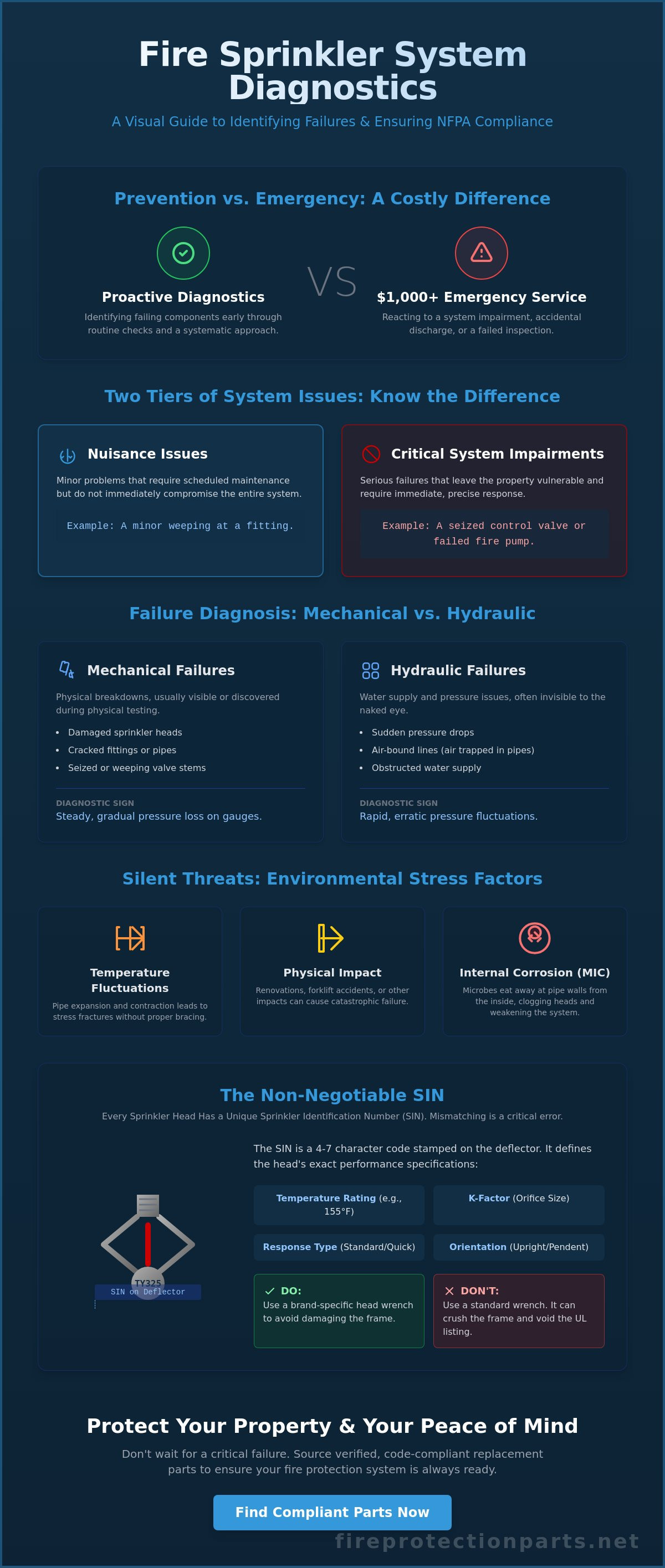
Effective troubleshooting is a disciplined process. It requires identifying component-level failures within the specific frameworks of NFPA 13 for commercial properties and NFPA 13D for residential settings. A professional Fire sprinkler system is a complex network of mechanical and hydraulic elements that must work in perfect unison. When a component fails, the response must be immediate and precise. We categorize these issues into two tiers: nuisance issues and critical system impairments. A minor weeping at a fitting is a nuisance that requires scheduled maintenance. A seized control valve or a failed fire pump is a critical impairment that leaves the property vulnerable. Safety doesn't allow for shortcuts.
Restoring these systems follows a "No Compromise" rule. Life-safety hardware is never patched, taped, or repaired with generic components. If a part is compromised, it must be replaced with listed, code-compliant hardware. Identifying the correct common fire sprinkler replacement parts, such as specific Sprinkler Identification Numbers (SIN) or matching escutcheons, is the only way to ensure the system remains within its original design parameters. To begin diagnostics, you need a specific toolkit. This includes calibrated pressure gauges, SIN identification charts, and specialized head wrenches that won't damage the frame during removal.
Mechanical vs. Hydraulic System Failures
Mechanical failures are physical. They include damaged sprinkler heads, cracked fittings, or seized valve stems that won't turn. These are usually visible to the naked eye or discovered during physical testing. Hydraulic failures are often invisible. They manifest as sudden pressure drops, air-bound lines, or obstructed water supplies. You can use your system gauges to differentiate between the two. A steady, gradual pressure loss often suggests a slow mechanical leak. Rapid, erratic fluctuations usually point to a hydraulic issue or a failing backflow preventer.
Environmental Factors in System Degradation
Temperature fluctuations are a primary driver of system stress. Both metal and Viking Plastics CPVC pipe expand and contract as ambient temperatures shift. Without proper ASC seismic bracing or room for expansion, this movement leads to stress fractures. Physical impact is another reality. Renovations or forklift accidents can cause immediate, catastrophic failure. Finally, Microbiologically Influenced Corrosion (MIC) acts as a silent threat. This internal pipe degradation eats away at the system from the inside out, eventually clogging heads and weakening pipe walls. Monitoring your water quality and using the right anti-freeze for fire protection are critical steps in mitigating these environmental risks.
Identifying and Resolving Mechanical Component Failures
Mechanical failures often hide in plain sight. You might notice a sprinkler head with a dark, discolored bulb or a frame that looks slightly bent. These aren't just cosmetic issues; they're indicators of a compromised life-safety device. Sediment build-up is another red flag. It can obstruct the water flow during a fire. Similarly, valves that weep at the stem or fail to seat fully suggest internal wear. These mechanical breakdowns are why keeping an inventory of common fire sprinkler replacement parts is essential for facility resilience. Identifying these issues early prevents the "panic buy" during an emergency.
Sprinkler Head Identification and SIN Mapping
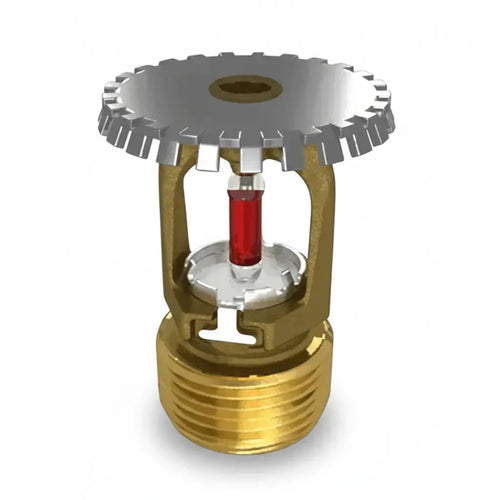
Every sprinkler head has a Sprinkler Identification Number (SIN) stamped onto the deflector. It's a code, usually four to seven alphanumeric characters, that tells you everything about the head's performance. You cannot guess here. You must match the temperature rating and K-factor exactly to the original design. Swapping a 155°F head for a 200°F head could delay activation and risk lives. When you perform the swap, always use brand-specific wrenches. Using a standard crescent wrench can crush the frame and void the UL listing. It's a simple tool that prevents a costly mistake.
Valve and Backflow Preventer Troubleshooting
If your fire control panel starts beeping, it's often a flow switch or tamper switch signal. These electronic components monitor the mechanical state of your water supply. A weeping backflow preventer is a sign that internal seals have perished. This requires either a specialized rebuild kit or a full replacement of the backflow preventer. Neglecting these issues violates the OSHA automatic sprinkler systems standard, which mandates that all systems be maintained in reliable operating condition. Watch out for slow-closing valves too. If a valve takes too long to shut, it creates a water hammer effect that can rupture pipe joints downstream.
CPVC Piping and Fitting Failures
When working with Viking CPVC fire sprinkler pipe, identification of Environmental Stress Cracking (ESC) is vital. ESC happens when the pipe contacts incompatible chemicals, like certain oils or fire-stop caulks. You'll see fine, spider-web cracks on the surface. Improper solvent cement application is another common failure point. If you see "beading" or excessive purple primer, the joint may be weakened. Always use code-compliant CPVC fittings for repairs. Don't overlook the trim either. Missing or damaged escutcheons are more than just ugly; they are a code violation in many jurisdictions because they can affect the heat-sensing ability of recessed heads. Ensure your list of common fire sprinkler replacement parts includes these critical finishing pieces to stay compliant.
Troubleshooting Pressure Fluctuations and Water Supply Issues
Pressure stability is the foundation of a reliable fire protection system. When pressure levels swing wildly, it does more than just trigger a nuisance alarm; it causes mechanical fatigue on every joint and valve. A "Low Pressure" alert on your fire control panel is a call to action that requires immediate investigation. This signal often indicates a breach in the system's integrity or a failure in the water supply. Maintaining a stock of common fire sprinkler replacement parts, such as pressure switches and calibrated gauges, allows for rapid restoration when these alerts occur. Following the NFPA 13 standard ensures that your system maintains the hydraulic calculations necessary for life safety. If the supply pressure from the municipal main is inconsistent, your system must be robust enough to handle the stress without compromising performance.
Air Supply Troubleshooting for Dry Systems
In dry pipe and pre-action systems, the air compressor is a critical component. You can identify a leak in the system by monitoring for compressor short-cycling. If the motor kicks on every few minutes, you have a leak that needs attention. Beyond the mechanical strain on the compressor, constant cycling introduces fresh, oxygen-rich air that accelerates internal pipe corrosion. Moisture is another enemy. Check your air lines for condensation regularly. When an aging air compressor begins to struggle, you must decide between a repair and a full replacement. If the pressure switch is faulty, a simple swap is effective. However, if the pump head is overheating or failing to reach target PSI, a new unit is the only safe choice to ensure system readiness.
Residential Fire Pump System Diagnostics
Residential Fire Pump Systems are essential for maintaining adequate pressure in NFPA 13D installations, especially in areas with weak municipal water. During your monthly flow test, the pump should activate immediately. If it fails to start, check the controller for power issues or seized motor shafts. Rapid pump cycling often points to a failure in the pressure tank bladder. When the bladder loses its charge, the system loses its "cushion," forcing the pump to start and stop violently. You should also listen for the sound of marbles rattling inside the pump casing. This is a sign of cavitation, where air bubbles implode against the impeller. Cavitation restricts water flow and can destroy the pump's internal components. Identifying these common fire sprinkler replacement parts early prevents a total water supply failure during a fire event.
Critical Inspection Points for NFPA Compliance
Passing a Fire Marshal inspection isn't a matter of luck. It's the result of a methodical verification of every life-safety component in your facility. You should conduct a "pre-inspection" audit to catch failures before they become costly citations or, worse, system impairments. Compliance is about more than just functionality; it's about documented readiness. Start with your pressure gauges. NFPA 25 mandates that gauges be replaced or recalibrated every five years. If your calibration dates are expired, it's an automatic deficiency. This is a simple, low-cost fix that frequently catches facility managers off guard.
Next, move to the spare head box. This cabinet is a primary focal point for inspectors. It must be stocked with at least six spare heads that match the exact types, temperatures, and SIN numbers used throughout the building. If your system uses a variety of heads, including common fire sprinkler replacement parts like uprights, pendants, or sidewalls, you need spares for each. Crucially, the box must also contain the specific, brand-matched wrenches required for installation. A missing wrench is a code violation because it prevents emergency restoration. Finally, verify that every control valve is in the "Open" position. They must be either electronically supervised by the fire panel or physically locked with a chain and break-away padlock to prevent unauthorized tampering.
The 5-Step Visual Audit
Step one is a visual sweep for "loaded" heads. Dust, grease, or paint on a deflector or glass bulb will impede heat response and water distribution. These heads must be replaced; never attempt to clean them with chemicals or abrasive tools. Step two involves verifying that all pipe hangers and ASC Seismic Bracing are secure. Seismic components are often loosened during other building renovations, compromising the system's structural integrity. Step three is clearing the riser room. Ensure there's a clear, unobstructed path to all main drains and test valves. An inspector shouldn't have to move boxes or equipment to access your system's core.
Testing and Documentation
Perform a main drain test to verify water supply consistency. By recording the static and residual pressures, you can identify if a street valve has been partially closed or if debris is obstructing the flow. Documentation is your strongest defense. Keeping detailed records of your troubleshooting steps and maintenance proves "due diligence" to insurance adjusters and helps avoid liability if a claim arises. Maintaining an on-site inventory of common fire sprinkler replacement parts ensures you can resolve minor issues immediately after they are identified. This proactive approach keeps your system online and your property protected without the need for expensive emergency service calls.
Sourcing Replacement Hardware for System Restoration
System integrity depends on the precision of your components. When a diagnostic check reveals a failure, brand-matching is non-negotiable. Viking, Tyco, and Victaulic hardware is engineered to specific tolerances that generic alternatives cannot replicate. Using non-listed or "universal" hardware in a life-safety application introduces unacceptable risk. A single mismatched component can cause a valve to seize or a head to fail during a fire event. Professional troubleshooting concludes only when the system is restored with parts that maintain its original UL listing and design parameters. There's no room for compromise when lives and property are on the line.
Identifying the correct hardware requires a methodical approach. Use the Sprinkler Identification Number (SIN) found on the deflector to track down legacy or hard-to-find heads. For valves, look for markings on the casting that indicate the model and pressure rating. Once you've sourced and installed your common fire sprinkler replacement parts, you must perform a post-repair test. Slowly pressurize the system and monitor the gauges for any sign of a drop. Inspect every new joint and fitting for weeping. A fully pressurized, leak-free system is the only evidence that your repair was successful. Expert procurement ensures that your restoration is permanent and code-compliant.
Navigating the Fire Protection Parts Catalog
Precision searching is the fastest way to restore your system. You can navigate our catalog by SIN, manufacturer, or specific application, such as wet versus dry systems. If you're repairing a dry system, ensure you're selecting components like dry pendent sprinklers designed for those environments. Cold-weather protection requires identifying the correct anti-freeze for fire protection to prevent pipe bursts. We also stock specialized ASC seismic bracing and all-thread rods to repair or reinforce pipe supports that have been damaged or loosened over time. Having these items on hand prevents minor repairs from turning into major system impairments.
Ensuring Code Compliance During Sourcing
Verification is your final safeguard. Every piece of replacement hardware must carry a UL Listing or FM Approval to be considered code-compliant. These certifications prove the part can withstand the high-pressure demands of a fire event. Sourcing from a specialized retailer who understands the granular details of NFPA requirements eliminates the risk of ordering the wrong part. You gain the confidence that every item in your inventory, from gauges to common fire sprinkler replacement parts, meets the highest industry standards. This professional assurance is what provides long-term peace of mind for facility managers and owners alike.
Source your code-compliant fire protection parts today to ensure your system remains ready for any emergency.
Secure Your System with Professional Restoration
Restoring a fire protection system to full operational status requires a systematic approach that moves beyond temporary fixes. You've learned that effective diagnostics depend on identifying specific component failures and matching those needs with precise, brand-specific hardware. Maintaining your NFPA compliance isn't just about passing an inspection; it's about ensuring the system performs exactly as designed during a crisis. By focusing on verified SIN numbers and pressure stability, you eliminate the risks of accidental discharge and system impairment.
Maintaining a ready inventory of common fire sprinkler replacement parts is the most effective way to avoid emergency surcharges and ensure long-term reliability. We provide a comprehensive inventory of Viking, Tyco, and Victaulic parts to keep your facility protected. Every component is UL Listed and FM Approved, providing the professional assurance you need for code-compliant repairs. If you're struggling to identify a legacy component, our expert technical support is available to assist with part identification. Take the final step in securing your property by choosing hardware that meets the highest safety standards.
Shop Professional Fire Protection Parts & Hardware and restore your system with confidence today.
Frequently Asked Questions
Why is my fire sprinkler system beeping?
A beeping sound usually indicates a supervisory or trouble signal on your fire alarm control panel. This alert is triggered by issues such as a partially closed control valve, low air pressure in a dry system, or a failing battery. You should check the panel display immediately to identify the specific trouble code. Resolving these signals quickly prevents a minor issue from becoming a critical system impairment.
Can I replace a fire sprinkler head myself?
While you can source common fire sprinkler replacement parts to save on hardware costs, the physical replacement should be conducted by a qualified professional. Improper installation can lead to catastrophic accidental discharge or system failure during a fire. You must ensure that the new head matches the original Sprinkler Identification Number (SIN) and temperature rating to maintain the system's UL listing and design integrity.
How do I identify the model of my sprinkler head?
You can identify the model by locating the Sprinkler Identification Number (SIN) stamped on the deflector. This alphanumeric code, usually four to seven characters long, identifies the manufacturer and the head's specific performance characteristics. You should also check the color of the glass bulb or the frame markings to confirm the temperature rating. Matching these details exactly is the only way to ensure code-compliant restoration.
What causes low water pressure in a fire sprinkler system?
Low pressure is often the result of a partially closed municipal water valve, a leak in the underground supply, or a malfunctioning backflow preventer. In homes with weak municipal supply, a failure in the residential fire pump system can also lead to pressure drops. You should compare current gauge readings with your system's baseline static pressure to determine the severity of the loss and identify the failure point.
Why is my dry pipe system air compressor running constantly?
An air compressor that runs continuously is a primary indicator of a leak in the piping of a dry pipe or pre-action system. This "short-cycling" happens because the compressor is struggling to maintain the air pressure required to keep the dry valve closed. Constant operation introduces moisture and oxygen into the pipes, which significantly accelerates internal corrosion. You must locate the leak to prevent a full system trip.
Can I use regular PVC pipe to repair my fire sprinkler system?
No, regular plumbing PVC is never an acceptable substitute for fire-rated piping. You must use listed Viking Plastics CPVC pipe for fire protection or approved metallic piping. Regular PVC lacks the heat resistance and pressure ratings required to survive a fire event. Using non-listed materials will result in a failed fire marshal inspection and could lead to your insurance policy being voided due to non-compliance.
What should I do if a sprinkler head is leaking?
A leaking head, often called a "weeping" head, indicates a failed internal seal or physical damage to the bulb assembly. You should identify the SIN and source a matching replacement immediately to avoid an accidental discharge. Do not attempt to stop the leak with tape or sealants. Use a brand-specific head wrench to remove the damaged component and install a new, listed head to restore the system's reliability.
How often should I troubleshoot or inspect my system?
You should follow the inspection intervals mandated by NFPA 25, which include monthly gauge checks and quarterly valve inspections. Proactive troubleshooting should occur the moment you notice pressure fluctuations or receive a panel alert. Maintaining an on-site stock of common fire sprinkler replacement parts allows you to address deficiencies immediately during these checks. Regular maintenance is the most effective way to provide peace of mind and avoid emergency service surcharges.

