



Troubleshooting Low Air Pressure in a Dry Pipe System: A Practical Guide
Could a pressure drop point to a leak, or is the compressor failing? A low gauge reading raises urgent questions, but replacing parts before identifying the cause may waste time and leave the system unready. Troubleshooting low air pressure in dry pipe system applications starts with tracking how pressure changes over time.
Dry pipe systems rely on maintained air or nitrogen pressure to keep the valve in its normal position. Leaks are a common cause of pressure loss, but compressor problems, clogged filters or dryers, and control settings can also contribute. Pressure trends and changes in compressor operation can help narrow down possible causes.
This guide explains how to interpret pressure symptoms, identify clues that may point to likely causes, and record useful observations before contacting a qualified fire protection professional. It also covers what not to adjust yourself and how to support a safe, code-conscious assessment. Track the pressure behavior first. Have qualified personnel diagnose the system and confirm any replacement parts against its requirements before work begins.
Key Takeaways
- When troubleshooting low air pressure in dry pipe system applications, track pressure trends and alarm history before drawing conclusions about the cause.
- Acceptable supervisory pressure depends on the system design and manufacturer documentation, not on a universal target.
- Changes in pressure or compressor behavior can offer clues about leaks, air-supply problems, or controls, but they don’t confirm a diagnosis.
- Record observations, notify responsible personnel, and follow site procedures while arranging qualified service. Don’t change settings or operate system valves yourself.
- Confirm the cause and system requirements before sourcing replacement components. Qualified personnel should verify stable pressure and proper supervisory status afterward.
What Low Air Pressure Means in a Dry Pipe Sprinkler System
In a dry-pipe sprinkler system, supervisory air pressure is the air or nitrogen pressure monitored to help keep the dry-pipe valve in its set condition. This pressure holds the valve closed against the water supply, keeping water out of the piping during normal operation. If a sprinkler operates, the pressure changes help the valve respond and admit water into the system.
This is the basic difference between dry-pipe and wet-pipe arrangements. For a foundational overview of how dry pipe systems work, see the explanation of how pressurized gas keeps water behind the valve until operation.
A low-pressure supervisory signal is not the same as a water-flow alarm. It indicates that monitored air pressure has moved outside its configured range. A water-flow alarm indicates water movement through the system. Other fire-alarm signals may relate to different equipment or conditions, so check the panel’s exact message rather than assuming all alarms mean the same thing.
Take the indication seriously, but don’t assume one pressure change means the system is about to fail. A sustained or recurring loss can affect supervision and may compromise readiness if left unresolved. Follow site procedures and have qualified personnel assess the condition promptly.
How dry-pipe system air pressure supports operation
System pressure helps hold the valve closed while the system is in its normal state. A change can trigger supervision or affect valve operation, depending on the design. That’s why troubleshooting low air pressure in dry pipe system installations starts with understanding the approved operating range, not applying a generic pressure target.
What to check before diagnosing a low-pressure indication
Gather information without adjusting settings or operating valves. Record the displayed pressure, the time, the panel’s exact alarm text, and any earlier readings available. Note whether the indication is new, recurring, or gradual, and whether another alarm appeared at the same time.
Compare your record with approved system documentation and the manufacturer’s instructions. Acceptable pressure depends on the specific design and valve requirements, so a figure used by another building may not apply. Keep these observations for the qualified professional assessing the system.
- Pressure: Record the current reading and any available prior values.
- Signals: Capture the alarm wording and any related indications.
- Timing: Note when the change began and whether it repeats.
Troubleshooting Low Air Pressure in Dry Pipe System: Trace Likely Causes
Use an observation-first sequence. The goal is to give qualified fire protection personnel a clear record, not to test or reset the system yourself. Don’t change pressure settings, silence or reset equipment, or operate valves to see what happens. Follow site procedures and manufacturer instructions. System-specific requirements govern any inspection or adjustment.
Read the pressure pattern before inspecting components
Start with the pressure trend and alarm history. Compare the current reading with earlier records to establish whether the loss appears sudden, gradual, or intermittent. Note when the signal began, whether it cleared and returned, and whether another system indication occurred at the same time. A sequence of readings offers more context than a single reading.
Observe the compressor from a safe location. Record whether it seems to run more often than usual, runs continuously, or makes an unfamiliar sound. Note visible operating indicators, but don’t change controls or open equipment. Log weather or maintenance events only when they could be relevant to the system’s design or site conditions, such as a recent service visit or a temperature change in a protected area.
Check the air supply and system for clues
Once the pattern is documented, qualified personnel can assess the air supply, compressor operation, power, controls, and components such as filters or dryers. A compressor that runs frequently while pressure falls may point to air loss or an air-supply issue, but that clue alone doesn’t confirm the cause. System design matters. The NFPA’s discussion of dry sprinkler requirements provides context for why installation and system details affect performance.
From a safe, accessible position, you may note obvious signs such as an unusual sound near a connection or visible damage. Don’t touch fittings, apply leak-detection products, drain piping, or attempt a repair. Qualified personnel should assess drains, joints, and connections using procedures appropriate to the system.
- Record: Pressure readings, timestamps, alarm history, and compressor observations.
- Observe: Accessible visual clues and relevant site or maintenance events.
- Leave to qualified personnel: Component testing, leak confirmation, adjustments, and system changes.
This sequence keeps troubleshooting low air pressure in dry pipe system conditions focused on evidence rather than guesswork. After a qualified professional identifies a failed component, contractors and facility managers can use fire-protection parts sourcing to find a potential replacement, then confirm compatibility against the system design and manufacturer documentation.
Low Air Pressure Symptoms: Compare Leaks, Compressor Issues, and Controls
The same low-pressure indication can have different causes. Look for patterns and share them with qualified fire protection personnel. The clues below can help focus an investigation, but none confirms a fault on its own.
| Observed pattern | Possible explanation | Professional follow-up |
|---|---|---|
| Pressure declines again after being restored, or falls steadily over time | Air loss somewhere in the system, including at piping, fittings, or drains | Have qualified personnel inspect the system and conduct any required leak investigation using applicable procedures. |
| Compressor cycles repeatedly, runs unusually often, or can’t maintain the expected pressure | A leak, air-supply issue, power concern, control problem, or equipment fault | Ask qualified personnel to assess compressor operation, power, air-supply components, and controls. |
| Pressure appears stable, but the panel reports a low-pressure condition, or the signal occurs at an unexpected reading | A pressure-sensing or control issue, alarm threshold, or difference between the displayed value and system records | Have the sensing and control components checked against approved system documentation and manufacturer instructions. |
When a leak or air loss may be involved
A recurring decline may prompt a qualified leak investigation, especially if the compressor runs more often while trying to maintain pressure. Fittings, drains, connections, and piping are possible inspection locations, not presumed defects. Record when pressure changes and whether the pattern repeats. Don’t try to locate a leak by opening or tightening components yourself. The American Fire Sprinkler Association’s discussion of NFPA 25 leak rate testing offers context on formal assessment. Applicable requirements depend on the system and its governing documentation.
When the compressor or pressure controls need attention
Unusual cycling, difficulty maintaining pressure, or a change in operating sounds deserves attention. These signs may relate to the compressor, its power supply, air-supply components, or controls. An alarm that doesn’t appear to match the gauge may also warrant checking the sensing and signaling path. These are possibilities, not diagnoses. Qualified personnel should compare alarm thresholds with approved records and confirm the cause before recommending corrective work.
Don’t adjust pressure-switch settings or valve components as a trial-and-error fix. A setting change can mask the underlying issue or affect system operation. When troubleshooting low air pressure in dry pipe system conditions, preserve the observed pattern and let qualified personnel test and verify the system under applicable procedures.
Fixing Low Air Pressure Without Compromising Safety
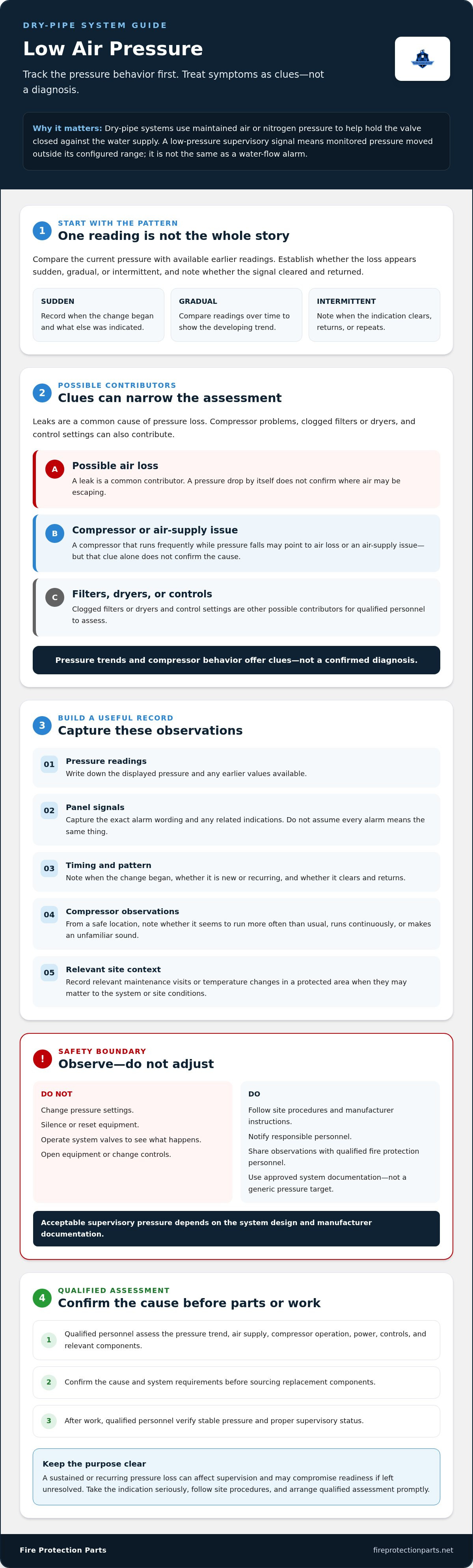
A low-pressure indication calls for a controlled response, not an improvised repair. Follow your facility’s procedures and keep the system’s condition visible to the people responsible for fire protection. Separate observation and notification from system adjustments.
- Recognize and report the signal. Follow site procedures for acknowledging it. Don’t silence, reset, or clear an alarm in a way that hides an unresolved condition.
- Notify responsible personnel. Contact the facility’s designated fire protection contact and follow its impairment plan, including any required notifications.
- Document what you observe. Record the pressure, exact alarm message, time, recent trend, and related compressor or system indications.
- Arrange qualified assessment. Share the records with qualified fire protection personnel and follow their direction for diagnosis and corrective work.
Don’t close valves, bypass controls, change pressure settings, or attempt repairs. These actions can affect system operation or obscure the original condition. The appropriate response depends on site procedures, system design, manufacturer instructions, and applicable impairment notification requirements. Ask the responsible professional whether additional safeguards or notifications are needed.
Information to gather before calling a fire protection professional
Make the first conversation useful. Have the exact panel message, current pressure reading, time observed, and any earlier readings available. Include compressor operating indications, related alarms, and recent maintenance or work that may be relevant. If accessible, gather approved system drawings, maintenance records, and manufacturer documentation. Don’t delay reporting a concerning condition just to locate paperwork.
When to escalate and how to document the response
Use the facility’s impairment plan to identify who must be notified and what steps apply. The professional assessing the system can advise whether additional safeguards or notifications are required—such as enlisting a professional Fire Watch Service to maintain safety coverage if the sprinkler system must be taken offline. Don’t assume a pressure signal can be handled by simply resetting the panel. Keep a response record of the reported condition, assessment findings, corrective actions, verification performed, and who authorized return to service. Responsible qualified personnel should confirm restoration under applicable requirements, not infer readiness from a cleared alarm alone.
Consider replacement parts only after the cause and system requirements are confirmed. If qualified personnel identify a component that needs replacement, source compatible fire-protection parts against the system design and manufacturer documentation. Fire Protection Parts is an online parts retailer, not an on-site inspection, repair, or emergency-response provider.
Restore Reliable Dry-Pipe Air Pressure and Source the Right Components
Once qualified personnel have identified the cause, replacement can be considered. Replacing a compressor or pressure-related component before diagnosis may leave the underlying problem unresolved. Confirm specifications against the system design, manufacturer instructions, and applicable approvals before ordering. The responsible contractor should verify compatibility, including for any replacement air compressor.
Confirm system requirements before choosing replacement parts
Don’t select a compressor based only on a generic pressure or capacity claim. The correct choice depends on the system’s documented requirements and the manufacturer’s guidance. If a compressor issue is confirmed, use the air compressors guide as a sourcing reference, then have the responsible contractor confirm the component is suitable for the system before purchase.
For other confirmed replacement needs, the fire protection parts and hardware guide and sprinkler system components sourcing guide can help contractors and facility managers understand parts-sourcing considerations. Verify current product details and compatibility against relevant listing and manufacturer documentation.
Verify readiness and reduce repeat pressure problems
After corrective work, qualified personnel should confirm that pressure is stable within the system’s approved range and that supervisory signals show the proper status. A cleared alarm alone isn’t proof that the underlying issue is resolved. Ask what was corrected, what verification was completed, and whether the system has been authorized for return to service under applicable requirements.
Keep service records and monitor pressure trends according to site procedures. If pressure changes again, those records can help distinguish a recurring condition from a new one. This closes the loop on troubleshooting low air pressure in dry pipe system issues: diagnose first, match parts to documented requirements, then verify system readiness.
For a confirmed component need, use the Fire Protection Parts online catalog to source relevant fire-protection hardware. The retailer sells parts, including air compressors for sprinkler systems, but does not provide on-site inspection, installation, or repair services.
Restore Readiness With a Verified Plan
Effective troubleshooting low air pressure in dry pipe system conditions starts with evidence, not guesswork. Track the pressure pattern and alarm history, then share those observations with responsible personnel. A pressure drop may point to air loss, compressor concerns, or a control issue, but only qualified assessment can confirm the cause.
Don’t adjust settings or replace components before diagnosis. After corrective work, qualified personnel should verify stable pressure and proper supervisory status in line with system documentation and manufacturer requirements. Keep the records so future changes are easier to recognize.
When a replacement component is confirmed, Fire Protection Parts offers an online source for fire-protection hardware, including air compressors for sprinkler systems. Check product suitability against your system documentation and manufacturer requirements before ordering. Browse fire-protection components and confirm the right parts for your system.
Stay focused on a safe, documented response. With useful observations and qualified follow-through, you can support a reliable return to readiness.
Frequently Asked Questions
What causes low air pressure in a dry pipe sprinkler system?
Common causes include air leaks in piping or connections, compressor or power problems, clogged air-supply components, and pressure-control issues. These are possibilities, not confirmed diagnoses. When troubleshooting low air pressure in dry pipe system conditions, record pressure readings and alarm history, then have qualified fire protection personnel assess the system. The approved pressure range depends on system design and manufacturer documentation, so don’t assume a generic target applies.
Is low air pressure in a dry pipe system an emergency?
It needs prompt attention, but a low-pressure signal doesn’t automatically mean system failure is imminent. It indicates an off-normal condition that could affect system readiness if unresolved. Follow your facility’s fire protection impairment procedures, notify responsible personnel, and arrange assessment by qualified professionals. Don’t silence the alarm or make adjustments to clear it. If there’s a fire or another immediate hazard, follow the site’s emergency procedures.
How do you find an air leak in a dry pipe sprinkler system?
Have qualified fire protection personnel investigate suspected air loss using procedures appropriate to the system. A recurring pressure decline or a compressor that runs more often may be a clue, but neither proves there’s a leak. Possible inspection areas include piping, fittings, drains, and connections. Record when pressure changes and any visible or audible observations from a safe location. Don’t loosen fittings, operate drains, or attempt leak tests or repairs yourself.
Can a dry pipe sprinkler system operate with low air pressure?
It may still operate, but low pressure can affect supervision and the dry-pipe valve’s operating condition. A low-pressure signal alone doesn’t confirm whether the system can perform as intended, so don’t treat a cleared alarm or continued compressor operation as proof of readiness. Notify responsible personnel and follow site impairment procedures. Qualified professionals should assess the condition and verify system status before it’s considered ready for service.
What should I check when a dry pipe system compressor runs constantly?
Note how often it runs, any unusual sounds or operating indications, the current pressure, and whether pressure continues to decline. Frequent or continuous operation may point to air loss, an air-supply issue, a power or control concern, or equipment trouble, but it doesn’t identify the cause. Share these observations with qualified personnel. Don’t adjust compressor controls or pressure settings while investigating.
How do you reset a low air pressure alarm on a dry pipe system?
Don’t reset the alarm simply to make it disappear. Follow site procedures, notify responsible personnel, and record the exact message and pressure reading. A reset doesn’t correct the condition or confirm the system is ready. Qualified personnel should assess why the signal occurred and follow the manufacturer’s instructions and site procedures for any reset. Afterward, confirm pressure and supervisory status are appropriate for the system.
When should a dry pipe system air compressor be replaced?
Consider replacement only after qualified personnel diagnose the compressor or related air-supply components and determine that replacement is appropriate. Repeated operation or inability to maintain pressure can signal a problem, but may also result from a leak, power issue, or control fault. Confirm the replacement compressor’s specifications against system documentation and manufacturer requirements. Don’t choose one based only on a generic pressure or capacity claim.

