



4000B-13 Repair Kit: The Complete Reference Guide for Ames Backflow Preventers (2026)
A leaking relief valve on your fire suppression system is more than a maintenance headache. It's a critical vulnerability that compromises your facility's safety and regulatory standing. When system pressure drops or water begins to pool, the uncertainty of finding the exact replacement part can stall essential repairs. You need a solution that eliminates doubt and restores full functionality without the risk of mismatched components.
Maintaining NFPA 13 and 25 compliance requires precision and high-quality hardware you can trust. This guide delivers the technical specifications and compatibility data for the 4000b-13 repair kit, ensuring you have the right components to stop leaks and maintain RPZ integrity. We'll examine the specific rubber parts included in the kit, verify hardware sizing for Ames assemblies, and provide the maintenance guidance necessary to keep your fire protection system fully operational. From verifying part numbers to final testing, we provide the expert clarity needed to protect your infrastructure and your peace of mind.
Key Takeaways
- Identify why the 4000b-13 is essential for maintaining the Reduced Pressure Zone (RPZ) integrity and preventing system contamination.
- Verify exact hardware compatibility for Ames 4000B series valves ranging from 1/2-inch to 2-inch sizes to ensure a precise fit.
- Recognize the primary signs of relief valve failure, such as continuous dripping, and learn how to address underlying mineral buildup.
- Ensure your fire suppression system meets NFPA 25 standards for internal inspections and successfully passes mandatory annual backflow testing.
- Understand the safety advantages of sourcing code-compliant components from specialized providers to maintain long-term system reliability.
What is the 4000B-13 and Why is it Critical for Fire Safety?
The 4000b-13 is a specialized relief valve repair kit engineered for the Ames 4000B series backflow preventers. It isn't just a collection of rubber parts; it's a critical maintenance component that ensures the "Reduced Pressure Zone" (RPZ) remains secure. In fire sprinkler systems, water can sit stagnant for years, accumulating rust and bacteria. A backflow prevention device acts as a sentinel, blocking this hazardous water from re-entering the city's potable supply.
Facility managers often face the challenge of identifying whether a minor drip is a sign of total valve failure or a simple seal replacement. Having this hardware on hand allows for rapid response, minimizing the time a building spends without active fire protection. This kit is a standard requirement for both scheduled annual maintenance and emergency repairs when a system begins to leak and pressure integrity is compromised.
The Role of the Ames 4000B RPZ Assembly
The Ames 4000B series is a staple in the fire protection industry, known for managing high-hazard cross-connections with unwavering reliability. These assemblies use a mechanical relief valve to maintain a specific pressure differential between two check valves. If pressure drops or a check valve fouls, the relief valve discharges water to create a safe air gap. The relief valve is critical for several reasons:
- It discharges water to maintain the required pressure differential between the supply and the system.
- It prevents back-siphonage during sudden pressure drops, such as those caused by city water main breaks.
- It provides a visual indicator of internal check valve health through the discharge port.
Ames hardware has earned its place as an industry standard because it delivers consistent performance under high-pressure fire system conditions. The relief valve acts as the primary defense against back-siphonage and back-pressure, requiring absolute precision every time the system experiences a fluctuation.
Why OEM-Quality Parts Matter for Compliance
Compliance isn't optional in fire safety. Using non-compliant or generic rubber components in safety-critical valves introduces unnecessary risk. Low-quality materials often fail to withstand the constant pressure and chemical exposure found in fire lines. Such failures lead to "spitting" or continuous discharge, which triggers alarms and forces system shutdowns. Local water authorities mandate annual testing to ensure these assemblies function exactly as intended.
Choosing the right kit means avoiding the complexity of sourcing individual O-rings while ensuring every seal matches the original equipment manufacturer's specifications. This approach eliminates the guesswork that often leads to failed inspections and costly return visits from contractors. Professional-grade parts provide the durability needed to withstand years of service in demanding environments. The 4000b-13 is the essential seal kit for the 4000B relief valve.
4000B-13 Compatibility and Component Breakdown
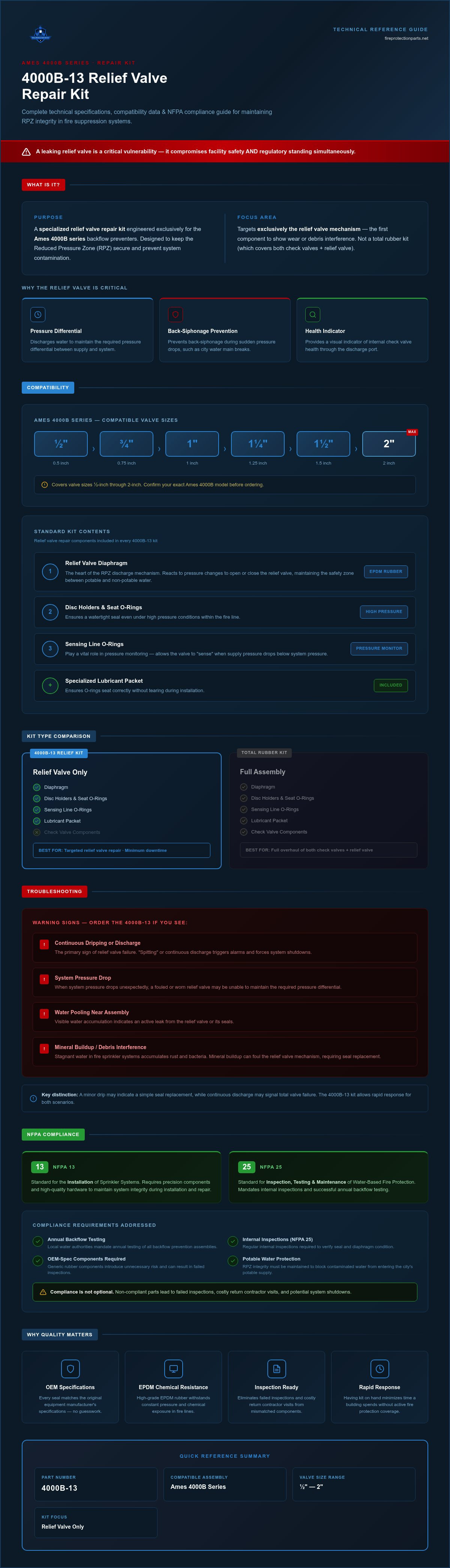
Precision is everything in fire protection. The 4000b-13 repair kit is designed specifically for the relief valve of Ames 4000B assemblies, covering valve sizes from 1/2-inch to 2-inch. Don't confuse this with a total rubber kit. While a total kit includes components for both check valves and the relief valve, the 4000b-13 focuses exclusively on the relief valve mechanism. This distinction is important because the relief valve is typically the first component to show signs of wear or debris interference. Replacing only what's necessary saves time and reduces system downtime.
For the 2026 model year, these kits are shipped with high-grade EPDM rubber components designed for longevity and chemical resistance. Each kit typically includes a packet of specialized lubricant to ensure O-rings seat correctly without tearing during installation. You can browse our inventory of backflow parts to ensure you're getting the exact match for your hardware before the next inspection cycle.
Standard Kit Contents for Relief Valve Repair
The relief valve diaphragm is the heart of the RPZ discharge mechanism. It reacts to pressure changes to open or close the relief valve, maintaining the safety zone between potable and non-potable water. Along with the diaphragm, the kit includes disc holders and seat O-rings that ensure a watertight seal even under high pressure. You'll also find sensing line O-rings. These small seals play a vital role in pressure monitoring, allowing the valve to "sense" when the supply pressure drops below the system pressure.
Cross-Reference: Ames vs. Watts Components
Ames and Watts share a manufacturing lineage, and many components are interchangeable across certain series. The Ames 4000B series often shares internal architecture with the Watts 009 series. However, you must verify your specific model number on the valve's nameplate before ordering to avoid return shipping delays. Using an incorrect kit can lead to improper seating and immediate leaks during the testing phase. When sourcing sprinkler system components online, always verify that the part number matches your specific assembly size and series. A mismatched O-ring or a slightly different disc diameter can compromise the entire fire suppression system's integrity.
Troubleshooting: When to Order a 4000B-13 Repair Kit
The most common sign that your Ames assembly needs attention is a constant drip or "spitting" from the relief valve discharge port. While these valves are designed to release water during pressure spikes, a continuous flow usually indicates an internal failure. Most often, the 4000b-13 is required when debris or mineral deposits lodge between the relief valve disc and the seat. Even a microscopic grain of sand can prevent a watertight seal, leading to wasted water and potential system alarms.
Over time, the rubber diaphragm inside the relief valve loses its flexibility. In fire suppression systems where pressure remains high but stagnant, these components can become brittle. When the city supply fluctuates, the aged rubber may crack or fail to respond quickly enough to maintain the internal air gap. Ordering a 4000b-13 allows you to replace these wear items before a minor leak becomes a code violation. Choosing between preventative and reactive maintenance is often a matter of risk management. A proactive approach ensures you're never caught off guard during a surprise inspection.
Common Symptoms of a Failing Relief Valve
Identifying a failure early prevents water damage and ensures your system remains compliant. Watch for these specific indicators during your routine walkthroughs:
- Constant discharge: The valve leaks even when upstream and downstream pressures are stable.
- Differential failure: During annual testing, the relief valve fails to open at the required 2.0 PSI minimum differential.
- Physical degradation: Upon inspection, the diaphragm shows signs of thinning, stiffness, or visible cracks.
If the assembly fails to maintain that 2.0 PSI buffer between the supply and the zone, the system is technically non-compliant. This isn't just a paperwork issue; it's a safety risk that could allow contaminated water to enter the public supply.
Diagnostic Steps Before Disassembly
Before you pull the valve apart, perform a few basic checks to confirm the kit is necessary. First, flush the sensing line. Small clogs here can trick the valve into thinking there's a pressure drop. Second, verify that the leak isn't caused by a failing upstream check valve. If the first check valve leaks, backpressure will force the relief valve to open, which might lead you to replace the wrong part.
If these external checks don't resolve the issue, it's time to look at the internal seals. Sourcing high-quality fire protection parts online ensures you have the exact OEM-spec components ready for the swap. Transitioning to a preventative schedule, where you replace these rubber goods every three to five years, provides the professional assurance that your facility remains protected without the stress of emergency repairs.
Maintenance Standards and NFPA Compliance
NFPA 25 standards dictate the rhythm of fire system maintenance. For facility managers, this means moving beyond simple visual checks to comprehensive internal assessments. Backflow preventers are high-stakes components because they bridge the gap between private fire lines and public water supplies. Failing an annual test isn't just an administrative hurdle; it often signals that internal rubber components have reached the end of their service life.
Documenting your repairs with the correct components ensures you have a clear paper trail for local Authorities Having Jurisdiction (AHJs) and insurance providers. In the event of a system failure or water damage claim, investigators look for proof that the assembly was maintained using code-compliant parts. Using professional-grade hardware protects your facility from liability and ensures your equipment retains its original "listed" status. This verification is a core part of professional safety management.
NFPA 25 and Backflow Prevention
The NFPA 25 standard requires a full internal inspection of backflow preventer components every five years. During this teardown, the relief valve is frequently identified as the most common failure point in RPZ assemblies due to its constant exposure to pressure fluctuations. Replacing worn diaphragms and seals with the 4000b-13 kit during these scheduled intervals prevents emergency shutdowns. Maintaining the assembly's listed status requires using parts that meet the manufacturer's original specifications, as generic alternatives can void the valve's certification and compromise safety.
The Impact on System Reliability
A malfunctioning backflow preventer does more than leak; it can disrupt the entire fire riser room's operation. If the relief valve fails to seat properly, it can cause "false" fire pump starts as the system struggles to maintain static pressure. These unnecessary cycles put undue wear on expensive pump motors and controllers, leading to premature mechanical failure. Additionally, proper valve seating prevents water hammer and pressure surges that could damage sensitive seismic bracing or CPVC piping. The 4000b-13 maintains the system's hydraulic balance by ensuring the relief valve only opens when a genuine pressure differential exists.
Integrating these repairs into your broader maintenance schedule ensures your fire protection infrastructure remains robust and ready. When you are ready to secure your hardware and eliminate procurement doubt, order your backflow preventers and repair kits from a specialist who understands the urgency of life safety compliance.
Sourcing the 4000B-13: Why Professional Quality Matters
Sourcing the 4000b-13 requires a level of technical precision that generalist distributors simply cannot match. Fire protection hardware isn't a commodity; it's a life safety requirement. When you buy from specialists who live and breathe these codes, you eliminate the risk of installing non-compliant parts. We understand that in high-stakes environments, professional assurance is the only acceptable standard. Every component we provide is selected for its ability to withstand the rigors of fire system service.
Our platform ensures quick access to critical repair components through a streamlined e-commerce experience. We understand the urgency contractors face when a relief valve begins to leak during a routine check. By offering direct sales, we reduce the procurement friction that often stalls essential repairs. This efficiency allows you to restore system pressure and maintain NFPA compliance without the delays of traditional wholesale channels. We act as a mission-driven partner, ensuring you have the hardware needed to keep your facility safe and operational.
Eliminating Doubt in Part Procurement
Reliability starts with vetting. At Fire Protection Parts, we evaluate hardware for long-term performance and adherence to industry standards. We don't just sell components; we provide the peace of mind that comes from knowing your hardware is code-compliant. Whether you are placing a bulk order for a multi-facility upgrade or an emergency order to fix a failing valve, having a dependable partner is essential. We act as a guide through the complexities of procurement, ensuring you receive the exact hardware needed for your Ames assemblies. Order your 4000B-13 repair kit today to secure your system's integrity.
Beyond the 4000B-13: Comprehensive System Support
A truly safe riser room requires a holistic approach to maintenance. While the 4000b-13 addresses the immediate needs of your backflow preventer, other structural elements also require attention. For example, ensuring proper seismic bracing for sprinkler systems is vital for maintaining compliance in areas prone to movement. As we move into 2026, staying ahead of safety standards means verifying every link in your fire protection chain. From check valves to bracing, quality hardware serves as the foundation of professional fire protection. We are committed to providing the technical specifications and reliable parts you need to eliminate doubt and protect your infrastructure.
Ensuring Long-Term Reliability for Your Fire Protection System
Maintaining a code-compliant fire suppression system requires more than just reactive fixes. It demands a commitment to professional-grade hardware and precise maintenance schedules. By identifying the specific symptoms of relief valve wear and understanding the technical breakdown of the 4000b-13, you eliminate the uncertainty that often stalls critical repairs. Proper part selection doesn't just stop a leak; it preserves the hydraulic balance of your entire riser room and ensures you pass mandatory annual testing without delay.
Reliability is built on the foundation of quality components. Sourcing your hardware from a specialized partner provides the assurance that every O-ring and diaphragm meets the rigorous safety standards of the fire protection industry. We take the guesswork out of procurement so you can focus on protecting your facility and its occupants. When you need rapid fulfillment for essential repairs, trust the experts who prioritize your safety above all else.
Secure your system with the 4000B-13 Repair Kit at Fire Protection Parts. Our team is dedicated to providing the professional-grade fire suppression hardware that contractors nationwide depend on. Stay ahead of your next inspection and keep your system fully operational with confidence.
Frequently Asked Questions
What is included in an Ames 4000B-13 repair kit?
The 4000b-13 repair kit focuses specifically on the relief valve assembly for Ames assemblies. It typically contains the relief valve diaphragm, disc holders, and various seat and sensing line O-rings. Most kits also include a packet of specialized lubricant to ensure the rubber seals seat properly without tearing. This comprehensive set of components allows you to restore Reduced Pressure Zone integrity without having to source individual seals during an emergency repair.
Is the 4000B-13 compatible with the Ames 4000SS series?
No, the 4000b-13 is designed specifically for the 4000B series and isn't compatible with the 4000SS series. The SS series uses a stainless steel body with different internal dimensions and seating mechanisms. Installing the wrong kit can lead to immediate failure during testing or cause the valve to leak. Always verify the model number and size on your assembly's nameplate before ordering to ensure you have the correct code-compliant hardware.
How often should I replace the rubber parts in my Ames backflow preventer?
Industry standards and NFPA 25 mandates require a full internal inspection of your backflow preventer every five years. However, many facility managers choose to replace rubber components every three to five years as part of a proactive maintenance strategy. Environmental factors like water quality and pressure fluctuations can accelerate wear. Replacing these parts before they fail prevents system downtime and ensures you pass your mandatory annual backflow test on the first attempt.
Why is my Ames 4000B relief valve constantly leaking water?
Continuous leaking or "spitting" usually indicates that debris is trapped between the relief valve disc and the seat. It can also mean the internal diaphragm has become brittle or cracked due to age. If the first check valve is fouled and leaking, it can create backpressure that forces the relief valve to open. Performing a flush of the sensing line is a good first diagnostic step before you proceed with a full valve teardown.
Can I use the 4000B-13 kit for a Watts 009 backflow preventer?
While Ames and Watts share some engineering lineage, you shouldn't assume the 4000b-13 is a direct substitute for Watts 009 parts. Even minor differences in O-ring thickness or diaphragm diameter can compromise the seal. To maintain the assembly's listed status and ensure safety, you must use parts specifically designated for your model. Using the wrong kit can void your certification and lead to failed inspections by local water authorities.
Do I need special tools to install the 4000B-13 relief valve kit?
You don't need proprietary specialty tools to install this kit, but you do need standard professional hand tools like wrenches and sockets. The most critical "tool" is actually the differential pressure test kit used after the installation. Every repair must be followed by a formal test to verify the relief valve opens at the required 2.0 PSI minimum. Without this verification, the repair isn't considered complete or code-compliant for fire safety.
What happens if my backflow preventer fails its annual inspection?
If your assembly fails its annual test, your facility is technically in violation of local safety codes and NFPA standards. Most water authorities allow a specific grace period, often between 15 and 30 days, to complete repairs and pass a re-test. Failing to address the issue can result in fines or the suspension of water service. Having a 4000b-13 kit on hand allows you to perform immediate repairs and avoid these penalties.
Are the parts in the 4000B-13 kit NFPA compliant?
Yes, the components in an OEM-spec 4000b-13 kit are designed to meet the original manufacturer's standards, which is a requirement for NFPA compliance. NFPA 25 emphasizes that any replacement parts must be of equal or superior quality to the original components. Using these specialized parts ensures that your Ames assembly maintains its "listed" status for fire protection service. This professional assurance is vital for passing inspections and protecting your facility from liability.

