



Commercial Fire Sprinkler Head Replacement Parts: The 2026 Sourcing Guide
In fire protection, "close enough" is a code violation that can compromise your entire facility's safety. You've likely felt the pressure of an impending inspection or the frustration of trying to identify a painted-over head while worrying about ordering the wrong K-factor or temperature rating. Sourcing the correct commercial fire sprinkler head replacement parts isn't just about making a purchase; it's about maintaining the hydraulic integrity of your system and ensuring life safety. When a failed inspection creates a sudden urgency, you need a solution that eliminates doubt and restores protection immediately.
We understand that identifying old or obsolete equipment is a high-stakes task where mistakes lead to costly delays or system failures. This guide will teach you how to decode the Sprinkler Identification Number (SIN), match technical specifications perfectly, and navigate the updated NFPA 25 2026 standards. You'll learn how to identify the "essential trio" of heads, wrenches, and escutcheons to ensure every component meets the latest compliance triggers, including the new 50-year replacement rule for dwelling units. You'll gain the expert confidence to source compliant parts quickly, ensuring your building remains protected and your next fire inspection is a success.
Key Takeaways
- Locate and decode the Sprinkler Identification Number (SIN) to guarantee an exact match for K-factor, orientation, and response time.
- Navigate the technical specifications of temperature ratings and response types to ensure your system performs as designed during a fire event.
- Understand why specialized wrenches and listed escutcheons are mandatory components when sourcing commercial fire sprinkler head replacement parts for NFPA 25 compliance.
- Recognize the specific physical defects, such as "loading" or a single drop of paint, that trigger an immediate requirement for full head replacement.
- Learn how to maintain building safety and peace of mind by sourcing UL-listed and FM-approved components from a trusted industry partner.
Identifying Commercial Sprinkler Heads: The SIN is Your Source of Truth
The Sprinkler Identification Number (SIN) is the DNA of your fire protection system. It is a unique alphanumeric code stamped directly onto the sprinkler deflector. This number is the only reliable way to ensure you are purchasing the correct commercial fire sprinkler head replacement parts. Relying on visual appearance alone is a dangerous gamble. Many heads look identical but possess vastly different internal components, such as orifice sizes or thermal sensitivity. If you replace a head based on looks rather than the SIN, you risk a catastrophic system failure.
Modern fire sprinkler systems rely on precise hydraulic calculations to function. If you install a head with the wrong specifications, you disrupt the entire system's balance. This can lead to insufficient water pressure or delayed activation during an emergency. Always verify the manufacturer, such as Viking or Tyco, before placing an order. A mismatch in parts compromises the safety of the entire building and likely violates your local fire code.
Decoding the Deflector Markings
The SIN typically consists of a one to two letter prefix followed by a three to four digit sequence. The prefix identifies the manufacturer. For example, "VK" denotes Viking, while "TY" indicates Tyco and "RA" represents Reliable. The digits that follow represent the specific model and its performance characteristics. This includes the orifice size, which determines the water flow rate. The K-factor is the discharge coefficient that must remain constant across the system. If the replacement part does not match the original K-factor, the hydraulic integrity of the floor or zone is compromised. Precision in matching these codes eliminates the risk of "look-alike" replacements that fail to meet design requirements.
What to Do When the SIN is Unreadable
Environmental factors like heavy corrosion, grime, or accidental over-painting can make a SIN impossible to read. When this happens, do not guess. You have several reliable alternatives to identify the necessary commercial fire sprinkler head replacement parts:
- As-Built Plans: Consult the building's original fire protection blueprints. These documents list the exact specifications for every head installed in the facility.
- Hydraulic Design Placards: These are usually located near the system riser. They provide a summary of the system's design requirements, including K-factors and required pressures.
- Spare Head Cabinet: NFPA standards require a cabinet on-site containing a list of all sprinklers used in the building. This cabinet should also hold a selection of matching replacement heads and the correct wrenches for installation.
Matching Technical Specifications for Commercial Compliance
Finding the correct SIN is just the first step. To ensure full compliance, you must match the physical orientation and thread specifications of the original installation. A common mistake is attempting to substitute a pendent head for an upright or sidewall model. These components aren't interchangeable. An upright sprinkler is designed to sit atop piping, while a pendent head hangs below. Swapping them disrupts the spray pattern, leaving large areas unprotected during a fire. You must also verify the thread size, typically measured in National Pipe Thread (NPT). Ensuring a precise fit is critical when connecting to Viking CPVC fire sprinkler pipe or traditional steel fittings to prevent leaks and maintain pressure.
Temperature Ratings and Thermal Sensitivity
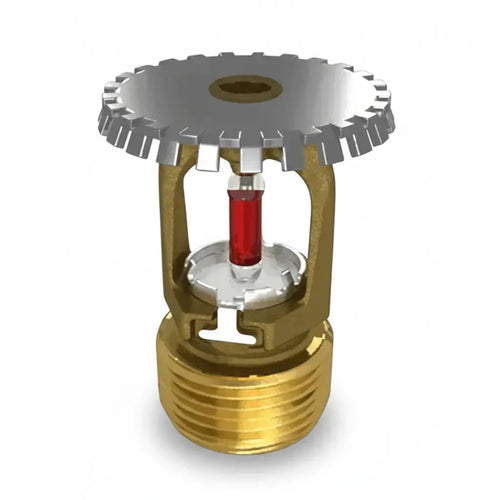
The temperature rating of a sprinkler determines when it activates. This is usually indicated by the color of the fluid inside the glass bulb or a stamp on the fusible link. Standard ratings include:
- Orange (135°F): Used in standard environments.
- Red (155°F): The most common rating for commercial offices.
- Yellow (175°F): Designed for slightly warmer areas.
High-temperature zones require specialized commercial fire sprinkler head replacement parts. Kitchens, boiler rooms, and areas near skylights often experience elevated ambient temperatures. If you install a head with a rating that's too low, you risk an accidental discharge. Conversely, a rating that's too high will delay activation when seconds matter most. For a comprehensive breakdown of these requirements, refer to our fire sprinkler head temperature ratings guide.
Quick Response vs. Standard Response
Thermal sensitivity is categorized by response type. You can visually identify these by the bulb thickness. A Quick Response (QR) head features a slim 3mm glass bulb, while a Standard Response (SR) head uses a thicker 5mm bulb. QR heads are mandatory in many light hazard commercial applications because they activate faster to improve life safety. Mixing these two types within the same compartment is a major NFPA violation. It causes "cold soldering," where the first head to activate cools the adjacent heads, preventing them from ever discharging. Always verify the response type to maintain your system's integrity. If you're unsure about your current specs, browsing the verified inventory at Fire Protection Parts can help you find exact matches for your facility.
The Essential Trio: Heads, Wrenches, and Escutcheons
Effective fire protection relies on a complete assembly. When you source commercial fire sprinkler head replacement parts, you aren't just buying a single component; you're maintaining a life-safety system. This system includes the head, the manufacturer-specified wrench, and the listed escutcheon. Neglecting the specialized tools or the correct trim can lead to a failed inspection or a system that doesn't activate during an emergency. Each piece must work in harmony to meet NFPA standards.
NFPA 25 mandates that every facility maintains an on-site spare head cabinet. This cabinet is a critical resource for emergency repairs. It must contain a representative sample of every sprinkler type installed in the building, along with the exact wrenches required for their installation. For high-traffic environments or warehouses, you must also identify and stock the correct head guards. These protective cages prevent forklift impacts or accidental bumps from shattering the sensitive glass bulbs without disrupting the spray pattern during a fire.
Sourcing the Correct Sprinkler Wrench
One-size-fits-all wrenches are a myth in professional fire protection. Each SIN is designed with specific grooves or flats that only a proprietary wrench can grip safely. Using pipe wrenches or pliers is a dangerous shortcut. These tools apply uneven pressure that can bend the frame or crack the thermal element, rendering the new part useless. Recessed and concealed heads present additional challenges, as they often require deep-socket wrenches to reach into the ceiling assembly. Sourcing the exact wrench model matched to your sprinkler's SIN ensures a secure installation without compromising the component's integrity.
Escutcheons and Finish Compatibility
Escutcheons provide more than just an aesthetic finish. For recessed, flush, or concealed sprinklers, the escutcheon acts as a functional fire seal. It closes the gap between the ceiling and the head to prevent heat from escaping into the plenum space above. If heat bypasses the head, activation is significantly delayed. You must use the manufacturer-approved escutcheon for your specific head model to ensure it fits the required depth, whether it's a standard, recessed, or conical design. Whether you're matching chrome, white, black, or brass finishes, ensure the trim is listed for use with your specific commercial fire sprinkler head replacement parts. Mixing brands or using unlisted trim is a code violation that puts your facility and its occupants at risk.

NFPA 25 Compliance: When to Trigger a Replacement
Maintaining compliance with NFPA 25 requires more than just an annual walkthrough. It demands a rigorous eye for specific defects that compromise system performance. You must replace any sprinkler head that shows signs of leaks, corrosion, physical damage, or "loading"—the accumulation of dust and grime. If a head is damaged, its response time is no longer predictable. This uncertainty is unacceptable in a commercial environment. Sourcing commercial fire sprinkler head replacement parts immediately upon discovering these issues is the only way to ensure your facility remains protected and code-compliant.
Beyond physical wear, you must stay informed about manufacturer recalls and Field Service Reports. Some older models are identified as having safety risks years after installation. Regularly checking these lists is a proactive step that prevents system failure during a fire. When a recall or inspection failure occurs, the urgency is high. You can find essential sprinkler system components online to facilitate fast, emergency repairs without waiting for a third-party service to source the parts for you.
The Painted Head Protocol
The "No-Paint" rule is absolute. NFPA standards strictly prohibit cleaning or scraping paint off a sprinkler head. Even a single drop of overspray from a ceiling renovation can insulate the thermal element, significantly delaying activation. This delay allows a fire to grow beyond the system's design capacity. If you identify a painted head, your only compliant option is a full replacement. Start by identifying the SIN on the deflector to find an exact match. Once you have the correct specifications, replace the head using the manufacturer's specified wrench to restore the system's integrity. Don't risk your safety on a DIY cleaning job; order your UL-listed replacement heads today to stay compliant.
Corrosion and Loading Issues
Environmental factors dictate the lifespan of your equipment. Facilities in coastal areas, industrial plants, or chemical storage sites face accelerated corrosion. If you see green oxidation or pitted metal on the frame, the head's structural integrity is compromised. Loading is another common fail point. While light dust can sometimes be vacuumed or blown off with compressed air, heavy grime that adheres to the bulb or link requires a head replacement. In harsh environments, consider sourcing commercial fire sprinkler head replacement parts with factory-applied coatings like wax or polyester. These specialized finishes provide an extra layer of protection against corrosive vapors and moisture, extending the life of your system and reducing the frequency of emergency replacements.
Buy Code-Compliant Replacement Parts at Fire Protection Parts
Choosing a supplier for life safety equipment is a decision that carries significant weight. Fire Protection Parts serves as more than just a vendor; we act as a dedicated partner for facility managers who cannot afford the risk of non-compliance. When you need commercial fire sprinkler head replacement parts, you need components that are verified for performance and durability. We eliminate the guesswork by stocking only UL-listed and FM-approved components. These certifications ensure that every part you install has undergone rigorous testing to meet the highest safety standards in the industry.
Downtime in a fire protection system isn't just an inconvenience. It's a liability. A system that is out of service often requires a costly 24/7 fire watch to keep the building occupied. We prioritize fast shipping across the United States to minimize this window of vulnerability. Whether you're dealing with a failed inspection or an accidental discharge, our logistics network ensures that critical parts reach your job site or facility without unnecessary delay. Our team provides expert support to help you identify the right fire protection parts online, ensuring your order matches the exact specifications of your existing system.
The Professional Sourcing Advantage
Professional procurement requires access to a diverse inventory. We maintain deep stock levels from industry leaders like Viking and Tyco, ensuring you have access to the specific SINs your system requires. This is especially vital for large-scale retrofits or annual ITM updates where consistency across a facility is required. We support bulk ordering to streamline these projects, allowing you to source all necessary components from a single, reliable provider. Every order is shipped directly to your location, providing a seamless transition from identification to installation. We handle the logistics so you can focus on maintaining a safe environment.
Your Partner in Life Safety
Our commitment to your facility's protection extends beyond just sprinkler heads. We provide a comprehensive range of equipment, including valves, air compressors for dry systems, and ASC seismic bracing. Every item in our catalog is selected for its ability to meet the stringent requirements of the current 2026 fire codes. By consolidating your sourcing with a professional partner, you gain the peace of mind that comes from knowing your equipment is built for longevity and reliability. Don't leave your building's safety to chance or unverified suppliers. Shop our full inventory of commercial fire sprinkler parts today.
Maintain Compliance and Protect Your Facility
Ensuring your building's safety requires more than just identifying a need for repair; it demands the precise identification and installation of commercial fire sprinkler head replacement parts. By decoding the SIN on your deflector and matching the exact temperature ratings and response types, you eliminate the risk of system failure. Remember that compliance isn't just about the head itself. You must also maintain the essential trio of manufacturer-specified wrenches and listed escutcheons to guarantee your system operates as designed during an emergency.
When inspections reveal painted, corroded, or loaded heads, the time for action is immediate. Fire Protection Parts provides the professional assurance you need with an inventory of UL Listed and FM Approved components. Our expert technical support team is available to help you navigate complex specifications, and our fast nationwide shipping ensures your building doesn't remain vulnerable for a moment longer than necessary. Don't leave your life safety system to chance. Secure Your Facility with Code-Compliant Sprinkler Parts and gain the peace of mind that comes with professional-grade protection.
Frequently Asked Questions
Can I replace a fire sprinkler head myself in a commercial building?
Physical replacement of a sprinkler head must be performed by qualified personnel as mandated by NFPA 25. While building owners are responsible for ensuring maintenance occurs, the actual work requires specialized training and licensing in most jurisdictions. Attempting a DIY replacement risks system leaks, accidental discharges, or improper installation that could lead to a failed fire inspection. Always hire a licensed fire protection contractor to handle the installation of commercial fire sprinkler head replacement parts to ensure your system remains fully operational and compliant.
How do I find the SIN number if the sprinkler head is painted?
You should never attempt to scrape or clean paint off a deflector to find the SIN, as this can damage the sensitive thermal element. Instead, consult your facility’s as-built blueprints or the hydraulic design placard located at the system riser. These documents contain the original design specifications for every head in the building. You can also check the spare head cabinet required by code, which should contain a list of all sprinkler types used in the facility along with their corresponding identification numbers.
What is the difference between a quick response and a standard response head?
The primary difference lies in the thermal sensitivity and activation speed of the glass bulb. Quick Response (QR) heads feature a slim 3mm bulb designed to activate early in a fire’s development to enhance life safety in light-hazard environments. Standard Response (SR) heads utilize a thicker 5mm bulb and are typically found in high-hazard or storage applications. Mixing these response types in the same compartment is a major code violation because it can lead to "cold soldering," where one head’s discharge prevents others from activating.
Do I need to replace the escutcheon when I replace the sprinkler head?
You must replace the escutcheon if the original is damaged, missing, or not listed for use with the new head. The 2026 edition of NFPA 25 requires that recessed, flush, or concealed sprinklers use only the specific, listed escutcheon from the original manufacturer’s assembly. If a matching, listed escutcheon is no longer available for an older head, the entire sprinkler assembly must be replaced. The escutcheon acts as a functional fire seal, so using a generic or mismatched part is a serious compliance failure.
How many spare sprinkler heads am I required to keep on-site?
The number of spares required depends on the total number of sprinklers installed in your facility. For systems with fewer than 300 sprinklers, you must keep at least 6 spares. Systems with 300 to 1,000 sprinklers require 12 spares, and facilities with over 1,000 sprinklers must maintain a stock of at least 24. These spares must represent every type and temperature rating installed in the building and must be stored in a dedicated cabinet with the correct manufacturer-specified wrenches.
What happens if I install a sprinkler head with the wrong K-factor?
Installing a head with an incorrect K-factor compromises the hydraulic integrity of your entire fire protection system. A K-factor that is too low won't discharge enough water to control a fire in that specific zone. Conversely, a K-factor that is too high can deplete the water supply faster than intended or drop the pressure for adjacent heads. Sourcing the exact commercial fire sprinkler head replacement parts is the only way to ensure the water discharge matches the original engineered design for your building.
Can I use a different brand of sprinkler head as a replacement?
You can only use a different brand if the new head’s technical specifications—including SIN, K-factor, orientation, and response time—match the original exactly. However, this is rarely recommended for recessed or concealed sprinklers because those heads must be used with their specific, manufacturer-listed escutcheons or cover plates. Mixing brands often results in using unlisted components, which is an automatic failure during a professional fire inspection. It's always safer to stick with the original manufacturer to ensure a perfect, listed fit.
Why is there a glass bulb in my fire sprinkler head and what do the colors mean?
The glass bulb acts as a heat-sensitive trigger that holds back the water supply. It contains a liquid that expands when exposed to heat, eventually shattering the glass to activate the head. The color of the liquid indicates the activation temperature. Red is the most common for commercial offices, activating at 155°F. Orange indicates a lower 135°F rating, while Yellow signifies 175°F. Using the correct color-coded bulb ensures the sprinkler activates only when a genuine fire hazard is present, preventing accidental discharge in warm environments.

