

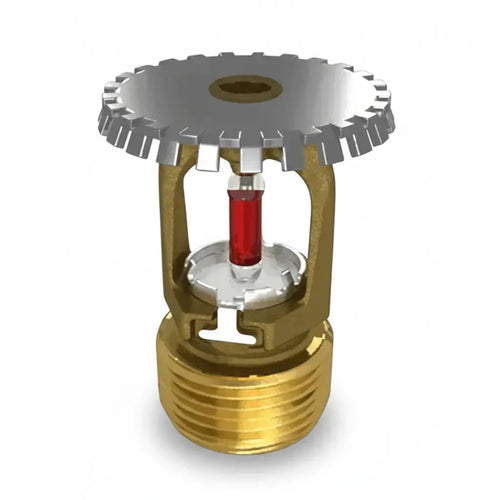


Electric Deluge Valve Fire Suppression: The 2026 Guide to Rapid Response Systems
In a high-hazard environment like a chemical plant or aircraft hangar, the difference between a contained incident and a total loss is measured in seconds. You already know that manual or hydraulic systems often lack the precision required for modern industrial safety standards. Achieving effective electric deluge valve fire suppression requires more than just installing hardware; it demands a system that bridges the gap between digital detection and immediate physical action. With the 2026 update to NFPA 25 introducing stricter quarterly testing for solenoid supervisory signals, staying compliant is now an urgent operational necessity.
It's challenging to navigate the technical divide between electric and hydraulic release systems, especially when a single component failure could lead to catastrophe. You need a solution that eliminates doubt and ensures a rapid response every time. This guide provides the technical clarity you need to master selection criteria and procurement for high-stakes environments. We'll examine the specifications of the PTR Electric Deluge VXD, verify NFPA compliance requirements, and show you how to secure the exact parts needed to keep your facility protected and your systems operational.
Key Takeaways
- Understand the core differences between traditional mechanical releases and modern electric actuation for faster response times in high-hazard zones.
- Learn how an electric deluge valve fire suppression system integrates with detection devices to automate the sequence of protection from detection to solenoid energization.
- Evaluate specific selection criteria for high-risk environments, focusing on the unique protection needs of aircraft hangars and power generation facilities.
- Ensure full compliance with the 2026 NFPA 25 standards, including the latest quarterly testing protocols for solenoid supervisory signals.
- Streamline your procurement process by identifying the key features and maintenance benefits of the PTR Electric Deluge VXD.
Understanding Electric Deluge Valves in Fire Suppression Systems
A deluge valve is a specialized, quick-opening device designed for high-hazard environments where fire spread is instantaneous. Unlike standard sprinkler systems that rely on individual heat-sensitive bulbs, a deluge system uses open nozzles. The piping remains empty until a detection event occurs. This architecture is vital for Understanding Deluge Fire Suppression in facilities storing flammable liquids or explosives. In these settings, rapid response isn't just a preference; it's the only way to prevent a total loss. Implementing electric deluge valve fire suppression ensures that the delay between detection and water delivery is minimized through digital precision.
Electric vs. Non-Electric Deluge Actuation
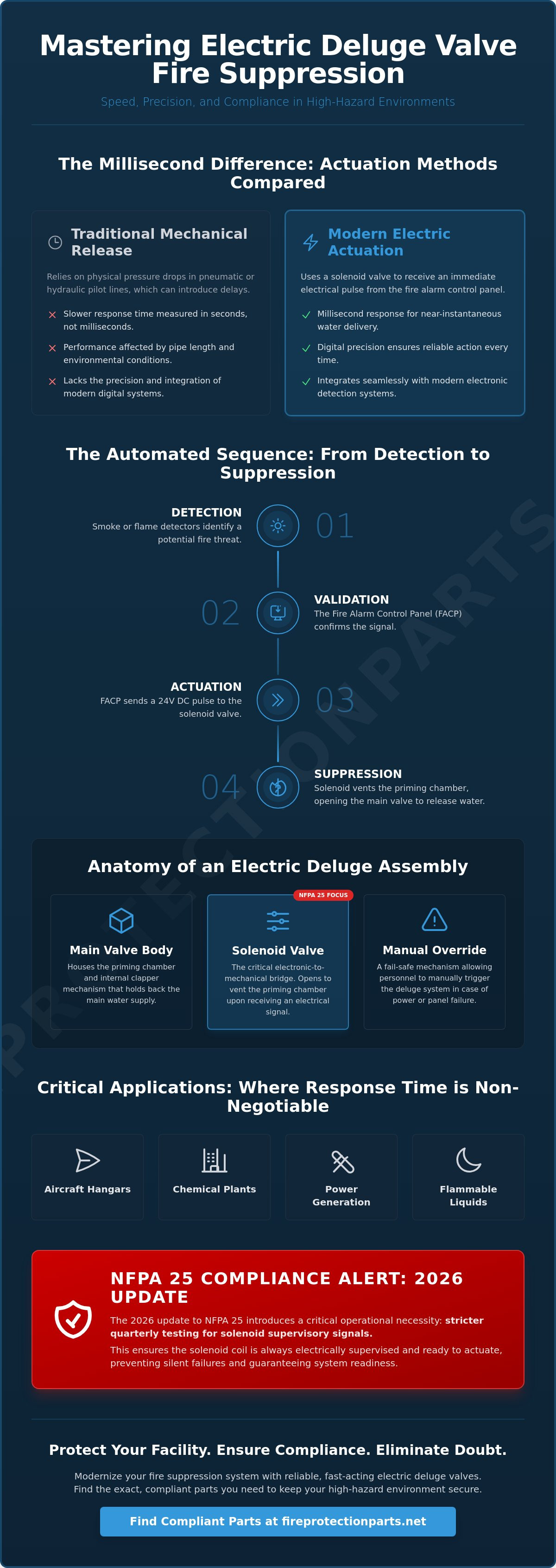
Traditional deluge systems often rely on pneumatic or hydraulic pilot lines to hold the valve closed. While functional, these systems depend on physical pressure drops that can be slowed by pipe length or environmental conditions. Electric actuation replaces these mechanical triggers with an electric solenoid. When the fire alarm control panel receives a signal from a smoke or flame detector, it sends an immediate electrical pulse to the solenoid. This action releases the priming water from the valve's pressure chamber in milliseconds. In a chemical refinery, these fractions of a second determine whether a flash fire is suppressed or becomes an out-of-control inferno. The internal clapper remains securely seated, holding back the full force of the water supply until that specific electrical command is received. It's a system built for speed and digital integration, moving away from the limitations of purely mechanical release.
Key Components of an Electric Deluge Assembly
A reliable electric deluge valve fire suppression assembly consists of several mission-critical parts. The main valve body houses the priming chamber and the clapper mechanism. The solenoid valve acts as the vital bridge between your electronic detection system and the mechanical water control. Reliability is built into the design through specific fail-safes and monitoring capabilities.
- The Priming Chamber: This holds the pressurized water that keeps the main valve closed.
- The Solenoid Valve: This component opens upon receiving a signal to vent the priming chamber. Modern 2026 standards now emphasize solenoid supervisory signals to ensure the coil is always in position.
- Manual Override: This is a dedicated emergency release that allows personnel to trigger the system manually if the power or control panel fails.
Each component must meet rigorous standards to ensure the system remains ready for action despite years of dormancy. This hardware configuration provides the unwavering reliability required for high-stakes protection. By using a piston or diaphragm-operated design, the valve can handle massive volumes of water almost instantly once the solenoid triggers. It's a functional remedy for the most extreme fire risks.
The Mechanism of Electric Actuation and Remote Release
The bridge between detection and suppression is a digital one. In an electric deluge valve fire suppression system, the Fire Alarm Control Panel (FACP) serves as the command center. It continuously monitors detection devices and, upon a confirmed fire event, sends a specific voltage to the valve's solenoid. This sequence happens in seconds. First, sensors identify a threat. Second, the FACP validates the signal. Third, the solenoid energizes. This triggers the physical release of water across the entire hazard area. Precision is the priority here.
Reliability depends on supervised circuits. A supervised circuit ensures that if a wire is cut or a connection is lost, the system immediately reports a trouble signal. You can't afford to discover a wiring fault during a fire. Most industrial systems utilize 24V DC power because it remains stable and compatible with emergency battery backups. Remote reset capabilities are also essential. They allow facility managers to reset the system from the control panel after a successful test or a false alarm, significantly reducing downtime. For detailed technical requirements, engineers often refer to Compliance and Maintenance Standards to ensure every electrical interface meets federal safety criteria. These standards ensure that the electronic components are as rugged as the iron they control.
Solenoid Valve Functionality in Deluge Systems
The solenoid is the gatekeeper. In fire protection, "normally closed" configurations are standard to prevent accidental water release if power is briefly interrupted. When the FACP sends a 24V DC signal, the solenoid coil creates a magnetic field that moves an internal plunger. This movement is what initiates the suppression sequence. When the solenoid is energized, it vents the pressurized priming water from the chamber, allowing the system pressure to force the clapper open. This transition from an electrical signal to mechanical movement must be flawless. If you're sourcing components for a new build, finding high-quality electric deluge system parts is the first step toward a reliable installation.
Detection Integration: Heat, Smoke, and Flame
Detection must be as rapid as the valve itself. Industrial bays often use linear heat detection, which uses a heat-sensitive cable to monitor large areas like cable trays or conveyors. Spot detectors are better suited for specific high-risk equipment. To prevent accidental discharge, many systems use cross-zoning. This requires two independent detectors to trigger before the deluge valve opens. It's a functional safeguard against expensive false activations in environments like aircraft hangars. Modern systems also include a feedback loop. This sends a confirmation signal back to the monitoring station the moment the valve clapper moves. You get instant verification that your protection is active, providing peace of mind when every second counts.
High-Hazard Applications and Selecting the Right Valve
The choice of an electric deluge valve fire suppression system depends entirely on the specific threat profile of your facility. In high-hazard zones, the speed of fire spread dictates the suppression strategy. Aircraft hangars require massive water or foam delivery to suppress rapid-spread fuel fires almost instantly. Protecting multi-million dollar assets means the system must trigger before the fire reaches a critical temperature. Power plants use these systems for transformer protection. In these cases, the goal is cooling high-voltage equipment to prevent catastrophic explosions. The valve acts as the primary defense, ensuring that the entire hazard area is saturated simultaneously.
Petrochemical facilities rely on deluge systems for cooling storage tanks and suppressing flammable vapors. If a tank's external temperature rises, the deluge system provides a constant water curtain to prevent structural failure. Data centers present a different challenge. While they are critical environments, water damage is often as risky as the fire itself. For this reason, pre-action systems are typically a better fit than pure deluge. Pre-action setups keep pipes dry until a confirmed detection occurs, providing a safety buffer that open-nozzle deluge systems don't offer. Matching the system type to the hazard ensures you aren't over-engineering or under-protecting your site.
Material Selection: Ductile Iron vs. Stainless Steel
Material choice is a functional remedy for environmental risk. Ductile iron is the industry standard for most land-based industrial sites due to its strength and cost-effectiveness. However, coastal or offshore facilities face constant salt spray and high humidity. In these corrosive environments, stainless steel is the only reliable choice to ensure the valve body doesn't degrade. You must ensure the valve’s pressure rating matches or exceeds your fire pump’s maximum output. Professionals often source these mission-critical components through fire protection parts online to ensure hardware longevity and adherence to safety standards.
Sizing and Flow Considerations
Selecting the right size is a matter of hydraulic mathematics. A valve that's too small creates excessive friction loss, starving the nozzles of the pressure needed for effective spray patterns. You should match the valve size to the riser diameter to maintain consistent flow and pressure. In specific system segments where corrosion resistance and ease of installation are priorities, Viking CPVC fire sprinkler pipe offers a high-performance alternative to traditional steel. Always verify that your piping material is compatible with the total hydraulic demand of your electric deluge valve fire suppression setup. Proper sizing eliminates the fear of system failure when it matters most, providing the peace of mind that comes from professional expertise.
Procurement, Compliance, and Maintenance Standards
Adherence to regulatory standards is the only way to guarantee that your electric deluge valve fire suppression system performs during a crisis. NFPA 13 and NFPA 25 are the essential frameworks for installation and ongoing maintenance. While NFPA 13 dictates how the system is engineered and set up, NFPA 25 focuses on its survival over time. In 2026, the updated solenoid monitoring requirements mean your inspection logs must be more detailed than in previous years. You can't treat these systems with a "set it and forget it" mentality. Regular verification is the functional remedy for the risk of mechanical or electrical stagnation.
Procuring the right components requires a focus on the "equal or better" rule. Insurance providers often mandate that replacement parts meet or exceed the original specifications to maintain coverage. Sourcing these specialized valves through an e-commerce partner offers a distinct logistical advantage. You get immediate access to technical data sheets and verified part numbers without the delays of traditional supply chains. When a system is down, every hour of wait time is an hour of unprotected risk. To keep your facility secure, you can browse our catalog of code-compliant deluge components to find the exact hardware your system requires.
Testing the Electric Release Mechanism
Testing is the only way to eliminate doubt. While a full-flow trip test provides the most accurate real-world data, it's often impractical due to the massive volume of water it discharges. Many facilities utilize partial-flow tests to verify the solenoid and clapper movement without flooding the hazard area. You must also verify the manual emergency release during every inspection cycle. This ensures that even if the control panel loses power, personnel can still trigger the system. If your deluge system integrates with pilot heads, it's critical to check fire sprinkler head temperature ratings to ensure the detection triggers align with the expected hazard intensity.
Common Failure Points and Troubleshooting
Most system failures aren't caused by catastrophic errors but by simple neglect. Debris in the priming line remains the primary cause of valve failure. Silt or pipe scale can block the small orifices in the trim, preventing the valve from venting pressure and opening. Solenoid burnout is another common issue, often caused by voltage spikes or aging coils that have reached the end of their service life. An air gap in the deluge valve drain line is essential to prevent back-siphonage and allow for visual verification of any leakage past the valve seat. Catching these minor issues during monthly checks prevents system-wide failure when a fire occurs. Maintenance isn't just a chore; it's an investment in unwavering reliability.
The PTR Electric Deluge VXD: Modern Suppression Solutions
High-hazard fire protection requires equipment that combines rapid response with long-term reliability. The PTR Electric Deluge VXD is engineered to meet these rigorous demands. As a pre-trimmed riser assembly, it arrives ready for integration, reducing the complexity of field assembly. It's a cornerstone of modern electric deluge valve fire suppression, offering a functional remedy for facilities that can't compromise on safety. The compact trim design allows for installation in tight mechanical rooms without sacrificing access for inspection or maintenance. This accessibility is vital for complying with the 2026 NFPA 25 quarterly testing requirements for solenoids that monitor coil position.
PTR VXD Technical Advantages
The internal clapper design of the VXD is a major technical leap. It minimizes friction loss, ensuring that the water supply maintains maximum pressure as it moves toward the open nozzles. This efficiency is critical in large-scale industrial bays where every pound of pressure counts. The system is fully compatible with standard 24V DC fire alarm control panels, allowing for seamless digital integration across your safety network. After a detection event or a routine test, the ease of reset is a significant benefit. You can restore the system to its standby state quickly. This minimizes protected downtime and provides the expert confidence that your facility is once again under watch.
Simplifying Your Procurement Workflow
Sourcing high-specification safety components shouldn't be a bottleneck in your project timeline. Our online storefront is designed to simplify the purchase of complex valves and replacement parts. We provide detailed technical documentation and support for contractors, including options for bulk ordering. We understand that getting critical suppression parts to the job site fast is essential for maintaining project schedules and facility safety. By choosing a partner that prioritizes availability and rapid shipping, you eliminate the uncertainty of traditional procurement. We act as a dependable guide, ensuring every part meets the "equal or better" standard required by insurance and code authorities. Shop the PTR Electric Deluge VXD and suppression parts now to ensure your high-hazard environment remains fully protected.
Master Your High-Hazard Fire Protection Strategy
Protecting high-value assets and personnel requires a system that eliminates doubt. You've learned how electric actuation bridges the gap between digital detection and physical response; this ensures compliance with the latest 2026 NFPA standards. Choosing the right hardware is the final step in building a resilient safety framework. Modern electric deluge valve fire suppression relies on these integrated components to function flawlessly when every second counts. It's a functional remedy for the most complex industrial risks.
We are here to support your mission with professional-grade solutions. With the PTR Electric Deluge VXD in stock and expert technical support for contractors, we provide the resources you need to stay on schedule. You can rely on our fast shipping on critical fire suppression components to keep your site compliant and safe. Don't leave your facility's safety to chance when expert guidance is just a click away.
Secure Your Facility with Code-Compliant Electric Deluge Valves. You have the tools and the knowledge to ensure your facility remains protected by the best in the industry.
Frequently Asked Questions
What is the main difference between a deluge valve and a pre-action valve?
A deluge valve supplies water to open nozzles, meaning every head in the zone discharges simultaneously upon activation. In contrast, a pre-action system uses closed sprinklers that only discharge water when individual heat-sensitive elements break. Deluge systems are the standard for high-hazard areas where rapid fire spread is a certainty, while pre-action systems protect water-sensitive assets from accidental discharge.
Can an electric deluge valve be operated manually if the power goes out?
Yes, every code-compliant electric deluge valve includes a manual emergency release. This mechanical pull-station or lever allows personnel to vent the priming chamber manually, bypassing the solenoid. This fail-safe ensures that your protection remains active even during a total power failure or control panel malfunction. It provides the unwavering reliability required for high-stakes industrial environments.
How often does NFPA 25 require a full trip test for deluge systems?
NFPA 25 requires a full-flow trip test every three years for deluge systems to verify water delivery times and nozzle patterns. Annual trip tests are also required but can often be conducted as "dry" or partial-flow tests to prevent water damage to the protected area. These regular intervals ensure your electric deluge valve fire suppression components remain free of debris and mechanical obstructions.
What are the power requirements for a standard electric deluge solenoid?
The industry standard for a fire protection solenoid is 24V DC. This voltage is used because it allows for easy integration with Fire Alarm Control Panels and standard battery backup systems. Using a supervised 24V DC circuit ensures that any break in the wiring is reported as a trouble signal before an emergency occurs. This electrical precision is vital for rapid response.
Why is a priming chamber used in electric deluge valve design?
The priming chamber uses pressurized water to hold the internal clapper or diaphragm in the closed position against the incoming water supply. When the solenoid triggers, it vents this priming water, creating a pressure imbalance that forces the valve to open instantly. This design provides a reliable mechanical seal that only breaks when the system receives a confirmed activation signal from the control panel.
Are electric deluge valves suitable for outdoor use in freezing climates?
Electric deluge valves are not suitable for unprotected outdoor use in freezing environments because the water in the priming chamber and trim will freeze. If the valve must be located in a cold area, it must be housed in a heated enclosure or valve house maintained at 40°F (4°C) or higher. Failure to protect the valve from freezing will lead to pipe bursts and system failure when it's needed most.
What happens if the solenoid valve on a deluge system fails?
If the solenoid fails, the system won't activate automatically through the electronic detection network. However, the system can still be triggered using the manual emergency release located on the valve trim. Modern 2026 standards require supervised solenoids to alert you of electrical faults or coil displacement before an emergency occurs. This monitoring provides peace of mind and eliminates doubt about system readiness.
Can I use CPVC piping with a deluge fire suppression system?
Yes, you can use CPVC in specific segments of a deluge system if the piping is listed for the application. Viking Plastics CPVC Pipe for Fire Protection is a common choice for supply lines or specific hazard zones where corrosion resistance is required. Always verify that the piping's pressure rating and temperature listings match the hydraulic demands of your electric deluge valve fire suppression setup.

