



Fire Sprinkler Alarm Valve Parts: The 2026 Maintenance and Sourcing Guide
A fire sprinkler alarm valve is only as dependable as the smallest rubber seal or tension spring within its assembly. You likely already know that a single pressure surge can trigger a costly false alarm, or worse, an internal failure can go unnoticed until a mandatory inspection fails. Keeping up with the 2026 NFPA 25 updates means you can't afford to guess which internal components are wearing down. Identifying the right fire sprinkler alarm valve parts is the difference between a system that functions and one that fails when it matters most.
We understand the frustration of navigating complex compliance standards while trying to reduce system downtime during repairs. This guide will help you identify, troubleshoot, and source the exact components you need to maintain NFPA compliance and ensure your system remains ready for action. We'll break down the critical anatomy of the clapper and trim, explain how to navigate the latest hardware requirements, and show you where to find code-compliant replacements that meet the rigorous safety standards of 2026.
Key Takeaways
- Identify critical fire sprinkler alarm valve parts like clapper assemblies and gaskets to prevent system failures and ensure reliable waterflow detection.
- Understand how retard chambers and pressure gauges function as your primary defense against false alarms triggered by water pressure surges.
- Master troubleshooting methods for common symptoms, including water leaking from drip cups and intermittent alarm signals without actual flow.
- Learn the criteria for deciding when to repair internal components versus opting for a complete valve replacement to minimize system downtime.
- Source code-compliant, UL/FM-approved hardware from industry-leading brands to maintain strict adherence to 2026 NFPA 25 standards.
What is an Alarm Check Valve and Why Are Its Parts Critical?
An alarm check valve is a specialized waterflow alarm valve designed to actuate mechanical or electrical alarms during a steady flow of water. In a standard wet pipe fire sprinkler system, this valve serves as the primary gateway between the water supply and the building's protection network. It ensures that water only moves in one direction and provides a dedicated port for alarm activation. Understanding the specific fire sprinkler alarm valve parts is essential because even a minor seal failure can lead to catastrophic system malfunctions or expensive false alarms.
The transition from the main valve body to the trim assembly represents the bridge between mechanical action and system notification. While the valve body houses the heavy iron components that hold back water, the trim assembly contains the precision instruments that monitor pressure and delay alarm signals during surges. Every component within this assembly must work in perfect synchronization to maintain the delicate balance required for a code-compliant system.
The Core Function of the Alarm Valve
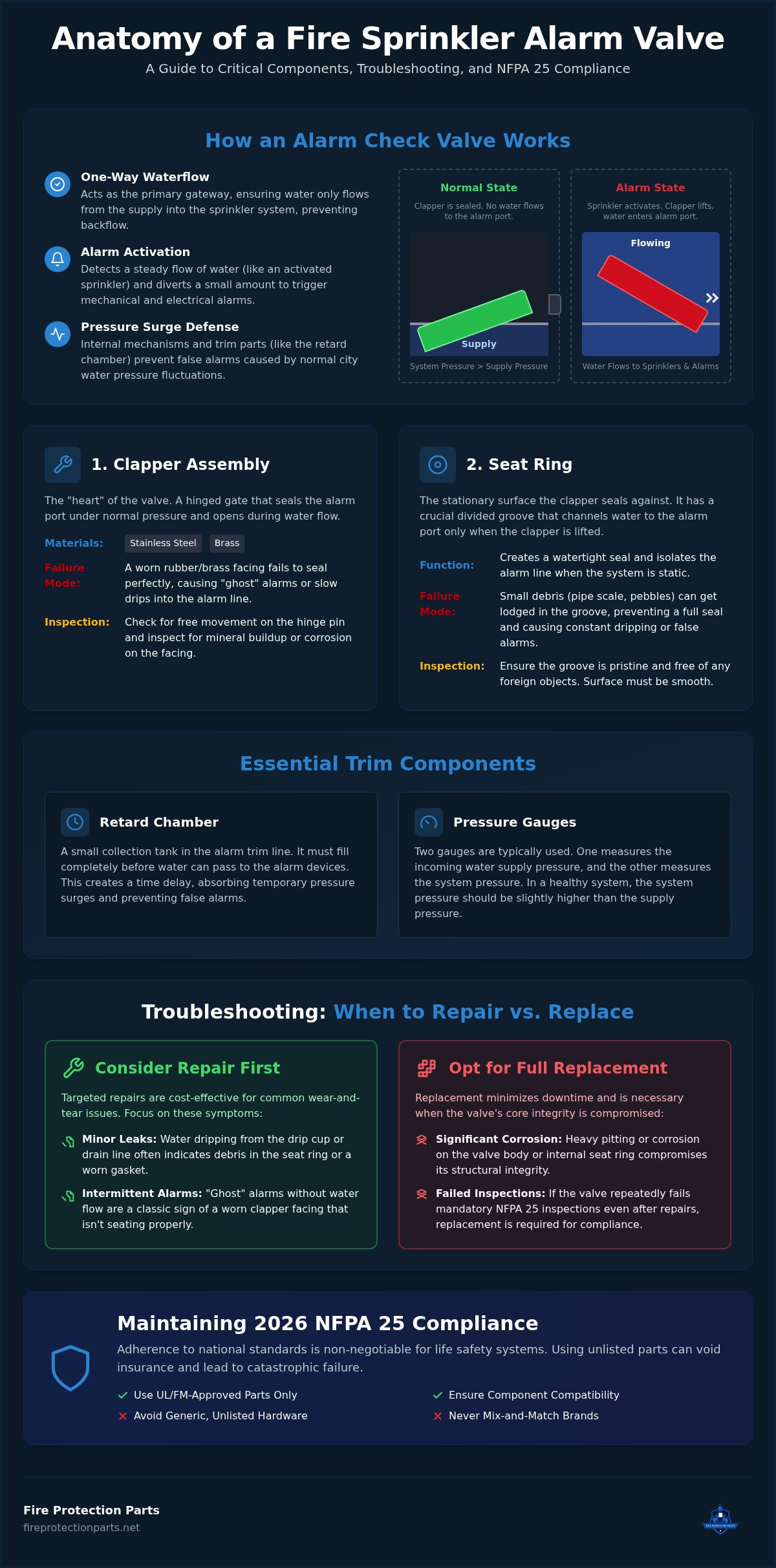
Modern systems must distinguish between a dangerous fire event and a simple city water pressure surge. The divided seat ring design is the mechanical solution to this problem. It creates a separate channel for the alarm line that remains dry while the clapper is seated. When a sprinkler head opens, the clapper lifts, allowing water to enter the alarm port and trigger the water motor gong or pressure switch. The clapper functions as a hinged, one-way barrier that maintains higher system pressure compared to the supply pressure while sealing off the alarm port during normal conditions. Without this precision, the valve would trigger an alarm every time a nearby fire hydrant is opened or a pump kicks on.
System Standards and NFPA Compliance
Adherence to NFPA 13 is the baseline for any professional installation or repair. This standard dictates that every component, from the largest valve body to the smallest trim fitting, must be compatible and capable of withstanding system pressures. Relying on generic hardware is a liability. You must use UL/FM-approved fire sprinkler alarm valve parts to ensure the entire assembly meets the rigorous testing required for life safety equipment. Using unlisted parts can void insurance policies and lead to failed inspections. For a deeper look at procurement strategies, consult our Sprinkler System Components Online: The 2026 Professional Sourcing Guide. Maintaining this standard isn't just about passing a code check; it's about the unwavering reliability of your suppression system.
Internal Fire Sprinkler Alarm Valve Parts: A Granular Breakdown
A reliable alarm valve is more than just a cast iron shell; it's a precision assembly of moving components designed to operate under pressure for decades. When a system malfunctions, the problem rarely requires a full valve replacement. Instead, the failure usually stems from specific fire sprinkler alarm valve parts that have succumbed to wear, corrosion, or age. Understanding these internal components allows you to perform targeted repairs, saving both time and capital.
Understanding the Clapper Mechanism
The clapper assembly is the heart of the check valve. Most modern clappers are constructed from high-grade stainless steel or brass to resist the harsh environment of stagnant water. Stainless steel offers superior resistance to pitting, while brass remains a standard for many legacy systems. If you notice "ghost" water flow alarms, a worn clapper facing is the likely culprit. This happens when the clapper fails to seal perfectly against the seat ring, allowing water to bleed into the alarm port even when no sprinklers have activated. Regular inspections should focus on the metal surfaces. Look for mineral buildup or localized corrosion that could prevent the clapper from seating correctly. If the clapper doesn't move freely on its hinge pin, the entire notification sequence is at risk.
The seat ring works in tandem with the clapper to maintain a watertight seal. This ring features a groove or "divided seat" that directs water to the alarm line only when the clapper lifts. Debris as small as a pebble or a shard of pipe scale can lodge in this groove. This prevents a full seal and triggers constant dripping into the drain. Keeping these surfaces pristine is a fundamental requirement of NFPA 25, which mandates internal inspections to verify the integrity of these critical surfaces.
Gaskets, O-Rings, and Seals
Seal integrity is the leading cause of alarm valve failure. Over time, the elastomers used in gaskets and O-rings lose their elasticity. You might encounter dry rot in systems that have been drained frequently, or "compression set" in older valves where the rubber has permanently deformed under pressure. Identifying the correct elastomer is vital. Most manufacturers use EPDM for standard water applications, but some specialized systems may require different materials. Rubber-faced clappers are preferred for low-pressure systems because they provide a more forgiving seal against minor seat ring imperfections.
Don't overlook the clapper springs and hinge pins. These small but essential fire sprinkler alarm valve parts ensure the clapper resets immediately after a flow event. A snapped spring or a bent pin can leave the valve stuck open, compromising the building's protection. If you're identifying signs of wear during your quarterly check, you can find professional-grade replacement hardware to restore your valve to its original factory specifications. Proactive replacement of these soft goods and small mechanical parts is the most cost-effective way to ensure long-term system reliability.
Essential Trim Components: Retard Chambers and Gauges
While the clapper manages internal flow, the external trim assembly governs the system's communication and stability. These fire sprinkler alarm valve parts are exposed to the environment and mechanical wear, making them frequent points of failure. If your trim is improperly configured, you'll face constant false alarms or, conversely, a failure to notify emergency services during a fire. Every component in the trim must be inspected for corrosion and blockages to maintain the system's "ready" state.
Pressure gauges provide the most immediate diagnostic data for any facility manager. You should always see a differential where system pressure is slightly higher than or equal to supply pressure. If the supply gauge fluctuates wildly while the system gauge remains steady, your clapper is doing its job. However, if both gauges drop simultaneously, you likely have a leak or a failing backflow preventer. Replacing a clouded or inaccurate gauge is a simple, low-cost fix that prevents diagnostic errors during mandatory inspections.
The Role of the Retard Chamber
The retard chamber is a surge-absorbing vessel. During a temporary pressure spike, water enters the alarm port but is diverted into this chamber rather than immediately hitting the alarm switch. This delay allows the surge to pass and the water to drain out through a small restricted orifice. If this orifice becomes clogged with silt or scale, the chamber won't drain. This leads to a "full" state that triggers a false alarm at the next minor pressure change. Most modern installations utilize vertical trim for better drainage, though horizontal configurations still exist in older, space-constrained retrofits. Checking the drain orifice for obstructions is a primary troubleshooting step when false alarms become frequent.
Monitoring and Signaling Hardware
Converting hydraulic movement into an actionable alert requires precise signaling hardware. Alarm pressure switches are the standard for modern buildings, sending an electrical signal to the fire alarm control panel. For those maintaining legacy systems or high-hazard areas, water motor gongs offer a mechanical alternative that requires no electricity. These gongs use the physical force of the water flow to strike a bell, providing an audible alert even during a total power failure.
Testing these components shouldn't require a system teardown. The main drain valve and test trim allow you to simulate flow and verify that alarms actuate within the required timeframes. If you're seeing sluggish response times or erratic gauge readings, it's time to inspect your Fire Protection Parts and Hardware for System Repairs. Ensuring every gauge and switch is UL/FM approved protects your facility and maintains your insurance standing. Using verified fire sprinkler alarm valve parts ensures that when the system speaks, the message is accurate and timely.
Troubleshooting Common Failures: When to Repair vs. Replace
Troubleshooting a fire protection system requires a methodical approach to identifying which fire sprinkler alarm valve parts have reached the end of their service life. Most malfunctions present as clear mechanical symptoms. Intermittent false alarms without actual water flow often point to a failure in the bypass check valve. If this small component fails, it allows pressure surges to bypass the retard chamber and actuate the pressure switch prematurely. Another common issue is water constantly leaking from the alarm line or drip cup. This typically indicates that the clapper isn't seating properly or the seat ring has become pitted over time.
When system pressure drops below supply pressure, your building is at risk. This reversal suggests that water is bleeding back into the supply line, often due to a compromised bypass valve or a failing main clapper. Deciding whether to repair or replace depends on the extent of the damage. While a full commercial control valve assembly can cost between $2,000 and $4,000 in 2026, many issues are resolved by simply replacing the internal trim and seals. Proactive maintenance prevents these minor leaks from escalating into total system failures.
Identifying the Root Cause of Leaks
Start your inspection at the bypass check valve. Debris as small as a single grain of sand can prevent this valve from closing, leading to erratic pressure readings and ghost alarms. If the bypass is clear, move to the clapper seat. Mineral buildup or physical pitting on the seat ring will prevent a watertight seal. You should also test the integrity of the main drain valve seal. A slow leak here can mimic a clapper failure, leading to unnecessary and expensive teardowns of the main valve body. Verifying these smaller components first saves time and ensures you're only replacing what's truly broken.
The Cost-Benefit of Repairing Older Valves
With major manufacturers implementing price increases between 6% and 8% in 2026, repairing legacy hardware is often the most strategic choice for facility managers. Labor costs for a full valve replacement are significantly higher than a trim rebuild, which can usually be completed in a few hours without cutting into the main riser. We recommend stocking critical gaskets, springs, and gauges to facilitate immediate repairs and minimize system downtime. If your valve body is structurally sound, a targeted internal rebuild is the most efficient path to NFPA compliance. For high-quality components that meet current safety standards, you can shop our selection of code-compliant replacement parts to restore your system's reliability.
Sourcing Code-Compliant Alarm Valve Parts Online
Finding the right fire sprinkler alarm valve parts shouldn't be a bottleneck for your maintenance schedule. In an industry where a single day of system downtime results in significant liability, sourcing from a specialized fire protection retailer is a necessity. Professional vendors ensure that every component, from a clapper spring to a pressure switch, meets the exact specifications of the original manufacturer. This precision is vital for maintaining brand compatibility across systems from Viking, Tyco, Reliable, or PTR.
Speed is just as critical as accuracy. Emergency repairs require a partner who understands the urgency of a "system down" status. Fast shipping prevents minor leaks from turning into prolonged safety risks. With major manufacturers like Viking and Reliable announcing price increases between 6% and 8% in 2026, securing your parts from a reliable e-commerce leader helps you manage costs while ensuring you receive UL/FM-certified hardware. These certifications are non-negotiable. Unlisted parts can void insurance coverage and will be rejected by any Authority Having Jurisdiction (AHJ).
Quality Assurance in Fire Safety Hardware
Generic plumbing parts have no place in a fire suppression system. While a standard gasket might look similar to a fire-rated component, it lacks the chemical resistance and pressure ratings required for life safety applications. We vet our inventory to ensure every item supports professional-grade installations. This commitment to quality extends beyond the valve itself to include essential support hardware like ASC Seismic Bracing and Viking Plastics CPVC Pipe. A reliable partner provides a comprehensive solution, ensuring that every fitting and brace works in harmony with your alarm valve assembly.
Ordering Your Replacement Components
Start by identifying your valve model using the data found on the nameplate located on the valve body. This ensures you select components that match the specific revision of your hardware. We recommend bulk ordering common wear items such as gauges, gaskets, and alarm switches. Having these on hand allows for immediate response during quarterly inspections and helps you stay ahead of the 2026 price adjustments. If you're ready to secure your system, Shop Professional Fire Sprinkler Alarm Valve Parts at Fire Protection Parts today. Our streamlined procurement process helps you move quickly from the identification of a need to a fully compliant, operational solution.
Future-Proof Your Fire Protection Strategy
Reliable fire suppression is built on the precision of every individual component. By identifying failing seals early and maintaining the integrity of your trim assembly, you eliminate the risk of costly false alarms and ensure your building remains protected. Adhering to the latest safety standards isn't just about passing an inspection; it's about the unwavering reliability of your life safety network. Proactive maintenance of your fire sprinkler alarm valve parts ensures that your system responds instantly and accurately when every second counts.
Don't let a worn gasket or a clogged retard chamber compromise your facility's safety. Partner with an expert who understands the nuances of code compliance and brand compatibility. We provide a comprehensive inventory of top brands and expert technical support to help you navigate complex repairs with confidence. All our hardware is UL and FM approved to give you total peace of mind. Secure Your System with Code-Compliant Alarm Valve Parts and take the guesswork out of your maintenance schedule. Your commitment to quality today ensures a safer environment for years to come.
Frequently Asked Questions
What causes a fire sprinkler alarm valve to trigger a false alarm?
False alarms are most commonly caused by city water pressure surges that the retard chamber cannot absorb. If the retard chamber's drain orifice is clogged, it stays full, triggering the alarm switch at the next minor pressure spike. Debris trapped in the clapper seat can also cause water to bleed into the alarm line. Regular cleaning of these fire sprinkler alarm valve parts prevents these costly and disruptive events.
How often should I inspect the internal parts of an alarm check valve?
According to the 2026 edition of NFPA 25, you must perform an internal inspection annually for valves that can be reset without removing a faceplate. Previously, this was a five year cycle for certain models, but the standards have tightened to ensure unwavering reliability. Quarterly external inspections are still required to check gauges and trim for leaks. Keeping a strict schedule ensures your internal seals remain intact and ready for operation.
Can I replace just the clapper facing, or do I need a whole new clapper?
You can usually replace just the rubber clapper facing if the metal clapper body shows no signs of pitting or structural damage. Replacing only the soft goods is a cost effective way to restore a watertight seal. However, if the hinge pin is bent or the clapper body is corroded, a full clapper assembly replacement is necessary. Always use UL/FM approved components to maintain the valve's listing and ensure consistent performance.
What is the purpose of the retard chamber in an alarm valve trim?
The retard chamber acts as a surge collection vessel that prevents temporary water pressure spikes from triggering a false alarm. When a surge occurs, water enters the chamber and drains out through a restricted orifice rather than reaching the pressure switch. This mechanical delay ensures that only a sustained flow of water, such as an open sprinkler head, activates the alarm. It is a critical component for systems connected to variable pressure water supplies.
Are alarm valve parts interchangeable between different brands like Tyco and Viking?
No, fire sprinkler alarm valve parts are not interchangeable between different brands or even different models from the same manufacturer. Each valve is UL listed and FM approved as a complete assembly with specific internal components. Using a Viking clapper in a Tyco valve voids the listing and can lead to mechanical failure. You must match replacement parts to the exact model number found on the valve nameplate to ensure code compliance.
What are the signs that my alarm pressure switch needs to be replaced?
Signs of a failing alarm pressure switch include intermittent alarm signals, visible corrosion on the electrical terminals, or a failure to actuate during a flow test. If the switch doesn't reset after the system is drained, the internal diaphragm or spring may be damaged. Since these switches provide the primary electrical notification to the fire department, any sign of erratic behavior requires an immediate replacement with a code compliant model to avoid safety gaps.
Is a water motor gong still required if I have an electric alarm system?
A water motor gong is not always required if you have a monitored electric alarm system, but it serves as a dependable mechanical backup. Local codes or the Authority Having Jurisdiction may mandate a mechanical alarm in certain high hazard or legacy buildings. Because it operates solely on water pressure, it provides notification even during a total power failure. Check your specific building plan and local amendments to confirm your requirements for mechanical notification.
How do I identify the model of my alarm valve if the nameplate is missing?
If the nameplate is missing, you can identify the model by checking the casting marks on the valve body and measuring the face to face dimensions. Manufacturers have distinct body shapes and trim configurations that help narrow down the series. Comparing the clapper shape and seat ring design against technical data sheets is another reliable identification method. If you are unsure, provide photos of the valve and trim to a professional parts specialist for verification.

