

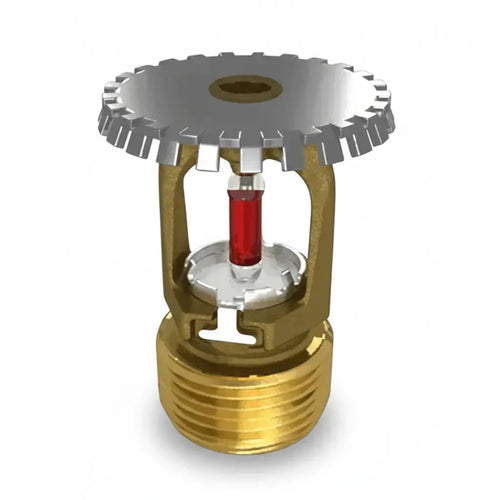


Freeze-Proof Sprinkler Heads: The Complete Guide to Dry Sprinklers in 2026
Wrapping pipe insulation around an exposed fitting will never stop sub-zero air from triggering a catastrophic blowout. Real freeze protection relies on internal mechanical isolation rather than surface wraps, making freeze-proof sprinkler heads the frontline defense for unheated areas. You already know the stress of sudden cold snaps if you oversee exterior canopies, parking garages, or commercial walk-in coolers. The risk of ruptured lines, severe water damage, and operational shutdowns is a constant hazard, especially when overlapping industry terms make specifying the right hardware feel daunting.
You don't have to leave freeze protection to chance. This guide shows you exactly how dry barrel mechanisms hold pressurized water inside heated zones, how to calculate precise barrel lengths based on wall thickness and ambient temperatures, and how to satisfy current NFPA 13 mandates. We will walk through everything from dry pendent configurations to code-compliant replacement strategies so your facility remains fully safeguarded all winter long.
Key Takeaways
- Understand how freeze-proof sprinkler heads utilize an internal dry barrel and remote inlet seal to keep water isolated in conditioned zones until system activation.
- Identify the core operational differences between dry pendent, sidewall, and upright configurations to match your building layout and supply pipe orientation.
- Learn how to apply NFPA 13 thermal criteria to calculate exact exposed barrel lengths, preventing cold conduction from freezing your supply piping.
- Eliminate common installation vulnerabilities, such as vapor seal breaches and air migration, that lead to hazardous ice plugs inside cold storage penetrations.
- Maintain code compliance by following NFPA 25 inspection protocols and securing verified, factory-assembled replacement hardware before winter weather hits.
What Are Freeze-Proof Sprinkler Heads and How Do They Work?
A freeze-proof sprinkler head is a specialized, factory-assembled dry barrel unit engineered to protect unconditioned environments without exposing standing water to freezing temperatures. In standard wet systems, water sits directly behind every sprinkler orifice. If exposed to sub-freezing air, that water expands, cracks the pipe, and unleashes severe structural flooding. Freeze-proof sprinkler heads eliminate this vulnerability by keeping standing water back inside a heated space, using an extended dry barrel to span the thermal boundary. They deliver localized protection for exterior canopies, unheated parking garages, and commercial walk-in freezers without requiring the conversion of the entire building system.
The Anatomy of a Dry Barrel Sprinkler Head
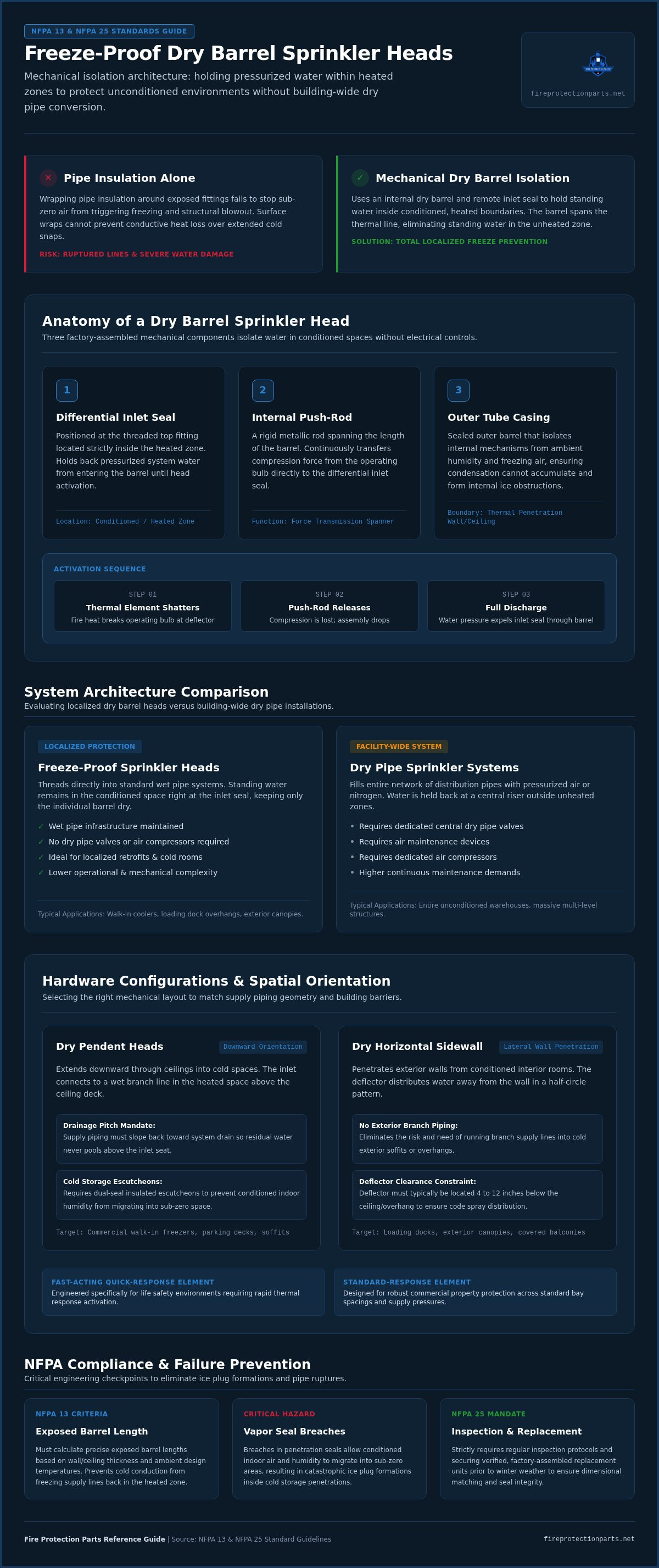
The core mechanism of a dry sprinkler relies on mechanical isolation rather than complex electronics. Its physical construction contains three critical components:
- Differential Inlet Seal: Located at the threaded top fitting inside the heated space, this seal holds back pressurized water from the wet supply branch.
- Internal Push-Rod: A rigid metallic rod extends through the center of the barrel, transferring compression force from the thermal element directly to the inlet seal.
- Outer Tube Casing: A sealed outer barrel isolates the internal rod from moisture and freezing ambient air, ensuring condensation cannot accumulate and freeze inside the mechanism.
When fire heat shatters the operating bulb at the deflector, the push-rod releases. Water pressure immediately expels the inlet seal and rod assembly, discharging water through the barrel to suppress the fire.
Dry Sprinkler Heads vs. Dry Pipe Fire Sprinkler Systems
A common point of confusion is distinguishing between individual dry barrel heads and complete dry systems. Dry pipe systems fill an entire network of distribution pipes with pressurized air or nitrogen. These larger installations require dedicated control valves, air maintenance devices, and specialized air compressors for dry sprinkler systems to hold back water at a central riser.
Freeze-proof sprinkler heads, by contrast, thread directly into standard wet pipe systems. Water remains in the heated area right up to the sprinkler's inlet seal, leaving only the barrel dry. For retrofits or localized freezing hazards like loading dock overhangs or refrigerated storage rooms, using dry barrel heads avoids the mechanical complexity and ongoing maintenance demands of a separate dry pipe valve assembly.
Types of Dry Sprinkler Heads for Freezing Environments
Selecting the right freeze-proof sprinkler heads requires matching the physical orientation to your building layout and piping geometry. Manufacturers engineer these assemblies in pendent, sidewall, and upright configurations. Each style uses either a fast-acting, quick-response thermal element for life safety or a standard-response bulb for commercial property protection. Choosing between standard throw profiles and extended coverage models depends entirely on structural bay spacing and water supply pressure.
Dry Pendent Sprinkler Heads
Dry pendent heads point downward, extending through ceilings into cold spaces such as commercial walk-in freezers, unheated parking decks, and exterior soffits. The inlet connects to a wet branch line in the heated space above. Proper pitch is critical; the supply piping must slope back toward the system drain so residual water never pools above the inlet seat. In cold storage applications, these units require dual-seal insulated escutcheons to stop conditioned indoor humidity from migrating into sub-zero space. When configuring replacements for cold storage facilities, contractors often review options through specialized suppliers like Fire Protection Parts to ensure exact barrel length matches the ceiling deck thickness.
Dry Horizontal Sidewall Sprinklers
Horizontal sidewall assemblies penetrate exterior walls from conditioned interior rooms to protect loading docks, exterior canopies, and covered balconies. The deflector distributes water away from the wall in a half-circle pattern, eliminating the need to run branch lines into cold exterior soffits. To ensure code-compliant spray distribution, contractors must maintain strict clearance between the deflector and structural overhangs, typically locating the deflector four to twelve inches below the ceiling plane per manufacturer listings.
Dry Upright Sprinklers
Unlike pendents that drop down from a supply line, dry upright heads point upward and connect directly to the top of branch piping. These units are deployed primarily in unheated attics and exposed truss areas connected to dry pipe systems. Placing a standard pendent drop in an unheated space creates an operational failure point; condensation pools in the drop nipple, freezes, and splits the assembly. Dry upright sprinklers resolve this risk entirely. Their vertical orientation allows water and condensation to drain back into the sloped main pipe, preventing frozen condensation from obstructing water delivery during an emergency.
NFPA 13 Requirements and Calculating Exposed Barrel Length
NFPA 13 mandates that water-filled supply pipes feeding dry sprinklers must remain in an environment maintained at or above 40°F (4°C). This rule protects the system from thermal bridging. Metal conducts cold efficiently; if the uninsulated barrel does not extend far enough into the conditioned space, freezing temperatures will travel up the casing directly to the inlet seal. Because freeze-proof sprinkler heads are factory-assembled with internal push rods, they cannot be cut, shortened, or modified in the field. Ordering an incorrect length risks either an impossible physical fit or a ruptured supply line during a deep freeze.
Understanding Minimum Exposed Barrel Length Charts
NFPA 13 provides standard exposed barrel length charts based on design minimum ambient temperatures and the temperature maintained in the heated space. For instance, if an unheated exterior canopy drops to -20°F and the interior ceiling plenum is held at 60°F, NFPA standards specify a minimum exposed barrel length of 12 inches within that heated boundary. If ambient plenum conditions drop to 40°F, that required exposed length increases to 18 inches. Specifiers must also cross-reference environmental thermal loads with appropriate fire sprinkler head temperature ratings to guarantee operating bulbs withstand ambient summer peaks while remaining fully responsive during fire conditions.
Step-by-Step Barrel Measurement Protocol
Avoid catastrophic sizing mistakes by following this sequential calculation before ordering your replacement units:
- Measure Fitting Face to Boundary Surface: Measure the precise distance from the face of the branch line tee fitting to the exterior face of the finished wall or ceiling.
- Add Assembly and Insulation Depths: Account for structural insulation boards, ceiling drywall, and vapor barriers. If you are retrofitting through a walk-in freezer panel, include the full panel thickness in this depth profile.
- Factor Thread Engagement: Deduct or add manufacturer-specific nominal thread engagement (typically 0.5 to 0.75 inches for standard NPT connections) based on whether your fitting is a welded outlet or a threaded cast iron tee.
- Verify Against NFPA Minimums: Ensure that the portion of the barrel remaining inside the heated space equals or exceeds the NFPA 13 minimum exposed length requirement for your local climate design temperature.
Critical Installation Considerations to Prevent Freeze Failures
Even properly calculated freeze-proof sprinkler heads can fail if installation practices ignore mechanical and thermal realities. Most freeze-related failures stem from field execution mistakes rather than equipment defects. Securing long-term reliability requires strict attention to vapor seals, mounting orientation, and proper handling tools.
Eliminating Air Infiltration and Condensation
Air leakage is the single most common cause of ice plugs in cold storage applications. When warm, humid air from an adjacent room or ceiling plenum migrates into a sub-zero freezer, physics takes over. Moisture condenses on the cold metal surface of the dry barrel and freezes solid. Over time, progressive ice accumulation builds around the operating mechanism, locking the deflector or crushing the thermal bulb.
Contractors must install specialized elastomeric vapor boots or dual-seal escutcheon assemblies at every penetration. Standard insulating expanding foams are inadequate; they often crack under thermal cycling or expand unevenly against the outer tube casing. Inspect penetrations thoroughly to verify an airtight barrier that stops convective airflow loops cold.
Piping Connection Rules and Supply Alignment
Supply pipe connection geometry directly impacts performance. When tying dry pendents into a wet pipe system, never install the dry head into the bottom of the supply pipe. Bottom-outlet configurations turn the sprinkler barrel into a sediment trap, collecting debris, scale, and stagnant moisture right above the inlet seal. Instead, connect dry sprinklers to the top or side of the supply pipe using a welded branchlet or threaded tee.
Physical handling during installation is just as critical. Never apply a standard pipe wrench to the outer barrel casing. The outer tube contains tight internal clearances; crushing or denting the metal binds the internal push-rod, preventing the inlet plug from opening during a fire. Always use manufacturer-designated dry sprinkler installation wrenches that grip the head base directly. When outfitting your facility, contractors choose to source verified sprinkler system components online to guarantee full listing compatibility across fittings, escutcheons, and heads.
Ready to upgrade your vulnerable branch lines? Shop code-compliant dry sprinklers at Fire Protection Parts to ensure reliable freeze protection before sub-zero temperatures hit.
Inspection, Maintenance, and Sourcing Replacement Dry Sprinklers
Maintaining freeze-proof sprinkler heads demands consistent surveillance and strict adherence to testing schedules. Neglected heads in cold environments degrade silently. Ambient moisture, corrosive atmospheres, and mechanical fatigue can compromise internal seals long before a cold snap triggers a blowout. Facility teams must execute seasonal assessments and plan replacements proactively to prevent emergency shutdowns when winter weather arrives.
NFPA 25 Inspection Checklist for Cold Storage and Freezers
NFPA 25 outlines rigorous maintenance rules for water-based fire protection equipment in sub-freezing spaces. Focus visual checks on these key trouble spots:
- Ice Accretion: Inspect the frame, deflector, and glass bulb quarterly. Any frost or ice buildup indicates a compromised vapor seal or moisture intrusion that can delay heat response.
- Vapor Seal Integrity: Check that ceiling escutcheons and elastomeric boots remain tight against building panels. Look for cracking, gaps, or deterioration caused by thermal cycling.
- Corrosion and Physical Damage: Check the outer barrel for pitting, white rust, or bent linkages. Corrosive atmospheres in chemical or food storage areas accelerate metal degradation.
- Testing Compliance: Track operating service life accurately. NFPA 25 mandates that dry sprinklers in service for 10 years must either undergo representative laboratory sample testing or be completely replaced, with retesting intervals scheduled every 10 years thereafter.
How to Order Replacement Dry Sprinklers Online
Replacing legacy heads without field delays comes down to identifying hardware specifications accurately before ordering. Because factory assemblies are custom-built to fixed dimensions, gather these parameters directly from the field:
- Sprinkler Identification Number (SIN): Locate the 4- to 6-digit alphanumeric code stamped onto the deflector. This code identifies the manufacturer, response speed, and specific deflector model.
- Barrel Length: Measure the exact length from the face of the inlet fitting to the finished ceiling or wall surface. Double-check your depth against original engineering plans.
- Thread Size and K-Factor: Most commercial dry heads use standard 1-inch NPT inlet threads, but flow requirements vary by design density. Verify the K-factor on the deflector plate.
Direct digital procurement gives facility managers and contractors quick access to essential components for seasonal turnarounds. You can source code-compliant replacement hardware and fire protection parts online without dealing with prolonged supply delays. Review available configurations through the complete collection of dry pendent sprinklers at Fire Protection Parts to ensure your facility maintains uninterrupted protection through the deepest winter freezes.
Protect Your Facility Before the First Freeze Hits
Safeguarding unheated spaces against winter blowouts requires robust mechanical design, not seasonal guesswork. Installing properly sized freeze-proof sprinkler heads ensures pressurized water remains securely isolated within conditioned areas until an emergency occurs. By accurately calculating your exposed barrel length against local climate design data, eliminating air gaps around structural penetrations, and maintaining a strict replacement schedule, you protect your building from catastrophic water damage.
Don't wait for sub-zero temperatures to expose hidden vulnerabilities in your fire protection system. Facility managers and contractors rely on fast digital procurement to keep critical life safety projects on schedule. When you need dependable replacement hardware for exterior canopies, loading docks, or commercial coolers, order code-compliant dry pendent sprinkler heads at Fire Protection Parts. With comprehensive nationwide distribution and an extensive catalog of specialized freeze protection hardware, you can secure total peace of mind before winter arrives.
Frequently Asked Questions
Can regular fire sprinkler heads be wrapped in insulation instead of using freeze-proof heads?
No, wrapping regular wet sprinkler heads or drops in insulation does not prevent freezing in unconditioned spaces. Insulation merely slows heat transfer; it doesn't generate warmth. Without an active heat source, standing water inside an exposed wet drop quickly drops below 32°F and freezes solid. Freeze-proof sprinkler heads are specifically required by NFPA 13 because their internal dry barrel isolates standing water safely inside the conditioned building envelope.
How does a dry barrel sprinkler head prevent water from freezing inside the barrel?
A dry barrel sprinkler holds water back inside a heated space using a specialized inlet seal assembly located at the top of the barrel. An internal push-rod spans the barrel, resting against the thermal operating bulb at the deflector. As long as the bulb remains intact, the rod keeps the inlet seal pressed shut against water pressure. The barrel itself stays empty and dry, meaning there is no standing water exposed to freezing air.
How do you determine the correct barrel length for a dry pendent sprinkler?
You calculate barrel length by measuring the distance from the face of the supply fitting to the finished ceiling plane, adding any insulation or structural panel thickness. You then compare that dimension to the minimum exposed barrel length charts in NFPA 13. The exposed portion inside the heated space must be long enough to prevent cold conduction from freezing water at the inlet fitting based on the area's lowest expected design temperature.
What happens if warm air leaks past the escutcheon into a freezer sprinkler penetration?
When humid air from a warm plenum or interstitial space migrates past a faulty escutcheon into a freezer, moisture immediately condenses and freezes. This process creates an exterior ice plug that wraps around the sprinkler frame, thermal bulb, and deflector. Over time, expanding ice can crush the glass bulb, causing an accidental discharge, or mechanically lock the push-rod assembly, preventing the sprinkler from activating properly during a fire.
Can dry sprinkler heads be connected directly to a wet pipe sprinkler system?
Yes, freeze-proof sprinkler heads are specifically engineered to thread into wet pipe supply lines. They allow contractors to protect localized unheated areas, like loading dock canopies or walk-in coolers, without installing an entire dry pipe valve, compressor, or accelerator system. The sprinkler inlet fitting connects to the wet piping inside a heated zone, ensuring pressurized water remains protected above 40°F until thermal activation occurs.
How often do freeze-proof dry sprinkler heads need to be replaced or tested?
Under NFPA 25 standards, dry sprinklers must be replaced or representative laboratory samples must be tested once they reach 10 years of service. If testing confirms operational reliability, the remaining heads can stay in service, but mandatory retesting must take place every 10 years thereafter. Additionally, facility teams should perform quarterly visual inspections to detect physical damage, corrosion, or ice accretion around the escutcheons and deflectors.
Why can you not cut or shorten a dry sprinkler barrel in the field?
Dry sprinklers are sealed, precision-machined factory assemblies containing an internal metallic push-rod under continuous spring compression. Cutting or altering the outer tube destroys the internal mechanism, ruins the inlet seal seating, and releases factory tolerances. Field modifications will either cause immediate water leakage upon system pressurization or prevent the internal mechanism from ejecting during a fire event. You must order exact manufactured lengths to fit each specific field application.

