



Reliable Fire Sprinklers: The 2026 Professional Buyer’s Guide
A single non-compliant sprinkler head can be the difference between a minor incident and a catastrophic failure. Choosing reliable fire sprinklers isn't just a matter of checking a box. It's about precision engineering and meeting the rigorous demands of the 2026 NFPA 25 standards. You want to protect your facility without getting buried in technical jargon or worrying about whether a part will actually fit your existing system. We know that identifying the right temperature ratings and response types for older hardware is often the most difficult part of the procurement process.
This guide provides the professional assurance you need to make informed decisions. You'll learn how to select the most dependable hardware to ensure total code compliance and maximum life safety. We'll cover everything from the new 50-year replacement rules for dwelling units to the technical differences between response types. We'll also explain how to source specific manufacturer-listed components like escutcheons and wrenches to satisfy inspectors. By the end, you'll have a clear path to maintaining a system that stays ready when it matters most.
Key Takeaways
- Differentiate between Quick Response (QR) and Standard Response (SR) heads to ensure your system reacts with the necessary precision for your specific hazard environment.
- Learn how to identify and source reliable fire sprinklers using the Sprinkler Identification Number (SIN) to guarantee an exact, code-compliant match for existing systems.
- Understand the critical differences between NFPA 13D and NFPA 13 requirements to select the correct pendent, upright, or sidewall orientation for your facility.
- Streamline your procurement process by avoiding complex manufacturer portals and focusing on verified, UL-listed hardware that ensures long-term system uptime.
- Discover the importance of matching original manufacturer components, such as cover plates and wrenches, to pass 2026 inspections without costly delays.
Defining Reliability in Modern Fire Suppression
Reliability in fire protection isn't an abstract concept. It's a measurable performance metric that dictates how your facility survives a thermal event. When we discuss reliable fire sprinklers, we're referring to a specific engineering philosophy that prioritizes localized response over broad suppression. This focus ensures that protection is both immediate and surgical.
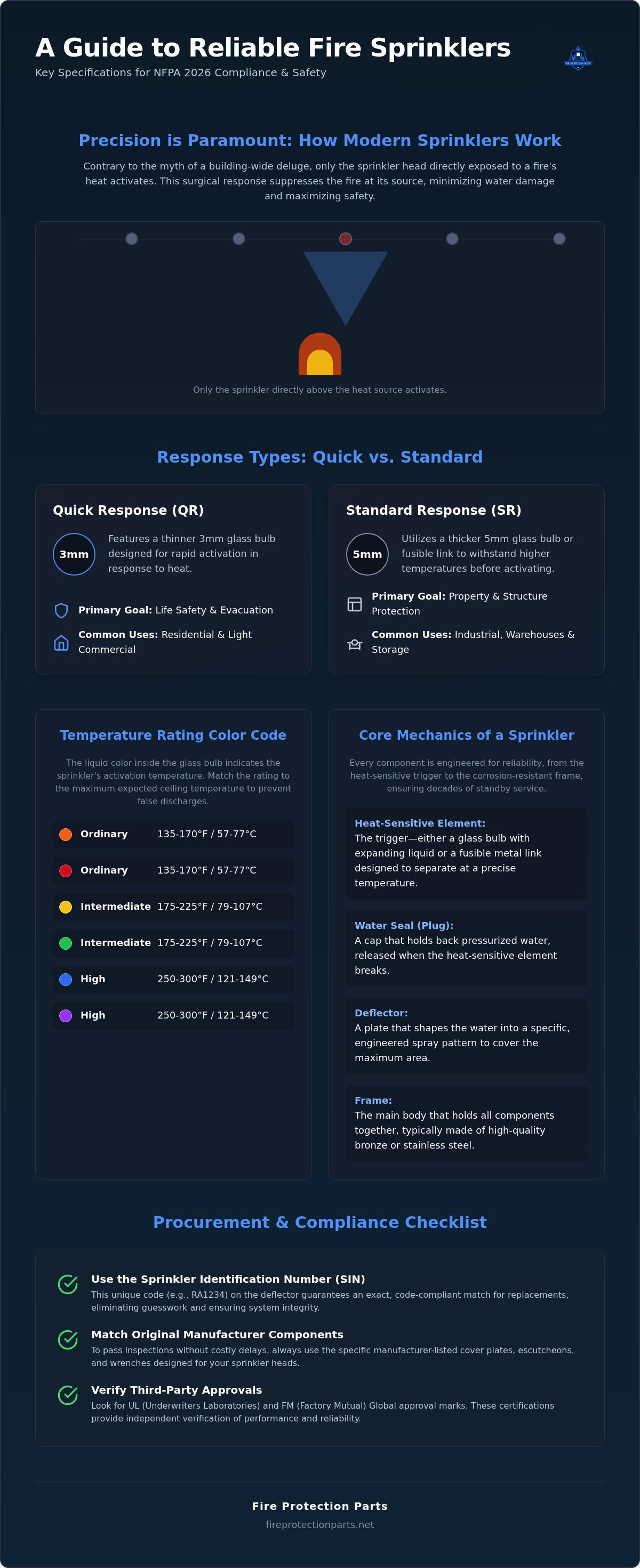
A common misconception is that every head in a building activates simultaneously during a fire. In reality, a modern fire sprinkler operates on a point-by-point basis. Only the heads directly exposed to a heat source activate. This individual activation is superior to total-flood systems because it suppresses the fire while minimizing water damage to the surrounding property. By focusing the discharge exactly where it's needed, the system preserves the building's assets and structural integrity.
System uptime depends on the physical integrity of every component. High-quality bronze, stainless steel, and specialized coatings prevent accidental discharge and slow leaks. These engineering choices reduce long-term maintenance costs by extending the hardware's lifespan and ensuring the system remains pressurized. Choosing high-grade reliable fire sprinklers means fewer emergency repairs and more consistent performance over decades of service.
The Core Mechanics of a Dependable Sprinkler
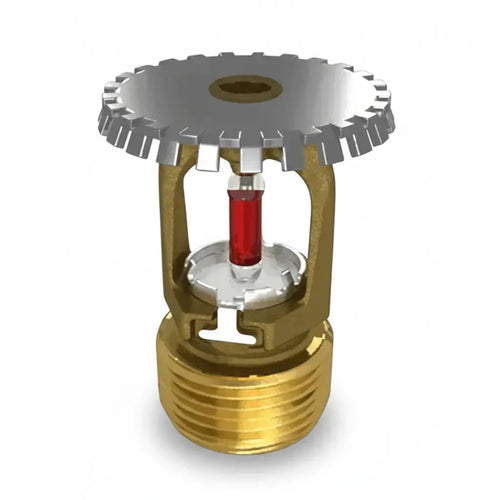
The heart of any head is its heat-sensitive element. Most modern systems use glass bulbs filled with a temperature-sensitive liquid. When heat reaches a specific threshold, the liquid expands and shatters the glass, releasing the water seal. Other models utilize fusible links, which are metal alloys designed to melt at precise temperatures. Precision manufacturing ensures that these elements respond rapidly during a thermal event without being triggered by minor ambient temperature fluctuations. In harsh or coastal environments, corrosion-resistant finishes are essential. They prevent mineral buildup from compromising the deflector or the trigger mechanism over time.
Why Building Professionals Prioritize the Reliable Brand
With over a century of innovation, the Reliable Automatic Sprinkler Co. has established a reputation for consistency. This history is vital for facility managers. It means that when you need a replacement for a twenty-year-old system, the specifications remain consistent. Every component meets strict UL and FM Global standards. This adherence to third-party verification provides peace of mind. It eliminates the guesswork during procurement. Contractors choose these parts because they know the hardware will fit the first time, maintaining the system's integrity without requiring expensive retrofitting or modifications to existing piping.
Decoding Technical Specifications: QR vs. SR and Beyond
Selecting the right hardware for your facility requires more than just a brand name. It demands a precise understanding of how different components react to heat and pressure. Understanding the technical data behind reliable fire sprinklers ensures your system performs exactly as engineered when every second counts. Procurement involves a deep dive into the thermal and hydraulic characteristics of each head to guarantee both safety and code compliance.
Response Types: When Seconds Count
Response time is a critical factor in fire suppression strategy. Quick Response (QR) heads are the standard for life safety in residential and light commercial settings. They typically feature a 3mm glass bulb designed to activate rapidly, keeping heat and smoke at manageable levels to allow for building evacuation.
Standard Response (SR) heads are the workhorses of industrial and storage applications. These heads utilize a thicker 5mm glass bulb or a robust fusible link. They're designed to suppress high-heat fires in environments like warehouses where the goal is to protect the building's structure and inventory. Thermal Sensitivity is the RTI (Response Time Index) of a sprinkler head.
Temperature Ratings and Color Coding
Every sprinkler head is classified by its activation temperature. These ratings are color-coded for easy identification during inspections and maintenance. Ordinary temperature heads (135°F–170°F) usually feature orange or red bulbs. Intermediate ratings (175°F–225°F) use yellow or green bulbs, while High temperature classifications (250°F–300°F) are identified by blue or purple bulbs.
Matching the head to the maximum expected ceiling temperature is vital to avoid nuisance activations. If you install an ordinary-rated head too close to a heat source or in an unventilated attic, you risk a false discharge. For a deeper breakdown of these classifications, consult our guide on fire sprinkler head temperature ratings. Ensuring the correct rating is the first step toward long-term system reliability.
Beyond response time and temperature, you must consider the K-Factor and the physical finish. The K-Factor represents the size of the orifice and determines the water flow at a given pressure. While a standard K-5.6 is common for light hazard areas, larger K-Factors are necessary for high-density applications. Finally, choosing the right finish—whether it's polished chrome, white polyester, or raw brass—allows you to balance aesthetic requirements with environmental protection. If you need help identifying the specific hardware for your project, you can search our professional fire protection inventory to find exact technical matches for your system.
Selecting the Right Head for Your Application
Choosing reliable fire sprinklers requires a clear understanding of the environment they protect. The decision matrix begins with the specific NFPA standard governing the building. NFPA 13 is the comprehensive standard for commercial and high-occupancy structures, while NFPA 13D focuses on one- and two-family dwellings. Matching the head to the standard ensures that the discharge patterns and response times meet the legal safety requirements for that specific occupancy type. Using a commercial head in a residential application, or vice versa, can lead to system failure and code violations.
Orientation is the next critical factor in the procurement process. Pendent sprinklers hang from the ceiling and are the most common choice for finished spaces. Upright sprinklers are installed on top of the piping, making them ideal for areas with obstructions or exposed ceilings where water must be deflected downward. Sidewall sprinklers are mounted on walls, providing a solution for hallways or rooms where ceiling piping isn't feasible. For unheated areas like attics or walk-in freezers, dry pendent sprinklers are essential. These utilize a specialized seal to keep water out of the drop nipple until activation, preventing pipe bursts in freezing temperatures.
Commercial and Industrial Solutions
High-piled storage and warehouse environments present unique challenges that standard spray sprinklers cannot handle. In these spaces, ESFR (Early Suppression Fast Response) heads are the industry standard. They deliver a high volume of water directly to the fire's core to suppress it before it can spread through the racks. For general-purpose buildings like offices or retail outlets, standard spray sprinklers provide balanced protection. In environments with high vibration or heavy-duty machinery, utilizing rugged fittings ensures the system's structural integrity remains uncompromised over time.
Residential and Aesthetic Options
Modern residential design often demands that safety hardware remains unobtrusive. Concealed heads solve this by sitting flush with the ceiling behind a decorative cover plate. These plates are designed to drop away at a temperature slightly lower than the sprinkler's activation point. It's vital to ensure total compatibility between the head and its specific escutcheon or cover plate; using mismatched parts can delay activation. For homes where municipal water pressure is insufficient, residential fire pump systems provide the necessary force to meet NFPA 13D requirements. By selecting the right combination of reliable fire sprinklers and support hardware, you ensure maximum protection without sacrificing the building's visual appeal.
The Buying Checklist: Avoiding Common Procurement Mistakes
Procurement errors in fire protection lead to more than just failed inspections. they cause system downtime and compromise life safety. Using a methodical checklist ensures that the reliable fire sprinklers you order are the exact ones your system requires. Verification is your best defense against the costs of incorrect parts and re-installation.
- Verify the SIN: The Sprinkler Identification Number is a unique alphanumeric code stamped on the deflector. It identifies the K-factor, response type, and manufacturer. Never buy based on visual similarity alone.
- Confirm Thread Size: Most heads use 1/2 inch or 3/4 inch NPT threads. Mismatched threads won't seal and can permanently damage your Viking Plastics CPVC Pipe or steel fittings.
- Check for UL and FM Approvals: These certifications are non-negotiable for insurance compliance and local fire codes.
- Maintain a Spare Head Cabinet: NFPA 25 requires on-site spare heads and the correct wrench. A backup stock ensures you can restore protection immediately after a discharge.
Essential Components for a Complete Installation
A sprinkler head doesn't function in isolation. Escutcheons are critical listed components, not just decorative trim. They ensure the head sits at the engineered depth to activate correctly. You must also source the manufacturer-specified wrench for each head type. Using a standard pipe wrench can crush the frame or shatter the glass bulb before the system is even pressurized. For a broader look at necessary hardware, see our guide on sprinkler system components online.
Common Pitfalls in Online Sourcing
Mixing brands within a single fire zone is a frequent mistake. Hydraulic calculations rely on the specific flow characteristics of a single manufacturer's hardware. Stick to reliable fire sprinklers from the same series to maintain system balance. Identifying older heads can be difficult if the SIN is obscured by paint or corrosion. In these cases, use the deflector shape and orifice size to find a modern equivalent that meets current standards. Finally, always account for environmental factors. Standard heads will fail in walk-in freezers or chemical storage areas. Use dry pendents or corrosion-resistant finishes where the atmosphere demands them. If you're ready to secure your facility, you can shop our full collection of fire protection parts today.
Sourcing Reliable Fire Sprinklers at Fire Protection Parts
Finding the exact hardware for a repair or a new project shouldn't be a hurdle. At Fire Protection Parts, we offer a curated collection of 79 Reliable brand products; this ensures you have access to the industry's most trusted components without the complexity of manufacturer portals. Whether you're a contractor managing a large-scale commercial retrofit or a homeowner maintaining a residential system, our inventory is designed for efficiency and precision. We focus on providing code-compliant, professional-grade hardware that meets the strict demands of 2026 safety standards.
Identifying the right fire protection parts online requires technical accuracy. Our team provides expert support to help you match SIN numbers and technical specifications. This specialized focus eliminates the risk of ordering non-compliant parts that could fail an inspection or, worse, fail during a fire. We prioritize fast procurement to keep your projects on schedule and your facilities protected.
Maintaining Your System for Decades of Service
Reliability depends on consistent maintenance. During your annual inspections, look for heads that have been accidentally painted or show signs of physical damage. A layer of paint on the glass bulb or fusible link can insulate the element. This delay in activation compromises the entire system. You must also keep heads free of dust, grease, and structural obstructions. Even minor buildup can interfere with the spray pattern, reducing the effectiveness of the suppression.
Deciding between a full system upgrade and individual head replacement depends on the age and condition of your hardware. If your system is approaching the 50-year mark, or if you've experienced recurring leaks, a comprehensive upgrade may be more cost-effective than piecemeal repairs. For newer systems, replacing specific heads with exact reliable fire sprinklers matches is the standard way to maintain compliance and uptime without unnecessary expenditure. Always verify the condition of your Viking Plastics CPVC Pipe and fittings during these checks to ensure the entire pressurized network is sound.
Ready to Secure Your Property?
The Reliable brand remains the industry gold standard because of its century-long commitment to engineering excellence. Their components provide the durability needed for high-pressure environments and the sensitivity required for life safety. Using our online store, you can quickly filter by SIN, orientation, or temperature rating to find the specific hardware your facility needs. This streamlined approach removes the doubt from the buying process. It gives you the professional assurance that your life safety system is equipped with the best available technology. Don't leave your facility's safety to chance. Ensure your system is ready to perform by sourcing verified, UL-listed hardware today. Shop the full Reliable Fire Sprinklers collection here to find the exact components for your next project.
Ensuring Long-Term System Integrity
Maintaining a fire suppression system requires more than just occasional checks. It demands the use of verified hardware that matches your building's specific hydraulic and thermal requirements. By following the 2026 procurement standards and verifying every SIN and thread size, you eliminate the risks associated with non-compliant parts. You've learned how to differentiate between response types and how to select the right orientation for your piping, ensuring your facility remains protected and code-compliant.
Fire Protection Parts is your partner in this mission. We offer a curated selection of 79 Reliable brand products, providing the specialized hardware needed for NFPA 13, 13R, and 13D compliance. Trusted by contractors and facility managers nationwide, we simplify the sourcing process so you can focus on safety rather than complex manufacturer portals. When you choose reliable fire sprinklers, you're investing in peace of mind and unwavering protection for years to come.
Secure your property with code-compliant Reliable Fire Sprinklers today and take the final step toward a safer facility.
Frequently Asked Questions
What is the difference between a quick response and a standard response fire sprinkler?
Quick Response (QR) heads feature a 3mm glass bulb designed for rapid heat sensitivity to assist in building evacuation. Standard Response (SR) heads use a thicker 5mm bulb or fusible link, focusing on containing fires in high-heat industrial environments. Choosing between them depends on whether your priority is life safety in residential zones or protecting property in a warehouse. Both types are essential for maintaining reliable fire sprinklers across different facility zones.
How do I identify which Reliable fire sprinkler head I need for a replacement?
The most accurate way to identify your hardware is by locating the Sprinkler Identification Number (SIN) stamped on the deflector. This alphanumeric code tells you the K-factor, response type, and specific model. You should also check the color of the bulb to verify the temperature rating. Matching the SIN ensures you're sourcing the correct reliable fire sprinklers that are fully compatible with your existing piping and system hydraulics.
Can I use a different brand of sprinkler head to replace a Reliable one?
You should avoid mixing brands within a single fire protection zone. Hydraulic calculations for your system are based on the specific discharge characteristics of a single manufacturer's hardware. Replacing a Reliable head with a competitor's part can disrupt water distribution and lead to inspection failures. Sticking to the original brand guarantees the system performs exactly as it's engineered and maintains its UL listing for insurance compliance; hydraulics don't allow for guesswork.
What do the different colors of the glass bulb in a fire sprinkler mean?
Glass bulb colors designate the temperature at which the sprinkler activates. It's critical to match the new head's color to the existing one to prevent nuisance activations. Common classifications include:
- Orange or Red: Ordinary temperature (135°F–170°F)
- Yellow or Green: Intermediate temperature (175°F–225°F)
- Blue or Purple: High temperature (250°F–300°F)
This coding ensures your hardware reacts only when a genuine thermal event occurs.
Are concealed fire sprinklers as reliable as exposed ones?
Concealed sprinklers are just as dependable as exposed models when installed with their specific manufacturer-listed cover plates. These plates are designed to drop away at a slightly lower temperature than the sprinkler's activation point. Using a mismatched or painted cover plate can delay the response and compromise safety. When sourced correctly, they're engineered to provide high-end aesthetics without sacrificing the rapid suppression performance required by modern NFPA standards.
Do I need a special tool to install Reliable fire sprinkler heads?
Yes, you must use a manufacturer-specified wrench to install or replace these components. Using a standard pipe wrench or pliers can apply uneven pressure to the frame, which might shatter the glass bulb or cause slow leaks over time. These specialized wrenches are engineered to fit the unique shape of the head, ensuring a secure seal without compromising the structural integrity of the hardware or the surrounding escutcheon.
How often should fire sprinkler heads be replaced according to NFPA standards?
Standard response heads typically require replacement or lab testing every 50 years. However, fast-response sprinklers in dwelling units like apartments or hotels must be replaced or tested every 20 years. The 2026 edition of NFPA 25 mandates that sprinklers in dwelling units that are 50 years or older must be replaced with fast-response heads or undergo thermal sensitivity testing. Don't ignore local code adoptions, as they vary by jurisdiction.
What is a dry pendent sprinkler and when should I use one?
A dry pendent sprinkler features a specialized seal at the top of a long barrel to keep water out of the drop nipple. You should use these in unheated areas like walk-in freezers, loading docks, or attics where standing water would otherwise freeze and burst the pipes. They allow the system to remain pressurized with air or nitrogen while keeping the water in a heated portion of the building to prevent catastrophic pipe failure.

