



The Ultimate Residential Sprinkler System Hardware Roundup for 2026
Did you know that a residential sprinkler system successfully controls a fire in 95% of cases? This data proves why fire suppression is the most vital investment you can make for a property. You already understand that safety isn't an area for compromise, but the technical reality of sourcing hardware is often overwhelming. It's common to feel frustrated when trying to align your parts list with the 2025 edition of NFPA 13D standards while ensuring every pipe, pump, and valve is professional grade.
We believe that building a life-saving system should be straightforward and certain. This guide promises to clear the confusion by identifying the essential, code-compliant hardware required for a high-performance installation. You'll gain a clear understanding of why CPVC has become the industry standard over metal and how to source reliable components online without the stress of non-compliance. We'll preview the must-have items for 2026, from specialized fire pumps to backflow preventers, so you can move forward with absolute professional assurance.
Key Takeaways
- Align your project with the 2025 NFPA 13D standards to prioritize life safety and maximum escape time.
- Evaluate the performance benefits of Viking CPVC piping and see how it streamlines installation in residential spaces.
- Identify the specific fast-response heads and riser components necessary for a code-compliant residential sprinkler system.
- Determine if your project requires a residential fire pump system to maintain the pressure needed for reliable fire suppression.
- Master the verification of UL listings and FM approvals to ensure every sourced part meets rigorous professional standards.
Understanding Residential Sprinkler System Standards: The NFPA 13D Framework
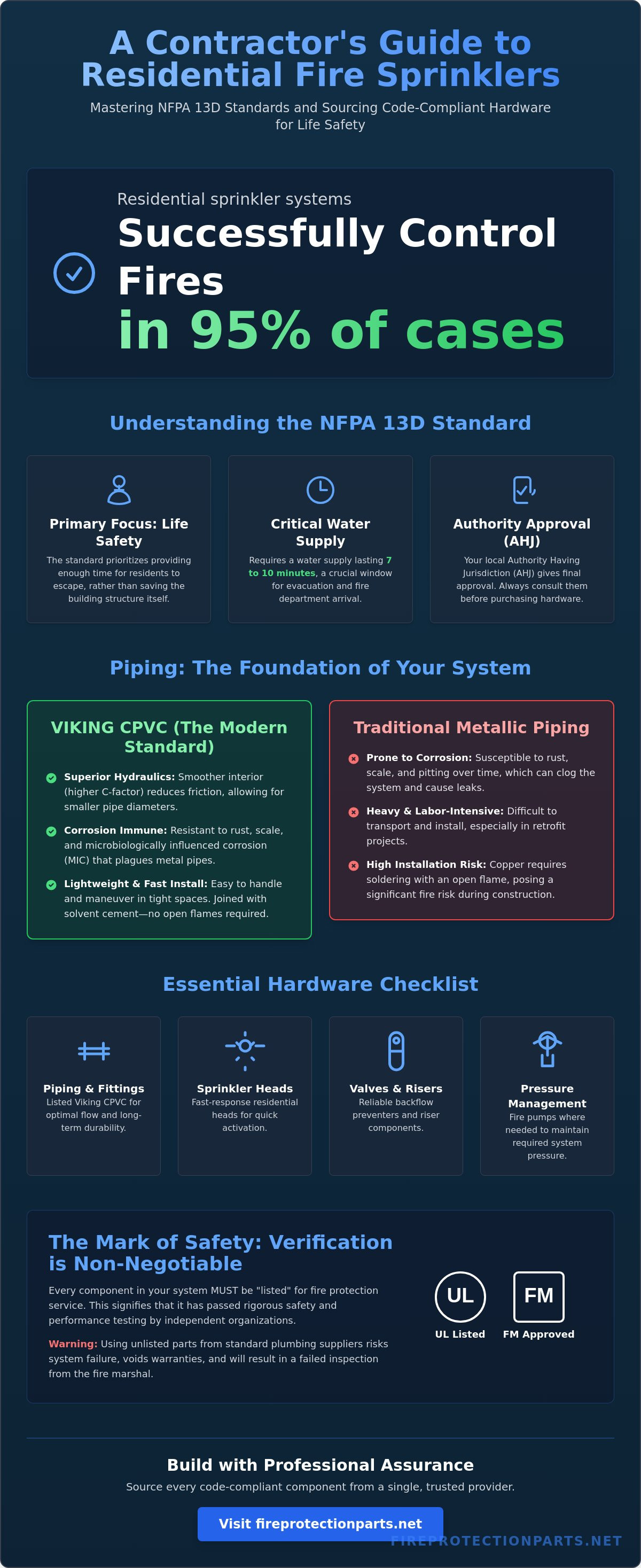
NFPA 13D serves as the definitive standard for installing a residential sprinkler system in one- and two-family dwellings. Unlike commercial standards, this framework focuses specifically on life safety. The objective is simple: provide enough time for residents to escape. While Fire sprinkler systems in commercial settings are designed to protect the building structure and high-value assets, residential versions are optimized to prevent flashover in the room of origin. This distinction allows for a more streamlined, cost-effective design that doesn't sacrifice occupant protection.
Compliance requires more than just following a layout. It demands the use of hardware that's specifically "listed" for fire protection service. This means every component has undergone rigorous testing by organizations like UL or FM Global. Using unlisted parts might save money upfront, but it risks system failure and will almost certainly result in a failed inspection from your local fire marshal. Safety is the priority here, and the standards reflect that reality through strict material requirements.
Key Requirements for Residential Compliance
A primary requirement under NFPA 13D is the water supply duration. Most residential systems must be capable of providing a 7 to 10 minute water supply. This window is critical. It provides the necessary time for the fire department to arrive or for occupants to exit safely. Your local Authority Having Jurisdiction (AHJ) holds the final power of approval. They verify that your hardware choices and water supply meet both national standards and local amendments. Always consult with the AHJ before you finalize your hardware procurement to avoid costly mid-project corrections.
The Hardware Checklist for Homeowners and Contractors
Building a reliable system requires a coordinated assembly of specialized parts. You can't rely on standard plumbing fixtures for fire suppression. A standard residential sprinkler system checklist includes:
- Piping: High-durability materials like Viking CPVC.
- Heads: Fast-response residential sprinklers in various orientations.
- Valves: Reliable backflow preventers and riser components.
- Pressure Management: Fire pumps or air compressors for specific environments.
Sourcing these components from a single, professional provider ensures that thread types and material specifications are fully compatible. Mixing and matching hardware from various unverified sources often leads to leaks or mechanical failures. For a detailed breakdown of every component you'll need, refer to The Essential Residential Fire Sprinkler Parts Checklist for 2026. This resource helps eliminate the guesswork and ensures your hardware meets every safety benchmark.
The Foundation: CPVC vs. Metallic Piping for Home Fire Safety
Choosing the right piping material is the most critical decision in the early stages of a residential sprinkler system installation. Historically, installers relied on black steel or copper. While these materials are durable, they present significant challenges in a home environment. Steel is heavy and prone to corrosion. Copper is expensive and requires open-flame soldering, which poses a fire risk during the construction or retrofit phase. Viking CPVC has emerged as the superior alternative for modern homes. It's lighter, easier to maneuver, and completely immune to the scale and pitting that eventually chokes metallic systems.
Beyond physical handling, CPVC offers superior hydraulic performance. It features a higher Hazen-Williams C-factor compared to steel. This means the interior walls are smoother, significantly reducing friction loss as water travels to the sprinkler heads. This efficiency often allows designers to use smaller pipe diameters while still meeting the flow requirements dictated by NFPA 13D installation standards. Using listed CPVC ensures the system remains reliable for decades without the risk of internal blockages.
Why Viking CPVC is the Residential Industry Standard
Durability is paramount in fire protection. Viking CPVC resists microbiologically influenced corrosion (MIC), a common killer of steel pipes that leads to pinhole leaks. In tight residential crawlspaces or wall cavities, its lightweight nature prevents installer fatigue and speeds up the construction timeline. The solvent-cement joining process creates a chemical bond that is often stronger than the pipe itself, eliminating the need for heavy threading machines or torches. For a deeper dive into technical specifications, consult our Viking CPVC Fire Sprinkler Pipe: The Professional Buyer’s Guide for 2026.
Essential CPVC Fittings and Accessories
A complete system isn't just straight runs of pipe. You need a suite of listed fittings to navigate the unique architecture of a home. Sourcing a complete kit of Viking CPVC components ensures that every joint meets professional safety standards. Key items include:
- Tees and Elbows: These are necessary for creating the "loop" or "grid" configurations that ensure redundant water paths to every room.
- Transition Fittings: These allow you to safely move from a metallic riser or backflow preventer to the CPVC mains without compromising the seal.
- Specialized Hangers: CPVC requires specific support to account for thermal expansion. You should never use standard metal plumbing straps; only use hangers specifically listed for non-metallic fire pipe to avoid damaging the material.
Installation efficiency shouldn't come at the cost of safety. By using a fully integrated CPVC system, you eliminate the compatibility worries that plague mixed-material builds. This professional-grade approach ensures your hardware passes inspection and performs perfectly if it's ever needed.
Residential Sprinkler Head Roundup: Balancing Aesthetics and Performance
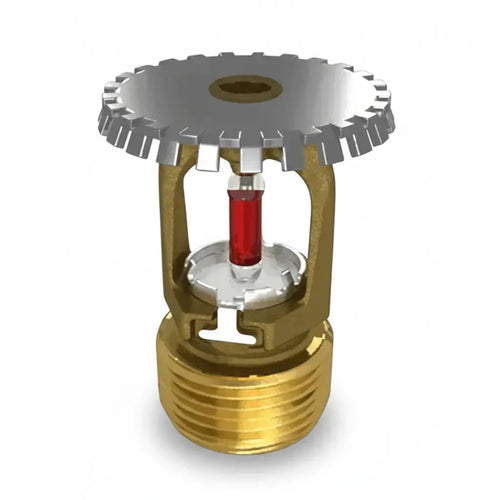
The sprinkler head is the most visible component of a residential sprinkler system, but its engineering is focused entirely on performance. Every head installed in a home must be a fast-response model. These units utilize a highly sensitive thermal element designed to react to heat much faster than standard commercial sprinklers. This rapid activation is the cornerstone of life safety. It controls the fire at its earliest stage, which keeps smoke levels manageable and protects the home's structural integrity during an evacuation.
Hydraulic efficiency depends on the K-factor of the head, with K4.9 being the most common specification for residential use. This number determines the flow rate based on your available water pressure. You must also match the temperature rating to the specific environment. While a 155°F rating works for most living spaces, areas like mechanical rooms or attics often require a 175°F rating to account for higher ambient heat levels. Making the right choice here eliminates the risk of both delayed activation and accidental discharge.
Concealed vs. Exposed Sprinkler Heads
Room function and ceiling design dictate the best head orientation. Concealed heads are the preferred option for finished living areas. They remain hidden behind a flat cover plate that matches the ceiling color, only dropping away when a fire is detected. This maintains a clean, modern aesthetic without compromising safety. Pendent heads are the traditional choice for utility rooms or unfinished basements. They provide reliable, direct protection where visual concealment is unnecessary. In retrofit scenarios where ceiling access is limited, sidewall heads are a functional remedy. These mount high on the wall and distribute water across the room, significantly reducing the need for invasive ceiling work.
Specialty Residential Heads
Certain areas of a home present unique challenges that standard heads cannot handle. For unheated spaces like garages or porches, dry pendent sprinklers are mandatory. These units keep water out of the piping in freezing zones until the system is triggered. If your project involves a multipurpose system that integrates with your potable water lines, you must select low-lead residential sprinklers to maintain water quality. Always ensure you use listed escutcheons and cover plates. These accessories are not merely decorative. They ensure the head is seated at the precise depth required to interact with rising heat, ensuring the system operates exactly as the manufacturer intended.
Essential Pressure and Flow: Residential Fire Pumps and Riser Components
While the piping and heads discussed in previous sections serve as the distribution network, the pump and riser assembly act as the heart of a residential sprinkler system. If your local municipal water supply provides insufficient pressure, even the most advanced sprinkler heads cannot perform their life-saving function. This is where a dedicated residential fire pump becomes mandatory. It ensures that when a fire is detected, the system possesses the hydraulic muscle to suppress it immediately, regardless of external water fluctuations.
A "Riser Pack" is the central nervous system of this setup. It consolidates critical monitoring tools into a single, professional unit. This typically includes flow switches to alert authorities, pressure gauges to verify system readiness, and test valves for routine maintenance. Just as vital is the backflow preventer. This component acts as a safety barrier, preventing stagnant water within the sprinkler pipes from migrating back into your home's clean drinking water supply. Protecting potable water is a non-negotiable requirement for any code-compliant installation.
For homes in cold climates, air compressors play a specialized role. In unheated areas like attics, a dry-pipe system uses compressed air to hold water back at a heated valve. When a sprinkler head activates, the air escapes, and water fills the system. This prevents the catastrophic pipe bursts associated with frozen lines while maintaining full protection in vulnerable zones. If your project requires high-performance pressure management, you can source professional-grade fire pumps and backflow preventers to ensure your system meets every safety benchmark.
Choosing a Residential Fire Pump
Sizing a pump requires technical precision. You must match the pump's output to the most demanding two-head flow requirement of the home's specific hydraulic design. Because residential space is at a premium, modern fire pumps feature compact footprints designed to fit into small mechanical closets or utility rooms. Reliability is the only metric that matters here. Regular maintenance, such as testing the motor and controller, ensures the pump is ready to activate during a life-safety event without hesitation.
Control Valves and Monitoring
Every valve in a fire suppression system should be supervised to prevent accidental shut-offs. A closed valve is a system failure waiting to happen. Pressure relief valves are equally essential. They protect your Viking CPVC piping from thermal expansion spikes that occur as ambient temperatures change. Finally, flow switches provide the necessary communication link. They trigger your home alarm or alert the fire department the moment water begins moving through the pipes, ensuring a rapid response when seconds count.
Sourcing Code-Compliant Hardware for Your Residential Installation
Procuring hardware for a residential sprinkler system is the final hurdle where many projects face unnecessary risks. Buying parts for fire suppression isn't like picking up standard plumbing supplies at a local big-box store. Generic hardware often lacks the critical certifications needed to guarantee performance under high heat. You must look for UL listings and FM approvals on every single component. These marks signify that the part has been vetted by independent laboratories specifically for fire protection service. Without these, your system isn't just non-compliant; it's a dangerous liability.
A specialized e-commerce partner eliminates the guesswork for contractors and DIY-builders. Instead of scouring multiple vendors, you can source everything from a single authority that understands the technical nuances of NFPA 13D. This approach ensures that your thread types match, your materials are compatible, and your project stays on schedule. Before you finalize your order, use a final checklist to verify that every transition fitting and adhesive on your list is specifically designed for fire suppression use. Consistency in your hardware choices is the best way to ensure a leak-free, high-performance installation.
Compatibility and Chemical Concerns
Material compatibility is a critical safety factor when working with non-metallic systems. You must only use products that are verified as FBC System Compatible when installing Viking CPVC. Many common construction materials, such as certain thread sealants, firestops, and even some types of wire insulation, contain chemicals that can cause environmental stress cracking. This leads to leaks and structural failure over time. Avoid improper oils or unlisted sealants that aren't approved for use with CPVC. Identifying the correct anti-freeze for fire protection is equally vital for wet-pipe systems in cold climates. Using unlisted chemicals can degrade gaskets or cause the system to fail during a freeze, leaving your home unprotected.
Why Trust Fire Protection Parts for Your Home System
Making the right choice for your family's safety requires access to the industry's most reliable brands. We provide the professional-grade hardware you need to eliminate doubt and ensure long-term performance. Our inventory includes industry-leading names like Viking and ASC Engineered Solutions, giving you the same quality used by large-scale commercial contractors. Our team offers expert support to help you identify the precise replacement parts or upgrades required for your specific layout, from ASC seismic bracing to PTR electric deluge valves. We prioritize your timeline with direct shipping to your job site, ensuring your project is ready for inspection without delay. Browse our full inventory of residential sprinkler system components to source the hardware your safety demands.
Secure Your Home With Professional-Grade Protection
A reliable residential sprinkler system is the result of precise planning and high-performance hardware. You've learned that NFPA 13D compliance depends on more than just a layout; it requires the right materials. Viking CPVC provides the corrosion resistance and hydraulic efficiency necessary for long-term safety, while specialized fire pumps ensure your system has the muscle to perform when it's needed most. Choosing professional-grade components isn't just about passing inspection. It's about ensuring your fire suppression system works exactly as designed during a crisis.
We eliminate the doubt from your procurement process by offering code-compliant UL/FM listed hardware. You'll benefit from specialized expert support and fast shipping on Viking CPVC and fire pump systems to keep your project moving. Don't compromise on the safety of your build. Secure the parts that professional contractors trust to protect lives.
Shop Professional Residential Sprinkler System Parts Now
Frequently Asked Questions
Do I really need a fire sprinkler system in my home?
Yes, fire sprinklers are the most effective way to protect lives and property. Statistics show they control fires in 95% of cases, providing the critical time needed for families to escape. Many local building codes now mandate their installation in new construction. Beyond compliance, a residential sprinkler system offers peace of mind and can significantly lower your homeowner's insurance premiums.
Can I install a residential sprinkler system myself?
You must check with your local Authority Having Jurisdiction (AHJ) regarding installation requirements. While we provide professional-grade hardware to contractors and homeowners, most jurisdictions require a licensed professional for the actual installation and final certification. Partnering with a specialized contractor like Firemex Solutions Inc. ensures the system meets NFPA 13D standards and provides the specific expertise required to guarantee life safety.
What is the difference between NFPA 13 and NFPA 13D?
NFPA 13 is the broad standard for commercial and high-occupancy buildings. NFPA 13D is a specialized, streamlined standard specifically for one- and two-family dwellings. The primary goal of a residential sprinkler system under 13D is life safety and providing escape time. Commercial standards often focus more on property protection and structural integrity, requiring more complex hardware and higher water volumes.
Will a residential sprinkler head go off accidentally from smoke or cooking?
No, cooking smoke or burnt toast will not trigger a sprinkler head. These units are heat-activated, not smoke-activated. The thermal element must reach a specific temperature, usually 155°F or 175°F, before it releases water. This design ensures that the system only activates in the presence of an actual fire, eliminating the risk of accidental discharge from daily activities.
Does a residential sprinkler system require a fire pump?
A fire pump is only necessary if your municipal water supply cannot meet the hydraulic demands of your system. If your home has low water pressure or relies on a well, a residential fire pump system ensures the heads receive the necessary flow. It acts as a mechanical safeguard to guarantee the system performs correctly during an emergency, regardless of external water fluctuations.
How do I maintain my home sprinkler system components?
Maintenance involves regular visual inspections of heads and gauges. You should ensure that control valves remain in the open position and that no heads are painted or obstructed. While we don't provide inspection services, you should verify local requirements for annual backflow preventer testing. Keeping your system clean and unobstructed is the best way to ensure its long-term reliability.
Can I use regular PVC pipe for my residential sprinkler system?
No, regular schedule 40 PVC is not rated for fire protection. You must use listed CPVC pipe, such as Viking Plastics CPVC, which is engineered to withstand the heat and pressure of a fire event. Using unlisted materials is a violation of fire codes and significantly increases the risk of system failure. Listed CPVC is the only non-metallic material designed for this critical application.
What is the average lifespan of residential sprinkler heads?
Residential sprinkler heads are designed for long-term reliability, often lasting up to 50 years. However, NFPA 13D recommends regular testing or replacement after 20 to 50 years depending on the specific head type and environment. Always consult your local fire code for the exact testing intervals required to maintain your system's certification and ensure it remains ready for a life-safety event.

