

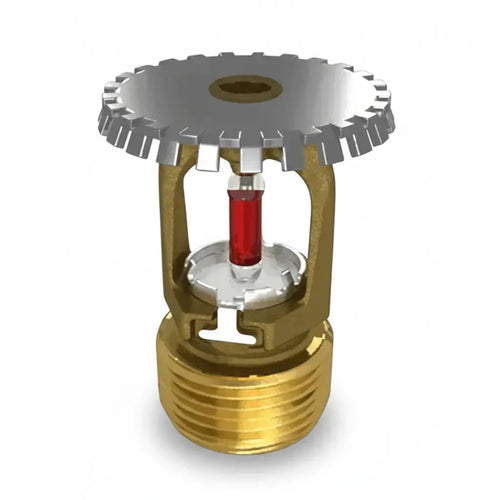


Viking Fire Sprinklers: The 2026 Professional Buying Guide
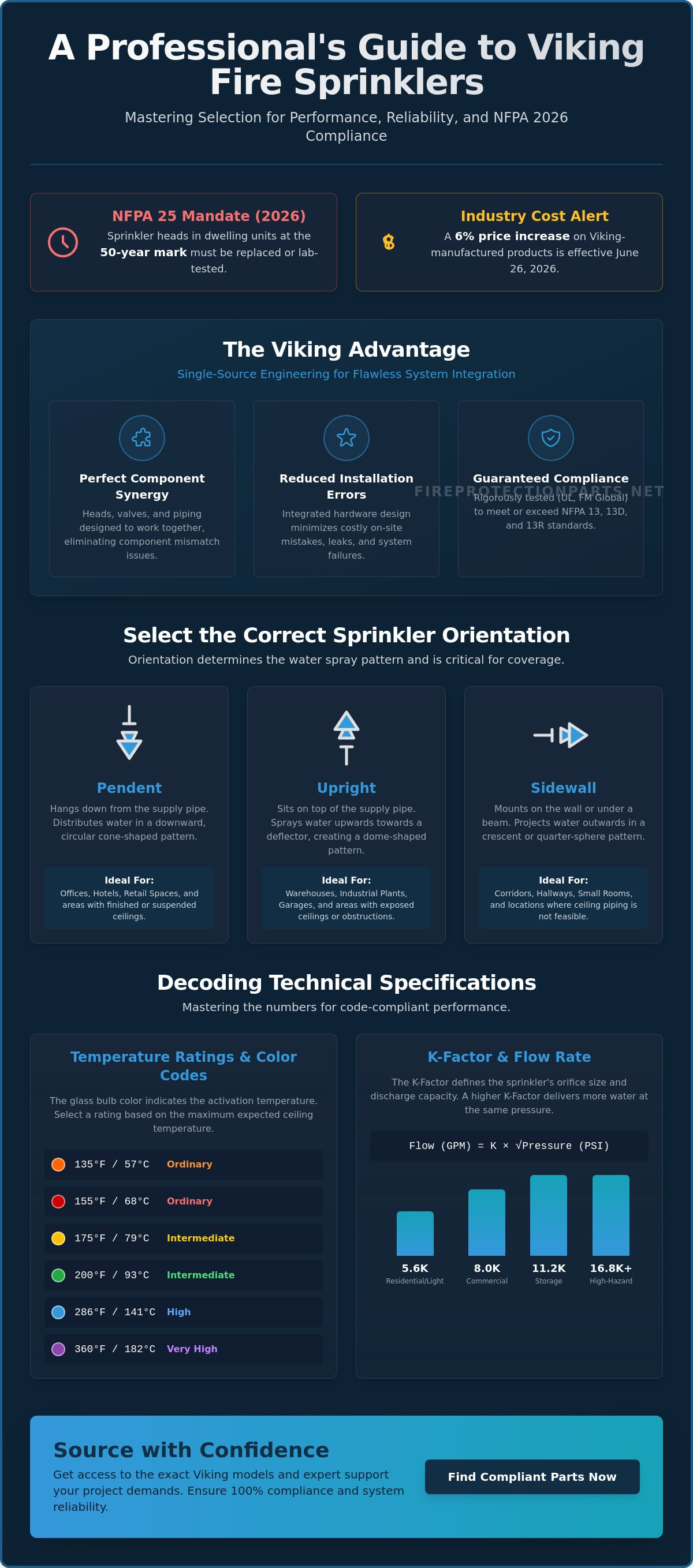
Did you know that under the 2026 edition of NFPA 25, any sprinkler heads in dwelling units that have reached the 50-year mark must now be replaced or undergo rigorous laboratory testing? This new mandate, combined with the 6% price increase on Viking-manufactured products effective June 26, 2026, makes precision in procurement more critical than ever. Selecting the correct viking fire sprinklers for your facility requires more than a casual glance at a spec sheet. It demands a clear understanding of K-factors, temperature ratings, and the synergy between components.
We understand the frustration of navigating complex code updates or the fear of ordering non-compliant parts that delay your project. You need a suppression system that works without fail when it matters most. This guide promises to help you master the technical specifications and selection criteria needed to build a high-performance, code-compliant system. We will walk you through identifying exact sprinkler heads, ensuring 100% NFPA compliance, and streamlining the procurement process for your most demanding projects. By the end, you'll have the expert confidence to make safe, professional choices that protect both lives and your bottom line.
Key Takeaways
- Discover how Viking's single-source engineering philosophy eliminates component mismatch and reduces costly installation errors.
- Identify the critical physical differences between pendent, upright, and sidewall heads to ensure proper water distribution.
- Match your facility's specific hazard level with the correct suppression technology, from light hazard areas to high-piled storage.
- Master the color-coding and K-factor calculations required to select viking fire sprinklers that meet all 2026 code requirements.
- Learn the benefits of sourcing from specialized retailers to ensure you have access to the exact models and technical support your project requires.
Why Viking Fire Sprinklers Are the Industry Standard for Reliability
Viking's reputation isn't built on marketing alone. It's built on a "single-source" engineering philosophy. When you choose viking fire sprinklers, you aren't just buying a component; you're investing in a system where every part is designed to work in perfect synergy with the next. This integrated approach is a game-changer for contractors and facility managers. Using Viking heads alongside Viking valves and piping eliminates the common headache of component mismatch. Many professionals struggle with parts from different manufacturers that technically meet specs but don't integrate smoothly during installation. Viking solves this by controlling the entire engineering process from the lab to the job site.
For those seeking a comprehensive overview of fire sprinkler systems, it's clear that reliability depends on the weakest link. Viking removes that weak link through precision-integrated hardware. This level of engineering reduces installation errors that lead to costly leaks or system failures. It provides the professional assurance that your hardware is as reliable as your design. Whether you're working on a residential project or a massive industrial complex, Viking remains the benchmark for innovation. They've spent decades refining their technology to ensure that when a fire occurs, the response is immediate and effective.
Innovation and Field-Proven Performance
Viking's commitment to precision manufacturing in the USA ensures a level of quality control that is hard to find elsewhere. Industry professionals prioritize these systems for high-hazard environments because they've been field-proven for nearly a century. Precision matters when lives are on the line. The durability of Viking's specialized coatings and finishes also ensures that the hardware survives harsh environments without compromising performance. From corrosive industrial settings to high-traffic commercial buildings, these sprinklers are built to last.
Meeting Global Standards and NFPA Compliance
Compliance isn't optional in fire protection. Viking components simplify the process of meeting NFPA 13, 13D, and 13R requirements. Every head and valve undergoes rigorous third-party testing from UL and FM Global. This independent verification eliminates doubt and provides peace of mind. At Fire Protection Parts, we only stock genuine viking fire sprinklers and code-compliant hardware. We don't compromise on safety because we know you can't afford to either. Using verified, genuine parts is the only way to ensure 100% compliance with the latest 2026 safety standards.
Selecting the Correct Sprinkler Orientation: Pendent, Upright, and Sidewall
Orientation is not a suggestion; it is a fundamental design requirement. When installing viking fire sprinklers, the physical orientation of the head determines the effectiveness of the water spray pattern. A pendent head is designed to hang from the piping, distributing water in a circular pattern downward. In contrast, an upright head sits atop the pipe, spraying water up toward its deflector before it cascades down. Mistaking one for the other is a common but dangerous error. Installing a pendent head in an upright position results in an improper spray pattern that fails to meet safety codes. Adhering to OSHA regulations for automatic sprinkler systems means ensuring that every head is positioned exactly as its listing intends. This precision prevents water from being blocked by the piping itself or by building structural elements.
Choosing the right orientation also involves balancing safety with aesthetics. In finished spaces, concealed heads offer a streamlined look, while industrial settings often require the rugged, exposed nature of upright heads. For projects requiring specific finishes or specialized orientations, you can browse the inventory at Fire Protection Parts to find the exact match for your facility.
Pendent and Concealed Pendent Sprinklers
Pendent heads are the standard choice for offices, retail spaces, and any environment with dropped or finished ceilings. They provide a clean, professional appearance while ensuring maximum coverage. Concealed pendent heads take this a step further by hiding the sprinkler behind a flat cover plate. This maintains interior aesthetics without compromising protection. It's vital to use the correct Viking escutcheon or cover plate for these installations. Using non-listed parts can prevent the head from deploying correctly, which is a significant safety risk and a code violation.
Upright and Horizontal Sidewall Applications
Upright sprinklers are typically found in mechanical rooms, warehouses, or areas with exposed piping. Because they sit above the pipe, they are better protected from accidental impact. Horizontal sidewall heads are the problem-solvers of the industry. They are the best solution for hotels and residential hallways where ceiling piping isn't feasible. Viking utilizes precision-engineered deflectors that are specifically tuned to the head's orientation. These deflectors optimize spray patterns in tight spaces, ensuring water reaches the hazard even when mounted on a wall rather than a ceiling.
Matching Viking Sprinklers to Your Hazard Environment
Hazard classification is the first step in any professional fire protection plan. It determines the density of water application required to suppress a fire effectively. Light Hazard environments, such as office buildings and schools, require less water density than Extra Hazard sites like chemical processing plants or aircraft hangars. Choosing the right viking fire sprinklers allows you to suppress a fire quickly while minimizing secondary water damage. The National Fire Sprinkler Association advocates for this precise matching to ensure that systems perform exactly as intended during an emergency. When you align the hardware with the specific combustible load of the space, you create a system that is both cost-effective and life-saving.
Storage facilities present a unique challenge because high-piled goods can create massive heat plumes. Standard sprinklers often fail to penetrate these plumes. This is why specialized technology like Early Suppression Fast Response (ESFR) is mandatory for modern warehouses. By delivering a high volume of water directly to the fire's core, these heads stop a fire before it can spread through the racks. It's a proactive approach that prioritizes high-performance suppression over simple containment.
Residential Solutions (NFPA 13D and 13R)
Viking's residential series is specifically engineered for quick response in homes and multi-family dwellings. These heads are designed to operate with lower flow and pressure requirements, making them ideal for domestic water supplies. They integrate perfectly with residential fire sprinkler parts and Viking Plastics CPVC Pipe for a streamlined installation. For high-end applications, domed concealed residential heads provide a flush finish that blends into the ceiling without sacrificing safety.
Storage and Industrial Hazards (ESFR and CMDA)
In industrial settings, the concept of "Control Mode Density Area" (CMDA) is used to design systems that protect large-scale manufacturing sites. Viking leads the industry with high-output ESFR heads that can handle the most demanding storage configurations. These systems often require compatibility with heavy-duty deluge valves, such as the PTR Electric Deluge VXD, to ensure rapid water delivery. This hardware is built for durability in environments where failure isn't an option.
Cold Storage and Dry Barrel Systems
Protecting walk-in freezers or unheated loading docks requires a system that won't freeze. Dry pendent sprinklers use a specialized barrel mechanism to keep water out of the freezing zone until the head activates. Viking's dry barrel technology is the gold standard for preventing ice plugs and pipe bursts in refrigerated spaces. If you're managing a cold storage project, you can source genuine dry pendent sprinkler heads to ensure your system remains operational in sub-zero temperatures.
Understanding Technical Specs: K-Factors, Temperature Ratings, and Finishes
Technical specifications are the difference between a system that works and one that fails under pressure. Every component must be verified before installation begins. The K-factor is a mathematical constant that represents the discharge coefficient of the head. It tells you exactly how much water will exit the orifice at a given PSI. When you specify viking fire sprinklers, you're getting hardware machined to exacting standards. This precision ensures your hydraulic calculations remain accurate throughout the life of the building. Using the wrong K-factor can lead to insufficient water density or excessive pressure drops, both of which compromise safety.
Aesthetics and durability also play a significant role in your selection. While standard brass is the most common finish, it isn't suitable for every environment. Corrosive settings like chemical plants, coastal facilities, or indoor pool areas require specialized protection. Viking offers Electroless Nickel PTFE (ENT) finishes that provide superior corrosion resistance, ensuring the head doesn't seize or degrade over time. Secure your system's longevity by choosing the right material for the environment. Shop our full collection of Viking fire protection parts to find the exact specs for your next project.
K-Factors and Flow Rate Precision
You can't swap a head with a different K-factor without a full system recalculation. It's a common mistake that leads to non-compliance during inspections. Residential systems generally use K3.0 or K5.6 heads to accommodate lower flow and pressure requirements. Commercial projects often start at K8.0 and go much higher for high-hazard storage applications. Viking's manufacturing process guarantees that a K8.0 head from one batch performs identically to one from another. This consistency is why professionals trust the brand for large-scale procurement and complex hydraulic designs.
Selecting the Right Temperature Rating and Response
Temperature ratings prevent accidental activation from ambient heat. The color-coding system is your primary tool for quick verification on the job site. Standard ratings like Ordinary (135°F-170°F) use red bulbs, while Intermediate (175°F-225°F) use green. For a complete list of colors and ranges, consult our fire sprinkler head temperature ratings guide. Beyond the temperature, you must choose the response time based on the hazard. A 3mm bulb denotes a Quick Response head. These are mandatory in many residential and light-hazard applications because they activate faster to facilitate safe evacuation. A 5mm bulb is a Standard Response head, which is the traditional choice for industrial protection where suppressing the fire is the primary goal. Always check your local building codes for specific room-type temperature requirements to ensure 100% compliance with 2026 standards.
How to Source and Maintain Viking Fire Protection Systems Online
Buying fire protection equipment isn't like buying a standard plumbing fixture. General hardware stores often lack the technical depth required to ensure a code-compliant installation. When you source viking fire sprinklers from a specialized retailer, you gain access to a catalog of over 700 Viking products. This depth ensures you find the exact K-factor, response time, and finish required for your specific hazard environment. Specialized sourcing eliminates the risk of purchasing non-compliant parts that could fail during a high-stakes inspection. It provides the professional assurance that every component in your order is genuine and verified.
The Benefits of a Single-Source Provider
One major advantage of sticking with a single manufacturer is the longevity of the entire system. Viking fire sprinkler heads are engineered to pair perfectly with Viking valves and Viking Plastics CPVC pipe. This compatibility is crucial for long-term reliability. Using disparate materials can lead to chemical incompatibilities or mechanical stress that shortens the life of your piping. Bulk ordering for large projects also streamlines your logistics. Instead of managing multiple vendors, you can secure everything from seismic bracing to backflow preventors in a single shipment. This reduces shipping costs and ensures that every component arrives on the same timeline. Our expert support team is also available to help you identify the precise replacement heads needed for legacy systems.
Ordering Replacement Parts and Maintenance Hardware
Maintaining a code-compliant system requires more than just the initial installation. The 2026 edition of NFPA 25 mandates that facilities keep a specific inventory of spare sprinklers on-site. These must be stored in a dedicated cabinet and accompanied by the manufacturer-specified wrench for each head type. Missing a single wrench during an inspection can result in a violation. Use this checklist to ensure your procurement is complete:
- Sprinkler Heads: Match the exact SIN (Sprinkler Identification Number) and temperature rating.
- Escutcheons and Cover Plates: Ensure these are listed for use with the specific head.
- Specialized Wrenches: Keep one for every type of Viking head installed.
- Spare Head Cabinets: Protect your inventory from dust and mechanical damage.
- Maintenance Accessories: Include head guards for areas prone to physical impact.
Staying ahead of the June 26, 2026 price increase means auditing your current inventory and securing these essential components now. Browse the full Viking Fire Sprinkler Collection here to complete your maintenance checklist and ensure your system remains 100% compliant.
Secure Your Facility with Precision-Engineered Fire Suppression
Selecting the right hardware is a commitment to life safety and long-term asset protection. You now understand how K-factors dictate hydraulic precision and why matching orientation to your specific ceiling type is non-negotiable for NFPA compliance. Viking's single-source philosophy ensures that every component works in harmony; this reduces the risk of system failure and eliminates the guesswork during installation. By prioritizing technical specs like temperature ratings and corrosion-resistant finishes, you ensure your system remains operational for decades.
Don't leave your facility's safety to chance or settle for generic parts from big-box retailers. We provide the professional-grade components you need to stay ahead of 2026 code updates and price increases. With over 700 Viking products in stock, including UL/FM approved hardware, we are your mission-driven partner in fire safety. Secure the exact viking fire sprinklers your project demands today.
Shop the Complete Viking Fire Sprinkler Collection at Fire Protection Parts. Build your system with the confidence that only expert-verified hardware can provide.
Frequently Asked Questions
How do I identify which Viking sprinkler head I currently have?
You can identify your sprinkler head by locating the SIN (Sprinkler Identification Number) stamped on the deflector. This three-to-five-digit alphanumeric code, which often starts with "VK" for Viking products, allows you to cross-reference the exact technical specifications in the manufacturer's database. If the SIN is illegible, you'll need to verify the orifice size, thread type, and temperature rating to find a suitable replacement that matches the original design.
Can I replace a standard response head with a quick response Viking head?
You shouldn't swap a standard response head for a quick response model without a professional hydraulic evaluation. Quick response heads activate faster and are designed for life safety in residential or light hazard areas. However, changing the response type can alter the system's performance and may lead to non-compliance with the original building design. Always consult your system's design documents or a fire protection engineer before making a change.
What is the most common temperature rating for residential Viking sprinklers?
The most common temperature rating for residential viking fire sprinklers is 155°F (68°C). These heads typically feature a red glass bulb and are designed to activate quickly in a fire while avoiding accidental deployment from standard ambient heat. Some kitchens or utility rooms may require a higher intermediate rating of 175°F or 200°F depending on local building codes and the proximity of the head to heat sources.
Are Viking fire sprinklers compatible with CPVC piping systems?
Viking fire sprinklers are fully compatible with CPVC piping systems when used with the correct listed fittings. Using Viking Plastics CPVC Pipe for Fire Protection ensures a chemical and mechanical synergy that prevents leaks and premature pipe degradation. It's essential to use only approved lubricants and sealants during installation to maintain the integrity of the CPVC material and ensure your system meets all 2026 safety standards.
Why is the K-factor important when buying a replacement Viking head?
The K-factor is critical because it determines the volume of water the head will discharge at a specific pressure. If you replace a head with one that has a different K-factor, you'll fundamentally change the hydraulic balance of the entire system. This could result in insufficient water density at the fire source or excessive pressure elsewhere. Both scenarios are dangerous code violations that compromise the effectiveness of your suppression system.
Do I need a special wrench to install Viking sprinkler heads?
Yes, you must use a manufacturer-specified wrench to install or replace Viking sprinkler heads. Standard pipe wrenches or pliers can damage the frame or the sensitive thermal element, leading to system failure or accidental activation. NFPA 25 requires that the correct wrench for every type of head installed on the premises be kept in the on-site spare sprinkler cabinet to ensure proper maintenance and emergency repairs.
What finish should I choose for a high-humidity or corrosive environment?
For high-humidity or corrosive environments, you should choose an Electroless Nickel PTFE (ENT) or a specialized polyester coating. These finishes provide a robust barrier against moisture, chemical vapors, and salt air that would otherwise corrode standard brass components. Using corrosion-resistant viking fire sprinklers in coastal or industrial settings ensures the head remains functional and prevents the thermal element from seizing over time due to environmental degradation.
How often should Viking fire sprinkler heads be replaced or tested?
Under the 2026 edition of NFPA 25, sprinklers in dwelling units that have been in service for 50 years must be replaced or undergo representative sample testing. In other environments, standard response heads are typically tested every 50 years, while quick response heads require testing every 20 to 25 years. If a head shows signs of corrosion, loading, or physical damage during an annual visual inspection, it must be replaced immediately.

