



Sourcing Code-Compliant Fire Sprinkler Components
A single non-UL listed component can bring an entire multi-million dollar project to a standstill during the final inspection. You understand the high stakes involved in fire protection, yet the constant evolution of NFPA standards makes it difficult to stay certain about every part you order. Whether you're balancing the requirements of NFPA 13, 13D, or 13R, the fear of failing an inspection due to non-compliant hardware is a real and costly concern. Sourcing code compliant fire sprinkler components shouldn't feel like a gamble with your project's timeline or safety.
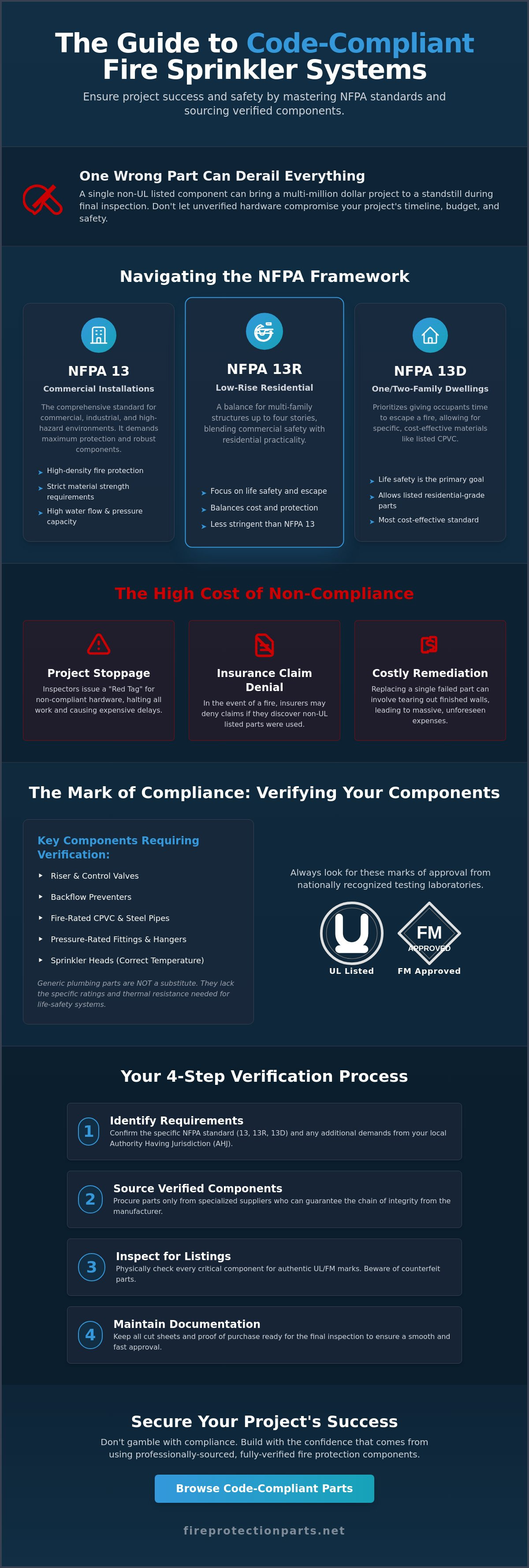
Understanding which code applies to your project is the first step in sourcing the right parts. NFPA 13 is the comprehensive standard for Commercial Fire Sprinkler Systems. It requires high-density protection and components designed for high-hazard environments, which is why experts like Superior Fire Protection Sherpas prioritize uncompromising quality in every installation. In these settings, there is no room for compromise on material strength or flow capacity.
This article provides the clarity you need to master NFPA standards and source verified parts for any application. You'll learn how to identify authentic hardware and navigate the specific demands of your local Authority Having Jurisdiction (AHJ). We will break down the procurement process to ensure you have a reliable supply of everything from CPVC pipe to backflow preventors. This guide will help you secure a faster inspection approval and the professional confidence that comes with uncompromising quality.
Key Takeaways
- Master the nuances between NFPA 13, 13D, and 13R to ensure your system design meets the specific safety requirements of your local AHJ.
- Identify and source verified code compliant fire sprinkler components that carry the necessary UL listings and FM approvals for guaranteed performance.
- Learn why specialized materials like fire-rated CPVC are essential for modern compliance and how they differ from standard plumbing hardware.
- Implement a reliable verification process to catch non-compliant or counterfeit parts before they cause costly delays during final inspection.
- Understand the critical role of specialized procurement in maintaining the chain of integrity from the manufacturer to the finished installation.
Navigating the NFPA Landscape: Why Code Compliance Is Non-Negotiable
Code compliance is more than a checkbox. It's a chain of integrity that ensures every part of the system performs under extreme heat. True code compliant fire sprinkler components are hardware specifically tested, listed, and verified for fire suppression duties. You can't rely on generic plumbing parts for life-safety applications. Fire sprinkler systems are engineered to precise standards where even a minor deviation in a fitting's pressure rating can lead to catastrophic failure. Reliability is the only metric that matters when lives are on the line.
The Authority Having Jurisdiction (AHJ) acts as the final arbiter of this compliance. Their role is to verify that the system installed matches the approved plans and utilizes only listed hardware. This oversight spans the entire project timeline. It begins during the initial design phase, continues through procurement, and culminates in the final hydro-test. If a component isn't verified at the start, it will likely fail at the end. Professional assurance comes from knowing every valve, pipe, and bracket meets the AHJ's rigorous expectations.
The NFPA Framework: 13, 13R, and 13D Explained
Understanding which code applies to your project is the first step in sourcing the right parts. NFPA 13 is the comprehensive standard for commercial installations. It requires high-density protection and components designed for high-hazard environments. In these settings, there is no room for compromise on material strength or flow capacity.
NFPA 13D focuses on one- and two-family dwellings. The goal here is life safety, specifically providing enough time for occupants to escape. This code allows for more cost-effective materials, such as specific CPVC pipes, provided they are listed for residential fire use. NFPA 13R serves as a middle ground for low-rise residential structures up to four stories. It balances the rigorous commercial safety of NFPA 13 with the practical residential considerations of 13D to protect multi-family occupants efficiently.
The Consequences of Non-Compliance
Cutting corners with unlisted components creates massive liability. If a system fails during a fire event because of a sub-standard fitting, the physical damage is only the beginning. Insurance providers often deny claims if they discover non-UL listed parts were used in the installation. They view unverified hardware as a breach of contract and a safety violation.
Inspectors will issue a "red tag" if they find non-compliant hardware during their walkthrough. This stops the project in its tracks. You'll face the high cost of remediation, which often involves tearing out finished walls to replace a single unverified valve or pipe section. Using code compliant fire sprinkler components from the outset is the only way to protect your reputation and your bottom line. Don't let a cheap part lead to an expensive failure.
Essential Code-Compliant Fire Sprinkler Components and Hardware
The riser room is the nerve center of any suppression system. It's where the most critical code compliant fire sprinkler components reside. You can't just pick up a gate valve from a local hardware store and expect it to pass inspection. Standard plumbing parts aren't designed to handle the surge pressures common in fire events. They lack the specific UL listings and FM approvals required for life-safety applications. Every piece of hardware, from the smallest fitting to the largest valve, must be engineered for reliability under duress. Substituting unlisted parts is a direct violation of the NFPA 13 standard and puts the entire building at risk.
Reliability starts with procurement. A system is only as good as its weakest link, which is why professionals prioritize verified hardware. If you're building out a new system or upgrading an existing one, you should browse verified hardware to ensure your procurement meets these strict criteria. Using the right parts doesn't just satisfy the inspector; it ensures the system performs exactly as designed when it's needed most.
Sprinkler Heads and Temperature Sensitivity
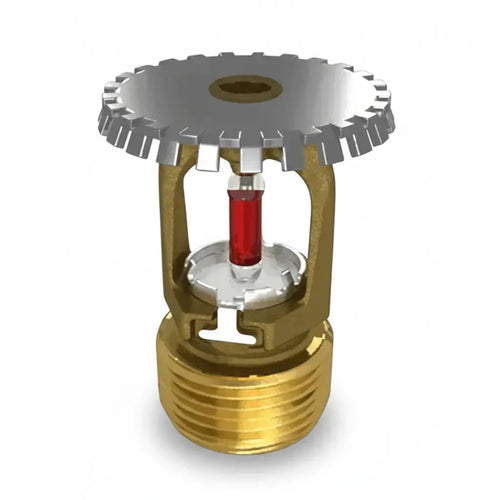
Sprinkler heads are the front line of defense. There are various types of fire sprinkler heads, each designed for a specific environment and hazard level. The glass bulb color isn't just for show. It indicates the specific temperature at which the head will activate. Using a head with the wrong temperature rating is a major code violation. For instance, in unheated areas like parking garages or attics, you must use specialized dry pendent sprinklers to prevent water from freezing in the pipe. Matching the head to the hazard is essential for both safety and code compliance.
Control Valves, Riser Parts, and Backflow Preventers
The riser assembly requires components that provide immediate feedback on system readiness. OS&Y (Outside Screw and Yoke) valves are a code requirement because their stem position makes it obvious whether the valve is open or closed. You can't afford to guess during an emergency. Similarly, backflow preventers are mandatory to protect the municipal water supply from contamination. For high-hazard or specialized applications, the PTR Electric Deluge VXD offers the precision control needed for deluge systems. These code compliant fire sprinkler components ensure the system stays pressurized and ready to act the moment a fire is detected.
Material Compliance: Evaluating CPVC and Steel for Modern Systems
The durability of a fire suppression system depends entirely on the materials used for its piping network. Choosing code compliant fire sprinkler components for these lines is a decision that impacts the system's lifespan and its ability to withstand corrosion. While steel has been the industry standard for decades, it's vulnerable to Microbiologically Influenced Corrosion (MIC). This internal decay can lead to pinhole leaks and obstructed heads, often requiring expensive chemical treatments or full system flushes. Modern compliance strategies increasingly favor materials that eliminate these risks entirely while meeting the rigorous pressure ratings of the NFPA 13 Standard.
Fire-rated CPVC has emerged as a superior alternative for residential and light commercial projects. Unlike standard plumbing PVC, fire-rated CPVC must meet specific ASTM standards, such as ASTM F442, to ensure it can handle the thermal and mechanical stresses of a fire event. It's immune to MIC and provides a smoother internal surface, which improves hydraulic performance. When you source code compliant fire sprinkler components, verifying these material certifications is the only way to guarantee long-term system integrity and pass the initial hydro-test without incident.
Viking Plastics CPVC: The Standard for Residential Safety
For NFPA 13D systems, Viking CPVC fire sprinkler pipe has become the professional choice for reliability. It's lightweight, easy to join, and designed specifically for the needs of one- and two-family dwellings. When comparing cpvc fire sprinkler pipe vs steel, the installation speed and corrosion resistance of CPVC often outweigh the traditional familiarity of metal. However, compliance isn't just about the pipe itself. You must use specialized CPVC fire protection fittings and approved solvent cements to maintain the listing of the entire assembly. Mixing brands or using non-rated fittings is a common mistake that leads to failed inspections.
Seismic Restraint and Support Requirements
In earthquake-prone regions, pipe material is only half of the compliance equation. Proper seismic bracing for fire protection systems is a mandatory requirement to prevent system rupture during ground movement. NFPA 13 dictates specific sway bracing and lateral restraint intervals based on the building's seismic design category. Using ASC seismic bracing and high-strength all-thread rod ensures that the system stays anchored when it matters most. These supports aren't optional additions; they're fundamental components of a code-compliant installation that protects both the building structure and the suppression system's ability to function during a disaster.
The 2026 Compliance Checklist: How to Verify and Source Parts
Verification isn't a suggestion; it's a requirement for project completion. You need a systematic approach to ensure every item in the riser room and across the ceiling grid is legitimate. Sourcing code compliant fire sprinkler components requires a skeptical eye toward unverified suppliers. Before any hardware is installed, you must cross-reference it against your approved submittals. This prevents the "red tag" delays discussed earlier and ensures the safety chain remains unbroken. The AHJ will look for these markings during the hydro-test and final inspection. If they find a single component that doesn't match the submittal package, they have the authority to stop work.
Documentation is your strongest defense during a final walkthrough. If a specific part is backordered, don't just swap it for a generic alternative. "Equivalent" substitutions must be supported by manufacturer data sheets and approved by your local AHJ. You should maintain a dedicated folder for all "cut sheets" and technical specifications. The 2026 standards emphasize accurate compliance records, so digitalizing these documents can save time and reduce labor during the inspection phase. Being organized shows the inspector that you prioritize professional assurance and safety.
Verification Step 1: Check for UL and FM Marks
The UL mark is the primary indicator that a component has been tested and listed for fire suppression service. It's the gold standard for compliance. You can use the UL Online Certifications Directory to verify a manufacturer's listing in seconds. While NFPA codes focus on UL, some insurance carriers require FM Approval for high-value properties. FM standards are often more stringent regarding durability and performance under extreme conditions. Always check the project specifications to see if FM-approved parts are mandatory. Using the wrong listing can lead to insurance liability issues later.
Verification Step 2: Brand and Material Authentication
Generic fittings from non-specialized marketplaces carry significant risks. They often lack the wall thickness or metallurgical consistency required for high-pressure systems. Authentic sprinkler heads always feature a Sprinkler Identification Number (SIN) stamped on the deflector. If you can't find a SIN, the head is likely counterfeit and must be rejected immediately. Ensure all fire protection fittings and accessories match the system’s maximum working pressure. Using unverified parts isn't worth the risk of system failure or a failed inspection.
Maintaining this level of scrutiny is the only way to ensure a seamless approval process. To simplify your procurement and avoid the risk of unverified hardware, source verified, code compliant fire sprinkler components from a professional partner who understands the high stakes of fire safety.
Ensuring System Integrity with Professional-Grade Components
Procurement is the foundation of every successful fire suppression project. It's the stage where you decide whether your system will merely exist or truly protect. Sourcing code compliant fire sprinkler components is about more than just matching part numbers; it's about ensuring system-wide compatibility. For example, if your design specifies Viking Plastics CPVC Pipe for Fire Protection, you must use the specific fittings and cements listed for that system. Mixing components from different manufacturers can lead to chemical incompatibilities or mechanical failures. These errors are often caught during the hydro-test, but the real danger is a failure years later when the system is actually needed.
System integrity also requires proactive maintenance. Code compliance isn't a "one and done" event. Components like Air Compressors for Sprinkler Systems and Backflow Preventors require regular checks to ensure they remain in peak condition. If you're managing a wet system in a cold climate, the quality of your Anti-freeze for Fire Protection is a mandatory safety consideration. Replacing aging or corroded parts before they fail is the mark of a seasoned professional who values long-term performance over short-term savings.
The Value of a Specialized Fire Protection Partner
A specialized fire protection partner is your best defense against non-compliant hardware. Big-box retailers and general plumbing suppliers don't understand the nuances of NFPA 13 or 13R. They don't vet their stock for UL listings or FM approvals with the same level of professional assurance. When you work with experts, you gain access to technical support and hard-to-find, compliant hardware. This includes critical items like Residential Fire Pump Systems and the PTR Electric Deluge VXD. These code compliant fire sprinkler components are essential for maintaining pressure and ensuring a reliable water supply in high-hazard or residential applications.
Final Steps for Your 2026 Project
As you wrap up your 2026 project, perform a final review of the riser room layout. Ensure it matches the approved NFPA 13 design exactly. Don't forget the small details that inspectors look for, such as the required stock of spare sprinkler heads and the correct wrenches. These final checks eliminate doubt and pave the way for a smooth approval process. By sourcing your hardware from a trusted partner, you protect your project, your reputation, and most importantly, the people inside the building. Professional safety doesn't happen by accident; it's the result of deliberate, high-quality choices.
Securing Your Next Project with Verified Compliance
Safety is a choice made during the procurement phase. By mastering the nuances of NFPA codes and implementing a strict verification process, you eliminate the risks of system failure and costly inspection delays. We've explored how code compliant fire sprinkler components like Viking CPVC and PTR deluge valves provide the foundation for a reliable installation. Every part must be listed and verified to maintain the safety chain from the riser room to the final sprinkler head.
As an authorized distributor of Viking Plastics and PTR hardware, we ensure every component in our inventory meets or exceeds current NFPA standards. Our team provides expert technical support for contractors and facility managers who don't have time for unverified parts or failed inspections. Browse Our Full Catalog of Code-Compliant Fire Protection Parts to find the exact hardware your project requires. You've done the hard work of planning; now ensure your system performs with professional-grade components.
Frequently Asked Questions
What makes a fire sprinkler component "code compliant"?
A component is code compliant when it is tested and listed by a nationally recognized laboratory, such as UL or FM Global, for a specific fire suppression purpose. It must also match the pressure, temperature, and material requirements dictated by the applicable NFPA standard for your project. Using unlisted parts is a direct violation that compromises system safety and legal standing.
Can I use standard PVC pipe for a fire sprinkler system?
No, standard plumbing PVC is not rated for fire protection and will fail under the thermal stress of a fire. You must use materials specifically listed for suppression duties, such as Viking Plastics CPVC Pipe for Fire Protection. These specialized pipes meet rigorous ASTM standards to ensure they maintain integrity when exposed to high heat and pressure.
How do I identify a UL-listed fire sprinkler head?
Authentic UL-listed heads feature the UL mark and a Sprinkler Identification Number (SIN) stamped directly onto the deflector. You can verify these details by searching the SIN in the UL Online Certifications Directory. If a head lacks these markings or the SIN doesn't match the manufacturer's data, it is likely a counterfeit part that won't pass inspection.
Is there a difference between NFPA 13 and NFPA 13D components?
Yes, the standards differ based on the hazard level and the goal of the system. NFPA 13 components are designed for high-density commercial protection and often require higher pressure ratings. NFPA 13D focuses on life safety in one- and two-family homes, allowing for residential-grade hardware and specific CPVC materials that are easier to install in domestic environments.
Are residential fire pumps required for code compliance in all homes?
Residential fire pumps are only mandatory when the existing municipal water supply cannot provide the flow or pressure required by the system's hydraulic calculations. If your local water main is insufficient, installing a Residential Fire Pump System is the only way to ensure code compliant fire sprinkler components function as intended during an emergency.
How do I know if my building requires seismic bracing for the sprinkler system?
Seismic requirements are based on the Seismic Design Category (SDC) assigned to your building by local building codes. If your project falls into SDC C, D, E, or F, you must install ASC Seismic Bracing to meet NFPA 13 requirements. These braces prevent the piping from breaking or swaying excessively during an earthquake.
What happens if an inspector finds a non-compliant part in my system?
The inspector will issue a "red tag" and stop the project until the issue is resolved. This often requires you to tear out finished work to replace the unverified hardware with code compliant fire sprinkler components. Beyond the remediation costs, this process can lead to significant delays in obtaining your certificate of occupancy.
Can I mix different brands of fire sprinkler components in one system?
You can mix brands for most generic hardware like valves or hangers, provided each part is listed for the application. However, you must never mix proprietary systems like CPVC pipes and fittings from different manufacturers. These systems are tested as a single assembly, and mixing brands can lead to chemical failures or weak joints that violate the system's listing.

