



Upright vs. Pendent Sprinkler Heads: The Complete 2026 Comparison Guide
Installing a sprinkler head upside down isn't just a minor oversight. It's a critical failure that can render your entire fire suppression system useless during a crisis. While they might look similar to the untrained eye, the choice between upright vs pendent sprinkler heads is a fundamental engineering decision based on drainage, spray patterns, and the 2025 NFPA 13 standards. Choosing the wrong orientation doesn't just risk a failed fire marshal inspection; it puts your entire facility at risk.
We understand that navigating technical specifications and varying deflector shapes can feel overwhelming, especially when the safety of your building is on the line. You want to be certain that every component is verified and compliant. This guide will help you master the technical and regulatory differences between these two essential components. You'll learn how to correctly identify your existing hardware, select the right replacements for your specific environment, and understand exactly when a specialized dry pendent is required to prevent system freezing in unheated areas. From understanding K-factors to verifying Sprinkler Identification Numbers, we provide the expert clarity you need to ensure your system is reliable and code-compliant.
Key Takeaways
- Understand why deflector orientation is a fundamental engineering requirement rather than a simple aesthetic choice.
- Identify the specific environments, from finished offices to industrial warehouses, where each head type is required for maximum safety.
- Master the technical differences in upright vs pendent sprinkler heads to ensure your system meets the latest NFPA 13 installation and clearance standards.
- Learn how to source exact replacements using SIN numbers and understand the critical hazards of modifying hardware during renovations.
Upright vs. Pendent Sprinkler Heads: Core Definitions
In any fire sprinkler system, identifying the hardware starts with orientation. The physical position of the head relative to the piping isn't just a design choice; it's a functional requirement for effective suppression. Orientation is the first step in fire system identification because it dictates how water will interact with the surrounding architecture during an emergency.
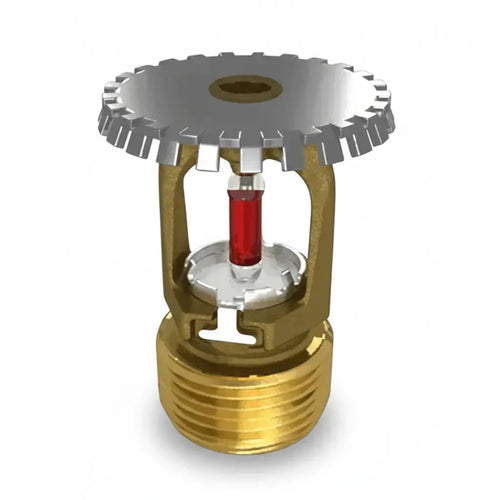
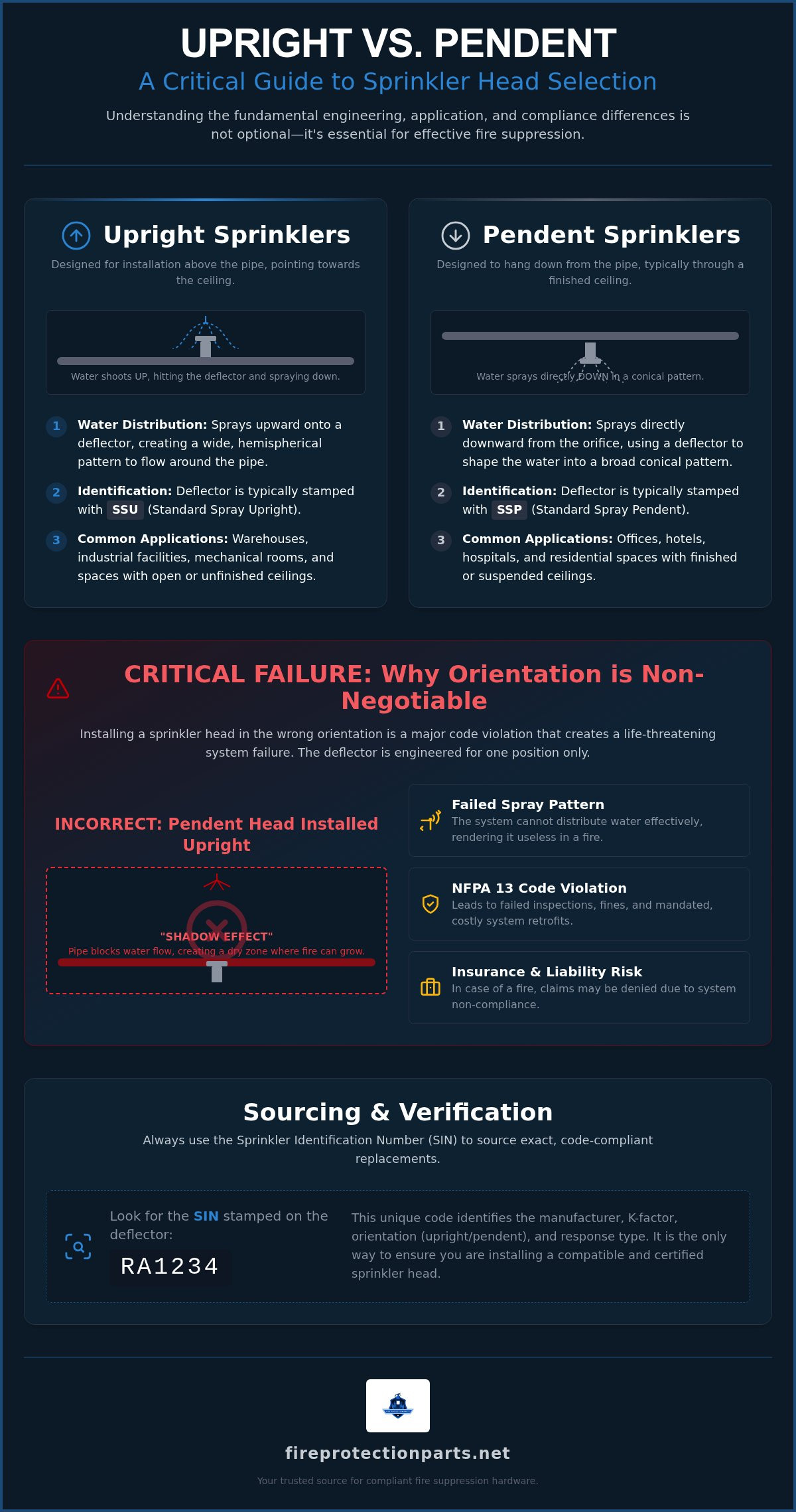
Upright sprinklers are installed with the head pointing toward the ceiling. They sit on top of the pipe. When heat triggers the system, water shoots upward and hits a deflector that redirects the flow into a hemispherical pattern toward the floor. Pendent sprinklers, conversely, hang below the piping. They spray water directly at the floor without having to redirect it around the pipe itself. These two configurations solve different spatial challenges while aiming for the same goal: total coverage.
The deflector is the most critical part of this assembly. It is the metal plate at the tip of the head that breaks the solid stream of water into specific droplets. When comparing upright vs pendent sprinkler heads, you'll notice the deflectors are shaped differently to account for the way gravity and the pipe's presence affect water distribution. One is engineered to push water around an obstruction, while the other is designed for a clear path downward.
Visual Identification of Sprinkler Heads
Identify your hardware by checking the deflector for specific stamps. Upright heads are often marked with "SSU" (Standard Spray Upright), while pendent heads bear the "SSP" (Standard Spray Pendent) mark. Frame shapes also provide clues. Upright frames are often more robust to protect the deflector from debris or impact in open-ceiling environments. Pendent frames are typically slimmer, designed to fit into escutcheons or concealed covers in finished spaces. Look for the SIN (Sprinkler Identification Number) on the deflector to verify the exact model and its intended orientation.
Interchangeability Myths Debunked
Thinking these heads are interchangeable is a dangerous misconception. The debate over upright vs pendent sprinkler heads often centers on aesthetics, but the technical reality is far more rigid. Installing a pendent head in an upright position is a major code violation. Because the deflector is designed for a specific orientation, flipping it upside down ruins the spray pattern. This creates "shadow areas" where water can't reach, allowing the fire to grow unchecked.
Beyond the physical danger, using the wrong head carries heavy legal and insurance consequences. If a fire occurs and the system fails due to improper orientation, insurance providers may deny claims based on non-compliance with NFPA standards. Fire marshals will also flag these errors during inspections, leading to costly fines and required retrofits. You must always match the head to the specific orientation of the branch line.
Deflector Design and Water Distribution Physics
The physics of fire suppression depends entirely on how water leaves the orifice and strikes the deflector. When comparing upright vs pendent sprinkler heads, the most significant technical difference is the engineering of these metal plates. Each is precision-machined to create a specific spray pattern that accounts for the head's position relative to the ceiling and the piping. Orientation isn't a suggestion; it's a requirement of fluid dynamics.
Upright deflectors must work against the presence of the branch line. Because the head sits on top of the pipe, the water shoots upward first. The deflector then catches this stream and redirects it in a wide arc that flows around and over the pipe. This ensures that the pipe itself doesn't block the water, which would leave the area directly below the sprinkler dry. Pendent deflectors have a clearer path. They use gravity to help accelerate the water directly toward the floor, focusing on maximizing droplet size to penetrate the rising heat of a fire.
The "teeth" or notches on the edge of a deflector perform several critical roles:
- Shearing: They break the solid water stream into a fine mist.
- Distribution: They determine the width and density of the spray arc.
- Momentum: They ensure droplets are heavy enough to reach the floor without evaporating instantly in high heat.
Water Obstruction and the 'Shadow' Effect
The "shadow effect" is a primary reason why you cannot flip a sprinkler head. If you install a pendent head in an upright position, the branch line pipe acts as a physical barrier. The water hits the pipe and splashes chaotically rather than forming a protective umbrella. This creates a "shadow" or dry zone where the fire can continue to burn. Adhering to NFPA 13 installation standards ensures that the deflector-to-ceiling distance is maintained so the spray can clear the sprinkler's own frame and the supply piping without interference.
K-Factor and Flow Rates
Orientation also influences the hydraulic calculations of a fire suppression system. K-factor is the discharge coefficient for sprinkler heads. It represents the relationship between the pressure in the pipe and the volume of water discharged. While both upright and pendent heads might have the same K-factor, their impact on the system's overall hydraulic balance differs based on their placement and the friction loss within the fittings. Ensuring you have the correct professional-grade hardware is the only way to guarantee the system operates at the flow rates designed by your engineer. When replacing heads, always match the K-factor and orientation exactly to maintain the integrity of the original hydraulic design.
Application Scenarios: When to Use Which Head
The environment dictates the hardware. While the previous section covered the physics of water distribution, the practical application of upright vs pendent sprinkler heads depends on the ceiling type and the risk of temperature fluctuations. You can't simply swap one for the other without compromising either the protection level or the building's structural integrity.
Pendent heads are the go-to choice for finished ceilings in offices, hotels, and residential buildings. They offer a clean, professional look and can be concealed entirely behind cover plates. Upright heads, however, are the workhorses of mechanical rooms, warehouses, and parking garages. Because they sit atop the branch lines, they are better suited for spaces with exposed piping where aesthetics matter less than functional coverage and clearance. In some cases, you might consider sidewall sprinklers if running pipe through the ceiling is physically impossible, but these follow different installation rules.
Freezing Environments and Drainage
In unheated spaces like attics or cold storage, drainage is the most critical factor. Upright heads are mandatory for dry pipe and pre-action systems. Because the head sits on top of the pipe, any residual water or condensation drains back into the main line rather than settling in the head. Pendent heads in these environments create a "trap" where water accumulates. When temperatures drop, this water turns into an ice plug. This doesn't just block the flow; it often causes the pipe to burst.
If you must use a pendent orientation in a freezing zone, such as a finished ceiling located below an unheated attic, you cannot use a standard head. You must install specialized dry pendent sprinklers. These components feature an internal seal and an extended barrel that keeps the water in the heated portion of the piping. This prevents ice formation while allowing for a finished look in the protected room.
Aesthetics vs. Functionality
Aesthetics often drive the selection in commercial retail and residential projects. Concealed pendent heads use escutcheons and decorative cover plates to blend into the architecture. These plates are designed to fall away at a specific temperature, allowing the head to deploy. In industrial settings, exposed upright heads remain the standard. They provide reliable coverage in "open" ceilings where branch lines are visible and aesthetics are secondary to utility.
Identifying these components during a retrofit is essential for maintaining code compliance. If you are unsure what hardware is currently installed, you can refer to our guide on sprinkler head parts and escutcheon identification. This helps ensure you purchase the correct replacement for your specific application. Matching the existing orientation is the only way to ensure the system remains within its original design parameters and passes local inspections.
NFPA 13 Compliance and Installation Standards
Adhering to NFPA 13 isn't just a matter of best practice; it's a legal requirement for building safety. When evaluating upright vs pendent sprinkler heads, compliance depends on precise physical measurements. For standard spray upright heads, the distance between the deflector and the ceiling typically ranges from 1 to 12 inches. Maintaining the deflector parallel to the ceiling or roof deck is mandatory. If a head is tilted, the water distribution becomes lopsided. This leaves portions of the floor unprotected during a fire event.
Proper spacing also prevents a phenomenon known as "cold soldering." This dangerous situation occurs when the water spray from an activated head cools the thermal element of an adjacent head. This prevents the second head from ever reaching its trigger temperature, even if flames are nearby. To remain compliant, every facility must maintain an on-site spare head cabinet. This cabinet must contain a representative sample of every head type used in the building and the specific wrenches required for their installation.
Avoiding Spray Obstructions
Obstructions are the primary enemy of effective suppression. The "Three Times" rule is a standard benchmark for contractors. It states that the distance from a sprinkler to an obstruction, such as a structural beam or HVAC duct, should be at least three times the maximum dimension of that obstruction. Pendent heads are particularly vulnerable to interference from recessed light fixtures and ceiling fans. In 2026, NFPA 13 updates have introduced stricter requirements for high-piled storage areas. These updates ensure that spray patterns can penetrate the dense racking systems common in modern logistics centers.
Temperature Ratings and Color Coding
Selecting the right temperature rating is just as vital as choosing the correct orientation. You must match the head's activation point to the maximum expected ambient heat of the environment. Installing a head with a rating that is too low leads to accidental discharges. Conversely, a rating that is too high delays the fire response. For a detailed breakdown of these standards, refer to our Fire Sprinkler Head Temperature Ratings Guide.
The glass bulb color code serves as a quick reference for contractors and facility managers. An orange bulb indicates a 135°F rating, while red signifies 155°F. Higher temperature heads, often found in mechanical rooms, use green or blue bulbs. Always verify these ratings and SIN numbers before purchasing replacement fire sprinkler heads to ensure they align with your original system design and current safety codes.
Sourcing and Maintaining Your Sprinkler System
Maintaining a system goes beyond just knowing the difference between upright vs pendent sprinkler heads. It requires a commitment to verification and adherence to NFPA 25 standards. Legacy systems often contain heads that are no longer in production, making exact identification the first hurdle in any repair or renovation project. Without the correct parts, your system's hydraulic balance is at risk.
NFPA 25 mandates annual visual inspections of all sprinkler heads. During these checks, you must look for signs of leakage, corrosion, or physical loading. One of the most common violations found during renovations is the "re-painting" of sprinkler heads. Even a thin layer of paint can insulate the thermal element or glue the deflector shut, causing the head to fail when it's needed most. If a head has been painted, it's compromised. It cannot be cleaned; it must be replaced. Sourcing these components from a professional fire protection store ensures you receive hardware that meets current UL and FM listings.
Identifying Sprinkler Identification Numbers (SIN)
Every modern sprinkler head has a Sprinkler Identification Number (SIN) stamped directly onto the deflector. This 4 to 7 digit alphanumeric code is the only reliable way to identify the head's technical specifications. While you might see a brand name like Viking or Tyco, the SIN tells you the K-factor, response type, and orientation. When comparing upright vs pendent sprinkler heads for replacement, the SIN prevents the dangerous mistake of installing a head with the wrong discharge coefficient. If you're dealing with a legacy model, you can cross-reference the SIN to find a modern equivalent that maintains the system's hydraulic integrity.
The Replacement Checklist
Before starting any hardware swap, verify that you have the correct equipment on hand. Using a standard pipe wrench can crush the frame or damage the glass bulb. Each manufacturer produces a specific wrench designed to fit the head's profile perfectly. Use this checklist to evaluate your current inventory:
- Physical Integrity: Check for bent deflectors, cracked glass bulbs, or signs of leaking.
- Environmental Suitability: Ensure the replacement head matches the temperature rating of the original installation.
- Hardware Matching: Use the SIN to confirm that the new head is the exact hydraulic match for the one being removed.
For those managing larger facilities, sourcing fire protection parts for repairs in bulk ensures you always have the necessary spares in your on-site cabinet. This proactive approach eliminates downtime. It keeps your building fully protected and compliant with local fire codes while providing peace of mind for facility managers and owners alike.
Securing Your Facility with Code-Compliant Hardware
Understanding the technical nuances of upright vs pendent sprinkler heads is the difference between a system that fails and one that saves lives. Orientation isn't a design preference; it's a critical engineering requirement that ensures proper drainage and effective water distribution. By mastering SIN identification and adhering to the latest NFPA 13 standards, you eliminate the risk of spray obstructions and ensure your facility remains fully protected.
When it's time to replace legacy hardware or stock your spare head cabinet, you need a partner that prioritizes verification. As an authorized Viking hardware retailer, we provide the professional-grade components required for any application. Our team offers expert support for SIN identification to ensure you receive the exact hydraulic match for your system. We understand that safety can't wait, which is why we offer fast shipping on critical repair components.
Don't leave your fire suppression to chance. Browse our full inventory of code-compliant Fire Sprinkler Heads and secure your building today. You've done the research; now take the final step toward professional-grade protection.
Frequently Asked Questions
Can I use an upright sprinkler head as a pendent if I flip it?
No, you cannot flip an upright head to use it as a pendent. Each head is precision-engineered with a deflector designed for a specific orientation. Flipping the head reverses the intended water distribution, causing the spray to hit the ceiling or branch line instead of the fire. This results in a total failure of the suppression pattern. It is a major code violation that will fail any professional inspection.
Why are upright sprinklers used in dry pipe systems?
Upright sprinklers are the standard for dry pipe systems because they facilitate proper drainage. Since the head sits on top of the pipe, gravity pulls any residual water or condensation back into the main branch line. This prevents water from pooling in the head. In unheated areas, trapped water can freeze and create ice plugs that burst pipes or block water flow during an emergency.
What is a dry pendent sprinkler and when do I need one?
A dry pendent sprinkler is a specialized head featuring an extended barrel and an internal seal. You need one when you want a pendent orientation in a finished ceiling that is exposed to freezing temperatures, such as a heated room below an unheated attic. The barrel keeps the water in the heated portion of the piping. This prevents the head from freezing while maintaining a clean, professional appearance.
How do I identify if my sprinkler head is upright or pendent?
Start by looking at the deflector, which is the metal plate at the tip. Upright heads sit on top of the pipe and often have an "SSU" stamp. Pendent heads hang below the pipe and usually feature an "SSP" stamp. For absolute verification, locate the Sprinkler Identification Number (SIN) on the deflector. Cross-referencing this number is the only way to confirm the technical specifications of upright vs pendent sprinkler heads.
What happens if a pendent sprinkler is installed in an upright position?
Installing a pendent head in an upright position creates a "shadow effect." The supply pipe acts as a physical barrier, blocking the water from reaching the area directly below the head. Instead of a uniform spray umbrella, the water splashes chaotically off the branch line. This leaves dry zones where a fire can grow unchecked. It is a critical safety failure that violates NFPA 13 installation standards.
Are upright and pendent sprinkler heads the same price?
Standard upright and pendent heads generally share similar pricing for basic commercial models. However, the cost varies significantly when you move into specialized hardware. Concealed pendent heads with decorative cover plates or extended-coverage models typically command a higher price point. Specialized dry pendent sprinklers are also more expensive due to their complex barrel and seal construction. Always check current inventory for specific model pricing and availability.
Do I need different wrenches for upright and pendent heads?
Yes, you often need specific wrenches for different head types. While some universal wrenches exist, most manufacturers like Viking require a wrench designed for the specific frame and SIN of the head. Using the wrong tool can crush the frame or shatter the glass bulb. Every facility is required by code to keep the correct wrenches in an on-site spare head cabinet for emergency replacements and maintenance.
Can I use CPVC pipe with both upright and pendent heads?
Yes, you can use CPVC pipe with both configurations. Products like Viking Plastics CPVC are specifically listed for fire protection and work with either orientation. The key is using the correct fittings to ensure the head is positioned properly relative to the ceiling. Whether you're installing upright vs pendent sprinkler heads, ensure the CPVC system is supported by proper seismic bracing and meets all local building codes for fire suppression.

