

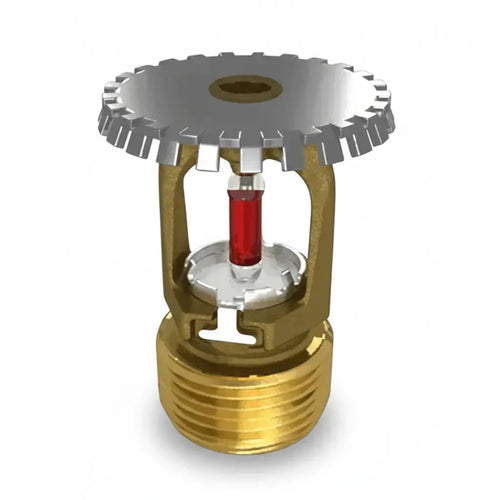


Upright vs. Pendent Sprinkler Heads: The Professional Guide to Selection and Compliance (2026)
Installing a sprinkler head in the wrong orientation isn't just a minor oversight. It's a critical failure that can render your entire fire suppression system useless during a blaze. Many facility managers and contractors feel the pressure when choosing between upright vs pendent sprinkler heads, especially with the strict requirements found in the NFPA 13 2025 Edition. You shouldn't have to guess whether your hardware will perform when it matters most. Safety is non-negotiable, and compliance shouldn't be a source of anxiety.
We understand that identifying replacement parts or designing for sloped ceilings is a complex task. This guide eliminates doubt by providing a professional breakdown of technical and regulatory differences. You'll gain a clear understanding of orientation mechanics and the confidence to choose the correct head for any environment. With wet pipe systems accounting for 62% of the market in 2026, we'll examine the latest standards for these and dry applications to ensure your project meets every professional benchmark for safety and longevity.
Key Takeaways
- Understand the fundamental orientation differences, where uprights sit atop piping and pendents suspend below, to prevent critical installation errors.
- Master the selection process for upright vs pendent sprinkler heads by assessing ceiling construction and hydraulic requirements for maximum coverage.
- Ensure full NFPA 13 compliance by adhering to the "Listing" rule, which mandates that heads are only installed in their specifically engineered orientation.
- Identify the best solutions for freezing environments, including the use of upright heads in dry systems or specialized dry pendent sprinklers.
- Eliminate the risk of system failure by sourcing high-performance, brand-matched components like Viking hardware for long-term reliability.
Defining Fire Sprinkler Orientations: Upright vs. Pendent
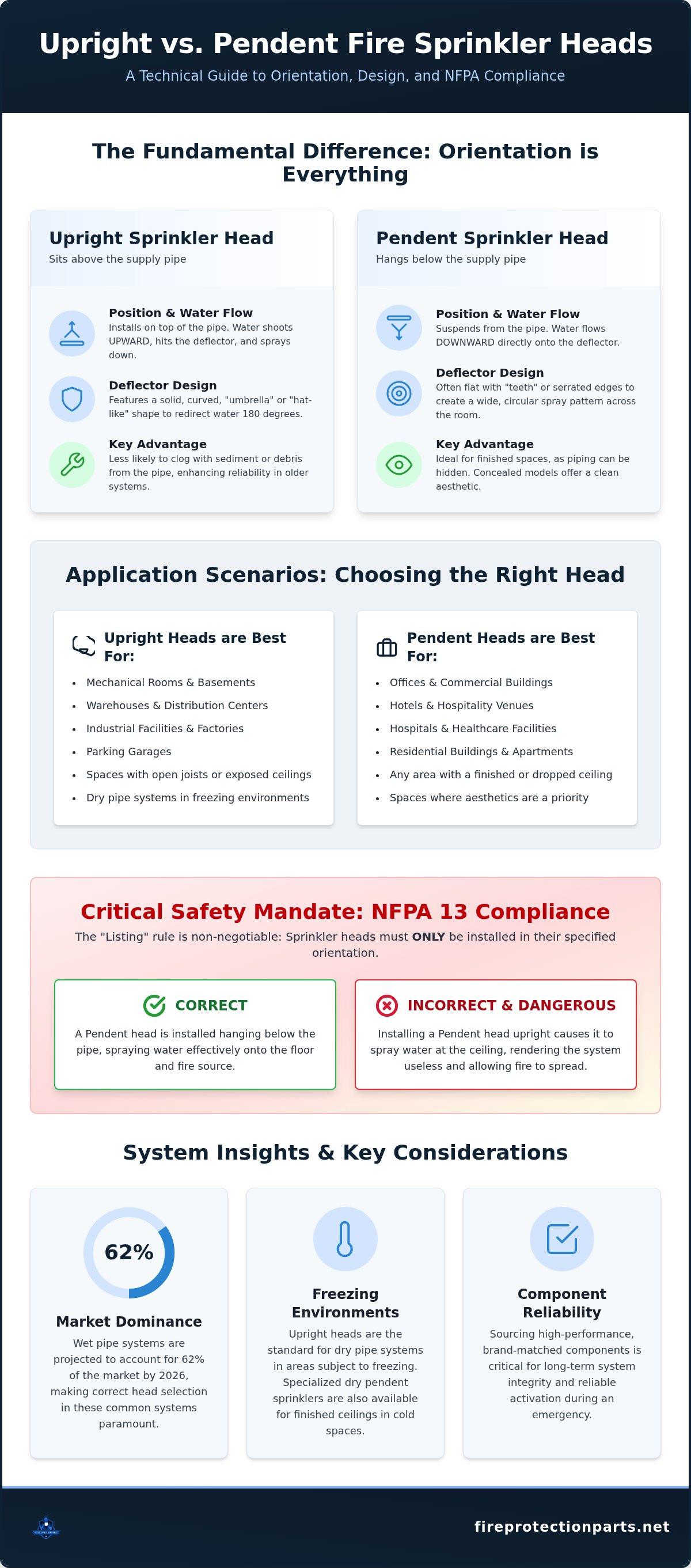
Orientation determines performance. The fundamental difference between upright vs pendent sprinkler heads is their physical position relative to the water supply pipe. An upright sprinkler sits on top of the pipe. A pendent sprinkler hangs below it. This placement is a calculated engineering decision based on the frame design and the specific geometry of the deflector. It's never a matter of convenience or installer preference; it's a requirement of the system's hydraulic design.
The deflector is the metal plate at the tip of the sprinkler head. It's engineered to break a concentrated stream of water into a predictable spray pattern. Installing a head in the wrong orientation is a critical safety violation that can lead to system failure. For example, a pendent head installed in an upright position will spray water directly at the ceiling. This leaves the floor dry and allows a fire to spread unchecked. Every head is "Listed" by testing laboratories for a specific orientation. Interchanging them is not just an error; it's a compromise of the entire fire suppression strategy.
The Pendent Sprinkler: Design and Ubiquity
Pendent heads are the most common choice for finished ceilings in offices, hotels, and residential buildings. Since the piping is usually hidden behind ceiling tiles or drywall, the head must hang down to reach the room it protects. You can identify these by a deflector that points toward the floor. They often feature "teeth" or a flat profile designed to spread water wide across a room. In professional environments, concealed pendents are a popular choice. These sit flush with the ceiling behind a decorative cover plate. The plate drops away when heat reaches a specific threshold, allowing the head to activate. This maintains a clean aesthetic while ensuring the system is ready to respond instantly.
The Upright Sprinkler: Purpose and Profile
Upright heads are the workhorses for mechanical rooms, warehouses, and open-joist construction. They sit above the pipe, which helps prevent sediment or debris from settling in the sprinkler orifice over time. These heads create an "umbrella" spray pattern. When the system activates, water shoots upward, hits the solid, curved deflector, and arches back down to saturate the area below. This design also helps protect the overhead piping from the heat of the fire. You can spot an upright head by its solid, rounded deflector shape. Selecting the correct upright vs pendent sprinkler heads ensures your system meets NFPA standards and provides reliable protection in unfinished or industrial spaces.
Mechanical Differences: Deflector Design and Water Distribution
Mechanical efficiency in fire suppression isn't accidental. It's the result of precise fluid dynamics and rigorous testing. When comparing upright vs pendent sprinkler heads, the most significant mechanical distinction lies in how they handle water discharge. Each head is engineered to convert high-pressure water into a specific spray pattern that matches its orientation. If you swap them, the physics of the system fail. The water won't reach the fire with the necessary velocity or density to suppress the flames.
Water discharge is a matter of pressure and surface impact. In a pendent system, water flows downward and strikes the deflector. In an upright system, water shoots upward before hitting the deflector and arching back down. Upright heads offer a unique advantage regarding internal pipe maintenance. Sediment, scale, and debris naturally settle at the bottom of horizontal piping. Because upright heads are installed on top of the pipe, they're far less likely to become clogged by these materials during an emergency activation. This makes them a reliable choice for older systems where pipe corrosion might be a concern.
Deflector Geometry and Spray Patterns
Deflector geometry is the primary differentiator between head types. Pendent deflectors typically feature a flat profile with serrated "teeth" around the edge. These teeth shred the water stream into uniform droplets, creating a consistent circular pattern that saturates the floor area directly beneath. In contrast, an upright deflector looks like a curved hat. This shape is necessary to catch the upward-moving water and redirect it 180 degrees. It sends the water in a wide arch around the supply pipe, ensuring the spray reaches the floor without being obstructed by the very hardware that feeds it. Professionals must select the right hardware to maintain these patterns. You can browse a comprehensive online catalog to identify the exact deflector style needed for your facility.
Thermal Response and Airflow
Orientation directly impacts how quickly a sprinkler reacts to a fire. Heat rises and pools at the highest point of a room, usually against the ceiling deck. Pendent heads in finished ceilings are often positioned perfectly within this thermal pocket. Upright heads, however, must be positioned carefully relative to the ceiling to ensure they don't sit too low. If the thermal element is outside the path of rising heat, activation is delayed. Even worse, incorrect orientation can lead to "skipping." This happens when the spray from an active head cools the thermal element of a nearby head. This cooling prevents the second head from reaching its activation temperature, leaving a gap in your fire protection coverage.
Application Scenarios: Choosing the Right Head for Your Environment
Selecting the correct orientation is a decision based on the structure of the ceiling and the presence of environmental hazards. While aesthetic preferences play a role in finished spaces, the technical requirements of the building often dictate the choice of upright vs pendent sprinkler heads. For example, residential projects often utilize Viking CPVC fire sprinkler pipe because it's lightweight and corrosion-resistant, making it ideal for the complex pendent layouts found in modern homes. Matching the piping material to the head orientation ensures a system that's both durable and code-compliant.
When to Specify Upright Sprinklers
Upright sprinklers are the standard for areas with open-joist construction or exposed overhead obstructions. You'll find them in mechanical rooms, parking garages, and industrial warehouses where aesthetics are secondary to functional coverage. These heads are essential for protecting the building's structure. Since they sit on top of the pipe, they can spray water upward to cool the ceiling deck and structural steel during a fire, preventing a total collapse of the overhead assembly.
Freezing temperatures create a specific challenge that upright heads solve effectively. In dry pipe systems, water is held back by pressurized air or nitrogen. If a system activates and then resets, small amounts of water can remain in the pipes. If you use pendent heads in these conditions, water pools in the drop nipple and the head itself, where it can freeze and cause a burst. Uprights allow water to drain back into the main line, keeping the head clear and operational. This makes them the primary choice for unheated loading docks and attic spaces.
When to Specify Pendent Sprinklers
Pendent sprinklers are the go-to choice for offices, retail stores, and high-end residential spaces. They're designed for finished ceilings where the piping is concealed behind drywall or tiles. To maintain a professional look, these heads are paired with escutcheons or cover plates that hide the hole in the ceiling. Concealed pendents are particularly popular because they remain virtually invisible until they're needed. They sit flush against the ceiling, providing a clean appearance without sacrificing safety.
Specialized environments like walk-in freezers require a different approach. Since the piping is in a heated space but the head is in a freezing one, you must use dry pendent sprinkler heads. These components feature a sealed tube that prevents water from entering the freezing zone until the head activates. Choosing the right hardware ensures your system remains compliant while providing the specific protection your environment demands. Always ensure your escutcheons and cover plates match the specific head model to maintain the required thermal response times.
Just as fire suppression systems require regular oversight to function correctly, other water-based infrastructure on your property needs professional attention; to keep your pool in peak condition, check out Paradise Pools, Inc.
Installation, Maintenance, and NFPA Code Requirements
Adhering to NFPA 13 standards is the only way to guarantee your fire suppression system performs as designed. The choice of upright vs pendent sprinkler heads is strictly governed by the "Listing" rule. This rule mandates that a sprinkler must only be installed in the orientation for which it was tested and certified by laboratories like UL or FM Global. Installing a head incorrectly is a major violation. It can lead to failed inspections, denied insurance claims, and, most importantly, a failure to control a fire. Safety is a matter of precision, not approximation.
One of the most frequent installation errors is the "upside-down" sprinkler. This often happens when an installer mistakenly uses a pendent head in an upright position. You can easily spot this by looking at the deflector. If the deflector is designed to push water down but is facing the ceiling, the spray pattern will be ruined. Inspectors are trained to look for these discrepancies immediately. Identifying the correct upright vs pendent sprinkler heads before the first turn of the wrench saves time and prevents costly re-work during a final walkthrough.
Code Compliance and Inspection Readiness
Every professional sprinkler head features permanent markings on the frame. Look for "SU" to indicate an Upright orientation or "SP" for Pendent. These markings are your first line of defense against orientation errors. During installation, you must also consider fire sprinkler head temperature ratings to ensure the thermal element matches the environment's heat profile. Always use the manufacturer-specified wrench for the specific model. Using a standard pipe wrench can put too much torque on the frame or crush the glass bulb, leading to a slow leak or an accidental discharge that causes water damage.
Maintenance and Long-Term Reliability
NFPA 25 requires annual visual inspections of all sprinkler heads. For upright heads, pay close attention to dust and debris accumulation on the top of the deflector. In warehouses or mechanical rooms, a thick layer of dust can insulate the thermal element or disrupt the spray pattern. Pendent heads should be checked for signs of corrosion or "loading," where grease or paint has coated the head. If you find damaged or non-compliant hardware, you can source high-quality fire protection parts online to restore your system to full operational status. Don't let a minor maintenance oversight become a major liability during an emergency.
Ensure your facility remains safe and compliant by upgrading to professional-grade hardware. Shop our full selection of Viking and code-compliant sprinkler components today.
Sourcing Reliable Sprinkler Components for Your System
The reliability of a fire suppression system depends on the integrity of its individual components. Choosing between upright vs pendent sprinkler heads is a fundamental design step, but the quality of the hardware you source determines the system's ultimate success. Generic, unlisted sprinkler heads represent a significant liability. These parts often lack the rigorous testing required to ensure they activate at the correct temperature or deliver the intended water density. In a high-stakes industry, there's no room for unverified equipment. A single failure can lead to catastrophic property damage or the loss of life.
Brand-matching is the most effective way to maintain system performance over time. Viking components are engineered for longevity and are a staple in professional installations. When you use trusted brands, you're not just buying hardware; you're investing in a history of proven reliability. Finding these parts is straightforward when you know what to look for. Professionals often rely on a sprinkler head identification guide to ensure they're sourcing exact matches for existing systems. This precision prevents the common errors that lead to failed safety inspections and system downtime.
Identifying the Correct Replacement Head
Finding a replacement starts with the Sprinkler Identification Number (SIN) located on the deflector. This code is the DNA of the sprinkler head. It defines the K-Factor, which is the mathematical constant used to calculate water flow at a specific pressure. If you replace a K-5.6 head with a K-8.0 head by mistake, you'll disrupt the hydraulic balance of the entire floor. You must also verify the thread size, typically 1/2 inch or 3/4 inch NPT, and the response type. Quick Response heads are standard for residential settings, while Standard Response heads are common in commercial buildings. Never deviate from the original orientation. Replacing upright vs pendent sprinkler heads with the wrong type is a code violation that renders the system's listing void and leaves the building unprotected.
Why Quality Hardware is Non-Negotiable
The financial impact of a fire is high, but the cost of a faulty system can be even higher. Insurance providers frequently investigate the hardware used in a system after a claim is filed. If they find unlisted or improperly installed heads, they may deny coverage entirely. Choosing professional-grade hardware from a dependable partner is a mission-critical decision. It ensures your facility is equipped with components that meet the 2026 standards for fire suppression. Sourcing through a specialized e-commerce platform allows for efficient bulk procurement, ensuring you have the necessary inventory for immediate repairs or large-scale upgrades. Don't leave your safety to chance. Browse our full selection of Viking and residential sprinkler heads today.
Securing Your System for 2026 Compliance
Mastering the technical distinction between upright vs pendent sprinkler heads is the foundation of a reliable fire suppression strategy. You've learned that orientation isn't a suggestion; it's a hydraulic mandate dictated by deflector geometry and environmental conditions. Whether you're designing for finished office ceilings or protecting unheated warehouse spaces, your choice must align with the latest NFPA standards to ensure life safety and insurance compliance.
Professional-grade protection requires professional-grade hardware. Using brand-matched components like Viking ensures that every head performs exactly as engineered when heat is detected. Don't let a minor error in selection lead to a major system failure. As a Viking Authorized Retailer, we provide the NFPA-compliant components you need with fast shipping for repair parts to keep your facility protected without delay.
Take the next step in system reliability. Shop Code-Compliant Sprinkler Heads and Parts at Fire Protection Parts today to find the exact components your project requires. You can move forward with the confidence that your fire suppression system is built to last.
Frequently Asked Questions
Can I install a pendent sprinkler in an upright position?
No, you cannot install a pendent sprinkler in an upright position. Every sprinkler head is specifically listed and tested for a single orientation to ensure the water reaches the fire effectively. Installing a pendent head upright causes the water to spray directly at the ceiling rather than the floor. This violation of NFPA standards ensures the system will fail to control a fire and will result in a failed safety inspection.
What happens if a sprinkler head is installed in the wrong orientation?
Installing a head in the wrong orientation results in an ineffective spray pattern that misses the fire source. It can also lead to "skipping," where the spray from one active head cools the thermal element of a nearby head, preventing it from activating. Beyond the physical risks, insurance companies often deny claims if the system hardware doesn't match the required listing. This error makes the building's protection plan functionally void.
How do I tell the difference between an upright and a pendent head visually?
You can identify the difference by examining the deflector and the frame markings. Pendent heads have a flat or slightly curved deflector with serrated "teeth" designed to spread water downward. Upright heads feature a solid, rounded, hat-like deflector that redirects water in an arch. Additionally, look for the "SP" (Pendent) or "SU" (Upright) stamps on the metal frame to confirm the correct orientation for upright vs pendent sprinkler heads.
Are upright sprinklers more expensive than pendent sprinklers?
Standard upright and pendent heads generally share similar price points, typically ranging between $2 and $5 at the factory level for basic K-80 models. Costs only diverge significantly when you move into specialized hardware. For example, concealed pendent heads with decorative cover plates or dry pendent sprinklers for freezing environments carry a higher price tag. This is due to their complex mechanical designs and the additional components required for aesthetic finishes.
Why are pendent sprinklers more common in residential homes?
Pendent sprinklers are the standard for residential homes because they're designed for finished ceilings where piping is hidden. They offer a low-profile appearance that blends into the living space. Many residential systems utilize Viking CPVC piping, which is easily configured for pendent drops through drywall. These heads allow for the use of decorative cover plates, ensuring life safety doesn't compromise the interior design or aesthetic of the home.
Do upright sprinklers require different piping than pendent sprinklers?
Upright and pendent heads use the same types of fire-rated piping, but the layout of the fittings differs. Upright heads are installed directly into a tee on top of the pipe to allow for proper drainage and to prevent debris accumulation. Pendent heads require a drop nipple to extend through the ceiling material. While the pipe material remains consistent, the hydraulic calculations must account for the specific orientation and fitting friction losses chosen during the design phase.
Can I use the same escutcheon for both upright and pendent heads?
No, you cannot use the same escutcheon for both types. Escutcheons are specifically designed for pendent heads to cover the gap between the sprinkler and the finished ceiling. Upright heads are almost exclusively installed in open-ceiling environments where the pipe and head are fully exposed. Because uprights sit above the pipe, there's no ceiling interface to finish, making an escutcheon unnecessary and functionally impossible to install in that orientation.
What is a 'universal' sprinkler head, and are they still used?
A "universal" or conventional sprinkler head is an older design engineered to spray water both upward and downward. While they were common in the mid-20th century, modern NFPA 13 standards now favor specific upright vs pendent sprinkler heads for better hydraulic efficiency and predictable spray patterns. Conventional heads are still used in some niche industrial applications or for replacement in very old systems, but they aren't the standard for new construction today.

