



Wet Pipe Versus Dry Pipe: Key Differences
A sprinkler system can look straightforward on a plan, but the wrong pipe arrangement can create freezing risk, slower water delivery, unnecessary maintenance, or a costly redesign. The wet pipe versus dry pipe decision should be based on the protected environment, the applicable code requirements, system hydraulics, and the building's long-term service needs.
For most conditioned commercial spaces, wet pipe is the practical default. Where piping is exposed to temperatures that can fall below 40°F, dry pipe protection may be necessary. The distinction matters because these systems operate differently from the moment a sprinkler activates.
Wet Pipe Versus Dry Pipe at a Glance
| Factor | Wet Pipe System | Dry Pipe System |
|---|---|---|
| Pipe contents | Water is maintained in the sprinkler piping | Pressurized air or nitrogen is maintained in the piping; water is held back at the dry valve |
| Typical use | Heated offices, retail, schools, healthcare, and conditioned facilities | Freezers, loading docks, unheated warehouses, parking structures, and other areas subject to freezing |
| Water delivery | Water discharges immediately after a sprinkler operates | The dry valve must trip and water must fill the piping before discharge |
| Equipment | Wet alarm valve or riser equipment | Dry valve, air supply, supervisory devices, and potentially an accelerator or exhauster |
| Maintenance demand | Generally less complex | More components and operating conditions to inspect and test |
| Initial cost | Usually lower | Usually higher due to specialized valves, air equipment, and installation requirements |
The table provides the short answer, but system selection should not stop there. Building temperature, occupancy hazard, pipe volume, water supply, and inspection obligations all affect the right specification.
How Wet Pipe Sprinkler Systems Work
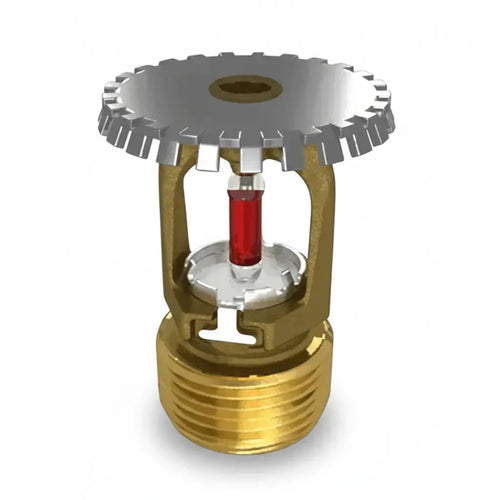
A wet pipe sprinkler system keeps water under pressure throughout the piping network. Each sprinkler is held closed by a heat-sensitive operating element. When heat from a fire reaches the sprinkler's temperature rating, that sprinkler opens and water begins discharging at that location.
Because water is already at the sprinkler, wet systems provide the fastest typical response of the common automatic sprinkler arrangements. They also use fewer moving parts than dry systems. That simplicity is why wet pipe systems are widely used in heated commercial buildings and are often the most economical choice for installation, inspection, and repair.
Wet pipe does have a hard limitation: the piping must remain protected from freezing. A brief loss of heat, an open overhead door, a poorly insulated exterior wall, or a rooftop exposure can turn a normally suitable wet system into a freeze-loss risk. Frozen sprinkler pipe can crack fittings, damage sprinklers, and put a system out of service when protection is needed most.
A conditioned building may still need dry protection in limited areas. A heated warehouse, for example, could use wet pipe in the main storage area while serving an unheated loading canopy or exterior dock enclosure with a separate dry system. The appropriate arrangement depends on the temperature conditions that can reasonably occur, not simply the building's primary occupancy.
Where Wet Pipe Is Usually the Better Choice
Wet pipe is normally appropriate where reliable heat is maintained and sprinkler piping is not exposed to freezing conditions. It is common in offices, hotels, hospitals, retail spaces, apartment buildings, schools, and interior portions of industrial facilities.
It can also be the better operational choice when rapid water application is a priority. There is no dry valve trip sequence and no delay while pipe fills with water. For contractors and facilities teams, the system is easier to understand, more straightforward to service, and generally less expensive to modify when the building layout changes.
How Dry Pipe Sprinkler Systems Work
A dry pipe sprinkler system is designed for areas where water-filled piping would freeze. The piping downstream of the dry valve contains pressurized air or nitrogen. Water is held on the supply side of the dry valve until a sprinkler operates.
When fire heat opens a sprinkler, air escapes through that opening. As pressure drops, the dry valve trips, allowing water to enter the sprinkler piping and flow to the open sprinkler. This sequence adds time before water reaches the fire, which is an inherent trade-off for protecting piping in cold environments.
Dry systems require properly selected and maintained air equipment. Depending on the system and application, that may include an air compressor, air maintenance device, nitrogen generator, pressure switches, low-point drains, and supervisory alarm connections. The dry valve itself must be compatible with the system's design and installed in an environment where it can be inspected, tested, and protected from damage.
A dry system is not simply a wet system with the water drained out. It has distinct hydraulic and operational requirements. The volume of piping, valve arrangement, air supply, and anticipated water delivery performance all need to be evaluated during design. NFPA 13 requirements, listing limitations, and the authority having jurisdiction should guide the final configuration.
Where Dry Pipe Is Usually the Better Choice
Dry pipe systems are commonly installed in unheated warehouses, parking garages, loading docks, cold-storage areas, attics, vestibules, exterior canopies, and other spaces with credible freezing exposure. They are also used where a building's heating reliability cannot be confidently maintained in a sprinklered area.
However, dry pipe should not be specified automatically for every space near an exterior wall. If the area can be continuously maintained above freezing and the piping can be protected accordingly, wet pipe may remain feasible and more economical. Conversely, a space that is usually heated but routinely left unconditioned during seasonal shutdowns may warrant dry protection.
Response Time Is a Meaningful Trade-Off
The key performance difference in wet pipe versus dry pipe systems is water delivery. With wet pipe, water is immediately available once the sprinkler operates. With dry pipe, the system must first lose enough air pressure for the valve to open, then water must travel through the piping to the activated sprinkler.
That delay does not mean dry systems are unsuitable for fire protection. Properly designed dry systems are a code-recognized and proven solution for freeze-prone areas. But it does mean the design team must account for delivery time and use the correct valve, air supply, and system configuration. Large systems, complex layouts, or unusually demanding applications may require additional attention to valve trip performance and water delivery calculations.
For facilities teams, the practical takeaway is simple: do not treat a dry valve trip test as a minor administrative item. It confirms that the system can transition from air supervision to water delivery as intended.
Installation Cost, Maintenance, and Corrosion
Wet pipe systems typically cost less to install because they require less specialized equipment. They also have fewer components that need adjustment or troubleshooting. For many owners, that lower complexity translates to lower lifetime operating cost.
Dry systems involve additional labor and materials. The system needs a dry valve assembly, a suitable air source, supervisory devices, drains, and accessible testing arrangements. Piping must also be installed with the proper pitch to drain condensate, since trapped water in a dry system can freeze and cause damage.
Internal corrosion deserves close attention in dry and preaction systems. Oxygen, moisture, and trapped water can contribute to corrosion inside steel pipe, potentially leading to pinhole leaks and premature replacements. Nitrogen-based supervision can help reduce oxygen-driven corrosion, but it does not eliminate the need for appropriate drainage, inspection, and system maintenance.
Inspection, testing, and maintenance should follow NFPA 25, the equipment manufacturer's instructions, and local requirements. Dry systems commonly require more frequent operational attention than wet systems because air pressure, valve condition, drainage, and trip performance directly affect readiness. A low-air supervisory signal, recurring compressor operation, or water discharged from a low-point drain should be investigated rather than treated as normal background activity.
Selecting Components That Match the System
Reliable sprinkler performance depends on more than choosing wet or dry pipe. The valve, sprinkler type, pipe, fittings, gauges, switches, compressor or nitrogen equipment, and supervisory devices must be selected as a listed, compatible arrangement. Substituting an unapproved component to solve a short-term availability problem can create inspection failures or undermine system performance.
For repair and retrofit work, verify the existing valve model, trim configuration, thread type, pressure rating, and required approvals before ordering replacement parts. Dry systems in particular may have manufacturer-specific trim and service requirements. Matching the part number and confirming compatibility before the job starts helps avoid return visits and impaired-system time.
Fire Protection Parts supports contractors and facility buyers with trusted fire protection components, including dry valves, air compressors, sprinklers, riser equipment, and replacement parts from recognized manufacturers. When a system condition is unclear, a custom quote built around the actual application is safer than guessing from a general product description.
Specify for the Environment You Actually Have
The best choice is not based on which system is simpler or more familiar. Use wet pipe where piping can be reliably protected from freezing and fast water delivery is desired. Use dry pipe where freeze exposure makes water-filled piping impractical, while planning for the added cost, equipment, testing, and drainage requirements.
A careful site review before installation or retrofit can prevent the most expensive mistakes: frozen pipe, repeated compressor issues, incompatible replacement parts, delayed water delivery, and failed inspections. Specify the system for the temperatures, occupancy, and operating conditions the building will actually experience, then source listed components built to perform when lives and assets are on the line.

