



Choosing Fire Sprinkler System Components: A Guide to Compliance and Reliability
A single missing escutcheon or an unlisted cover plate is no longer just a cosmetic flaw. Under the 2026 NFPA 25 standards, it's a direct compliance failure that can compromise your entire system's integrity and lead to failed inspections. You understand that maintaining a facility requires more than just ticking boxes. It's about the professional assurance that every valve and head will perform flawlessly when lives are on the line. However, choosing fire sprinkler system components that satisfy both local codes and the latest 2026 requirements can feel like a high-stakes puzzle.
We're here to eliminate that doubt. You'll master the selection process for fire suppression hardware to ensure your system meets strict NFPA codes and performs reliably in an emergency. This guide provides a clear path through the complexities of procurement, covering everything from identifying the correct dry pendent sprinklers to selecting high-quality backflow preventors. We will break down the technical requirements for essential components like residential fire pump systems and ASC seismic bracing, giving you the expertise needed to build a system that stands the test of time.
Key Takeaways
- Align your system design with NFPA 13, 13R, and 13D standards to ensure total regulatory compliance from the start.
- Select the appropriate sprinkler head by accurately classifying hazard levels and prioritizing quick-response technology for life safety.
- Simplify the process of choosing fire sprinkler system components by weighing the benefits of traditional steel against high-performance Viking Plastics CPVC pipe.
- Secure your system’s long-term health by integrating vital accessories like air compressors, pressure gauges, and seismic bracing.
- Protect your investment by learning to verify SIN numbers and supplier credentials before any parts arrive at your facility.
The Fundamentals of Fire Sprinkler System Selection
Reliability in fire suppression isn't about individual parts; it's about synergy. If one component fails to communicate with the rest, the entire system is useless. Success starts with understanding fire sprinkler system fundamentals. When you're choosing fire sprinkler system components, you're building a life safety network that must adhere to specific National Fire Protection Association (NFPA) standards. You're not just buying hardware; you're investing in a verified safety barrier.
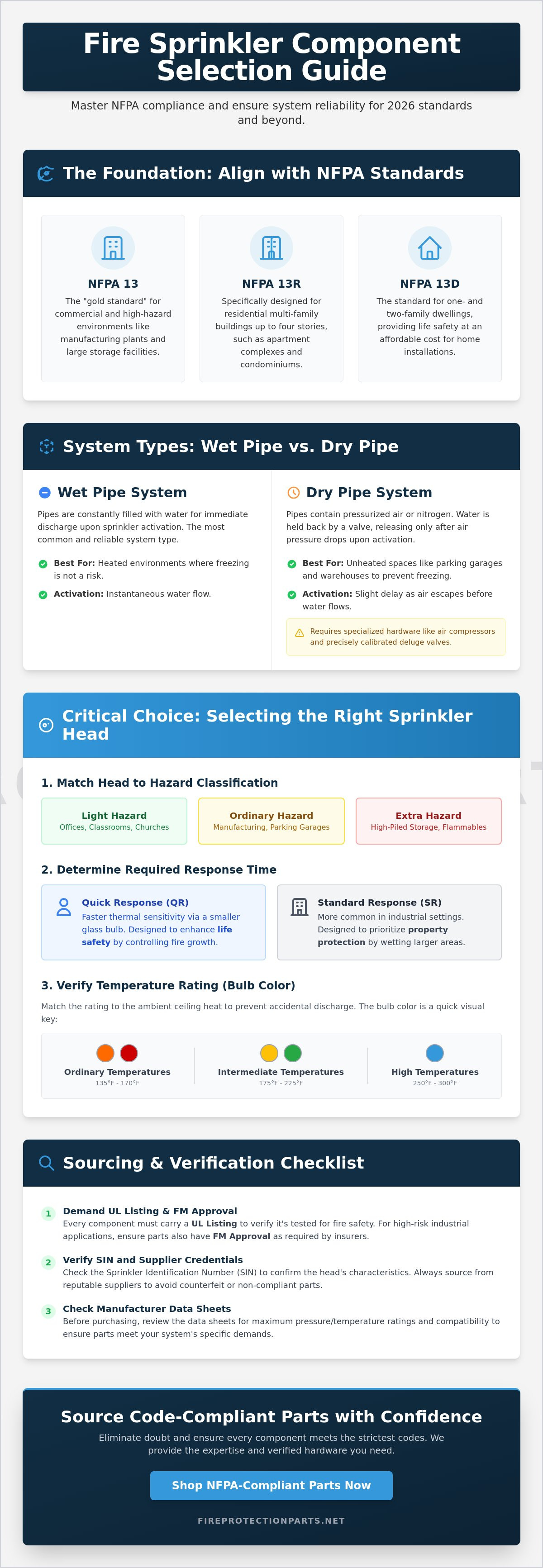
Commercial projects follow NFPA 13. This is the gold standard for high-hazard environments. Residential multi-family buildings typically fall under NFPA 13R, while one- and two-family dwellings use NFPA 13D. Each standard dictates different flow rates and coverage areas. Using "generic" plumbing hardware as a substitute for fire-rated components is a dangerous gamble. Standard plumbing parts aren't tested for the high-temperature and high-pressure environments of a fire. Selecting non-listed parts can void your insurance and lead to catastrophic system failure. Your choice of hardware also dictates the ease of future maintenance. With steel pipe prices up over 20% in early 2026, selecting the right materials the first time is a financial necessity.
Understanding System Types: Wet vs. Dry
Wet pipe systems are the standard choice for most facilities. They keep water in the pipes at all times for immediate discharge. However, unheated spaces like parking garages or warehouses require dry pipe or deluge systems to prevent freezing. In these environments, you'll need specialized hardware like the PTR Electric Deluge VXD or dedicated air compressors to maintain the necessary "air-over-water" balance. Choosing fire sprinkler system components for these systems requires a deeper look at environmental factors. The hardware for dry systems is more complex and requires precise calibration to ensure the air vents quickly enough for water to reach the fire.
Code Compliance and Listings
Every part you buy must carry a UL Listing. This ensures the component has been rigorously tested for fire safety applications. For industrial applications, FM Approval is often required by insurance providers to mitigate high-risk hazards. Always check the manufacturer data sheets before finalizing a purchase. These documents list the maximum pressure and temperature ratings for each head and valve. Verifying these ratings protects you from buying non-compliant parts that won't stand up to the heat of a real-world emergency. Professional procurement means looking for the UL or FM mark on every single valve, head, and pipe fitting.
Choosing the Right Fire Sprinkler Heads for Your Application
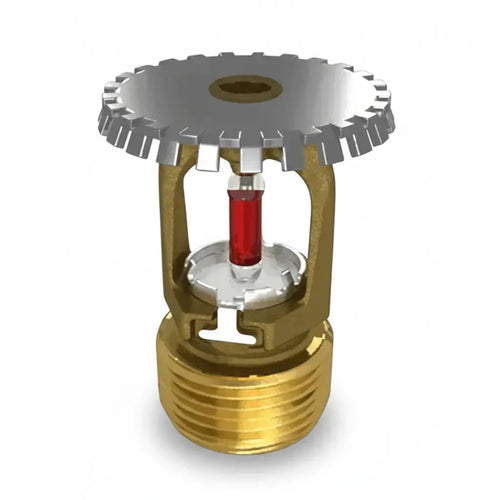
The sprinkler head is the final link in your safety chain. Selecting the wrong head can lead to delayed activation or insufficient water density during a fire. When you're choosing fire sprinkler system components, start by accurately classifying the hazard level of your environment. Light Hazard areas include offices and classrooms. Ordinary Hazard covers manufacturing and parking garages. Extra Hazard involves high-piled storage or flammable liquids. Each level requires a specific water discharge density to be effective.
Response time is equally critical. Quick Response (QR) heads feature a smaller glass bulb and faster thermal sensitivity. They're designed to enhance life safety by keeping fires small and toxic gases cool. Standard Response (SR) heads are more common in industrial settings where property protection is the priority. Refer to the NFPA 13 Standard to determine which response type your specific occupancy requires. Using the wrong response type can result in a system that activates too late to save lives or too early to control a large-scale industrial blaze.
You must also match the temperature rating to the ambient ceiling heat. Glass bulbs are color-coded for quick verification. Orange or red bulbs indicate ordinary temperatures, while green or blue bulbs signify intermediate heat. Choosing the wrong rating leads to accidental discharge from proximity to HVAC vents or industrial machinery. Finally, verify the K-factor and orifice size. These metrics determine the flow rate at a given pressure. A higher K-factor delivers more water, which is vital for high-challenge fires. For those managing specialized facilities, you can find code-compliant sprinkler heads and hardware designed for these demanding environments.
Orientation and Coverage Patterns
Ceiling design dictates head orientation. Upright heads sit above the piping. They're ideal for exposed ceilings where water must spray upward against a deflector. Pendent heads hang below the pipe and are the standard for finished ceilings. For hallways where overhead piping isn't possible, sidewall heads provide a horizontal spray pattern. If aesthetics are a priority, concealed heads hide behind a cover plate. Remember that under 2026 NFPA 25 updates, any missing or damaged escutcheons must be replaced with listed components from the original manufacturer to maintain compliance.
Specialty Sprinkler Heads
Standard heads won't work in every environment. In unheated attics or commercial freezers, you must use dry pendent sprinklers. These contain an internal seal that keeps water in the heated part of the piping until activation. In high-corrosion areas like coastal facilities or chemical plants, look for heads with specialized coatings to prevent rust. Specialized institutional heads are also available for high-security environments, featuring tamper-resistant designs that prevent the head from being used as an anchor point.
Piping and Control Valves: The Infrastructure of Suppression
The distribution network is the skeleton of your fire protection strategy. If the piping fails due to corrosion or poor joining, the most advanced sprinkler heads in the world won't matter. When you're choosing fire sprinkler system components for the infrastructure, the primary decision often rests between traditional black steel and modern CPVC. Steel has long been the industry standard for commercial high-rise applications, but it's vulnerable to internal corrosion and microbial growth. Additionally, as of early 2026, steel pipe prices have surged by over 20% year-over-year. This shift in the market makes Viking CPVC fire sprinkler pipe a highly efficient alternative for residential and light commercial installs. CPVC is immune to corrosion, easier to handle, and offers superior flow characteristics.
Control valves and backflow preventers serve as the system's gatekeepers. A control valve must be secured in the "open" position to ensure water is always available. Backflow preventers are equally vital. They protect the municipal water supply from the stagnant, potentially contaminated water inside the sprinkler pipes. Choosing fire sprinkler system components that are properly listed for your specific water pressure ensures these valves don't become the weak point in your suppression network. Reliability here isn't just about functionality; it's about the peace of mind that comes from knowing your water supply is both secure and isolated.
Selecting Control Valves (OS&Y vs. PIV)
Visibility is safety. Outside Screw and Yoke (OS&Y) valves are preferred in riser rooms because the rising stem provides a clear visual indicator of whether the valve is open or closed. For exterior applications, Post Indicator Valves (PIV) allow you to control the water supply from outside the building. PIVs feature a small window that displays "Open" or "Shut," eliminating any guesswork for emergency responders. Butterfly valves offer a compact solution for tight spaces, often coming with built-in tamper switches for easier electronic monitoring.
Fittings and Joining Methods
The strength of your system is only as good as its connections. Steel systems typically use grooved couplings for speed or threaded fittings for smaller diameters. For CPVC, solvent welding creates a chemical bond that is often stronger than the pipe itself. In regions prone to earth movement, integrating ASC Seismic Bracing is a compliance requirement to prevent pipe rupture. Flexible drops can also be used to connect heads to the main piping, providing the necessary movement to survive a seismic event without losing system integrity.
Essential Accessories for System Reliability and Maintenance
A fire suppression system is only as reliable as its monitoring hardware. While the pipes and heads provide the physical defense, accessories like pressure gauges and flow switches act as the system's nervous system. Choosing fire sprinkler system components that provide real-time data is the only way to guarantee readiness. Pressure gauges must be accurate to ensure the water supply meets the hydraulic calculations of the design. Similarly, water flow switches and tamper switches provide 24/7 alarm monitoring. These devices alert the fire department the moment water moves through the pipes or if a critical control valve is closed by mistake.
For systems in unheated environments, specialized protection is mandatory. Dry pipe systems rely on dedicated air compressors for sprinkler systems to maintain the "air-over-water" balance. If air pressure drops too low, the dry valve may trip accidentally, flooding the pipes and risking a freeze-up. In wet systems exposed to fluctuating climates, using high-quality anti-freeze for fire protection is a functional remedy against burst pipes. These solutions must be carefully mixed and monitored to maintain the correct concentration, ensuring the system remains fluid and functional even in sub-zero temperatures. You can browse our full inventory of maintenance accessories to find the exact parts needed for your facility's climate.
Maintenance Hardware and Tools
Compliance doesn't end at installation. The 2026 edition of NFPA 25 mandates that a spare head cabinet be maintained on-site, containing a minimum number of replacement heads. Crucially, the new standards now require at least one manufacturer-specified wrench for every type of sprinkler installed on the premises. Using a standard pipe wrench can damage the head frame or the delicate glass bulb, leading to a failure during a fire. Additionally, any damaged or missing escutcheons must be replaced with listed components from the original manufacturer. These aren't just aesthetic finishes; they're vital for ensuring the head activates at the correct temperature.
Managing Pressure and Flow
Inconsistent water pressure can cripple an otherwise perfect system. For homes or light commercial buildings with low municipal pressure, residential fire pump systems are the necessary solution to meet flow requirements. Conversely, high-rise applications often struggle with excessive pressure that can damage components. Pressure reducing valves (PRVs) are used here to keep the system within safe operating limits. To simplify the mandatory annual inspections required by code, many professionals now install integrated test and drain assemblies. These units combine several functions into one piece of hardware, allowing for faster, more accurate flow testing without the need for complex temporary setups.
Sourcing Code-Compliant Fire Protection Parts Online
Choosing fire sprinkler system components online requires a higher level of scrutiny than standard industrial procurement. The convenience of digital sourcing must be balanced with the absolute necessity for verification. A reputable seller in this industry doesn't just move boxes; they act as a mission-driven partner in your safety strategy. You should look for vendors that demonstrate deep technical knowledge and offer components from established leaders like Viking and ASC. These brands are recognized for their longevity and adherence to the most stringent testing protocols. By selecting professional-grade hardware, you eliminate the risk of premature failure and ensure your system remains compliant for decades.
For contractors and facility managers, streamlining procurement is about more than just finding a low price. It's about efficiency. Bulk ordering and pre-configured kit solutions for systems like the PTR Electric Deluge VXD or residential fire pump systems can significantly reduce lead times. This methodical approach to purchasing ensures that all necessary fittings, valves, and bracing arrive together, preventing costly project delays. When your reputation and the safety of a building are on the line, there is no room for compromise on the quality of the hardware you install.
Verification Checklist for New Parts
The moment your order arrives, a thorough inspection is your final line of defense against non-compliance. Every sprinkler head features a Sprinkler Identification Number (SIN) etched into the deflector. This code is the component's DNA; use it to verify that the head's K-factor, orientation, and temperature rating match your hydraulic design exactly. Your receiving checklist should also include the following steps:
- Confirm that every valve and fitting carries the required UL Listing or FM Approval markings.
- Inspect all components for physical damage or debris that could obstruct water flow.
- Verify that the manufacturer's installation instructions are included in the packaging.
- Cross-reference the 2026 NFPA 25 requirements to ensure you have the mandatory spare wrench for every head type in your shipment.
The Fire Protection Parts Advantage
We provide the professional assurance you need to manage complex safety requirements with confidence. Our inventory is strictly limited to code-compliant components that meet the rigorous demands of modern fire suppression. Whether you are searching for specialized dry pendent sprinklers or high-performance ASC seismic bracing, our team offers the expert support required to identify the exact replacement parts for your system. We prioritize fast, reliable shipping because we know that a system out of service is a liability that cannot wait. Our goal is to provide peace of mind through a no-nonsense approach to business and a commitment to excellence. You can browse our full catalog of fire sprinkler system components to secure the hardware your facility deserves.
Securing Your Facility with Professional-Grade Hardware
Building a reliable fire suppression system requires more than just following a blueprint. It demands a commitment to quality and a deep understanding of how every valve, head, and pipe works in unison. By choosing fire sprinkler system components that are strictly UL Listed and FM Approved, you eliminate the variables that lead to failure. You've learned how to navigate the 2026 NFPA updates; from verifying SIN numbers to selecting corrosion-resistant materials like Viking CPVC pipe. These decisions directly impact the longevity of your system and the safety of the lives it protects.
Don't leave your compliance to chance. As an authorized distributor of Viking and ASC Engineered Solutions, we provide the expert technical support you need to identify the exact parts for your project. Whether you're retrofitting a residential space or upgrading a commercial riser room, we ensure every piece of hardware meets the highest industry standards. Shop Code-Compliant Fire Sprinkler Components at Fire Protection Parts today to secure your facility. You have the knowledge to build a better system; now get the hardware that matches your professional standards.
Frequently Asked Questions
How do I identify which fire sprinkler head I need for a replacement?
Locate the Sprinkler Identification Number (SIN) etched into the deflector plate of the existing head. This four to six-character code is the most reliable way to ensure you're choosing fire sprinkler system components that match your original design. The SIN identifies the manufacturer, K-factor, and thermal sensitivity. You must also verify the orientation, such as pendent or upright, and ensure the temperature rating and thread size are identical to the original head.
Can I use CPVC pipe for a commercial fire sprinkler system?
CPVC pipe is permitted in commercial systems under NFPA 13, but its use is strictly limited to Light Hazard occupancies. It's also the standard for residential multi-family (13R) and single-family (13D) settings. Viking Plastics CPVC is a high-performance choice for these environments. It offers superior corrosion resistance and easier installation than steel, provided the building's hazard classification doesn't exceed the Light Hazard limits set by code.
What is the difference between a standard response and a quick response sprinkler head?
Quick response (QR) heads are designed for life safety and feature a 3mm glass bulb that activates faster than standard response (SR) versions. SR heads typically use a 5mm bulb and focus on property protection by controlling the fire's spread. QR heads are mandatory in many residential and light commercial settings to keep toxic gases cool and maintain survivable conditions for occupants during an evacuation.
Is it legal to buy fire sprinkler system parts online for professional use?
It's entirely legal and common for professionals to source hardware online. The critical factor is ensuring the parts are UL Listed or FM Approved for their specific application. When choosing fire sprinkler system components online, you should only buy from authorized distributors who provide manufacturer data sheets and SIN verification. This ensures the hardware meets the same rigorous standards as parts bought through traditional local supply houses.
What temperature rating should I choose for my fire sprinkler heads?
Select a rating that's at least 25°F above the maximum expected ceiling temperature to prevent accidental discharge. Ordinary temperature heads, usually 135°F to 170°F, feature orange or red bulbs. Intermediate ratings, ranging from 175°F to 225°F, use green or blue bulbs. High-temperature environments like commercial kitchens or uninsulated attics require these higher ratings to ensure the system only activates during a legitimate fire event.
Do I need a fire pump if my home's water pressure is low?
You'll likely need a residential fire pump system if your municipal water supply can't meet the hydraulic pressure required by your NFPA 13D design. Low pressure can prevent the sprinkler heads from discharging the correct volume of water. A dedicated pump ensures that even during peak local water usage, your home's fire suppression system has enough force to suppress a fire effectively and protect your family.
What is an OS&Y valve and why is it used in fire protection?
An OS&Y (Outside Screw and Yoke) valve is a control valve that provides a clear visual indicator of its status. When the valve is open, the threaded stem is visible and extended. When it's closed, the stem is retracted. This design is a standard requirement in fire protection because it allows inspectors and emergency responders to verify that the water supply is active at a glance, eliminating dangerous guesswork.
How often should fire sprinkler system components be inspected or replaced?
Inspection frequencies are governed by NFPA 25. While standard response heads often last 50 years, the 2026 edition mandates more frequent checks for other hardware. For example, preaction and deluge valves now require annual internal inspections. Hose valves must be inspected quarterly rather than annually. Keeping a rigorous schedule ensures that every component, from the backflow preventer to the seismic bracing, remains ready for an emergency.

