



Fire Department Connection Parts: A Practical Guide
Could an FDC replacement fit the opening and still be wrong for the system? The parts needed for a fire department connection depend on what it serves and how it’s configured. A mismatch in connection type, thread, or component can leave you with a part that won’t work as intended.
If you’re unsure what each component is called or what to confirm before ordering, you’re not alone. An FDC lets firefighters supplement the water supply to a building’s sprinkler or standpipe system, but its parts aren’t one-size-fits-all. This guide explains what an FDC assembly does, which components it may include, and what details to gather before sourcing replacements.
You’ll learn the functions of common parts, such as inlets, caps, and swivels, and how to check system documents, manufacturer information, and local Authority Having Jurisdiction requirements. Confirm the system served, connection type, thread details, and other identifying information before selecting a component. A careful check helps reduce ordering errors and supports a compatible replacement.
Key Takeaways
- The parts needed for a fire department connection vary with the system it serves, so confirm the design before choosing components.
- Understand how common FDC components support connection, water flow, and protection from debris or weather.
- Compare interface details, materials, ratings, and manufacturer documentation before sourcing a replacement.
- Prepare system labels, connection details, and clear photos, where safe and permitted, to make your parts inquiry more precise.
- Check product availability and verify requirements with system records, the manufacturer, and the local Authority Having Jurisdiction.
What Parts Are Needed for a Fire Department Connection and What Does It Do?
A fire department connection (FDC) is an emergency water-supply connection that lets responding firefighters supplement water to a building’s fire protection system when conditions require it. The parts needed for a fire department connection depend on the approved system design. There isn’t one parts list that fits every building.
An FDC is the connection point, not the fire engine or other firefighting apparatus that supplies water. It also isn’t the sprinkler or standpipe system itself. The FDC links the responding crew’s water supply to the building’s designated system through components specified for that site. Depending on the design, those components may include inlet connections, piping, a check valve, and protective caps or plugs. Confirm the exact assembly from system records rather than assuming based on appearance.
How does a fire department connection support a fire protection system?
When system conditions call for supplemental water, responding crews connect their supply to the FDC. Water then passes through the connection and associated piping toward the sprinkler system, standpipe system, or another arrangement documented for the building. A standpipe provides hose connections for firefighting operations; the Standpipe (firefighting) overview describes how standpipe types differ, including systems that rely on an FDC for water.
The FDC’s purpose is to support the connected system, but the connection type and route into that system are design-specific. Approved plans and system documentation show what the FDC serves and how it is configured. Use those records to identify the intended arrangement before selecting replacement parts.
Why do FDC parts vary from one installation to another?
System type, inlet arrangement, piping materials, component listings, manufacturer requirements, and local rules can all affect part selection. A connection that looks similar may have a different interface or serve a different system. Treat visual resemblance as a clue, not proof of compatibility.
Check approved design documents, equipment labels, and manufacturer information. Also confirm requirements with the Authority Having Jurisdiction (AHJ), the local agency or official responsible for enforcing applicable fire and building requirements. The AHJ can clarify site-specific expectations, including connection details. Applicable requirements depend on adopted codes and local decisions, so don’t treat a common configuration as a universal mandate.
Before sourcing a part, identify what the FDC serves and compare the existing component with documented specifications. If records are missing or unclear, seek confirmation from the system manufacturer or AHJ rather than guessing. This helps narrow the search to components intended for the actual installation.
How FDC Inlets, Check Valves, Piping, and Caps Work Together
Think of an FDC assembly as a pathway: firefighters connect at the inlet, and water moves through the specified piping toward the fire protection system. A check valve may help control the direction of flow, while caps or plugs protect exposed openings between uses. The exact components and their order depend on approved drawings and manufacturer specifications, so don’t treat a familiar-looking assembly as a universal parts list.
The FDC inlet assembly is the connection interface; the piping beyond it routes water into the building’s designated fire protection system. Keeping that distinction clear helps identify which component may need replacement and which system records to check.
What do FDC inlets, swivels, and caps or plugs do?
Inlet openings provide connection points for the fire department’s water supply. Verify their number and configuration against site records. Where a swivel or threaded interface is used, it must match the specified connection and compatible equipment. Caps or plugs close exposed inlets to help limit debris and weather exposure. Their style and interface can vary, so confirm the details rather than assuming a particular thread or closure will fit.
Where do the check valve and connecting piping fit?
From the inlet, water travels through the FDC piping toward the connected sprinkler, standpipe, or other documented arrangement. A check valve generally helps control flow direction, but its location and function within the assembly depend on the design. Drains, supports, and other features may also be present. Include them in your parts review only when they appear in approved documents or manufacturer information.
For a replacement inquiry, note the component’s label, connection details, location in the assembly, and the system it serves. Where safe and permitted, take clear photographs that show the part and its interfaces. Don’t remove or alter components just to identify them. If the part’s condition raises an inspection question, consult the responsible qualified professional and applicable system documentation. Applicable NFPA guidance can provide code context, but it doesn’t replace site-specific direction.
Once you have the relevant specifications, compare them with manufacturer requirements before sourcing. You can review fire protection components as a sourcing step, while confirming FDC-specific product availability and compatibility before ordering. A documented match matters more than a part that simply looks similar.
How to Compare FDC Parts and Confirm System Compatibility
Choosing a replacement by appearance alone is risky. A similar-looking part may have a different connection, material, rating, or listing, making it unsuitable for the documented system. Before sourcing any of the parts needed for a fire department connection, compare the candidate with site records and manufacturer requirements.
Which records help identify the correct replacement component?
Start with approved plans, system submittals, product data sheets, and markings on the existing component. Record the manufacturer, model, connection details, material, and ratings where they’re legible and supported by documentation. Note the system the component serves as well. If information conflicts or is incomplete, ask the system designer, manufacturer, qualified contractor, or Authority Having Jurisdiction (AHJ) to help verify the specification.
Keep confirmed details separate from assumptions. A photograph can help identify shape and location, but it can’t establish a component’s rating, listing, or approval for a particular system.
What should a comparison table help readers check?
Use a simple comparison to organize what’s known and identify what still needs confirmation. The verification source should support each detail, not just repeat a generic product description.
| Component | Function | Interface details to compare | Documentation and verification source |
|---|---|---|---|
| Inlet or swivel | Provides the connection point for the fire department’s water supply. | Specified connection type and matching equipment interface. | Approved plans, component markings, manufacturer documentation, and AHJ confirmation where needed. |
| Check valve | Helps control flow direction as designed. | Connection, material, rating, and required listing. | System submittals, product data, and manufacturer requirements. |
| Connecting pipe | Routes water toward the system served. | Material, size, joining method, and applicable rating. | Approved drawings and piping specifications. |
| Cap or plug | Closes an inlet when it’s not in use. | Matching connection and manufacturer-specified details. | Existing markings and manufacturer information. |
Check connection type, material, ratings, listing, and manufacturer requirements against existing records. If documents show that CPVC fire protection pipe or a backflow preventer is relevant to the system, confirm the specific specification and current product availability before considering that category. Neither category should be assumed to be an FDC replacement part.
For broader context on evaluating fire protection components, see fire protection parts and hardware for system repairs. Use that information to prepare a clear sourcing inquiry, then resolve uncertain compatibility or approval details with the appropriate system authority before ordering.
How to Prepare for FDC Part Identification or Replacement
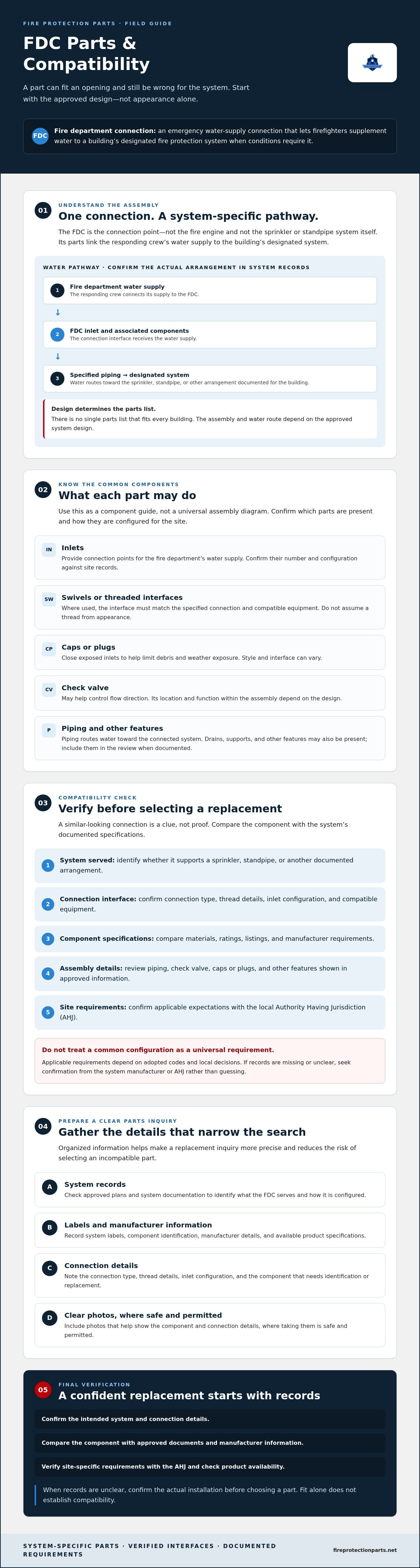
Good part identification starts with records, not guesswork. Before asking about the parts needed for a fire department connection, gather the details below. This checklist is for preparing an inquiry, not for opening, testing, modifying, or replacing fire protection equipment.
- Identify the property and system. Record the building or system identifier, then note whether the FDC serves sprinklers, standpipes, or both, if confirmed by system records.
- Check available documentation. Find approved drawings, system submittals, product data sheets, and relevant drawing references. Record the document name or page where the connection or component appears.
- Transcribe visible markings. Note the manufacturer, model, and any legible connection, material, or rating information. Don’t fill gaps with assumptions.
- Document the connection details. Describe the visible interface and location in the assembly, using records to confirm specifications where possible.
- Take photographs only when safe and permitted. Capture the component and its interfaces from clear angles without removing caps, opening equipment, or disturbing the assembly.
- List what remains unknown. Flag missing labels, unclear records, or conflicting details so they can be verified before ordering.
What information should you gather before requesting a part?
A useful inquiry pairs the system type with identifying details for the specific component. Include the property identifier, system served, visible manufacturer and model information, connection details, and drawing references. Photographs can provide context, but they can’t establish a rating, listing, or precise specification when labels and records are unavailable.
Who should confirm an FDC replacement or system change?
If specifications are missing or don’t agree, pause the order. Direct technical questions to the responsible fire protection professional or system designer, and confirm applicable requirements with the Authority Having Jurisdiction (AHJ) using current approved documentation. Don’t treat a replacement decision as permission to alter the system. Any inspection or replacement work should be handled by the appropriate qualified professional.
For broader sourcing context, use the component comparison and inquiry checklist above. Once the required specifications are verified, review available fire protection components and confirm whether a requested item is offered and matches the documented system requirements before ordering.
Where to Source Fire Department Connection Parts with Confidence
Once the system requirements are documented, a clear inquiry can help a retailer determine whether a component may match your specifications. Fire Protection Parts is an online retailer of fire protection hardware and system components. It is a sourcing resource, not an installation or inspection provider. FDC-specific product availability isn’t confirmed, so verify that an exact item is offered before treating it as an option.
How can you make an FDC parts inquiry easier to verify?
Send the system type, manufacturer and model markings, connection details, and relevant drawing references. Include clear photographs only as supporting context, not as proof of specifications. Ask whether product documentation is available and whether the listed interface, material, ratings, and other details match the information you provide. A generic name match isn’t enough to establish compatibility.
Keep design and code questions with the responsible professional. A retailer can be a resource for sourcing listed components, but the system designer or other qualified professional should resolve technical suitability. The Authority Having Jurisdiction (AHJ) can confirm applicable local requirements.
What should readers confirm before ordering?
Before checkout, verify the exact product identity, documented specifications, intended system, and current availability. Compare the item with approved system records and manufacturer requirements. If a key detail is missing or conflicts with the documentation, pause and get it confirmed rather than ordering based on appearance or a broad product description.
Fire Protection Parts’ confirmed categories include CPVC fire protection pipe and fittings and backflow preventers. Consider these only when system documentation establishes their relevance, and verify the specific product and current availability. They should not be assumed to be FDC assemblies or FDC-specific replacement parts.
With your specifications ready, Browse fire protection parts and verify product details before ordering. A documented match is the right starting point. If the intended use or compatibility remains uncertain, get confirmation from the responsible professional before proceeding.
Make Your Next FDC Parts Decision With Confidence
The parts needed for a fire department connection depend on the specific system, so a familiar-looking component isn’t enough to confirm a match. Use approved records and manufacturer details to identify what the FDC serves, document the part specifications, and resolve uncertainties with the responsible professional or Authority Having Jurisdiction before ordering.
Fire Protection Parts is an online retailer of fire protection hardware and system components, with individual and bulk ordering. Its product information doesn’t confirm a complete FDC assembly or every FDC-specific replacement part, so check current availability and exact specifications rather than assuming a component is offered or compatible.
When your details are ready, Browse fire protection parts and verify product details before ordering. A careful sourcing decision starts with verified information. Take the time to confirm the match before proceeding.
Frequently Asked Questions
What parts are commonly included in a fire department connection?
A fire department connection may include inlet openings, swivels or other connection interfaces, protective caps or plugs, connecting piping, and a check valve. Some assemblies may also include other features, such as drains or supports. The exact parts and arrangement depend on the building’s approved system design and manufacturer specifications. Use the site’s drawings and component records to identify what’s actually present before sourcing replacements.
Does every fire department connection have two inlets?
No. The number and arrangement of inlets depend on the approved design and applicable local requirements. Don’t assume that a connection needs two inlets because another building has that configuration. Check the building’s approved drawings, equipment labels, and system documentation. If those records don’t clearly identify the inlet arrangement, ask the responsible fire protection professional or Authority Having Jurisdiction (AHJ) to confirm it before ordering or changing components.
What is the difference between an FDC and a standpipe connection?
An FDC is an interface where responding firefighters can supply supplemental water to a designated fire protection system. A standpipe is the building system of piping and hose connections used for firefighting operations. A hose connection on a standpipe isn’t the same thing as the exterior FDC inlet. The approved system documents identify how the FDC connects to the standpipe, sprinkler system, or another arrangement.
Can FDC caps or plugs be interchangeable between assemblies?
Not necessarily. Caps and plugs must match the specified connection and be appropriate for the assembly. Similar appearance doesn’t prove that the interface, thread, or other details are compatible. Check component markings, approved records, and manufacturer documentation before selecting a closure. If the specifications are unclear, don’t force a cap or plug onto an inlet; have the responsible professional confirm the correct part for that installation.
How do I identify the correct replacement part for an FDC?
Start with the approved drawings, system submittals, and product data. Record the system served, component manufacturer and model, visible markings, connection details, material, and documented ratings. Photographs can help show the part’s location and appearance, but they can’t confirm specifications by themselves. These records help identify the parts needed for a fire department connection. Resolve missing or conflicting information with the system designer, manufacturer, or qualified fire protection professional before ordering.
Does a fire department connection need a check valve?
Whether a check valve is required, and where it belongs, depends on the system design and applicable requirements. A check valve generally helps control flow direction, but don’t use that general function to decide whether a particular FDC needs one. Review the approved drawings, equipment documentation, and manufacturer specifications. If the records don’t provide a clear answer, ask the system designer or AHJ to verify the arrangement.
Who can confirm whether an FDC component meets local requirements?
The local Authority Having Jurisdiction, or AHJ, can clarify applicable local requirements. For technical compatibility with the building’s design, consult the system designer, manufacturer, or responsible qualified fire protection professional. Check current approved documentation and adopted code requirements for the site; don’t assume a part is acceptable based only on a product description or visual match. A retailer can help with sourcing, but that doesn’t replace professional design or AHJ verification.

