

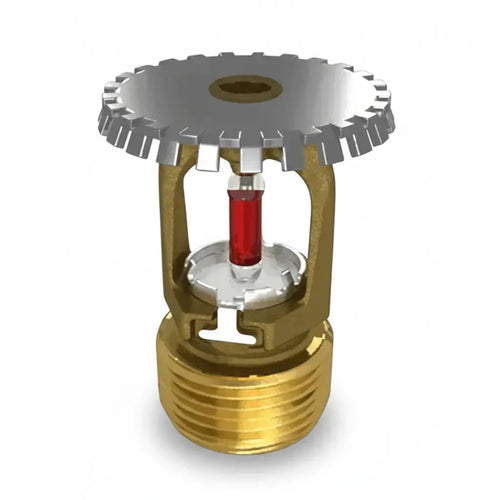


Fire Sprinklers: What Contractors Need to Verify
A fire sprinkler system is only as dependable as the parts selected for the application and the workmanship behind the installation. Fire sprinklers may be small compared with pumps, valves, and risers, but they are the discharge point that must activate at the right temperature, deliver water in the intended pattern, and work with the available water supply. For contractors, facilities teams, and purchasing professionals, that makes correct identification and sourcing more than a line-item exercise.
Fire Sprinklers Are Part of a Complete System
A sprinkler head cannot be selected in isolation. Its listing, temperature rating, orientation, K-factor, finish, coverage classification, and response type must work with the system design and the protected occupancy. The head also has to be compatible with the fitting arrangement, piping system, escutcheon where applicable, and environmental conditions at the point of installation.
The common mistake is treating a replacement as interchangeable because it looks similar. A standard spray pendent, an extended coverage pendent, a residential sprinkler, and a dry pendent can share a general appearance while serving very different listed applications. Changing one characteristic can affect spacing, hydraulic calculations, obstruction rules, or the authority having jurisdiction's acceptance of the work.
For new installations, follow the approved design documents, applicable NFPA standards, manufacturer data, and local requirements. For repair work, start by identifying exactly what was installed and why. If the original product is obsolete or unavailable, determine whether the proposed replacement is listed for the application rather than assuming the closest physical match is acceptable.
Start With the Hazard and Environment
Sprinkler selection begins with the occupancy and the conditions around the sprinkler, not with the thread size. Light-hazard office areas, ordinary-hazard storage and manufacturing spaces, parking structures, freezers, combustible concealed spaces, and special hazards can require substantially different approaches.
Temperature is one of the first checks. Ordinary-temperature sprinklers are common in conditioned spaces, but heads near unit heaters, skylights, process equipment, ovens, or hot ceilings may require an intermediate or high-temperature rating. Installing an ordinary-temperature sprinkler where ambient heat is elevated can lead to an unwanted operation. Specifying a higher rating without confirming the design can delay activation where a lower rating was intended.
Corrosion and moisture also drive product choice. Parking garages, washdown areas, coastal facilities, cold storage operations, and industrial processing environments may need corrosion-resistant finishes or materials. A standard painted sprinkler may be appropriate in one location and a poor long-term choice a few feet away in a damp, chemically exposed area.
Concealed or recessed architectural applications add another layer. Cover plates, escutcheons, and sprinklers are often listed as a specific assembly. Mixing parts from different models or manufacturers can compromise the listing and create a visible finish mismatch. When appearance matters, confirm the approved finish and assembly before ordering instead of trying to correct it in the field.
Match Orientation, Response, and K-Factor
Orientation determines how a sprinkler distributes water. Upright sprinklers are commonly used where exposed pipe is above the protected area. Pendent sprinklers are common beneath ceilings. Sidewall models protect areas where ceiling piping is impractical, while horizontal sidewalls have their own placement and obstruction considerations. Dry pendents and dry sidewalls extend through a cold space to keep water out of the exposed barrel.
Response type matters as well. Standard-response sprinklers are widely used in commercial and industrial systems. Quick-response sprinklers are designed for specific applications and may be required or permitted based on occupancy and system design. Residential sprinklers are purpose-built and tested differently from standard spray models. They should not be substituted simply because the thread connection and deflector orientation appear similar.
K-factor is equally critical because it affects discharge flow at a given pressure. A higher K-factor sprinkler can deliver more water at lower pressure, but it also changes hydraulic calculations and may require different design assumptions. Replacement work should verify the existing K-factor against the sprinkler identification, system records, and approved plans when available. Do not rely on visual comparison alone.
Dry Sprinklers Need Accurate Measurements
Dry sprinkler selection demands careful field dimensions. The barrel length, fitting type, ceiling construction, and heated-space connection all affect the correct product. An incorrect dry pendent length can leave the seal in the cold area, interfere with the ceiling, or prevent proper installation. Confirm the manufacturer's measuring instructions, the required minimum and maximum barrel length, and any pitch requirements before placing the order.
Protect the Listing During Installation
A listed sprinkler can lose its practical value when installation practices damage it or alter its operating conditions. Heads should remain protected from paint, impact, contamination, and improper handling. Paint on a sprinkler or its thermal element can delay operation or prevent it from functioning as intended. If painting work is underway, use manufacturer-approved protective measures and remove them according to instructions.
Use the correct sprinkler wrench for the specific model. Gripping the frame, deflector, bulb, or fusible element with pliers can damage the sprinkler or distort components that affect discharge performance. Thread sealant must be compatible with the system and applied in a way that does not contaminate the waterway.
Obstructions deserve close attention during tenant improvements and maintenance. New light fixtures, ductwork, cable trays, signage, ceiling features, storage, and security devices can alter the discharge pattern after the original installation has passed inspection. Facilities teams should include sprinkler clearance in project reviews, especially when changes are made above ceilings or in high-piled storage areas.
Replacement Work Requires Documentation
For a damaged, activated, recalled, or corroded sprinkler, gather the available data before ordering. The manufacturer, model, SIN or identification number, K-factor, temperature rating, orientation, thread size, finish, and date code can all matter. Photographs of the sprinkler, escutcheon, adjacent piping, and installation location help confirm details when markings are incomplete.
A replacement may need to match the existing sprinkler exactly, particularly where it is part of a listed arrangement or a hydraulically calculated design. In other cases, an approved equivalent may be possible, but that decision should be made through the proper design, engineering, and authority review process. The urgency of a repair does not eliminate the need for a compliant solution.
Keeping a small, controlled stock of common spare sprinklers can reduce downtime after damage or an operation. The right cabinet contents depend on the facility's installed inventory. A warehouse with standard uprights may need a different spare selection than a hotel with concealed pendents or a freezer with dry sprinklers. Spare sprinklers should be stored in an appropriate cabinet and identified clearly so maintenance personnel do not install the wrong head under pressure.
Source Components as a System, Not a Shortcut
Sprinkler work often creates a broader material need than expected. A head replacement can reveal damaged drops, missing escutcheons, corroded fittings, compromised valves, or inspection deficiencies. A retrofit may require sprinkler heads, CPVC fittings, pipe, valves, hangers, gauges, test connections, and alarm-related components that must all align with the approved scope.
This is where product traceability and manufacturer support matter. Recognized brands provide model-specific data, listings, installation guidance, and replacement information that help contractors avoid guesswork. Low-cost substitutes with unclear approvals can create inspection failures, schedule delays, and exposure for the installer and building owner.
When a project includes unusual temperature conditions, specialized finishes, large-orifice sprinklers, dry systems, foam-water equipment, or a hard-to-identify legacy product, provide complete job details when requesting a quote. The right questions early can prevent multiple shipments, field changes, and expensive rework later.
Fire Protection Parts supports contractors and facilities buyers with code-conscious products from established manufacturers and practical assistance for standard and specialized component needs. For time-sensitive work, confirming the exact product data before shipment is usually faster than correcting an incorrect installation after the fact.
The best sprinkler purchase is not merely the one that arrives first. It is the one that matches the approved design, preserves the system listing, installs correctly, and remains dependable when a building needs it most.

