



How to Reset a Dry Pipe Valve After Activation: A Safe 2026 Guide
A dry pipe valve that trips isn’t ready for service just because the water flow has stopped. If you’re searching for how to reset a dry pipe valve after activation, first treat the system as impaired and determine what caused the trip. Restoring the valve without correcting the cause can lead to another activation or leave the sprinkler system unable to protect the building.
There’s no safe, universal reset sequence. Valve and accelerator configurations differ, and the correct procedure depends on the specific equipment and system documentation. This guide covers immediate priorities after activation, why qualified personnel need to identify and correct the cause, and what to verify before the system returns to service. It also explains how manufacturer instructions and applicable inspection, testing, and maintenance requirements inform checks of the valve, air supply, and system operation. The goal is a complete, documented restoration, not simply a reset.
Key Takeaways
- After activation, treat the system as impaired and establish what happened before restoration begins.
- Use the valve’s exact manufacturer instructions and system documentation. How to reset a dry pipe valve after activation depends on its configuration.
- A technician’s restoration workflow should address the cause, the valve, and the air supply, then verify operation before return to service.
- Document the cause, corrective work, replacement parts, test results, and restoration time to create a clear repair record.
- Correctly specified replacement components can support a documented repair, but they don’t replace system-specific checks.
What dry pipe valve activation means, and what to do first
When a dry pipe valve activates, it opens and water enters piping that is normally kept dry. This can happen during a fire, but activation may also follow damage, a test, air loss, or another system-specific event. Activation signals that the system needs attention, but it doesn’t establish what caused the trip. Until the cause is understood and authorized personnel complete restoration and verification, treat the system as potentially impaired.
Dry pipe systems are used where piping may be exposed to freezing conditions. For a basic overview of their purpose and operation, see Dry pipe systems.
What happens when a dry pipe valve trips?
In normal conditions, pressurized air or nitrogen in the piping helps hold water back at the dry pipe valve. If pressure changes enough to meet the valve’s trip conditions, the valve opens and water enters the system piping. Pressure thresholds and operation vary by valve model and system configuration, so a generic number or reset instruction can be misleading. Water in the pipes alone doesn’t establish whether a fire occurred or explain why the valve tripped.
Immediate priorities after activation
Put people first. Follow the building’s emergency procedures, and call emergency services if fire is suspected. Notify the designated building contact so responsible personnel can coordinate the response and track the system’s status. Don’t attempt a reset based on a general guide or assume protection has been restored because water flow has stopped.
As soon as it’s safe, responsible personnel should record what they know. Useful details include:
- The time activation was discovered and any alarms displayed
- Visible water release, damage, or other abnormal conditions
- Known events before activation, such as testing, maintenance, or a reported pressure issue
These observations can help a qualified technician investigate, but they’re clues, not a diagnosis. For example, pressure loss may be related to a leak or another system condition. The actual source needs to be established before restoration. A stopped alarm, closed water flow, or quiet valve area doesn’t prove the system is ready to protect the building. The next step is a system-specific assessment, followed by restoration and verification using the valve manufacturer’s instructions and applicable documentation. That’s the essential context behind how to reset a dry pipe valve after activation: resetting the valve is only one part of returning the system to service.
Why a dry pipe valve activates, and how technicians identify the cause
A tripped valve shows that the system’s trip conditions were met, but it doesn’t explain why. A fire or another waterflow demand may be involved. Activation can also follow an air-pressure change, a mechanical problem, or planned testing and maintenance. The initial trigger is a lead, not proof of the root cause. Restoring the system before identifying and correcting the cause can leave a fault in place and risk another trip.
Common conditions that can trip a dry pipe system
Possible causes include low air or nitrogen pressure, a leak, damaged piping, an open drain, or a fault in a system component. These are conditions to investigate, not a diagnosis based on the valve tripping alone. An accelerator or a particular air-supply arrangement can also affect how the system responds. Technicians need to consider the complete configuration rather than focus on one pressure reading.
Testing and maintenance matter, too. A planned trip test intentionally operates the valve, while work on the system may create conditions that need investigation. For context on testing and restoration, see this industry overview of a qualified technician's dry pipe valve restoration sequence.
What information helps narrow down the cause?
A qualified technician builds a picture from system evidence and records, then compares it with the documentation for the exact valve, trim, accelerator, and compressor. Useful information includes:
- Alarm-panel indications and event history, where available
- Pressure readings and observed waterflow, recorded for qualified review
- Visible signs of leakage, damage, or an open drain
- Recent system work, testing, maintenance, or reported air-supply issues
One observation rarely tells the whole story. A low pressure reading, for example, may point toward air loss, but it doesn’t establish whether the source is a leak, a supply issue, or another condition. Technicians compare the timeline, indications, physical evidence, and equipment instructions before deciding what corrective work is needed.
The cause must be identified and corrected before restoration begins. Recorded events, observed conditions, component configuration, and current manufacturer documentation guide that work. This evidence-led approach is central to understanding how to reset a dry pipe valve after activation: resetting without resolving the underlying condition can simply repeat the problem.
If the documented repair calls for replacement hardware, fire protection system components can support the parts search. The selected part must suit the system’s specific requirements.
Why there is no universal dry pipe valve reset procedure
A reset sequence that suits one dry pipe system may be unsafe or incomplete for another. Valve design, trim arrangement, accelerator configuration, air source, and piping layout all affect how qualified personnel restore and verify the system. Resetting a valve alone doesn’t prove the system is ready for service. The applicable manufacturer’s current instructions, adopted codes, and authority having jurisdiction requirements govern the work.
Which system differences change the restoration process?
Valve models can use different trim and reset arrangements, so the required sequence varies. An accelerator adds a component whose setup and operation must be addressed according to its system documentation. Air compressors and other air supplies also have configuration-specific requirements for restoring and checking pressure. Auxiliary drains and piping layout can affect post-operation tasks as well. The National Fire Sprinkler Association discusses these system-specific maintenance needs in its guidance on dry pipe system maintenance.
| General principle | What requires system-specific instructions |
|---|---|
| Identify and correct the cause before restoration. | The diagnostic checks for the particular valve, trim, accelerator, and air supply. |
| Restore components in a controlled, documented sequence. | The valve’s reset steps and the correct configuration of its associated trim. |
| Verify system operation before return to service. | Required pressure settings, test methods, and acceptance criteria for that installation. |
This distinction matters when researching how to reset a dry pipe valve after activation. General guidance can explain why correct restoration matters, but it can’t establish the correct control sequence or settings for every model. Don’t substitute a procedure written for a different valve or assume that an apparently successful reset confirms the system is ready.
When should readers stop and hand off the work?
If you’re not qualified to work on the system, don’t operate valve controls or attempt a reset. Leave diagnosis, restoration, testing, and documentation to qualified fire sprinkler personnel. They can match the equipment to its current manufacturer instructions, consider the system layout, and apply relevant local requirements and authority having jurisdiction direction.
Use the exact valve and component documentation, not generalized online steps. If the correct instructions or system configuration aren’t clear, pause the work until qualified personnel can establish them. A controlled, documented restoration is the safeguard. Turning a handle is not verification.
The qualified technician's dry pipe valve restoration sequence
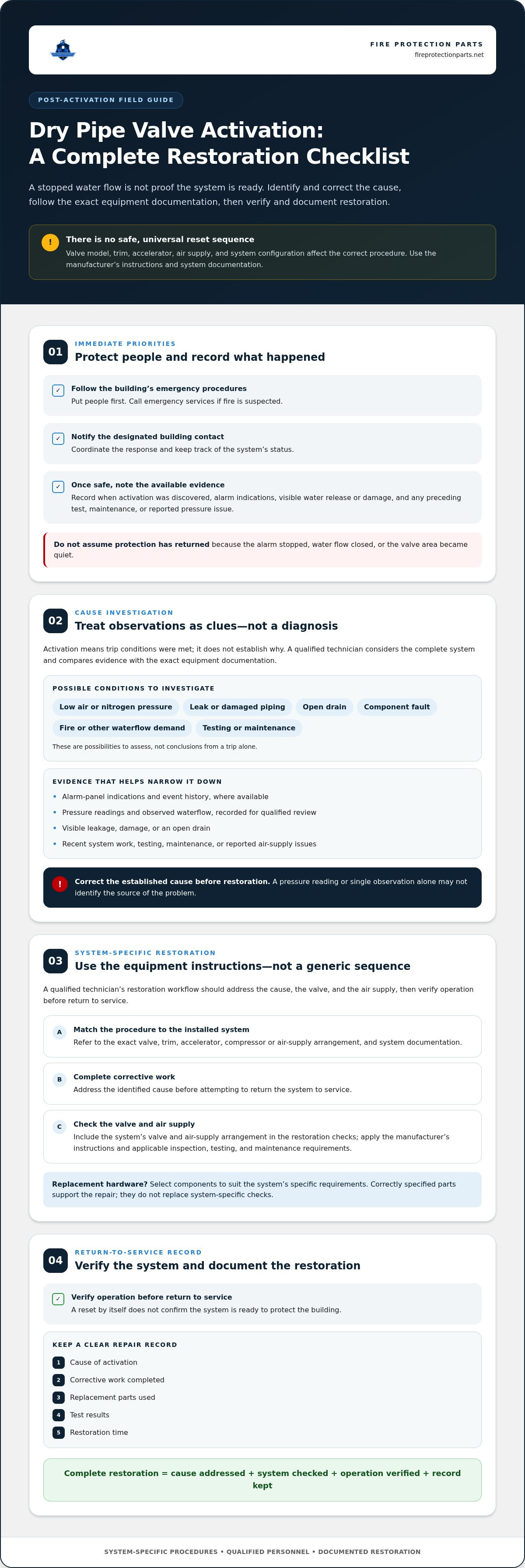
Restoration is a controlled workflow, not a universal reset recipe. Qualified fire sprinkler personnel need to manage the system’s impaired status and required notifications while they investigate, restore, test, and document the work. The exact sequence depends on the installed valve and system. This overview explains the stages, but it doesn’t replace current manufacturer instructions or site procedures.
Before restoring the valve
Work begins with the event, not the reset. The technician confirms that the activation has been investigated and the underlying condition corrected. They identify the exact valve and trim arrangement using equipment labels and system records, then review the applicable manufacturer instructions and site procedures before operating controls.
The air-supply configuration is part of that review. For background on equipment used in dry sprinkler systems, see the air compressors for dry sprinkler systems guide. It provides context on the air supply, not model-specific reset instructions.
During restoration and system checks
Once the cause is addressed and the applicable procedure is established, qualified personnel restore the system using the model-specific sequence. The process may involve the valve and associated trim, air supply, drainage, and other configuration-dependent checks. Generic instructions can’t safely specify valve positions, pressures, or timing for every installation.
The technician then checks system operation as required for the equipment and work performed. Depending on the configuration, verification may include confirming that the valve is seated, the air supply is operating as intended, alarms respond appropriately, and waterflow behaves as expected. Required model-specific testing and documentation must be completed before the system is considered ready for service.
- Secure and communicate: Maintain impairment controls and make required notifications during the work.
- Investigate: Confirm the cause and corrective work before restoration.
- Follow the manual: Match the procedure to the exact valve, trim, and system configuration.
- Restore and verify: Complete applicable checks and tests before return to service.
- Document: Record the cause, work performed, test results, and restoration status.
That’s the practical answer to how to reset a dry pipe valve after activation: qualified personnel follow the correct documentation, then verify the whole system rather than treating the valve reset as proof of protection. If the documented repair requires replacement equipment, browse fire protection system components to support the parts search.
Verify return to service and source suitable replacement components
A reset is not the finish line. Return to service follows successful, system-specific checks and completion of required notifications. Qualified personnel should confirm that the valve and related components have been restored according to current manufacturer instructions, then perform applicable operational, alarm, and system tests. Site procedures and jurisdictional requirements guide the management of impairment status and notifications.
What should be verified before the system is returned to service?
The verification plan depends on the equipment and system. The technician checks that the valve and connected components are in their required operating condition, the air supply is functioning as intended, and applicable alarms and waterflow checks produce the expected response. Required testing must be completed before the system is treated as ready for service.
Keep a clear record of the restoration. Capture:
- The identified cause and corrective work completed
- Replacement parts used, including identifying details available from the component
- Test results and any unresolved issues
- The time restoration was completed and required notifications
If any part of the system remains impaired, document that status and follow the site’s notification procedures. A completed reset does not prove that outstanding issues have been resolved.
How to match replacement parts to the system
A replacement part must suit the installed equipment and its application. Before ordering, match the component against the system’s manufacturer, model, size, and relevant ratings. Then review technical documentation, compatibility information, and applicable approvals against the manufacturer’s requirements. A similar-looking part is not necessarily interchangeable.
For repair planning, fire protection parts and hardware for system repairs offers broader context on selecting components for documented work. The sprinkler system component guide also covers sourcing considerations. Use system records and equipment documentation to guide the final selection. Don’t assume compatibility based on appearance alone.
That’s the full intent behind how to reset a dry pipe valve after activation: restore the equipment correctly, verify operation, record the outcome, and confirm system status before return to service.
Restore the System With Confidence
A dry pipe valve reset is only one part of restoring protection. The cause of activation must be identified and corrected, and the system must be restored using the exact manufacturer instructions for its valve and configuration. Qualified personnel then complete the applicable checks and testing, manage required notifications, and document the results before the system is considered ready for service.
That’s the essential answer to how to reset a dry pipe valve after activation: don’t rely on a generic sequence or assume that a reset alone proves the system is operational. Careful verification and a clear repair record help responsible teams understand what was corrected and what was tested.
Fire Protection Parts is an online source for fire protection hardware and system components, including air compressors for sprinkler systems. For equipment related to documented system repairs, browse fire protection components for system repairs.
Frequently Asked Questions
Can I reset a dry pipe valve myself after it activates?
No. Don’t operate valve controls or attempt a reset unless you’re qualified to work on that system. If you’re searching for how to reset a dry pipe valve after activation, remember that procedures vary by valve model, trim, accelerator, and air supply. A qualified technician should identify the cause, follow current manufacturer instructions, complete applicable tests, and document the restoration before the system is considered ready for service.
What should I do immediately after a dry pipe valve trips?
Follow the building’s emergency procedures, and call emergency services if fire is suspected. Notify the designated building contact and treat the system as potentially impaired until qualified personnel verify its status. When it’s safe, record the time, alarm-panel indications, visible damage, and known recent events such as testing or maintenance. These observations can help with the investigation, but they don’t confirm the cause or prove the system is ready.
Why would a dry pipe valve activate without a fire?
A valve can trip for reasons other than a fire, including low air or nitrogen pressure, leaking or damaged piping, an open drain, a component fault, or testing and maintenance activity. An accelerator or air-supply configuration may also affect system behavior. These are possible leads, not a diagnosis. A qualified technician should compare the event history and observed conditions with the specific system and equipment documentation.
Does every dry pipe valve have the same reset procedure?
No. The restoration sequence depends on the valve model and its trim, accelerator, air source, and system layout. Steps or settings intended for one configuration may be wrong for another. Qualified personnel should use the current instructions for the exact installed equipment, along with applicable site procedures and local requirements. General online guidance can explain principles, but it can’t replace model-specific instructions for operating or testing the system.
What needs to be checked before a dry pipe system returns to service?
Qualified personnel should verify that the cause has been corrected and the valve and related components have been restored according to current manufacturer instructions. They complete applicable operational, alarm, and system tests, then document the cause, corrective work, parts used, results, and restoration time. Any unresolved impairment must be recorded and managed through site procedures and required notifications. A reset alone doesn’t demonstrate system readiness.
How long does it take to reset a dry pipe valve?
There isn’t a reliable universal time. The work can vary with the valve and system configuration, the cause of activation, required repairs, and testing needed before return to service. Don’t assume the work is a straightforward reset if damage, a leak, or an air-supply issue needs investigation. The priority is completing the manufacturer-directed restoration and applicable verification, not meeting a generic time estimate.
Can a dry pipe system stay in service if the valve has activated?
Don’t assume it remains fully protective after activation. The system may be impaired until qualified personnel assess it, correct the cause, restore it, and complete required checks. Responsible building personnel should follow site procedures for impairment status and notifications while the work is underway. Whether the system can be treated as ready for service depends on its condition and successful verification, not simply on whether water flow has stopped.

