

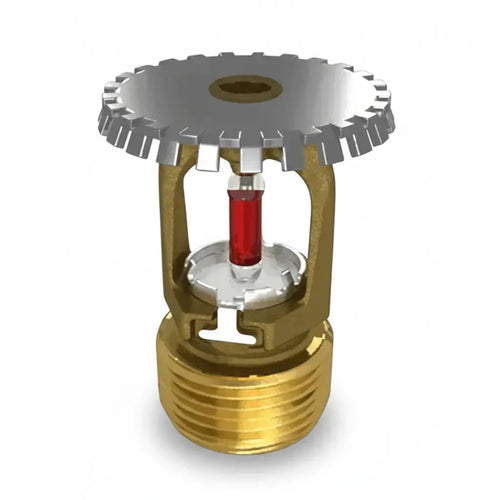


CPVC vs Steel Fire Sprinkler Pipe: 2026 Comparison Guide
The most durable material for your fire suppression system might actually be the one that feels the lightest in your hand. While heavy-wall steel has long been the industry default, the 2026 landscape for CPVC vs steel fire sprinkler pipe has shifted toward materials that naturally resist internal decay. You're likely facing the pressure of rising labor costs for skilled fitters and the fear that microbiologically influenced corrosion is silently eating away at your infrastructure. It's a high-stakes choice where the wrong material leads to expensive retrofits or, worse, system failure during an emergency.
We believe safety shouldn't be a guessing game. This guide helps you make an informed, code-compliant decision by evaluating life-cycle costs, corrosion resistance, and installation efficiency across different occupancy types. We'll provide a clear decision matrix for navigating NFPA 13 and 13R application limits while verifying where Viking CPVC components offer the best protection for your specific build. By the end, you'll have a reliable roadmap to ensure your project meets the 2025 NFPA standards without sacrificing long-term performance or your budget.
Key Takeaways
- Eliminate the risk of internal pipe corrosion (MIC) by identifying which material properties offer permanent immunity to scale and decay.
- Compare hydraulic efficiency using Hazen-Williams values to see how smoother internal walls can reduce required pipe diameters and system pressure requirements.
- Assess the total project impact of installation labor, contrasting the need for heavy threading machinery with the efficiency of certified CPVC solvent welding.
- Ensure full code compliance for 2026 by verifying the application limits of non-metallic piping within NFPA 13, 13R, and 13D standards.
- Utilize a professional decision matrix for CPVC vs steel fire sprinkler pipe to balance immediate material costs against long-term system reliability.
Material Fundamentals: Steel vs. CPVC in Fire Suppression
Fire suppression technology has evolved from heavy industrial foundations to include advanced engineered thermoplastics. Choosing between CPVC vs steel fire sprinkler pipe requires understanding the distinct chemical and mechanical properties of each. While Schedule 10 and Schedule 40 black steel have served as the backbone of the fire sprinkler system for over a century, high-limit CPVC compounds now offer a specialized alternative for residential and light-hazard applications. Both materials meet rigorous UL and FM thermal performance standards, but they solve different structural problems.
The transition from traditional metal to engineered polymers wasn't just about cost. It was a response to the need for materials that could withstand internal environments where water chemistry might compromise metal over time. Today, professionals evaluate these materials based on a specific set of fundamental strengths:
- Steel: Exceptional heat resistance, high tensile strength, and suitability for all hazard levels, including high-hazard storage.
- CPVC: Total corrosion immunity, a lighter structural footprint, and superior hydraulic flow characteristics.
The Structural Integrity of Black Steel
Steel remains the primary choice for high-hazard and extra-hazard classifications due to its extreme heat tolerance. In industrial settings where physical impact or high-pressure requirements are common, the rigidity of black steel is unmatched. It doesn't soften under high temperatures. This stability is critical for maintaining system integrity in warehouses or manufacturing plants.
Steel systems also provide the necessary strength for complex bracing requirements. Implementing Seismic Bracing for Sprinkler Systems ensures these heavy installations remain secure during geological events. This protects both the building and the life-safety infrastructure from catastrophic mechanical failure. When the project demands a material that can survive the harshest physical environments, steel is the standard.
The Engineering of Fire-Resistant CPVC
Modern CPVC isn't standard plumbing plastic. It's a specialized polymer chemically treated to resist ignition and prevent flame spread. When exposed to fire, CPVC undergoes a specific charring process. This carbonized layer acts as a thermal insulator. It protects the internal water column and keeps the pipe functional while the sprinklers activate.
This engineering makes it a reliable choice for residential and light-hazard builds. Because it's significantly lighter than metal, it reduces the overall structural load on multi-story buildings. This weight advantage simplifies transport and staging on high-rise residential sites where crane time and floor loading are constant concerns. It's a functional remedy for modern construction challenges that prioritize speed and weight reduction without compromising safety standards.
Performance & Longevity: Combatting Corrosion and Friction Loss
A fire suppression system's value is measured by its reliability decades after the initial installation. When comparing CPVC vs steel fire sprinkler pipe, the most significant performance gap appears in how these materials handle water over time. Steel is a reactive metal that begins to degrade the moment it's filled with water, whereas CPVC is an inert polymer designed to maintain its internal integrity indefinitely. This difference dictates not only the system's lifespan but also its hydraulic efficiency and required maintenance schedule.
Hydraulic Superiority and Pipe Sizing
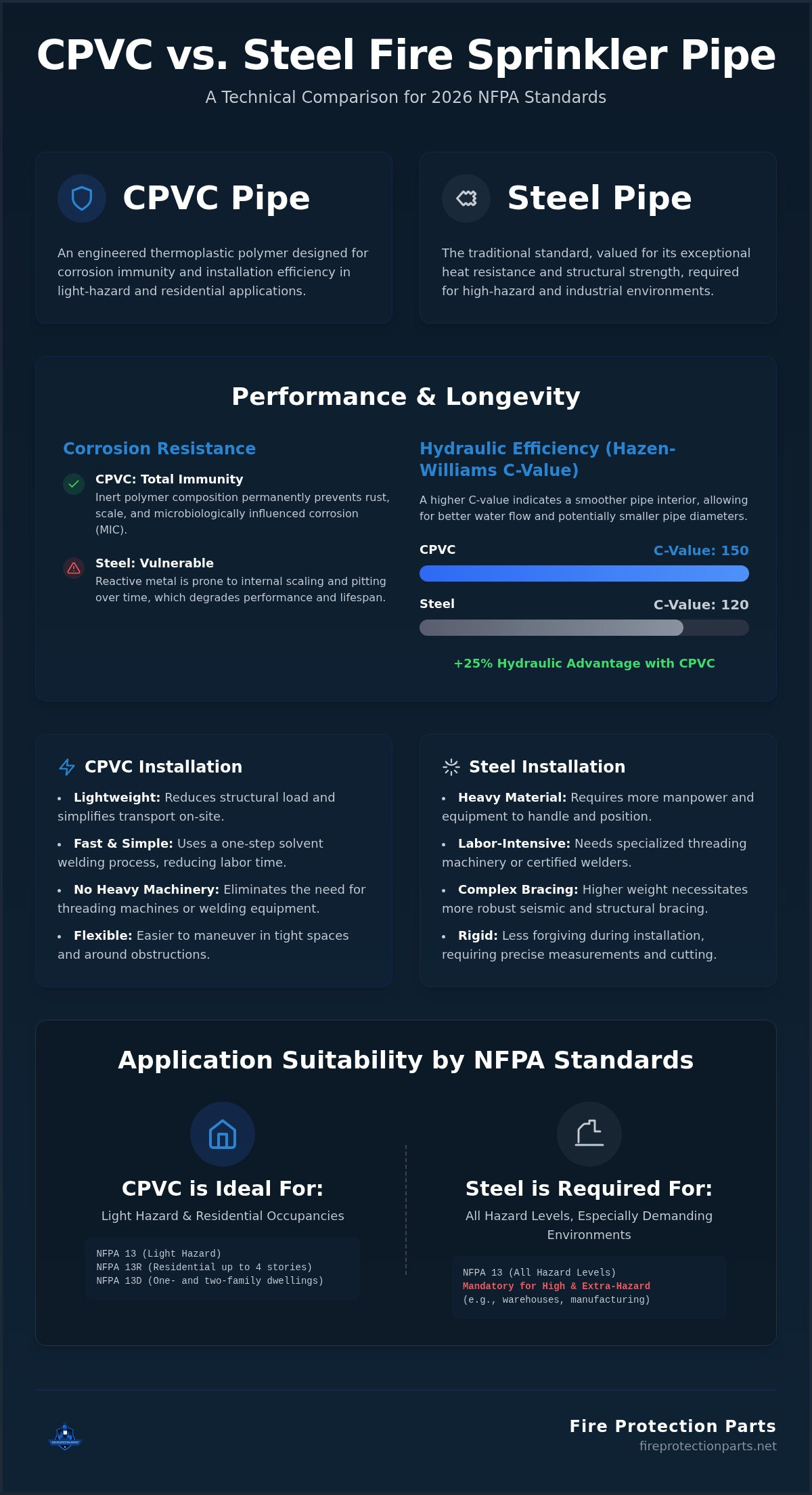
The efficiency of water delivery depends on the smoothness of the pipe's interior. Friction loss is the energy consumed by water moving against pipe walls. Engineers use the Hazen-Williams 'C' value to measure this smoothness; a higher number indicates less friction and better flow. Steel pipe typically has a C-value of 120, while CPVC carries a rating of 150. This 25% advantage in hydraulic efficiency often allows designers to use smaller pipe diameters to achieve the same pressure at the sprinkler head.
Over a 20-year span, the performance gap widens. Steel pipes are prone to internal scaling and pitting, which creates turbulence and further restricts flow. This degradation can lead to a significant drop in system pressure that wasn't present during the initial commissioning. In contrast, the internal walls of CPVC remain smooth. As documented in industry research comparing CPVC to steel pipe, the long-term hydraulic stability of thermoplastics provides a level of predictability that metal systems struggle to match.
The Corrosion-Free Advantage
Corrosion is the leading cause of failure in aging steel systems. Beyond simple oxidation, many facilities struggle with microbiologically influenced corrosion (MIC). This occurs when bacteria in stagnant water create acidic byproducts that eat through steel walls, causing pinhole leaks. These leaks often go unnoticed until they cause significant property damage. Because CPVC is a non-metallic material, it's naturally immune to both oxygen-based corrosion and MIC. It won't rust, scale, or pit, regardless of the local water chemistry.
The financial impact of corrosion is substantial. Replacing sections of a corroded steel system involves high labor costs, specialized equipment, and significant building downtime. For facility managers, choosing a corrosion-resistant material is a functional remedy that eliminates the need for expensive chemical treatments and frequent nitrogen inerting. If you are managing an existing system, sourcing the right Fire Protection Parts and Hardware for System Repairs is essential for maintaining code compliance. Sourcing high-quality Viking components from Fire Protection Parts ensures your system starts with the best available materials for long-term peace of mind.
Installation Dynamics: Labor Costs and System Flexibility
Labor remains the most volatile variable in fire protection budgeting. In 2026, the shortage of skilled pipe fitters has made installation efficiency a primary driver for material selection. When evaluating CPVC vs steel fire sprinkler pipe, the difference in mechanical requirements is stark. Steel installations demand heavy threading machines, groovers, and oil-slicked work areas. CPVC systems, conversely, rely on lightweight cutters and a solvent welding process that eliminates the need for heavy machinery and the risks associated with hot work permits.
Retrofitting existing buildings presents another challenge for traditional materials. Maneuvering 21-foot lengths of rigid steel through occupied offices or narrow residential corridors is a logistical burden that often requires multi-person crews. CPVC’s flexibility and lighter weight allow a single technician to handle staging and assembly in tight spaces; this significantly reduces the disruption to building occupants and lowers the total man-hours required for project completion. It's a functional remedy for contractors facing tight deadlines and limited site access.
Solvent Welding vs. Mechanical Joining
The speed of CPVC assembly is its greatest asset on the job site. Because the material is joined through a chemical solvent welding process, joints become a single, fused piece of material. This eliminates the potential for the mechanical leaks often found in threaded or grooved steel connections. However, joint integrity is strictly dependent on following proper cure times as dictated by NFPA 13, 13R, and 13D standards. For contractors looking to streamline their procurement, sourcing high-quality sprinkler system components online ensures that every fitting and solvent cement can matches the rigorous demands of a life-safety installation.
The Hidden Costs of Steel
While the raw material price of steel might occasionally appear competitive, the hidden costs of handling it often erode profit margins. Shipping and handling fees for heavy metal pipe are significantly higher than for thermoplastic alternatives. In dry systems, the use of steel also necessitates the addition of specialized Air Compressors for Dry Sprinkler Systems to maintain pressure and mitigate the accelerated corrosion caused by trapped moisture. When you calculate the ROI of reduced installation time and the absence of heavy equipment rentals, the economic advantage of CPVC vs steel fire sprinkler pipe frequently shifts toward engineered thermoplastics for residential and light-hazard projects.
Application Suitability: NFPA 13, 13R, and 13D Standards
Choosing between CPVC vs steel fire sprinkler pipe isn't just about material preference; it's about strict adherence to NFPA classifications. NFPA 13 serves as the primary standard for commercial installations, where CPVC is generally limited to light-hazard occupancies such as offices, schools, and hospitals. In these environments, the pipe must be protected by a thermal barrier, typically 1/2-inch gypsum wallboard. For high-piled storage, industrial zones, or areas with extra-hazard classifications, steel remains the non-negotiable requirement due to its ability to withstand extreme heat without losing structural integrity.
Understanding listing requirements is also essential when installing in plenum spaces. Non-metallic pipe must be specifically listed for use in air-handling spaces to ensure it doesn't contribute to smoke development or flame spread within the building's ventilation system. If a space is used as a return air plenum, steel is often the safer, more direct path to compliance unless a specialized CPVC listing is verified for that specific environment.
Residential Fire Suppression: The CPVC Stronghold
Residential applications under NFPA 13R and 13D have seen a massive shift toward thermoplastic materials. CPVC is now the industry default for single-family homes and multi-family apartments up to four stories. It provides a cost-effective life safety solution that fits within the tight framing of residential builds. To ensure adequate pressure in these systems, contractors often integrate CPVC with Residential Fire Pump Systems. It's vital to match fire sprinkler head temperature ratings with the specific temperature limits of the piping material. Using a head that activates at a temperature higher than the pipe's rated limit could lead to system failure before the water begins to flow.
Mixed-Use and Commercial Realities
Modern high-rise residential construction frequently utilizes hybrid systems. These designs use steel for the main risers to provide maximum physical protection and structural support, while switching to CPVC for the horizontal branch lines. This approach balances the need for heavy-duty protection in vertical shafts with the installation speed required for hundreds of individual units. If your project involves exposed areas where physical impact is a risk, prioritizing steel is a functional remedy to prevent accidental breaks. You can ensure your project stays compliant by sourcing Viking Plastics CPVC Pipe for Fire Protection and matching fittings from a trusted partner like Fire Protection Parts.
Strategic Sourcing: Why Viking Plastics CPVC Leads the Market
Viking Plastics has established itself as the gold standard by engineering materials specifically for fire suppression. Unlike generic CPVC used in plumbing, Viking’s compound is optimized for the thermal and pressure demands of a life-safety system. When evaluating CPVC vs steel fire sprinkler pipe, the technical synergy between the pipe and its specialized fittings is a critical factor for long-term reliability. Contractors trust Viking because their products are designed by fire protection experts for fire protection professionals. This focus on specialized application eliminates the doubt often associated with multi-purpose materials.
One of the most vital aspects of choosing Viking is the FBC System Compatible Program. This initiative eliminates the guesswork regarding chemical compatibility. It ensures that the CPVC won't degrade when it comes into contact with common job-site materials like thread sealants, firestops, or lubricants. This level of verification provides peace of mind that a steel system simply cannot offer without extensive, ongoing water treatment and monitoring. Sourcing from an authorized provider like Fire Protection Parts ensures you receive only code-compliant, professional-grade hardware that meets these rigorous standards.
The Viking Plastics CPVC Ecosystem
A complete system requires more than just lengths of pipe. It demands a cohesive ecosystem of fittings and accessories designed to work together. Pairing Viking CPVC fire sprinkler pipe with its own line of specialized fittings reduces the risk of installation errors and joint failure. This unified approach simplifies the procurement process and ensures that every component meets the same high standards of durability and heat resistance. It's a functional remedy for the fragmentation often found in complex safety procurement.
Fire Protection Parts offers a specialized inventory tailored for NFPA 13D and 13R systems. Our e-commerce platform provides clear benefits for contractors, including bulk ordering options and professional support to help navigate complex procurement lists. Nationwide US shipping ensures that your project stays on schedule, regardless of location. We act as a dependable guide, ensuring you have the right components to maintain full code compliance from the riser to the sprinkler head.
Final Decision Framework
Making the final call between CPVC vs steel fire sprinkler pipe comes down to three key criteria:
- Hazard Classification: Is the project a light-hazard occupancy or a residential build? If yes, CPVC is likely the most efficient and compliant choice.
- Environmental Factors: Does the local water supply have a history of causing MIC or scale in metal pipes? CPVC offers a permanent solution to these corrosion concerns.
- Labor and Schedule: Are you facing tight deadlines or a shortage of skilled fitters? The speed of CPVC assembly can save significant project time and reduce overall man-hours.
Professional-grade CPVC is the future of light-hazard suppression. It balances immediate installation savings with a lifetime of corrosion-free performance. Shop our full inventory of Viking Plastics CPVC Pipe and Fittings today.
Securing Your Project with the Right Material
Deciding between CPVC vs steel fire sprinkler pipe isn't just about the upfront price. It's a strategic move to eliminate the long-term threat of corrosion while optimizing hydraulic flow. You've seen how Viking CPVC streamlines installation and meets the rigorous 2026 NFPA standards for residential and light-hazard builds. By contrast, steel provides the structural rigidity required for high-hazard industrial zones. The goal is to match the material to the hazard level to ensure unwavering protection for building occupants.
As an authorized Viking retailer, Fire Protection Parts provides the specialized inventory you need for code-compliant sourcing. We offer nationwide US shipping to keep your projects on schedule and within budget. Upgrade Your System: Shop Viking Plastics CPVC Pipe & Fittings today to build with confidence. Protecting lives is a mission that allows no room for compromise. We're here to help you make the safest choice for every project.
Frequently Asked Questions
Is CPVC fire sprinkler pipe as strong as steel?
Steel has higher tensile strength and impact resistance, making it mandatory for high-hazard zones. However, CPVC is engineered specifically for the pressure requirements of light-hazard and residential systems. While it lacks the physical rigidity of metal, CPVC provides sufficient strength for its listed applications while offering the added benefit of corrosion immunity. The choice depends on whether your project requires industrial-grade durability or residential-scale efficiency.
Can CPVC be used in commercial fire sprinkler systems?
Yes, CPVC is permitted in commercial systems under NFPA 13, but its use is strictly limited to Light Hazard occupancies. This includes environments like offices, nursing homes, and schools. In these commercial settings, the pipe must generally be installed behind a thermal barrier, such as half-inch gypsum wallboard. It is not a substitute for steel in high-piled storage or extra-hazard industrial areas where higher heat loads are expected.
What is the lifespan of CPVC vs. steel fire sprinkler pipe?
CPVC generally offers a longer service life because it is immune to the internal decay that plagues metal systems. While steel pipe might require replacement in as little as 10 to 15 years due to corrosion, a properly installed CPVC system can last 50 years or more. Choosing CPVC vs steel fire sprinkler pipe often comes down to this long-term reliability. Thermoplastics maintain their hydraulic efficiency without the need for chemical treatments.
Does CPVC pipe melt during a fire?
CPVC is engineered to char rather than melt away when exposed to fire. When temperatures rise, the outer layer of the pipe carbonizes, creating a thermal insulator that protects the water column inside. This allows the system to remain functional and maintain pressure until the sprinkler heads activate. It is a specialized fire-resistant polymer, not to be confused with standard plumbing PVC which lacks these critical life-safety properties.
What is MIC, and why does it affect steel pipes more than CPVC?
MIC stands for Microbiologically Influenced Corrosion, a process where bacteria in stagnant water produce acids that eat through metal. Steel is a reactive material that provides a surface for this biological activity to thrive, leading to pinhole leaks. Because CPVC is an inert polymer, it doesn't provide the food or the reactive surface necessary for MIC to occur. This makes CPVC naturally immune to the leading cause of premature steel pipe failure.
Is CPVC cheaper to install than steel pipe?
Yes, CPVC is significantly more cost-effective to install. When comparing CPVC vs steel fire sprinkler pipe, industry data shows that the installed cost of thermoplastic systems can be up to 25% less than metal. These savings come from reduced labor hours and the elimination of heavy machinery. Since CPVC is joined with solvent cement rather than being threaded or grooved, a smaller crew can complete the installation in a fraction of the time.
Can I mix CPVC and steel pipe in the same fire sprinkler system?
You can mix these materials, and it is a common practice in modern hybrid systems. Designers often use steel for the main risers to provide structural support and switch to CPVC for the horizontal branch lines to save on labor. When transitioning between the two, you must use specialized, listed adapters to ensure a leak-proof connection. This hybrid approach allows you to leverage the best attributes of both materials in a single project.
What are the NFPA 13 restrictions for using CPVC pipe?
NFPA 13 restricts CPVC to Light Hazard occupancies and requires it to be protected by a thermal barrier in most configurations. There are also specific listing requirements if the pipe is installed in a plenum space used for return air. Designers must also account for temperature limits; CPVC cannot be used in areas where ambient temperatures consistently exceed 150 degrees Fahrenheit. Always verify the specific 2025 NFPA 13 edition updates for your local jurisdiction.

