

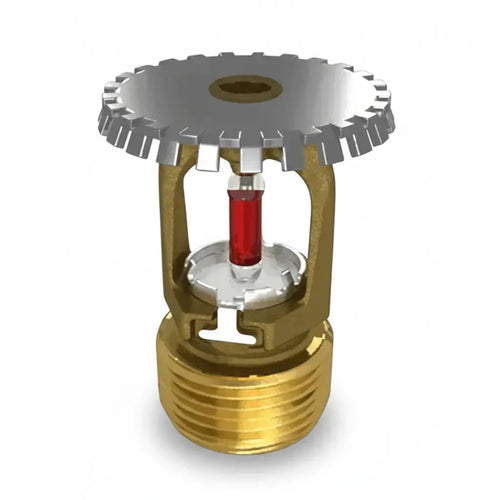


Fire Sprinkler Backflow Preventer Parts: A 2026 Maintenance & Sourcing Guide
Installing a standard irrigation check valve in your fire suppression system isn't just a technical mistake; it's a serious liability that can lead to catastrophic system failure. When an inspector arrives to verify compliance with the 2026 edition of NFPA 25, the distinction between general plumbing and specialized fire sprinkler backflow preventer parts becomes the difference between a passed certificate and a costly shutdown. You need components that meet rigorous ASSE 1013 or 1047 standards, not just whatever is available at a local hardware store. Using the wrong internal seals or springs can compromise the entire pressure balance of your life safety system.
It's stressful to manage aging valves while facing strict local water authority mandates and updated fire codes. You want to ensure your facility remains protected without overpaying for entire valve replacements when a high quality internal repair kit would solve the problem. This guide promises to help you master these technical components to ensure 100% code compliance and system reliability. We will show you how to identify the correct repair kits for your specific brand and model, distinguish fire-rated parts from inferior alternatives, and source the hardware you need to minimize system downtime during critical repairs.
Key Takeaways
- Recognize why specialized fire-rated components are non-negotiable for NFPA 25 compliance and the protection of public water supplies.
- Identify the critical fire sprinkler backflow preventer parts found in professional repair kits to streamline your maintenance and inspection schedule.
- Differentiate between RPZ and DCVA assemblies to ensure your high-hazard suppression systems receive the exact internal components they require.
- Apply professional diagnostic techniques to resolve relief valve discharge and prevent small leaks from becoming major compliance failures.
- Source verified hardware compatible with modern Viking CPVC piping to eliminate procurement doubt and ensure long-term system performance.
The Role of Backflow Preventer Parts in Fire Suppression Integrity
A backflow prevention device serves as the ultimate barrier in a facility's plumbing infrastructure. It acts as the critical gatekeeper that prevents stagnant, potentially contaminated fire system water from siphoning back into the public potable water supply. In a fire suppression context, this isn't just a plumbing preference; it's a life-safety requirement. The 2026 standard for maintenance has shifted away from reactive "fix-it-when-it-leaks" mentalities. Today, professional facility managers prioritize proactive replacement of internal components to maintain system integrity and avoid the high costs of emergency repairs.
Fire systems operate under extreme conditions that standard plumbing hardware can't handle. When a fire pump kicks on, the resulting pressure surge is immense. Standard "plumbing grade" parts often fail under these hydraulic shocks, leading to cracked seats or ruptured seals. This is why sourcing specific fire sprinkler backflow preventer parts is mandatory for professional assurance. These components are designed to withstand high-pressure demands while meeting strict NFPA regulations. You can't compromise on the quality of a check valve disc or a relief valve spring when the safety of the municipal water supply is on the line.
Why Fire Protection Backflow Parts Differ from Irrigation
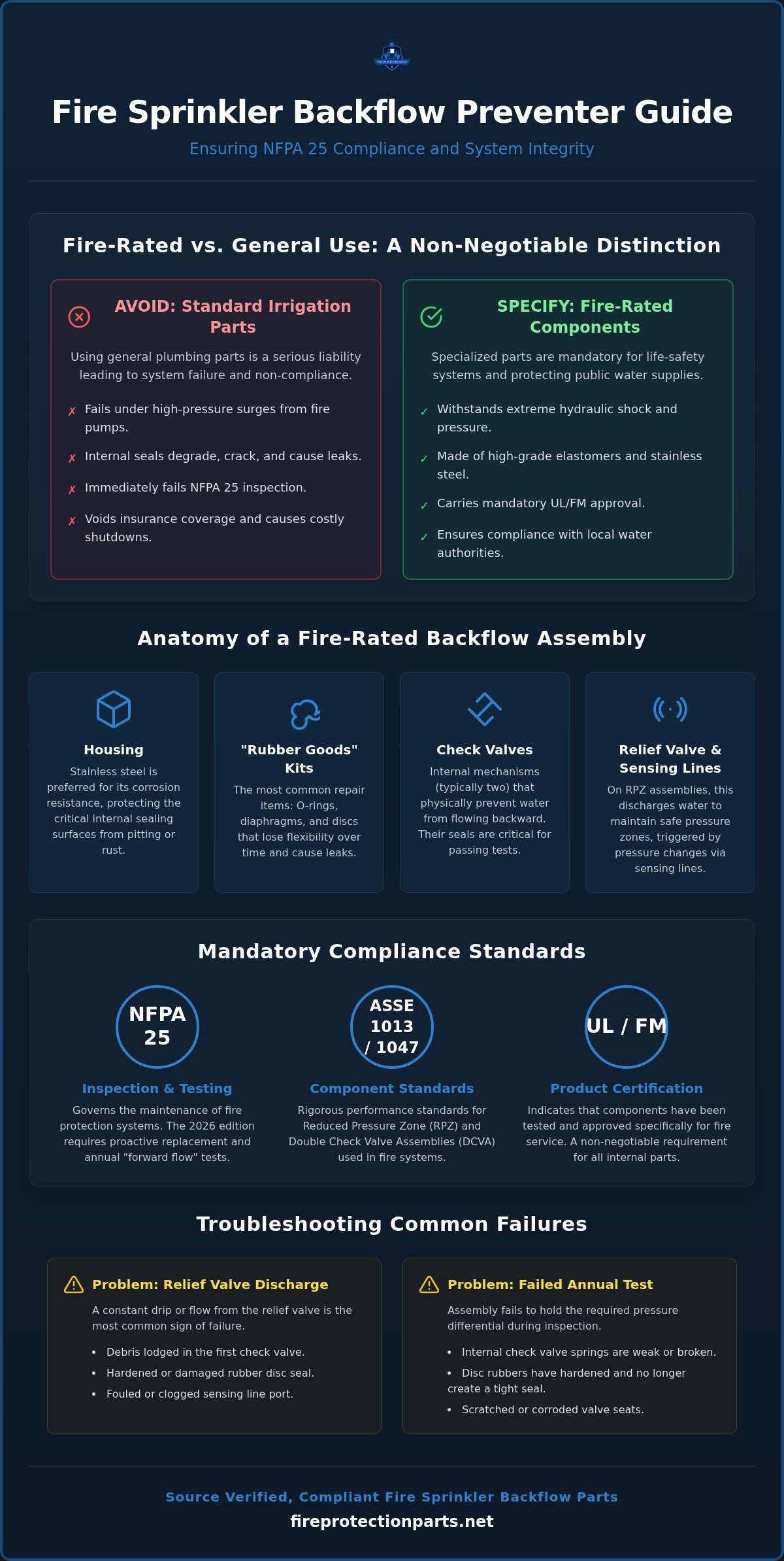
Irrigation systems typically deal with lower, more consistent pressures. Fire suppression systems require significantly higher pressure ratings and specialized materials to combat corrosion. Because fire water often sits stagnant for years, internal parts must be made from high-grade elastomers and stainless steel that won't degrade or "stick" during an emergency. Every internal replacement component must carry UL/FM approval. If a part isn't specifically rated for fire service, it doesn't belong in your assembly. Using unrated components can void your insurance coverage and compromise the entire system's reliability.
The Legal Stakes: NFPA 25 and Local Water Authority Compliance
Compliance is a dual-layered challenge. You must satisfy both the local water authority and the fire marshal. Failing a backflow test can result in immediate "red-tagging," which shuts down your facility's legal occupancy until repairs are verified. Most failures occur because internal rubber parts have hardened or debris has scarred a seat. By maintaining these assemblies with verified hardware, you ensure the system passes the annual "forward flow" test required by the 2026 edition of NFPA 25. For a deeper look at how these items fit into your overall infrastructure, consult our guide on sprinkler system components online to stay ahead of modern safety requirements.
Anatomy of a Fire-Rated Backflow Assembly: Key Components Explained
Understanding the physical construction of an assembly is the first step in successful sourcing. The housing provides the structural foundation for the entire unit. While older installations often utilize epoxy-coated ductile iron, modern high-performance units favor stainless steel. This material choice is vital because corrosion can compromise the internal sealing surfaces where fire sprinkler backflow preventer parts must seat perfectly. If the housing pits or rusts, even a brand-new repair kit won't stop a leak. Professional contractors prioritize stainless steel in high-moisture environments to ensure the assembly lasts as long as the building it protects.
The most frequent maintenance need involves the "Rubber Goods" kit. This package contains the O-rings, diaphragms, and disc rubbers that endure constant hydraulic pressure. Over time, these elastomers lose their flexibility or become scarred by pipe scale. When this happens, the assembly can no longer maintain a drip-tight seal. High-hazard environments, such as those using foam or chemical additives, place even more stress on these components. In these systems, sensing lines play a critical role by communicating pressure differentials between the different chambers of the valve to the relief valve assembly, ensuring the system reacts instantly to any back-pressure event.
Internal Hardware: Check Valves and Relief Valves
A professional fire-rated assembly relies on two independent check valves to create a redundant safety barrier. If the first check fails, the second remains as a backup to prevent contaminated water from reaching the public main. In Reduced Pressure (RP) assemblies, the relief valve adds a third layer of protection by venting water to the atmosphere if the pressure differential drops too low. These relief valves utilize heavy-duty springs and sensitive diaphragms to maintain a specific "buffer" zone. The clapper is a hinged, spring-loaded internal disc that opens to allow water flow in one direction and swings shut to prevent reverse flow.
External Accessories: Test Cocks and Shut-off Valves
External components are just as vital for long-term reliability. Test cocks are the small ball valves used as entry points for diagnostic equipment during annual certification. These must remain clear of debris to ensure accurate readings. You should consult state compliance regulations for backflow preventers to understand the specific testing protocols required for these ports. Additionally, fire systems require OS&Y (Outside Screw and Yoke) shut-off valves. These provide a clear visual confirmation of the valve status; if the stem is out, the valve is open. For assemblies located in high-risk zones, ensure your setup is compatible with ASC seismic bracing to prevent structural failure during an earthquake. If you are unsure which components fit your specific model, browse our selection of professional-grade backflow preventers to find verified hardware.
RPZ vs. DCVA: Comparing Parts and Repair Requirements
Selecting the correct fire sprinkler backflow preventer parts depends entirely on whether your facility uses a Reduced Pressure Zone (RPZ) assembly or a Double Check Valve Assembly (DCVA). You can quickly identify an RPZ by the presence of a relief valve, which typically features a downward-facing discharge port designed to vent water if pressure drops. A DCVA lacks this port, presenting a more streamlined, inline appearance. This physical difference isn't just cosmetic; it dictates the complexity of your maintenance schedule and the specific internal components you must keep in stock. RPZ units are the heavy lifters of the industry, required for any system where the risk of high-hazard contamination exists.
The RPZ Advantage: Differential Pressure Relief Components
High-hazard systems, especially those containing anti-freeze for fire sprinkler systems, rely on the RPZ's relief valve as a mechanical fail-safe. If the check valves fail or back-pressure occurs, this valve opens to dump suppression fluids safely away from the potable water supply. Consequently, an RPZ repair kit is more extensive. It includes not only check valve discs but also diaphragm assemblies, relief valve seats, and specialized O-rings. These components are sensitive to debris and require more frequent internal inspections than their DCVA counterparts. Under the 2026 NFPA 25 standards, maintaining the pressure differential in these units is critical for passing annual certifications.
The DCVA Standard: Simplified Reliability
For low-hazard fire suppression, such as standard residential wet-pipe systems, the DCVA remains the industry standard for simplified reliability. The parts list for a DCVA is focused and utilitarian. You'll primarily deal with check valve seats, discs, and springs. Because there is no relief valve to "spit" or leak, these units are often preferred in locations where drainage is limited. Maintenance is straightforward, making them a dependable choice for contractors who value efficiency. However, even with fewer moving parts, you still need verified fire sprinkler backflow preventer parts to ensure the heavy-duty springs maintain the required tension over years of stagnant service. Don't mistake simplicity for an excuse to use inferior, non-rated hardware.
Troubleshooting and Maintenance: Identifying Failing Backflow Components
Identifying a failure before it results in a "red-tag" from a fire marshal requires a disciplined diagnostic approach. The most common symptom of a system in distress is a relief valve that constantly drips or "spits" water. In a Reduced Pressure Zone assembly, this discharge usually indicates that the pressure differential between the supply and the zone has narrowed beyond the safety margin. While it's tempting to assume the relief valve is faulty, the culprit is often a fouled first check valve. If the first check doesn't seal tight, supply pressure creeps into the intermediate zone, forcing the relief valve to open as designed. Using the test cocks to monitor pressure drops across each internal stage allows you to isolate which fire sprinkler backflow preventer parts have actually reached their limit.
Water quality plays a silent but destructive role in fire system health. Because water in these systems remains stagnant for long periods, mineral scale and pipe debris can settle directly on the check valve seats. When a fire pump test occurs, this debris is stirred up and often becomes trapped between the disc and the seat. Even a microscopic pebble can prevent a drip-tight seal. If you've identified a leak through your test cock diagnostics, it's time to inspect the internal hardware for physical obstructions before committing to a full component overhaul.
Common Failure Modes in Fire System Backflow
- Debris Entrapment: Fine silt or rust flakes from the municipal main can scar check valve seats, making a reliable seal impossible without replacement hardware.
- Spring Fatigue: High-pressure fire systems place constant tension on internal springs. If a check valve spring can't maintain the required 1 or 2 PSI differential, the assembly will fail its annual certification.
- Rubber Degradation: Chloramines used in modern water treatment aggressively attack internal elastomers. Over time, O-rings and diaphragms become brittle or "gummy," leading to immediate seal failure.
When to Repair vs. When to Replace the Full Assembly
Deciding between a repair kit and a new unit is a matter of economics and structural integrity. If the internal valve body shows signs of deep pitting or "wire-drawing" on the seating surfaces, a repair kit is a temporary fix at best. Pitted metal prevents even brand-new rubber discs from sealing correctly. However, if the housing is sound, replacing the internal fire sprinkler backflow preventer parts is significantly more cost-effective than the labor-intensive process of cutting out and replacing the entire assembly. You should perform a comprehensive evaluation of the full assembly's viability every ten years to determine if the housing is still capable of meeting modern safety standards. If your diagnostics reveal it's time for a refresh, you can order code-compliant backflow preventers and repair kits to restore your system's reliability immediately.
Sourcing Reliable Fire Sprinkler Backflow Parts for Compliance
Procuring the correct fire sprinkler backflow preventer parts is a task that leaves no room for error or compromise. While a general hardware store might stock standard plumbing washers, they lack the specialized, code-compliant hardware required for life-safety systems. Using a non-rated component can lead to catastrophic failure during a fire event or result in an immediate fail during a 2026 NFPA 25 inspection. When you source parts, they must be compatible with the entire system architecture, including modern Viking CPVC fire sprinkler pipe and high-pressure fire pumps. A mismatch in pressure ratings or material specifications can compromise the chemical resistance of your piping or the hydraulic balance of the riser. Professional sourcing ensures that every seal and spring is verified for the specific stresses of fire suppression service.
To ensure you receive the exact repair kit for your assembly, you must have specific data ready before ordering. Manufacturers often update internal designs without changing the external model name. Always verify the following details before finalizing your purchase:
- Brand and Model: Found on the manufacturer's nameplate or the valve body casting.
- Nominal Size: The diameter of the pipe connection, typically ranging from 1 to 10 inches.
- Serial Number: This is essential for identifying the specific "generation" of internal hardware for older valves.
- Material Type: Confirm whether the body is stainless steel or epoxy-coated iron to match your existing housing.
The Fire Protection Parts Advantage
We provide a mission-driven partnership for contractors who value excellence. Our inventory is built on a commitment to unwavering reliability, ensuring that every component meets the rigorous standards required for modern fire protection. Identifying fire sprinkler backflow preventer parts for legacy systems can be difficult, but our expert support team helps you navigate obscure model variations with ease. We understand that system downtime is a liability. By offering direct shipping to your job site, we eliminate procurement delays and help you restore protection as quickly as possible. Our no-nonsense approach to business means you get the right parts the first time, every time.
Next Steps for Your System Maintenance
Proactive maintenance is the only way to guarantee 100% code compliance and long-term system reliability. Begin by auditing your current backflow assemblies for any signs of external corrosion or moisture near the relief valve discharge. It's a professional best practice to keep a "rubber goods" kit on hand for every major assembly in your facility. Having these seals and diaphragms ready before your annual inspection prevents the stress of a failed test and the high costs of emergency repairs. When you are ready to secure your system's integrity, browse our full inventory of backflow preventer parts to find the professional-grade solutions you need.
Take Control of Your Fire System Integrity
Maintaining a fire suppression system requires more than just passive observation; it demands a proactive approach to component health. By understanding the mechanical differences between RPZ and DCVA assemblies, you've already taken the first step toward avoiding costly inspection failures. The integrity of your water supply relies on the quality of your fire sprinkler backflow preventer parts. High-pressure demands and stagnant water conditions mean that only verified, fire-rated hardware will suffice for long-term protection.
Don't wait for a leaking relief valve or a failed annual test to address your system's needs. Having the right internal repair kits on hand ensures that maintenance is a routine task rather than an emergency crisis. When safety is the priority, there's no room for compromise on quality or speed. You can Secure Your System with Code-Compliant Backflow Parts today. Our inventory features UL/FM Approved Components, backed by Expert Technical Support and Fast Shipping for Emergency Repairs. You have the knowledge to maintain a reliable system, and we have the hardware to make it happen. Keep your facility protected and your compliance records spotless.
Frequently Asked Questions
How often should fire sprinkler backflow preventer parts be replaced?
Internal components should be evaluated during the mandatory five-year internal inspection required by the 2026 edition of NFPA 25. Many professionals recommend replacing rubber goods every 3 to 5 years to stay ahead of material degradation. Stagnant water and mineral buildup can accelerate the wear on fire sprinkler backflow preventer parts, making proactive replacement a safer choice than waiting for a costly test failure.
Can I use irrigation backflow repair kits in my fire sprinkler system?
You cannot use irrigation-grade repair kits in a fire protection system. Fire-rated assemblies are subject to much higher pressure demands and must carry UL/FM approvals for life-safety compliance. Irrigation parts lack these certifications and may fail under the hydraulic shock of a fire pump. Always verify that your replacement hardware is specifically rated for fire service to maintain system integrity and legal occupancy.
What is the difference between an RPZ and a Double Check repair kit?
The primary difference lies in the relief valve components. An RPZ repair kit includes diaphragms, springs, and seals for the differential pressure relief valve in addition to the standard check valve parts. A Double Check Valve Assembly kit is simpler; it focuses exclusively on the seats and discs for the two internal check valves. RPZ kits are more complex because the assembly provides a higher level of protection for high-hazard systems.
Why is my fire system backflow preventer leaking from the relief valve?
Relief valve discharge, often called "spitting," usually signals a fouled first check valve. If debris prevents the first check from sealing perfectly, supply pressure enters the intermediate zone and triggers the relief valve. It can also indicate a ruptured diaphragm or a scarred relief valve seat. Using fire sprinkler backflow preventer parts to rebuild the relief assembly and clean the check seats typically resolves this persistent dripping issue.
Do I need a professional to replace internal backflow parts?
A certified backflow technician must perform the actual repair and the subsequent re-certification test. While facility managers can source the hardware, the installation involves critical pressure settings and safety protocols. Once the internal parts are replaced, the assembly must pass a field test to prove it meets local water authority standards. This ensures the protection of the public water supply remains intact and your facility stays compliant.
Are backflow preventer parts brand-specific or universal?
Backflow components are strictly brand and model-specific. There is no such thing as a "universal" fire-rated repair kit. Each manufacturer uses unique dimensions, spring tensions, and seating designs for their assemblies. Attempting to force-fit parts from a different brand will lead to immediate leaks and potential mechanical failure. Always match your order to the exact model and serial number found on the manufacturer's nameplate to ensure a perfect fit.
How do I identify the model of my backflow preventer to find the right parts?
Locating the manufacturer's nameplate is the only reliable way to identify your model. This plate is usually riveted to the valve body or the sensing line. It contains the brand, model number, size, and serial number. If the plate is missing or illegible, take clear photos of the entire assembly and the internal components. This helps an expert supplier identify the correct hardware required for your specific generation of valve.
What happens if my fire backflow preventer fails its annual test?
Failing an annual test results in a compliance deficiency that must be corrected immediately. Most jurisdictions issue a "red tag" or a notice of violation, giving you a set window to perform repairs. If the system isn't restored to code-compliant status within that timeframe, you may face significant fines or have your water service disconnected. Promptly sourcing verified parts is the fastest way to resolve these legal and safety risks.

