

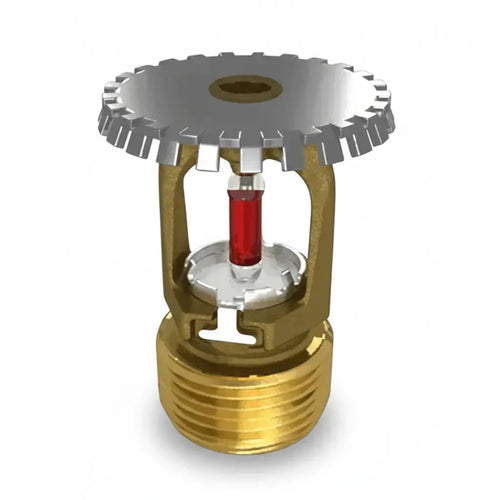


Fire Sprinkler Control Valve Types: The Complete 2026 Selection Guide
A closed water supply is the number one cause of fire sprinkler system failure. This startling statistic highlights why your choice of hardware is the most critical link in your life safety chain. If you feel overwhelmed by technical acronyms like OS&Y, PIV, or FCVA, you aren't alone. Many facility managers and contractors worry about failing a fire marshal inspection simply because they installed a part that doesn't meet the specific demands of their system architecture.
This guide eliminates that uncertainty. You'll master the mechanical differences between various fire sprinkler control valve types to ensure unwavering reliability and strict compliance with the 2026 edition of NFPA 25. Whether you're managing a residential wet system or a complex commercial deluge setup, making an informed selection is the only way to guarantee the water stays on when it's needed most.
We'll examine the functional roles of gate and butterfly valves, explain the latest mandates for annual internal inspections, and provide a clear path to sourcing professional grade components like the PTR Electric Deluge VXD. By the end of this guide, you'll have the confidence to select and maintain the right valves for any project.
Key Takeaways
- Understand why indicating valves are mandatory for safety and how they provide immediate visual confirmation of system status.
- Identify the specific fire sprinkler control valve types required for wet, dry, and deluge systems to ensure your building remains code-compliant.
- Learn the 2026 NFPA requirements for electronic supervision and why tamper switches have replaced physical locks in modern installations.
- Discover how to spot early signs of valve failure like seized stems or corrosion to prevent catastrophic system downtime.
- Master the new 2026 annual inspection mandates to navigate fire marshal audits with confidence and professional assurance.
What is a Fire Sprinkler Control Valve?
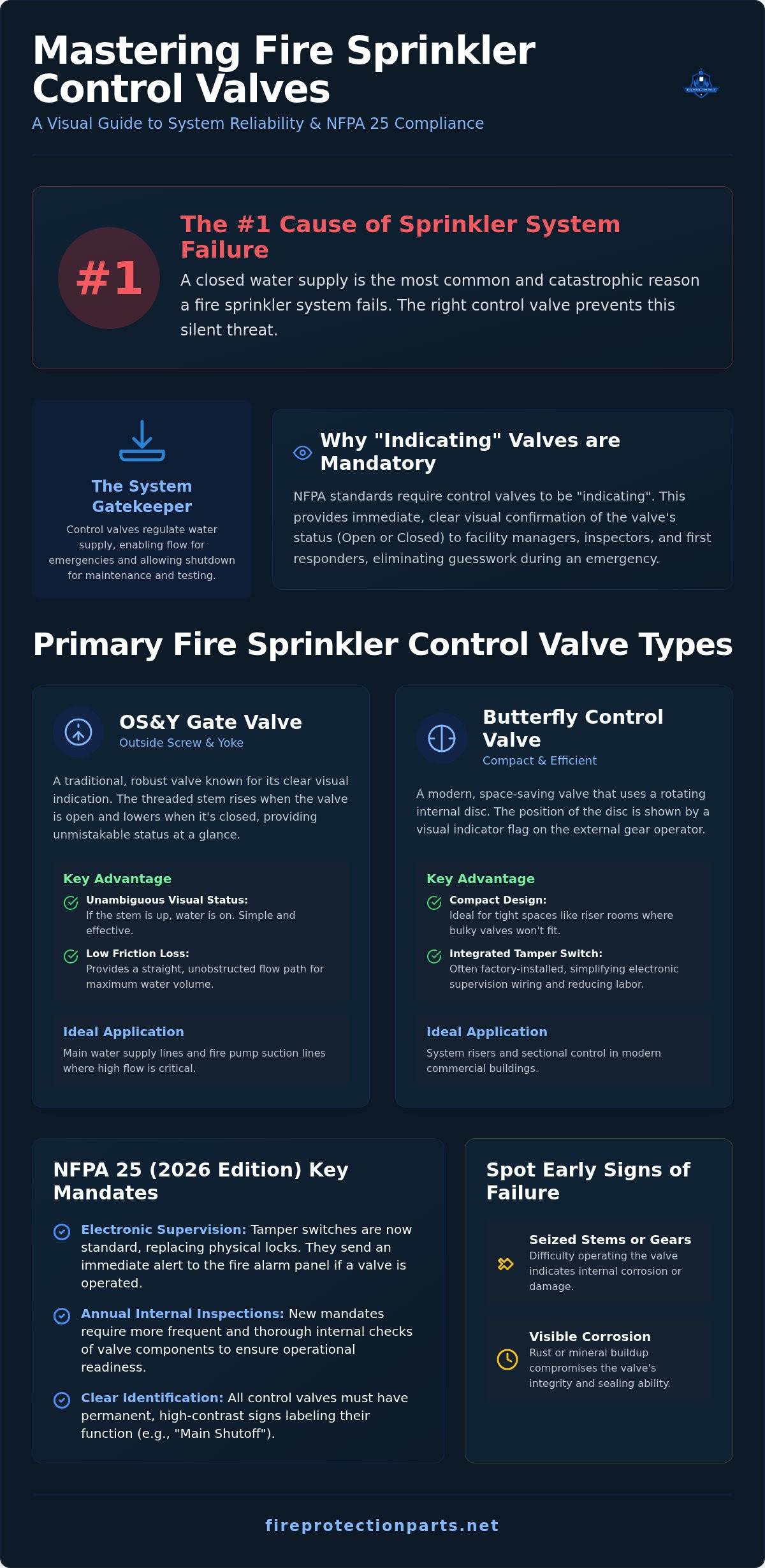
A fire sprinkler control valve serves as the primary regulator for the water supply entering your fire protection system. It's the gatekeeper. During normal standby conditions, these valves must remain in the open position to ensure that water is ready to flow the moment a sprinkler head activates. Choosing between the various fire sprinkler control valve types is a decision that impacts the long term safety of your facility. While they permit water flow during an emergency, they also allow for system maintenance, testing, and emergency shutdowns. Without a functional control valve, you can't isolate sections of the system for repairs or conduct the quarterly flow tests required by modern safety codes.
NFPA standards mandate the use of "indicating" valves. This design feature removes any guesswork by providing a clear, physical sign of whether the valve is open or closed. You don't want to rely on memory or hidden internal components when lives are at stake. Understanding the different fire sprinkler control valve types is the first step toward building a system that satisfies both safety requirements and legal mandates. These components are specifically engineered to provide unwavering reliability under pressure.
The Role of Control Valves in NFPA 13, 13R, and 13D
Commercial systems governed by NFPA 13 typically require robust, heavy duty hardware like Outside Screw and Yoke (OS&Y) or butterfly valves. These are built to handle high pressure and the rigors of frequent testing. In contrast, residential systems under NFPA 13D often utilize smaller, simpler ball valves because the scale and pressure requirements are lower. Regardless of the system size, the hardware must be listed for fire protection service and verified for its specific application. NFPA compliance for control valves requires that the valve's status be immediately visible to any inspector or first responder from a distance.
Why Proper Identification Matters for Life Safety
A closed valve is a silent failure. If a fire occurs and the water supply is shut off, the sprinklers are nothing more than ceiling decorations. This is why first responders prioritize checking valve indicators the moment they arrive on the scene. They need to verify the system's status without wasting precious seconds. If the valve is closed, the entire investment in pipes and heads is rendered useless. This simple mechanical check can be the difference between a minor incident and a total loss.
Standardized signage and color coding play a vital role in professional fire protection. Most fire protection valves are painted bright red and must be accompanied by permanent, weatherproof signs that identify their function. These signs usually state "Control Valve" or "Main Shutoff" in high contrast lettering. Proper labeling ensures that even someone unfamiliar with your specific facility can locate and operate the equipment during a crisis, eliminating doubt and providing peace of mind.
Primary Types of Fire Sprinkler Control Valves
Selecting hardware isn't just about finding a fit. It's about ensuring the system performs under pressure without hesitation. There are four primary mechanical designs used in modern fire protection, each suited for specific hydraulic demands. Every selection must be "indicating," meaning the valve’s position is visible to any inspector at a glance. For professional grade reliability, always prioritize UL-listed and FM-approved components. When you need to find sprinkler system components online, look for hardware that meets these rigorous testing standards to avoid inspection failures.
OS&Y (Outside Screw and Yoke) Gate Valves
The OS&Y valve remains a staple in the industry for a reason. Its mechanism is simple and highly effective. As you turn the wheel, the threaded stem rises or lowers. If the stem is visible above the wheel, the valve is open. This clear visual confirmation is its biggest advantage. Because it provides a straight through flow path, it offers minimal friction loss. You'll typically find these on main water supply lines and suction lines for fire pumps where high volume and low resistance are mandatory for performance.
Butterfly Control Valves
Butterfly valves offer a more compact alternative to the bulky OS&Y design. They utilize a rotating disk inside the pipe to control water flow. An external indicator flag on the gear operator shows the status. These are favorites in tight riser rooms where space is at a premium. Most modern butterfly valves come with factory-installed tamper switches. This integration simplifies the wiring process for your monitoring system and reduces labor costs. It's a smart choice for efficiency that doesn't compromise on safety or code adherence.
Ball and Globe Valves
While OS&Y and butterfly valves handle the heavy lifting, ball and globe valves serve specialized roles. Ball valves are the standard for trim, drains, and residential NFPA 13D systems. They're quick to operate and provide a reliable seal. In many residential applications, Viking CPVC fire sprinkler pipe systems are paired with specialized brass ball valves to maintain material compatibility and ease of installation. They're the go-to for smaller diameter lines where precision matters.
Globe valves are different. They're designed for high pressure throttling and are commonly used in test-and-drain assemblies. Their internal geometry allows for precise control of water flow during testing cycles. Understanding these various fire sprinkler control valve types ensures your system remains compliant and ready for action. If you're ready to upgrade your hardware, you can browse our selection of professional fire protection parts to find the perfect match for your project.
System-Specific Valves: Wet, Dry, and Deluge
The system valve is the heart of every riser assembly. While general fire sprinkler control valve types provide the means to shut off water, the system valve dictates how that water is managed and distributed during an emergency. Your choice depends heavily on the environment. Heated buildings typically use wet pipe systems where water is always present in the pipes. In contrast, unheated areas like parking garages or warehouses require dry pipe systems to prevent freezing and pipe bursts. It's about matching the hardware to the physical reality of the space.
Pressure ratings are another critical factor in your selection process. Most standard components are rated for 175 psi, but high-rise buildings or systems with high-pressure pumps often require hardware rated for 300 psi. Using a valve with an insufficient rating is a major compliance risk that can lead to catastrophic system failure under stress. For high-hazard zones that require immediate, high-volume coverage, the PTR Electric Deluge VXD offers a modern, electronically actuated solution that provides the rapid response needed to protect critical assets with professional assurance.
Alarm Check Valves for Wet Pipe Systems
In a wet pipe system, the alarm check valve serves two vital purposes. It prevents backflow from the sprinkler system into the municipal water supply and triggers local alarms, such as water motor gongs, when a head activates. These assemblies often include retard chambers to prevent false alarms caused by minor pressure surges in the city main. If you notice leaks or pressure switch failures, sourcing high-quality fire protection parts online is essential for keeping your system in peak condition. Regular maintenance of these check valves ensures the alarm sounds exactly when it should, providing peace of mind to facility managers.
Dry Pipe and Deluge Valves
Dry pipe valves use a specialized clapper mechanism to hold back water using pressurized air or nitrogen. When a sprinkler head opens, the air pressure drops, allowing the water to force the clapper open and flood the system. This delicate balance requires reliable air compressors for dry sprinkler systems to maintain constant pressure and prevent accidental trips. Deluge systems take this a step further. They use open sprinkler heads and a deluge valve that releases a massive volume of water simultaneously across a large area. These are the go-to choice for aircraft hangars and chemical storage facilities where fire can spread with terrifying speed and requires a decisive remedy.
Monitoring and Indicators: Post Indicators and Tamper Switches
Supervision is the only way to ensure your fire sprinkler control valve types remain in the correct position. NFPA 13 requires all valves governing water supply to be monitored to prevent accidental or malicious shutdowns. While chains and padlocks were once the standard, modern codes prioritize electronic supervision. This shift provides real-time data to your Fire Alarm Control Panel (FACP), ensuring that an unauthorized closure doesn't go unnoticed. It's a proactive approach that eliminates the risk of human error and ensures the system is ready to perform.
Post Indicator Valves (PIVs) and Wall Indicators
Post Indicator Valves (PIVs) provide a critical exterior control point for first responders. They allow the water supply to be shut off or verified from outside the building, which is vital if the interior becomes inaccessible during a fire. These posts feature a clear "Open" or "Shut" target mechanism visible behind a glass window. For facilities in high-risk areas, maintaining the stability of these underground connections is essential. You should consult our guide on seismic bracing for sprinkler systems to ensure your exterior valves and risers are protected against ground movement and structural shifts.
Supervisory Switches and Tamper Proofing
Supervisory switches, or tamper switches, act as the electronic eyes of your system. The installation method varies depending on the hardware. For OS&Y valves, the switch is typically mounted to the yoke, tracking the movement of the rising stem. Butterfly valves often feature internal switches built directly into the gear operator, which simplifies the wiring process. A critical requirement is the "two-turn" rule. The switch must trigger a supervisory signal at the FACP before the valve has moved more than two full revolutions or one-fifth of its total travel distance. Commercial building codes strictly mandate monitored valves to ensure that life safety systems are never left inoperative without an immediate alert.
Confirming that your monitoring hardware is compatible with your specific fire sprinkler control valve types is non-negotiable for passing marshal inspections. If you need to replace a failing switch or upgrade your riser monitoring, shop for code-compliant fire protection hardware to maintain your system's integrity and professional assurance.
Sourcing and Maintaining Fire Sprinkler Valves
Maintaining the long-term reliability of your chosen fire sprinkler control valve types requires a proactive approach to inspection. Signs of mechanical failure often begin with minor leaks at the packing nut or visible surface corrosion on the yoke. If you encounter a seized stem during a test, the hardware has already failed its primary mission. Under the 2026 edition of NFPA 25, annual internal inspections are now mandatory for all dry, preaction, and deluge valves. This shift from the previous five-year cycle ensures that internal components haven't succumbed to mineral buildup or seal degradation. It eliminates the doubt that a valve will function when lives are on the line.
When to Repair vs. Replace a Control Valve
Evaluating trim components and internal seals is the first step in deciding whether to rebuild or replace. Rebuilding an older OS&Y valve might seem cost-effective, but the specialized labor hours required often outweigh the price of a new, listed unit. Choosing between different fire sprinkler control valve types during a replacement is an opportunity to upgrade to more reliable, modern designs. When selecting a replacement, verify that the valve’s hydraulic characteristics match your current system flow requirements and fire sprinkler head temperature ratings. A mismatched valve can create turbulence or pressure drops that compromise the hydraulic calculations of the entire system.
Choosing Fire Protection Parts for Your Project
Sourcing from a dedicated fire protection retailer eliminates the risk of accidental non-compliance. Access to professional-grade brands like Viking and PTR ensures that every part is listed and labeled for its specific duty. For emergency repairs, fast shipping isn't just a convenience. It's a necessity to bring a compromised system back into service quickly. Use this final checklist before finalizing your order to ensure the hardware meets your project's specific demands:
- Pressure Rating: Confirm if the system requires 175 psi or 300 psi hardware to handle the pump's output.
- End Connections: Ensure the valve matches existing piping, whether it's flanged, grooved, or threaded.
- Supervision: Verify the valve includes or supports the correct tamper switch for your fire alarm control panel.
- Certifications: Double-check for UL listing and FM approval to satisfy the Authority Having Jurisdiction (AHJ).
Browse our full selection of fire protection control valves to find the exact, code-compliant hardware required for your next inspection or repair. Professional procurement is the only way to ensure unwavering reliability and peace of mind.
Ensuring Unwavering Reliability in Fire Protection
Mastering the technical differences between fire sprinkler control valve types is the only way to eliminate doubt in your life safety system. Whether you are managing the high-pressure demands of a commercial riser or the specific needs of a residential NFPA 13D setup, your hardware selection dictates long-term performance. Compliance in 2026 requires more than just installation. It demands rigorous annual internal inspections and precise electronic monitoring to ensure every valve remains in the open position when it matters most.
Don't let a seized stem or an outdated monitoring switch lead to a failed fire marshal inspection. We are an authorized distributor of Viking and PTR hardware. Our expert-vetted inventory ensures your system stays code-compliant, and our fast shipping supports immediate facility maintenance and repairs. Shop Code-Compliant Fire Sprinkler Control Valves today to secure your building with confidence and professional assurance. You have the knowledge to choose the right protection. We have the hardware to make it happen.
Frequently Asked Questions
What is the difference between an OS&Y valve and a butterfly valve?
OS&Y valves show their status via a rising stem while butterfly valves use a rotating disk and indicator flag. OS&Y designs provide a clear visual from a distance and offer minimal friction loss in high-flow lines. Butterfly valves are the preferred choice for cramped riser rooms due to their compact footprint. Both serve as essential fire sprinkler control valve types, but your choice depends on the available space and hydraulic requirements of the building.
Why must fire sprinkler control valves be supervised or monitored?
Supervision ensures that the water supply remains open and ready for an emergency. A closed valve is the primary cause of system failure during a fire. Monitoring through electronic tamper switches provides an immediate alert to the fire alarm control panel if the valve is moved. This level of oversight eliminates the risk of human error or unauthorized tampering, providing the peace of mind that your protection remains active.
Can I use a standard gate valve for fire protection?
You cannot use a standard plumbing gate valve for fire protection because it lacks an indicating mechanism. NFPA codes require valves to show their open or closed status at a glance. Fire protection hardware must also be UL-listed and FM-approved to handle the specific pressures of a life safety system. Installing non-listed hardware will lead to failed inspections and potential liability if the system fails to perform during a fire event.
What is a Post Indicator Valve (PIV) used for?
A Post Indicator Valve (PIV) is used to control the underground water supply from a safe location outside the building. It allows first responders to verify the system's status without entering a hazardous area. The upright post features a target window that clearly displays "Open" or "Shut." This exterior control is vital for large commercial complexes where the main riser might be inaccessible during a significant fire or structural collapse.
How often do fire sprinkler control valves need to be inspected?
Inspection intervals vary by valve type, but the 2026 edition of NFPA 25 now requires annual internal inspections for all dry and deluge valves. Standard control valves typically require monthly visual inspections if they are locked or weekly if they are not. Supervisory switches and waterflow alarm devices now require testing semiannually. Adhering to these updated schedules is the only way to ensure your hardware remains code-compliant and fully operational.
What is a tamper switch and is it required by code?
A tamper switch is a supervisory device that monitors the position of a valve handle or stem. It is strictly required by code for most commercial fire sprinkler control valve types to prevent the water supply from being left closed. The switch must trigger a signal before the valve moves more than two full turns. This electronic supervision has largely replaced physical locks and chains in modern, high-security fire protection designs.
What happens if a fire sprinkler control valve is accidentally closed?
An accidentally closed valve renders the entire sprinkler system inoperable. If a fire occurs, water cannot reach the sprinkler heads, leading to a total loss of the property. This is why the latest NFPA standards mandate frequent testing of supervisory signals. Modern systems use these alerts to ensure that any closure, whether accidental or intentional, is addressed by facility managers before a life safety emergency actually occurs.
Which control valves are best for residential NFPA 13D systems?
Listed brass ball valves are the most effective choice for residential NFPA 13D systems. They are smaller, easier to operate, and perfectly suited for the lower pressure requirements of a home. These valves often integrate seamlessly with Viking Plastics CPVC Pipe for a complete, corrosion-resistant solution. Using professional-grade residential hardware ensures your home system meets local building codes while providing the same reliability found in large-scale commercial installations.

