



Residential Fire Suppression System Parts: The 2026 NFPA 13D Guide
Did you know that in homes equipped with fire sprinklers, the civilian death rate is 89% lower than in those without them? This data underscores why your residential system is a critical life-safety tool rather than a mere building requirement. Ensuring that system functions correctly starts with installing an NFPA 13D compliant fire pump to maintain necessary water pressure in domestic environments where municipal supply might fall short.
You likely understand that residential standards are unique, but the confusion between NFPA 13D and commercial NFPA 13 requirements often leads to costly mistakes. It's stressful to worry about whether your hardware meets the latest 2026 codes or if a replacement sprinkler head is the right fit for your specific ceiling type. We're here to provide the professional assurance you need to protect your home with confidence and eliminate any doubt about your system's readiness.
This guide promises to help you master every critical component of home fire safety, from specialized valves to corrosion-resistant piping. We will preview the essential hardware needed for 2026 compliance, explain how to identify the correct replacement parts, and help you source reliable, branded hardware that eliminates the risk of cheap substitutes. You'll gain a clear path to a system that is both code-compliant and built for long-term performance.
Key Takeaways
- Understand the core life-safety objectives of NFPA 13D and how they differ from commercial fire protection requirements.
- Learn why CPVC is a preferred residential piping material for its longevity and reliable performance.
- Determine if your property requires an NFPA 13D compliant fire pump to solve water pressure issues from wells or low-flow municipal lines.
- Identify the correct residential-specific sprinkler heads that prioritize fast heat activation and aesthetic integration.
- Establish a proactive maintenance routine by learning how to source code-compliant replacement parts and maintain a spare head cabinet.
Understanding Residential Fire Suppression: NFPA 13D Standards
NFPA 13D isn't just a scaled-down version of commercial fire codes. It's a specialized standard designed specifically for one- and two-family dwellings and manufactured homes. The primary mission is life safety. Unlike commercial systems that focus on property preservation, residential systems aim to provide occupants enough time to escape safely. Modern Fire sprinkler systems are engineered to be the first line of defense in a domestic emergency, reacting long before the fire department can arrive.
The hardware used in these systems reflects this specialized focus. Residential parts prioritize fast-response technology. While a commercial head might be designed to control a large-scale warehouse fire, residential heads are engineered for high-heat sensitivity. They activate quickly to suppress a fire in its room of origin, preventing the deadly phenomenon known as flashover. If your home relies on a well or has low municipal pressure, an NFPA 13D compliant fire pump is the essential component that ensures the system has the force required to operate effectively.
The Core Components of a Residential System
Life Safety vs. Property Protection
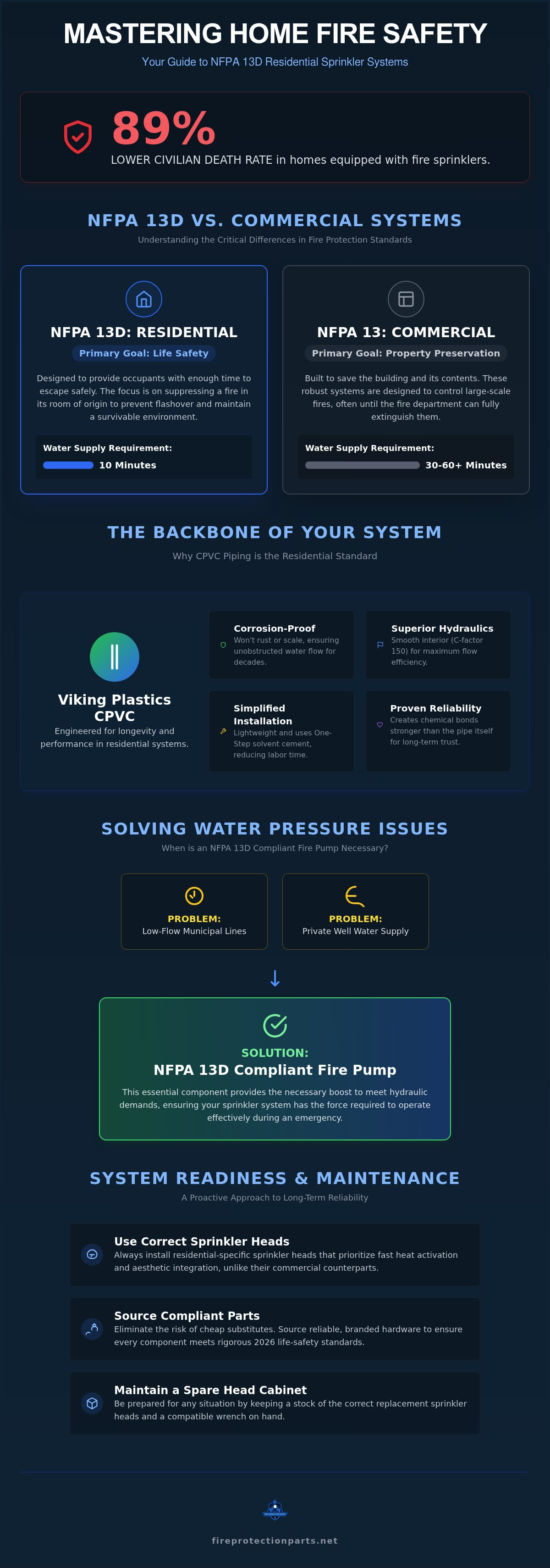
Commercial systems (NFPA 13) are built to save the building itself, often requiring 30 to 60 minutes of water supply. In contrast, NFPA 13D focuses on the "10-minute rule." This 10-minute water supply is calculated to control a fire and allow for a safe evacuation. Residential sprinkler heads are the heroes of this strategy. They're designed to activate at lower temperatures than commercial versions to keep the environment survivable for as long as possible. NFPA 13D compliance in 2026 represents a rigorous adherence to life-safety standards that prioritize rapid heat sensitivity and verified hydraulic performance in a domestic setting.
CPVC Piping and Fittings: The Backbone of Home Suppression
Viking Plastics CPVC is the industry standard for residential fire protection for a reason. Unlike black steel or copper, CPVC won't corrode or scale over time, which is vital for residential systems that might sit dormant for years. Metal pipes often suffer from internal buildup that restricts water flow and compromises safety. CPVC maintains its smoothness, ensuring that if your NFPA 13D compliant fire pump activates, the water reaches the heads without friction loss or obstruction.
Choosing CPVC over metal also simplifies the installation process in tight residential spaces. It's lightweight, easy to cut, and doesn't require the heavy threading equipment or soldering torches needed for steel or copper. This makes it an ideal choice for both new construction and retrofitting existing homes where space is at a premium. Using the right materials is the first step in eliminating doubt about your system's long-term reliability.
Viking Plastics CPVC: Performance Specs
Viking Plastics CPVC is engineered for durability. It features a superior C-factor of 150, which translates to better hydraulic efficiency. This means you can often use smaller pipe sizes while still meeting the necessary flow requirements for a home. It's also rated for the high temperatures found in residential attics and the damp conditions of basements. You can find more technical details in our Viking CPVC fire sprinkler pipe guide.
The installation is streamlined through the One-Step solvent cement process. This eliminates the need for separate primers, reducing labor time and the risk of installation errors. It creates a chemical bond that is often stronger than the pipe itself, providing a sense of unwavering reliability for the life of the home.
Essential Fittings and Accessories
Never substitute standard plumbing PVC for fire protection fittings. Specialized CPVC fire fittings are designed to withstand specific pressure surges and heat. Identifying the correct tees, elbows, and adapters is critical for maintaining code compliance and system integrity. For contractors and homeowners, sourcing sprinkler system components online ensures you get the exact, branded hardware required for repairs without compromising on quality.
Hangers and bracing also play a key role. They keep the system stable during the high-pressure surge of a pump activation. Without proper support, the force from an NFPA 13D compliant fire pump could damage joints or cause leaks. It's about building a system that doesn't just pass inspection but performs perfectly during a crisis. If you need to upgrade your hardware, you can browse our selection of Viking CPVC components to ensure your home remains protected.
Residential Fire Sprinkler Heads: Precision vs. Volume
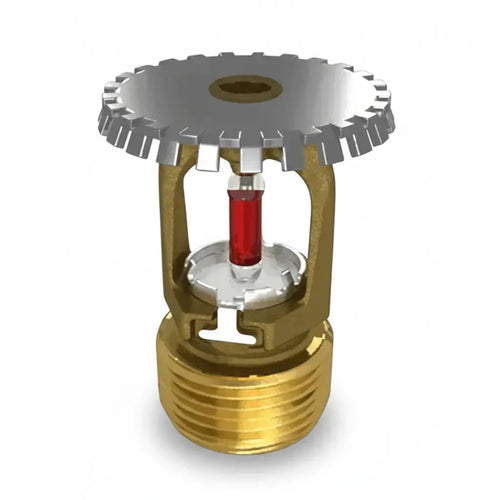
Residential sprinkler heads are precision-engineered for speed. While commercial heads often focus on high-volume water discharge to protect property, residential versions prioritize life safety through fast activation. These heads utilize a highly sensitive thermal element designed to react at the earliest stages of a fire. This rapid response is critical to preventing flashover, the moment when a room's contents simultaneously ignite. To ensure these heads receive the specific water volume they require, your system must be supported by an NFPA 13D compliant fire pump if your local water supply lacks sufficient pressure.
Aesthetics play a significant role in home safety adoption. You don't have to sacrifice your home's interior design for protection. Concealed heads sit behind a flat cover plate, blending seamlessly with the ceiling until heat triggers the plate to drop away. Pendent heads hang from the ceiling, while sidewall heads are mounted on walls to accommodate specific room layouts. Escutcheons and trim aren't just decorative; they're functional components that ensure the head is positioned at the correct depth to catch rising heat effectively. Most homes utilize heads rated at 155°F or 175°F to balance sensitivity with the prevention of accidental discharge from ambient heat.
Identifying Replacement Sprinkler Heads
Replacing a damaged or aged head requires an exact match to maintain system integrity. Every head has a Sprinkler Identification Number (SIN) stamped on the deflector. This code identifies the manufacturer and the specific performance characteristics of that head. You must also match the K-factor, which determines the water flow rate at a given pressure. Installing a head with the wrong K-factor can lead to inadequate coverage in a crisis. For a detailed breakdown of which head fits your environment, consult our fire sprinkler head temperature ratings guide. Using an NFPA 13D compliant fire pump ensures that even these precision-engineered replacement heads perform to their laboratory-tested specifications.
Specialized Heads for Harsh Environments
Standard heads aren't suitable for every area of a home. In unheated spaces like garages or attics, dry pendent sprinklers are essential. These units keep water behind a seal in a heated area of the piping until activation, preventing the pipes from bursting in freezing temperatures. If you live in a coastal area, high-humidity environments can lead to premature corrosion. Choosing heads with specialized corrosion-resistant coatings protects your investment and ensures reliability. In high-traffic zones like home gyms or garages, adding a head guard provides a physical barrier against accidental impact without obstructing the spray pattern. It's about choosing the right tool for the specific risk; similarly, for specialized outdoor water needs, Sonora Sprinkler Inc. offers custom residential irrigation design tailored for Arizona's desert environment.
NFPA 13D Compliant Fire Pump: Solving Water Pressure Issues
Municipal water pressure is rarely guaranteed. If your home draws from a private well or resides in an area with aging infrastructure, your static pressure might not meet the hydraulic requirements of a modern sprinkler system. An NFPA 13D compliant fire pump becomes mandatory in these scenarios to ensure your life-safety system performs as designed. Unlike the massive vertical turbines found in high-rise commercial buildings, residential pumps are compact, efficient, and designed to integrate directly with your home's existing electrical and plumbing footprint.
Integration with the residential fire riser is a critical step. The pump must be connected in a way that allows it to activate the moment a drop in pressure is detected. This requires a seamless link between the water source, the pump, and the riser assembly. Electrical reliability is equally paramount. A dedicated circuit is essential to ensure that even if other appliances trip a breaker, your fire suppression system remains powered and ready to act. You're building a failsafe, not just a plumbing fixture.
Sizing a Pump for NFPA 13D Compliance
Sizing isn't about guesswork; it's about precise hydraulic calculation. The pump must be capable of supplying the two most demanding sprinklers in your home simultaneously. This ensures that even if a fire spreads beyond the initial point of origin, the system maintains the necessary flow to control the heat. A pressure tank is often included in these assemblies to prevent the pump from short-cycling. Short-cycling occurs when the pump turns on and off too frequently due to minor pressure fluctuations, which can lead to premature motor failure. Using a dedicated fire pump is always superior to a standard domestic booster because fire-rated pumps are built with more robust materials and higher safety margins.
Pressure Maintenance and Control
A jockey pump often works behind the scenes to maintain system pressure. This smaller pump handles minor leaks or temperature-related pressure changes, which prevents the main fire pump from starting unnecessarily. The assembly also includes critical control valves and backflow preventers to ensure that water only flows in the correct direction and doesn't contaminate the domestic supply. Residential pump controllers in 2026 must be specifically listed for fire service and feature a manual start option to ensure operation during a crisis. If you need to upgrade your system's performance, you can shop for Residential Fire Pump Systems to find a code-compliant solution that fits your home.
Sourcing and Maintaining Code-Compliant Replacement Parts
Maintaining a residential system requires more than just a successful initial installation. To ensure immediate readiness after a discharge or accidental damage, every home should have a spare head cabinet mounted near the riser. This cabinet isn't just for storage; it's a code requirement to keep the system operational without extended downtime. You should also regularly inspect the entire riser assembly for visible wear or corrosion. Identifying failing gauges or slow-leaking valves early prevents a minor issue from becoming a system-wide failure during an emergency. If your property utilizes a dry pipe setup, monitoring air compressors for dry sprinkler systems is vital for maintaining the necessary air pressure and preventing accidental water trips.
In earthquake-prone regions, structural integrity is just as important as the water supply itself. Utilizing seismic bracing for sprinkler systems ensures your piping network remains intact during ground movement. Without ASC seismic bracing, the high-pressure surge from an NFPA 13D compliant fire pump could cause pipes to sway and snap at the joints, rendering the system useless when it's needed most. Sourcing these specialized components from a reputable Fire Protection Parts online store guarantees you receive brand-name hardware that meets 2026 standards. We focus on eliminating the doubt that comes with cheap substitutes, providing only verified hardware that contractors and homeowners can trust.
The 5-Step Sourcing Checklist for Contractors
Contractors must be methodical when procurement is on the line to avoid installation delays. Follow this checklist to ensure every replacement part matches the original design specifications exactly:
- Verify the SIN (Sprinkler Identification Number) on existing heads to match performance specs and discharge patterns.
- Check pipe material compatibility; never mix Viking Plastics CPVC with incompatible chemicals or metal types without verified fittings.
- Confirm the temperature rating of all thermal elements, typically 155°F or 175°F for most residential rooms.
- Ensure all valves, gauges, and fittings carry UL/FM approvals to maintain local code compliance.
- Verify that your NFPA 13D compliant fire pump is sized correctly for any system expansions or home renovations.
Maintenance Hardware You Should Keep on Hand
Don't wait for a hardware failure to order essential parts. Keeping a small inventory of maintenance hardware minimizes system downtime and provides immediate peace of mind for the homeowner.
- Replacement pressure gauges for both the water supply and system side of the fire riser.
- Certified, pre-mixed anti-freeze solutions for wet pipe systems, ensuring they meet the latest 2026 safety requirements for residential use.
- ASC Seismic Bracing components to replace or reinforce piping in high-risk zones.
- Spare escutcheons and cover plates to replace those damaged during renovations or routine cleaning.
- A wrench specifically designed for your SIN-specific sprinkler heads to prevent damage during replacement.
Take Command of Your Residential Fire Safety
Ensuring your home remains a safe haven requires more than just meeting minimum standards. It's about choosing precision-engineered components that perform without compromise when seconds matter most. From the hydraulic efficiency of Viking Plastics CPVC to the rapid activation of residential-specific sprinkler heads, every part plays a role in the 10-minute life-safety window. If your domestic water supply is inconsistent, integrating an NFPA 13D compliant fire pump is the final step in eliminating doubt about your system's readiness.
You don't have to navigate these complex 2026 requirements alone. As an authorized distributor of Viking Plastics CPVC, we provide the expert support you need to ensure full NFPA 13D compliance. We prioritize your peace of mind with fast shipping on all in-stock replacement parts, helping you minimize system downtime and maintain a constant state of protection. Shop Code-Compliant Residential Fire Suppression Parts today to secure the reliable hardware your home deserves. Professional fire protection is a partnership in excellence and quality.
Frequently Asked Questions
What is the difference between NFPA 13 and NFPA 13D parts?
NFPA 13D parts are specifically designed for one- and two-family dwellings with a focus on life safety and a 10-minute water supply. Commercial NFPA 13 parts are built for property protection and longer discharge durations. Residential hardware is often more compact and aesthetically pleasing, while commercial components are larger and more rugged. Using residential-specific parts ensures the system reacts quickly enough to allow for safe evacuation during a domestic fire.
Can I use standard CPVC plumbing pipe for a fire suppression system?
No, you must use CPVC specifically listed for fire protection, such as Viking Plastics CPVC. Standard plumbing CPVC isn't rated for the pressure surges or heat resistance required in a fire emergency. Fire-rated CPVC features a distinct orange color and undergoes rigorous testing to ensure it won't fail when the system activates. Using non-rated plumbing materials violates building codes and compromises the safety of everyone in the home during a crisis.
How do I know if I need a fire pump for my home sprinkler system?
You need an NFPA 13D compliant fire pump if your static water pressure doesn't meet the hydraulic demand of your two most remote sprinkler heads. This is common in homes with private wells or those located at the end of a municipal line with low flow. A hydraulic calculation performed during the design phase will confirm if a pump is necessary to boost pressure and ensure the system operates as intended.
Are residential fire sprinkler heads different from commercial ones?
Yes, residential heads are designed for fast response to prevent flashover in smaller domestic rooms. They prioritize life safety by activating at lower temperatures and with higher heat sensitivity than many commercial heads. While commercial heads focus on high-volume water discharge to save a building's structure, residential heads focus on keeping the environment survivable for occupants. They also come in more aesthetic designs, like concealed or low-profile pendent styles for home interiors.
How often should residential fire suppression system parts be replaced?
Most residential components don't have a fixed expiration date but require regular inspection to ensure reliability. Sprinkler heads should be replaced if they show signs of corrosion, paint loading, or physical damage. Gauges on the fire riser generally require replacement every five years to ensure accuracy. If your system relies on an NFPA 13D compliant fire pump, the manufacturer's maintenance schedule should be followed strictly to prevent motor failure or controller issues.
What are the requirements for seismic bracing in residential systems?
Seismic bracing is required in specific high-risk earthquake zones as defined by local building codes and NFPA standards. Components like ASC Seismic Bracing keep the piping network secure during ground movement. This prevents the pipes from swaying and breaking at the joints. Even if you aren't in a high-risk zone, adding bracing provides extra stability against the high-pressure surge that occurs when a fire pump activates or a valve suddenly closes.
Can I buy replacement fire sprinkler heads online without a contractor?
You can purchase replacement heads online, but you must ensure they match the SIN of your existing hardware exactly. Buying from a reputable e-commerce specialist ensures you receive genuine, branded hardware rather than cheap substitutes. While homeowners can source the parts, local codes often require a licensed professional to perform the actual replacement. This ensures the system remains leak-free and fully operational after the repair is completed to maintain safety.
What temperature rating should my home sprinkler heads have?
Most residential rooms use heads rated at 155°F or 175°F for optimal protection. These ratings provide a balance between high sensitivity for fire detection and protection against accidental activation from ambient heat. In areas with higher baseline temperatures, such as unventilated attics or near kitchen appliances, a higher temperature rating may be necessary. Always check the original system design documents to confirm the correct rating for each specific area of your home.

