

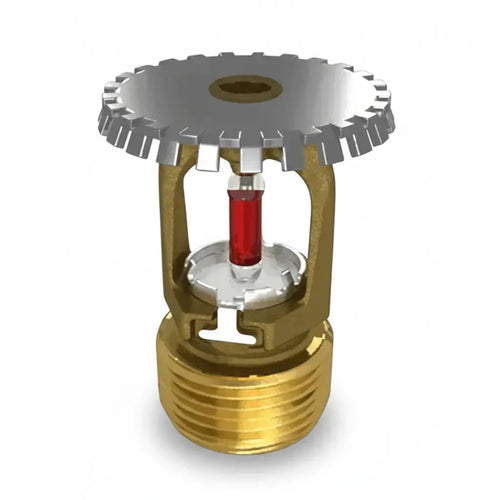


Air Compressors for Dry Sprinkler Systems: The Complete 2026 Guide
A single faulty component can turn a fire suppression system into a liability overnight. If your air supply fails, you aren't just looking at a code violation. You're risking a catastrophic freeze-up or an accidental system trip that causes massive water damage. Selecting the right air compressors for dry sprinkler systems is the difference between a reliable safety net and a maintenance nightmare.
You understand that maintaining a dry pipe system is a delicate balancing act. It's frustrating to manage moisture-related corrosion or worry that your setup won't meet the strict 30-minute NFPA 13 fill-time requirements during an inspection. This guide will help you master the technical standards and compliance requirements to ensure your fire suppression remains operational and freeze-proof. We're providing the professional assurance you need to eliminate doubt and protect your assets.
We will examine the 2026 NFPA 25 updates, compare riser-mount versus tank-mounted units, and outline the specifications needed to eliminate moisture-related downtime. You'll learn how to navigate the latest standards for corrosion mitigation and smart monitoring. This overview provides a clear roadmap for a code-compliant system that reduces long-term costs and ensures your facility stays protected against the elements.
Key Takeaways
- Understand how air pressure maintains the dry pipe valve position and why meeting NFPA 13 fill-time requirements is essential for system readiness.
- Compare the compact footprint of riser-mount units against the high-capacity performance of tank-mounted air compressors for dry sprinkler systems.
- Identify the critical role of air dryers in preventing internal pipe corrosion and ensuring your suppression network remains free of ice plugs.
- Learn how to calculate total system volume to select a compressor with the correct voltage and output for your specific environment.
- Discover why oil-less piston technology and UL-listed components are the standard for reducing long-term maintenance costs and accidental trips.
The Role of Air Compressors in Dry Pipe and Preaction Systems
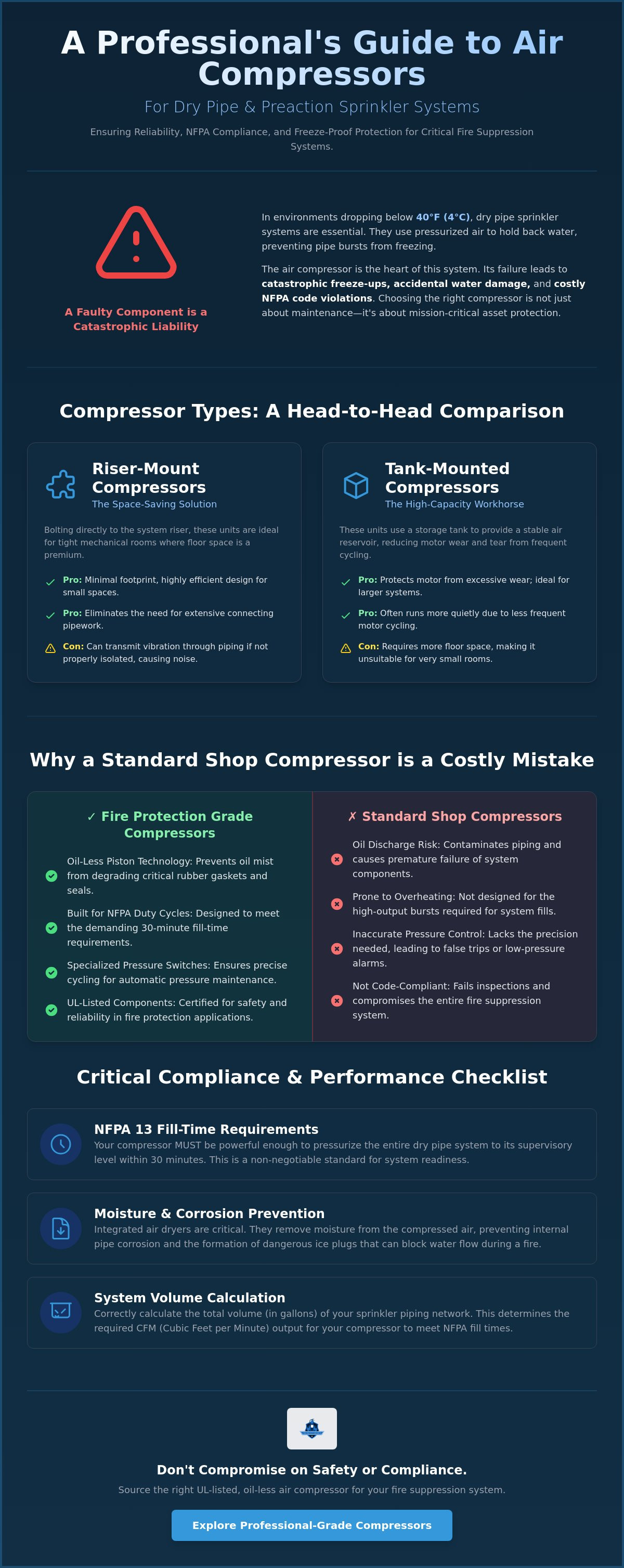
Protection in freezing environments requires more than just water. Dry pipe sprinkler systems are specialized networks where piping is filled with pressurized air or nitrogen rather than water. This design is crucial for unheated warehouses, parking garages, or attics where temperatures frequently drop below 40°F (4°C). By keeping water out of the piping until it is needed, these systems prevent the catastrophic pipe bursts associated with wet systems in cold climates.
At the heart of this setup is the dry pipe valve. It acts as a mechanical gatekeeper. Air pressure on the system side pushes against a large surface area on the valve clapper to hold back the higher water pressure on the supply side. To maintain this delicate balance, air compressors for dry sprinkler systems serve as the primary source of supervisory pressure. They compensate for small, inevitable leaks and ensure the system doesn't trigger prematurely.
The pressure differential represents the specific ratio of air pressure to water pressure needed to keep the valve clapper securely seated.
Dry Pipe vs. Preaction Systems: Air Supply Needs
Standard dry systems release water as soon as a sprinkler head opens and air pressure drops. In contrast, double-interlock preaction systems require two independent events; usually a smoke detector activation and a sprinkler head opening; before water enters the pipes. Supervisory air is mandatory in both configurations to monitor pipe integrity. If a pipe breaks or a seal fails, the air pressure drops and triggers a low-pressure alarm. Without this constant monitoring, you face the risk of accidental system trips that lead to massive water damage in sensitive environments like data centers or libraries.
Why a Standard Shop Compressor is Not Sufficient
It is tempting to use a standard shop compressor from a local hardware store. This is a mistake that compromises safety. Generic units aren't designed for automatic pressure maintenance. They lack the specialized pressure switches required to cycle on and off precisely within fire protection parameters. Duty cycles are another critical factor. Fire protection compressors must handle the "fill-time" requirements of NFPA 13, which demand high output for short bursts. A standard unit will likely overheat or fail under these stresses. Most importantly, fire suppression requires oil-less operation. Standard compressors often discharge oil mist into the piping. Over time, this oil degrades the rubber gaskets and seals within your sprinklers. Specialized air compressors for dry sprinkler systems eliminate this risk entirely.
Comparing Compressor Types: Riser-Mount vs. Tank-Mounted Units
Selecting the right air compressors for dry sprinkler systems depends on your riser room's layout and the total volume of your pipe network. Riser-mount units offer a minimal footprint. They are the go-to choice for tight spaces where every square inch matters. Tank-mounted systems require more floor space but provide a stable air reservoir that protects the motor from excessive wear. For most fire protection needs, oil-less piston compressors are the gold standard. They deliver clean air without the risk of oil contamination in your pipes. If you're managing a massive industrial complex with thousands of gallons of capacity, a rotary screw compressor might be necessary to meet the demanding NFPA fill times. These units are designed for continuous duty and high-volume output.
Noise and vibration are critical factors in commercial settings like hospitals or luxury apartment buildings. Riser-mounted units can transmit vibration through the piping network if you don't isolate them correctly. This results in an audible hum throughout the building. Tank-mounted systems often run more quietly because the motor cycles less frequently. Using high-quality air compressors for dry sprinkler systems ensures these mechanical stresses are minimized through superior engineering and vibration-dampening mounts. If you need a reliable unit for your next project, explore the professional-grade Air Compressors for Sprinkler Systems.
Riser-Mount Compressors: The Space-Saving Solution
These units bolt directly to the system riser. It's a highly efficient design that eliminates the need for floor stands or complex mounting brackets. Most models come with pre-wired pressure switches, making them a "plug-and-play" solution for contractors who value speed and reliability. They are ideal for small to medium-sized dry systems where floor space is at a premium. Because they lack a tank, they rely on the pipe volume itself to act as the reservoir. This makes them best suited for systems with tight seals and minimal leakage.
Tank-Mounted Systems: High Capacity and Stability
These systems include a dedicated air tank. This reservoir is a game-changer for corrosion protection in dry pipe systems because it reduces how often the motor has to start. Frequent cycling wears out motors and increases heat, which can lead to premature failure. A large tank provides a buffer for immediate pressure needs and compensates for systems with minor, hard-to-find air leaks without triggering the compressor every few minutes. It provides the steady, reliable pressure required for large-scale suppression networks in warehouses or manufacturing plants.
NFPA 13 Compliance: Calculating System Capacity and Fill Times
NFPA 13 isn't just a suggestion; it's the standard that keeps lives and property safe. One of the most critical aspects of this standard is the time required to pressurize the network. Fire marshals strictly enforce these metrics during annual or semi-annual inspections. If your equipment fails to meet the mark, your system isn't compliant, and your facility could be deemed unsafe for occupancy. Reliability begins with accurate calculations and ends with the right hardware.
The "30-minute rule" dictates that the air supply must be capable of restoring the required supervisory pressure to the entire system within half an hour of a complete trip or maintenance event.
To meet this requirement, you must first calculate the total system volume. This involves totaling the capacity of all pipes in the network. Use the standard formula: multiply the length of each pipe segment by the gallons-per-foot capacity for that specific pipe diameter. Once you have the total volume in gallons, you can determine the required output for your air compressors for dry sprinkler systems. This calculation ensures the motor isn't undersized for the task at hand.
Professional installers always include a 10% safety margin in these calculations. This buffer accounts for the minor, inevitable air leaks that occur at fittings and joints over time. Without this margin, a compressor that's perfectly sized for a brand-new, airtight system might fail a compliance test just a few years later as the building settles and seals age. It's a small adjustment that provides massive peace of mind.
The 30-Minute Fill Rule Explained
Rapid pressurization is a necessity for system readiness. After a dry pipe valve trips, the system is vulnerable until it's reset and the air pressure is restored. The relationship between your compressor's Cubic Feet per Minute (CFM) rating and the system volume is the deciding factor. If the CFM is too low, the fill time will exceed 30 minutes, resulting in a failed inspection. This delay leaves the facility unprotected and can lead to costly fines or a required fire watch.
Using Air Maintenance Devices (AMD)
An Air Maintenance Device (AMD) acts as a precision pressure regulator. When you use air compressors for dry sprinkler systems that produce higher pressure than the supervisory level required, the AMD ensures the system receives exactly what it needs. It prevents the system from over-pressurizing, which could delay the trip time of the dry pipe valve during a fire. Maintaining these components is vital for long-term reliability. You can find high-quality components through fire protection parts online to ensure your AMD remains in peak working condition.
Moisture Management: Why Air Dryers are Critical for Dry Systems
Water vapor is the primary enemy of dry pipe system longevity. It's a silent threat that begins the moment your system is pressurized. When air compressors for dry sprinkler systems pull in ambient air, they also pull in humidity. This moisture doesn't just vanish; it condenses inside your pipes as the air cools. This creates a breeding ground for problems that can lead to expensive repairs or, in the worst cases, a total system failure during a fire event.
This condensation leads directly to Microbiologically Influenced Corrosion (MIC). It's a process where moisture, oxygen, and specific bacteria eat away at the metal pipe walls from the inside out. You won't see the damage until a pinhole leak appears or the pipe becomes so thin it bursts under pressure. Beyond corrosion, moisture is a death sentence for system performance in refrigerated warehouses. If water vapor enters a sub-zero environment, it freezes instantly. These ice plugs can completely block the flow of water, rendering your sprinklers useless when they're needed most.
Selecting the right drying technology is a safety-critical decision. Use this checklist to determine which dryer fits your facility's needs:
- Refrigerated Dryers: Use these if your piping remains in conditioned spaces where temperatures stay above 40°F.
- Desiccant Dryers: These are mandatory for any piping exposed to sub-zero temperatures or unheated exterior runs.
- CFM Rating: Verify the dryer's capacity matches or exceeds your compressor's output to prevent a bottleneck.
- Filtration: Ensure the unit includes a pre-filter to keep oil and particulates out of the drying medium.
Desiccant Dryers for Sub-Zero Environments
In freezers and cold storage, a standard dryer isn't enough. Desiccant dryers use chemical beads, such as activated alumina, to lower the pressure dew point to -40°F or lower. This ensures the air inside the pipes is bone-dry, preventing any frost or ice from forming. These units require regular maintenance. You must monitor the desiccant and replace it once it becomes saturated to maintain NFPA 13 compliance. Without a functional desiccant dryer, a dry system in a freezer is a liability, not a safeguard.
Automatic Drains and Condensate Management
Automatic tank drains are essential for removing the liquid water that naturally collects in the compressor tank. Manual draining is a common point of system failure. It's often forgotten during busy shifts, leading to water being pushed directly into the sprinkler lines. Automatic drains eliminate this human error and protect the integrity of your pipes. Check our residential fire sprinkler parts checklist to ensure every component of your suppression network is ready for the coming year. Maintain a dry, reliable system by sourcing professional-grade Air Compressors and Dryers today.
Sourcing and Selecting the Right Air Compressor
Precision procurement is the final step in securing your facility's safety. Choosing air compressors for dry sprinkler systems requires more than a cursory glance at a spec sheet. You must align the hardware with your system's total volume, the electrical infrastructure of your building, and the specific environmental conditions of the riser room. Cutting corners on these details doesn't just lead to maintenance headaches. It leads to system failures that compromise your entire fire suppression strategy. Reliability is built on the foundation of the right equipment.
Start by verifying your local power requirements. It's a common and costly mistake to order a 115V unit for a site wired for 230V. This error causes immediate delays and can damage the motor if an improper connection is attempted. Beyond voltage, ensure your selection is a code-compliant, UL-listed component. These units have undergone rigorous testing to prove they can withstand the high-stress demands of fire protection service. Sourcing from a specialized fire protection retailer ensures that every piece of inventory is vetted for these standards, providing a level of assurance that general industrial suppliers cannot match.
Professional Procurement for Contractors
Facility managers and contractors benefit from a streamlined procurement process. When managing large-scale properties, bulk sourcing from a single, trusted partner reduces administrative friction and ensures consistency across multiple systems. This approach also allows you to coordinate specialized hardware needs, such as residential fire pump systems, alongside your dry pipe components. Expert-vetted inventory eliminates the guesswork. You can move forward with the confidence that your air compressors for dry sprinkler systems will pass the most stringent fire marshal inspections.
Final Checklist Before Purchase
Before you finalize your order, run through this technical checklist to confirm the unit meets your project's specific needs. Missing a single detail can result in a non-compliant installation. Verify these points:
- Voltage: Confirm 115V or 230V based on site-specific electrical plans.
- CFM Rating: Ensure the output meets the NFPA 13 30-minute fill rule for your total system volume.
- Mounting: Decide between space-saving riser-mount or high-capacity tank-mounted configurations.
- Safety Components: Verify the unit includes a pre-set pressure switch and a code-required relief valve.
- Environment: Match the compressor type (oil-less piston) to the air quality needs of your piping.
Don't leave your fire suppression to chance. Browse our selection of code-compliant air compressors to find the exact model required for your next installation or system upgrade. Investing in professional-grade hardware today prevents the catastrophic costs of system failure tomorrow.
Securing Your System Readiness for 2026
Maintaining a code-compliant fire suppression network requires constant vigilance and the right hardware. You've learned how to calculate system capacity to meet the strict 30-minute fill rule and why specialized moisture management is the only way to stop internal corrosion. Selecting high-quality air compressors for dry sprinkler systems isn't just about meeting a regulatory requirement; it's about ensuring your facility remains protected against freezing temperatures and accidental trips. Every component must work in harmony to provide the reliability your building demands.
We provide the professional assurance you need to keep your projects on schedule and your systems operational. Our inventory features UL-Listed and FM-Approved components designed for unwavering reliability in the most demanding environments. We offer expert technical support for contractors navigating complex sizing requirements and provide fast shipping on critical system parts to minimize downtime. You don't have to navigate these safety standards alone.
Shop Professional-Grade Air Compressors for Dry Systems today to eliminate doubt and secure your suppression network. Take the guesswork out of your procurement and build a system that stands the test of time with confidence.
Frequently Asked Questions
Can I use a standard air compressor for my fire sprinkler system?
No. Standard shop compressors are not suitable for fire protection. They lack the automatic pressure maintenance features and oil-less operation required for safety. Specialized air compressors for dry sprinkler systems are engineered to meet strict NFPA 13 fill times and prevent pipe degradation. Using generic hardware risks motor failure and gasket damage. This can lead to accidental system trips and catastrophic water damage in your facility.
How often should a dry pipe air compressor run?
A compressor should only run occasionally to compensate for minor, inevitable leaks. If your unit cycles more than once an hour, you likely have a significant leak or an undersized compressor. Frequent cycling causes excessive wear on the motor and increases heat. This leads to premature equipment failure. Regular monitoring ensures your air compressors for dry sprinkler systems remain pressurized without overworking the motor or increasing energy costs.
What is the NFPA 30-minute fill rule for dry sprinklers?
The 30-minute fill rule requires your air supply to restore supervisory pressure to the entire network within half an hour. This ensures the system is ready for operation quickly after a trip or maintenance event. Fire marshals strictly enforce this metric during inspections. To remain compliant, you must size your compressor based on the total gallon volume of your specific piping network, including a safety margin for leaks.
Do I need an air dryer for my dry pipe system?
Yes, especially in unheated or refrigerated environments. Air dryers remove the moisture that causes internal pipe corrosion and ice plugs. Without a dryer, condensation forms inside the pipes, leading to Microbiologically Influenced Corrosion (MIC). In sub-zero areas, this moisture freezes and blocks water flow. This renders the suppression system useless during a fire. A dryer is a critical investment for long-term system integrity and safety.
What is the difference between an oil-less and lubricated compressor?
Oil-less compressors are the industry standard for fire protection because they don't discharge oil mist into the piping. Lubricated compressors can contaminate the air supply with oil. This oil degrades sprinkler head gaskets and rubber seals over time. Choosing an oil-less model reduces maintenance requirements and ensures the long-term integrity of your fire suppression components. It eliminates the risk of chemical degradation within the network.
How do I calculate the size of the compressor I need?
You calculate the size by determining the total volume of your piping in gallons. Multiply the length of each pipe diameter by its specific capacity. Once you have the total volume, select a compressor with a CFM rating that can fill that volume to the required supervisory pressure within 30 minutes. Professional installers always add a 10% safety margin to account for minor leaks and ensure compliance.
What is an air maintenance device (AMD)?
An AMD is a specialized pressure regulator that controls the air flow from the compressor to the sprinkler system. It ensures the pipes receive a steady, low-volume supply of air at the correct supervisory pressure. This prevents over-pressurization, which could delay the dry pipe valve from opening during a fire. It is a critical safety component that maintains the delicate balance between air and water pressure.
Why is my dry pipe compressor cycling on and off frequently?
Frequent cycling usually indicates air leaks in the piping or a faulty pressure switch. Small leaks at fittings, valves, or sprinkler heads cause the supervisory pressure to drop, triggering the compressor to start. Identifying and sealing these leaks is essential to prevent motor burnout. In some cases, a failing check valve or a water-logged air tank can also cause rapid cycling that requires immediate professional attention.

