



Fire Sprinkler Head Temperature Ratings: The Complete 2026 Guide
A single mistake in selecting fire sprinkler head temperature ratings can transform a critical safety asset into a multi-thousand-dollar liability. It is a valid concern for any facility manager or contractor. You need the peace of mind that comes with a reliable suppression system, but you also fear the catastrophic water damage caused by an accidental discharge. Choosing a head that activates too early is a risk you simply cannot afford.
We understand that the technical nuances of thermal classifications can feel overwhelming. You are likely balancing the need for rapid response with the reality of high ambient ceiling temperatures near heat sources. This guide simplifies the technical landscape. It empowers you to master the color-coding and markings used by industry leaders like Viking. You will learn how to identify existing hardware and choose the correct replacement ratings to maintain strict code compliance. We cover everything from Response Time Index (RTI) to the specific temperature margins required by NFPA 13, giving you the expert confidence to protect your property without compromise.
Key Takeaways
- Understand how fire sprinkler head temperature ratings dictate the precise thermal threshold for activation to prevent both delayed suppression and costly accidental discharge.
- Master the NFPA 13 color-coding system to instantly identify bulb fluid colors and fusible link markings on existing hardware.
- Learn to calculate maximum ambient ceiling temperatures to ensure your chosen rating provides a safe 25°F to 30°F operating margin.
- Discover why using the Sprinkler Identification Number (SIN) is the only reliable way to source exact-match replacement heads that maintain system integrity.
- Ensure total code compliance by avoiding the mixing of different brands or response types on a single branch line.
Why Fire Sprinkler Head Temperature Ratings Are Critical for Life Safety
Fire sprinkler head temperature ratings represent the precise thermal threshold at which a sprinkler transitions from a dormant state to an active fire suppression tool. This specific temperature is the point where the heat-sensitive element, whether a glass bulb or a metal link, fails and allows water to flow. It's a binary event. There is no middle ground. If the rating is too high, the fire gains a foothold before the system reacts. If it's too low, you face the nightmare of accidental discharge in a non-emergency situation. Using incorrect fire sprinkler head temperature ratings can lead to catastrophic property damage and legal repercussions.
Understanding these ratings is about managing risk through professional precision. In high-heat environments like commercial kitchens or uninsulated attics, standard heads might trigger without a fire. This "nuisance" activation causes massive water damage. Conversely, a head rated for a boiler room installed in an office might stay closed while smoke fills the corridors. For a deeper look at these mechanisms, a Fire sprinkler overview provides essential context on how these devices have evolved to save lives. Reliability depends on matching the hardware to the environment.
The Physics of Sprinkler Activation
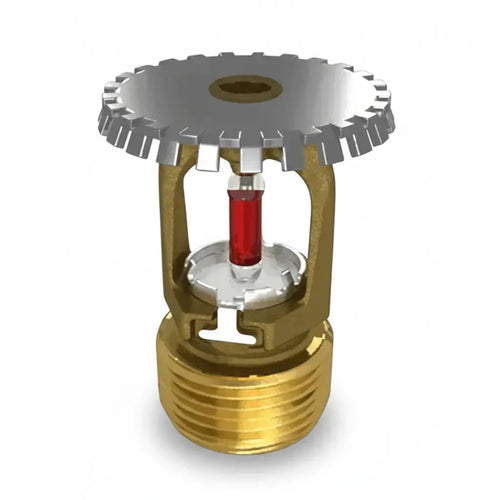
Activation relies on basic physical principles. In glass bulb sprinklers, a small vial contains a heat-sensitive liquid. As ambient heat rises, the liquid expands until the internal pressure shatters the glass. Modern fusible link sprinklers use a different approach. They feature two metal plates held together by a specialized solder. This solder is engineered to melt at a specific, verified temperature, releasing the cap. Response Time Index (RTI) is a measure of a sprinkler's thermal sensitivity, indicating how quickly the heat-sensitive element reaches its activation temperature.
Consequences of Incorrect Rating Selection
Selecting the wrong rating carries heavy penalties. Accidental discharge in a finished space can lead to tens of thousands of dollars in restoration costs. This often happens when "Ordinary" rated heads are placed too close to skylights or HVAC heaters where ceiling temperatures exceed 100°F. Beyond immediate water damage, using an incorrect rating is a direct violation of NFPA 13 standards. This creates liability for contractors and facility managers if a fire occurs. It's a compromise on safety that no professional should make.
We must also consider the long-term impact of "heat soak." This is a phenomenon where prolonged exposure to temperatures near the activation point weakens the element over time. A sprinkler constantly exposed to borderline heat may eventually fail due to thermal fatigue. Proper selection eliminates this doubt. It ensures the system remains a silent protector rather than a potential liability. Our goal is to provide the components that ensure your system stays dormant until it's actually needed.
The Universal Color-Coding System for Fire Sprinkler Heads
Visual identification is the first line of defense in fire safety management. NFPA 13 and listing agencies like UL and FM have established a rigorous, universal color-coding system to eliminate guesswork during inspections. This system allows facility managers and contractors to verify that fire sprinkler head temperature ratings are appropriate for a specific environment without needing to disassemble the hardware. It is the primary tool used by fire marshals to ensure a building remains compliant with life safety codes.
Relying on these colors is only possible when the hardware is clean and unaltered. Over time, environmental dust or grease can obscure the glass bulb or painted link. However, the most critical threat to identification is a painted sprinkler head. Painting any part of the thermal element is a severe code violation. The paint acts as an insulator, significantly delaying the time it takes for the head to react to a fire. If you discover a head that has been painted or is so faded that the color is indistinguishable, it must be replaced immediately to restore the system's integrity.
Glass Bulb Color Identification Chart
Glass bulb sprinklers use a small vial of colored liquid to indicate their thermal threshold. This is the most common identification method found in modern commercial and residential buildings. The following standards apply:
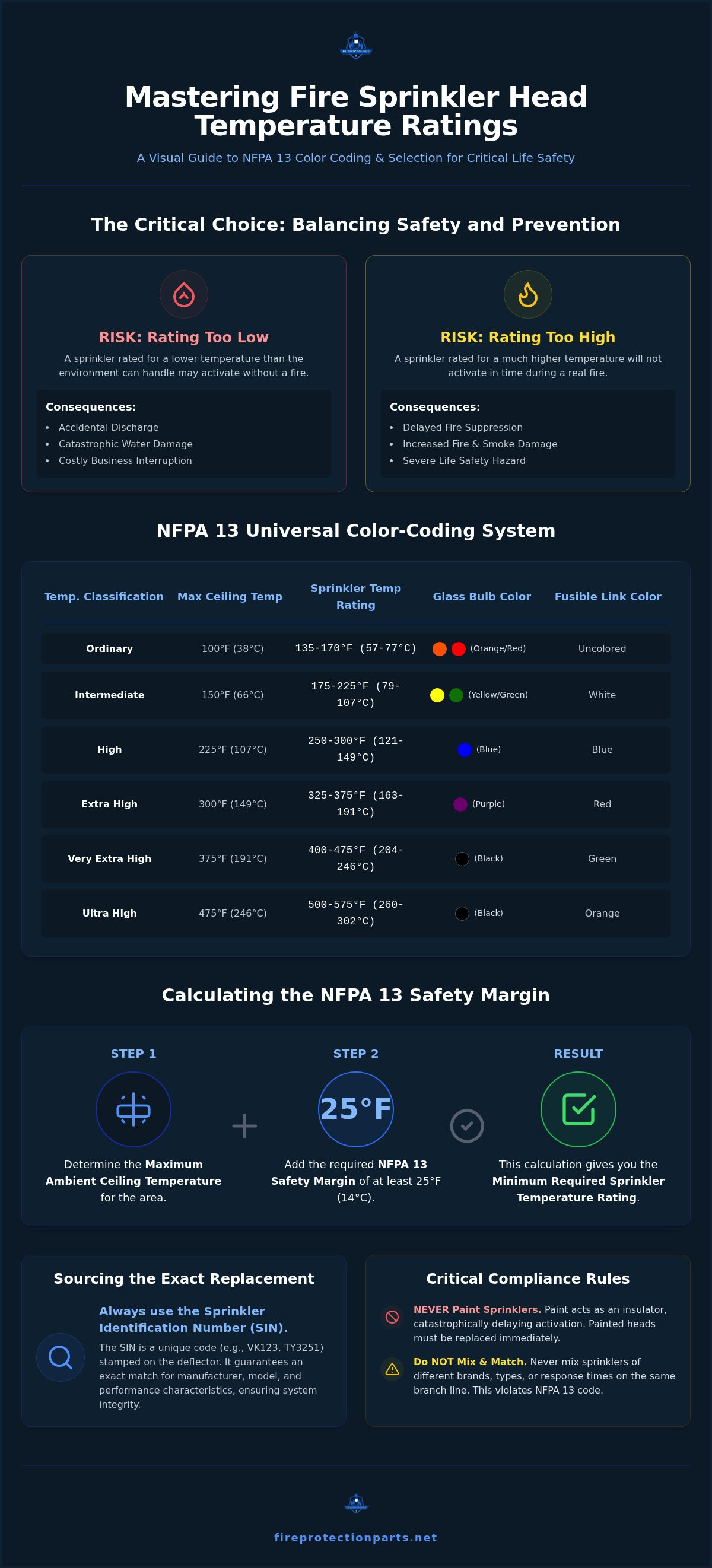
- Orange (135°F) or Red (155°F - 170°F): Classified as "Ordinary." These are the industry standard for offices, retail spaces, and residential living areas.
- Yellow (175°F) or Green (200°F - 225°F): These "Intermediate" ratings are typically found in mechanical rooms, commercial kitchens, or attics where ambient temperatures naturally fluctuate.
- Blue (250°F - 300°F): Classified as "High" temperature. These are used in industrial settings or areas directly above heat-producing machinery.
- Purple (325°F - 375°F) or Black (400°F - 650°F): These "Extra High" and "Ultra High" ratings protect specialized manufacturing processes involving extreme heat.
Fusible Link Color Coding
Fusible link heads don't use a glass vial. Instead, they rely on a metal link held together by a specialized solder. Since there is no fluid to color, manufacturers use a different method for fire sprinkler head temperature ratings identification. They paint the frame arms or the "boss" of the sprinkler to match the standard color tiers. For example, an Intermediate link head will often feature white paint on the frame. You can also find the temperature rating stamped directly onto the deflector or the link itself for secondary verification. For a broader technical context, Wikipedia's guide to fire sprinkler systems provides details on how these mechanical triggers function within a larger network.
If your inspection reveals heads with missing color markings or signs of corrosion, you can secure code-compliant replacement fire sprinkler components to ensure your facility remains protected. Maintaining clear, visible identification is a simple but vital part of professional fire protection management.
Temperature Classifications: Matching Sprinklers to Room Environments
Selecting the correct fire sprinkler head temperature ratings is a task of environmental assessment. You aren't just buying hardware; you're calibrating a defense system against the specific thermal profile of a room. A common mistake is assuming a "standard" head works everywhere. Localized heat factors, such as large skylights that create a greenhouse effect or HVAC vents that blow warm air, can push ceiling temperatures beyond the limits of basic hardware. Professional system design requires a room-by-room analysis to ensure the rating matches the reality of the space.
The relationship between ambient ceiling temperature and the required rating is governed by strict safety margins. You must account for the highest possible temperature the ceiling will reach during a heatwave or peak production hours. If the gap between the ceiling temperature and the sprinkler activation point is too narrow, the thermal element may suffer from gradual degradation. This leads to a loss of integrity and, eventually, a failure that causes significant water damage. Matching the classification to the environment is the only way to eliminate this risk.
Ordinary Classification (135°F–170°F)
Ordinary rated heads are the most frequent choice for climate-controlled environments. They are ideal for living rooms, bedrooms, and general office spaces where temperatures remain stable. The maximum allowable ceiling temperature for these sprinklers is 100°F (38°C). While these are the most common heads found in residential sprinkler systems, they aren't always the default. In modern homes with vaulted ceilings or large south-facing windows, ceiling temperatures can easily exceed 100°F, necessitating a move to the next tier to prevent accidental discharge.
Intermediate Classification (175°F–225°F)
Intermediate ratings are the workhorses of unconditioned or high-heat spaces. You'll find these in unventilated attics, mechanical rooms, and storage areas near heaters or steam pipes. These heads allow for a maximum ceiling temperature of 150°F (66°C). They provide a critical buffer in spaces with high solar gain, where roofing materials can transfer intense heat to the attic air. If you're replacing a head in a room that feels noticeably warmer than the rest of the building, an Intermediate rating is often the code-compliant solution.
High and Extra-High Classifications (250°F+)
In industrial settings and commercial kitchens, heat is a constant byproduct of operations. High-temperature sprinklers are required directly over commercial ranges, ovens, and heavy machinery. These classifications support maximum allowable ceiling temperatures starting at 225°F (107°C) and can go much higher for specialized manufacturing. These robust heads are often integrated into electric deluge valve fire suppression environments where the risk of flash fires is high, but the ambient heat would trigger a standard head instantly. Choosing these specialized ratings ensures your suppression system remains a protector rather than a nuisance.
Calculating Maximum Ceiling Temperatures and the NFPA 13 Safety Factor
Precision in fire protection requires more than just identifying colors. You must calculate the specific thermal environment of your facility to ensure fire sprinkler head temperature ratings are selected with a professional safety margin. The industry "Rule of Thumb" dictates that a sprinkler rating must be at least 25°F to 30°F above the maximum expected ambient ceiling temperature. This gap isn't a suggestion; it is a critical buffer mandated by NFPA 13 to account for the physics of heat soak and thermal cycling.
When a sprinkler head is installed in a zone where the ambient temperature is too close to its activation point, you risk "Cold Soldering" or element fatigue. In fusible link models, the solder can soften and deform without fully melting. Over months or years, this degradation weakens the head, eventually causing a catastrophic accidental discharge. For glass bulb sprinklers, constant thermal expansion and contraction can stress the vial, leading to a loss of integrity. Maintaining a significant gap between the ceiling temperature and the activation point eliminates this doubt and ensures long-term reliability.
Measuring Peak Ambient Temperatures
You cannot rely on a single thermostat reading from the middle of a room. Ceiling temperatures are often significantly higher than floor-level air, especially in high-ceiling structures where a "Heat Layer" forms. To get an accurate measurement, use thermal sensors or maximum-reading thermometers placed exactly at the intended sprinkler location. You must account for the worst-case scenario. This includes peak summer months in unconditioned warehouses or the highest heat output during a full manufacturing cycle. Seasonal variations in attics can see temperatures swing by 60°F or more, so your data must reflect these extremes.
Applying the NFPA 13 Classification Table
Selecting the right hardware follows a methodical three-step process to ensure code compliance:
- Step 1: Determine the maximum expected ceiling temperature through verified measurement during peak heat periods.
- Step 2: Select the thermal classification that allows for that specific temperature limit. For example, if your ceiling reaches 110°F, you must move from "Ordinary" to "Intermediate."
- Step 3: Verify that the color code on the replacement head matches your intended classification and that the SIN (Sprinkler Identification Number) is correct for the system design.
Once you have determined the required thermal threshold for your environment, you can source code-compliant replacement fire sprinkler heads to secure your facility. Professional calibration of your system's temperature ratings is the only way to balance rapid fire suppression with the total elimination of accidental water damage.
Choosing and Sourcing Replacement Sprinkler Heads
Identifying the correct fire sprinkler head temperature ratings is only the first step in a professional replacement process. Sourcing the hardware requires a commitment to exact specifications. You cannot treat sprinkler heads as generic commodities. Every head is part of a calculated hydraulic system designed to perform under specific conditions. Replacing a head with an "equivalent" that doesn't match the original design can compromise the entire system's effectiveness and lead to failed inspections.
Consistency is vital for system integrity. You must never mix different brands or response types, such as Standard Response and Quick Response, on the same branch line. These heads have different thermal sensitivities and discharge patterns. Mixing them disrupts the hydraulic balance and can lead to uneven water distribution during a fire. When working with Viking CPVC fire sprinkler pipe, it is essential to use heads and components that are specifically listed for compatibility with CPVC materials to prevent chemical degradation or mechanical failure.
Specialized environments require specialized hardware. In areas subject to freezing, such as walk-in freezers or unheated loading docks, standard wet-pipe heads will fail. These environments demand dry pendent sprinkler heads. These components feature a pressurized seal that keeps water in the heated portion of the piping until activation. Selecting the right fire sprinkler head temperature ratings for these specialized heads ensures they only trigger when a genuine fire threat exists, protecting your facility from both fire and pipe bursts.
Verifying SIN and Manufacturer Specs
The Sprinkler Identification Number (SIN) is the most reliable way to ensure an exact match. You can usually find this five or six-digit alphanumeric code stamped directly onto the deflector. The SIN tells you the manufacturer, the K-factor, and the orifice size. You must also verify the orientation. A pendent head cannot be installed in an upright position. Finally, ensure the finish, whether it is chrome, white, or brass, matches the existing aesthetic and any corrosion-resistance requirements for the space.
Navigating the Procurement Process
Buying from a specialized fire protection parts online store eliminates the doubt associated with general hardware vendors. Professional suppliers understand the nuances of life safety codes and provide verified components. Use this checklist before finalizing your order:
- Confirm the SIN matches the original system design documents.
- Verify the temperature rating and corresponding color code.
- Match the K-factor to ensure proper water flow.
- Select the correct finish for environmental or aesthetic needs.
- Order the specific sprinkler wrench designed for that head model to avoid damaging the frame during installation.
Taking a methodical approach to sourcing ensures your building remains protected and compliant. Reliability comes from using the right parts, the right tools, and the right expertise.
Securing Your Facility with Thermal Precision
Mastering fire sprinkler head temperature ratings is the only way to ensure your suppression system remains a reliable protector rather than a liability. You now have the tools to identify hardware via universal color codes and calculate the critical NFPA 13 safety factors required for your specific environment. By matching the Sprinkler Identification Number (SIN) and thermal classification to the room's peak ambient heat, you eliminate the risk of accidental discharge and maintain strict code compliance. Reliability is never an accident; it's the result of professional calibration.
Don't leave your building's safety to chance or generic hardware. As a Viking Authorized Retailer, we provide the specialized components you need to protect your property without compromise. Our comprehensive inventory includes SIN-specific heads and matching escutcheons for both commercial and residential applications. With same-day shipping on in-stock components, you can address maintenance needs immediately.
In addition to maintaining your suppression system, ensure your facility is equipped for immediate first aid by reviewing essential safety supplies; for a detailed guide on emergency preparedness, visit Burn-Fix.
Shop Code-Compliant Sprinkler Heads and Components today to secure your facility. Take the next step toward a safer, more reliable fire protection system with the confidence of an expert partner.
Frequently Asked Questions
What does the color of the fluid in a fire sprinkler bulb mean?
The fluid color is a visual indicator of the activation threshold. NFPA 13 mandates these colors so inspectors can verify safety at a glance. Orange or red bulbs signify ordinary ratings, while yellow or green represent intermediate levels. This system ensures the hardware matches the thermal profile of the room without requiring a physical teardown of the system.
Can I replace a 155°F sprinkler with a 175°F sprinkler?
You can only make this change if the ambient ceiling temperature requires a higher threshold. Moving from 155°F to 175°F transitions the system from an Ordinary to an Intermediate classification. While this prevents accidental discharge in hot spaces, it may slightly delay activation during a fire. Always consult the original system design to ensure the change remains code-compliant.
How do I find the temperature rating on an old sprinkler head?
Locate the temperature rating by examining the deflector or the heat-sensitive element. Most manufacturers stamp the specific degree rating directly onto the metal deflector. If the stamp is illegible, use the Sprinkler Identification Number (SIN) to look up the manufacturer's data sheet. Identifying fire sprinkler head temperature ratings correctly is the only way to ensure an exact match during a replacement.
What is the standard temperature rating for a residential fire sprinkler?
Residential systems typically utilize Ordinary ratings of 155°F or 175°F. These are designed for living areas where ceiling temperatures don't exceed 100°F. However, specialized areas like unventilated attics or rooms with large skylights may require intermediate ratings. The goal is to provide rapid life safety protection while avoiding the water damage associated with a nuisance activation.
Effective fire prevention also involves maintaining other critical structures in the home. For those with fireplaces, Absolute Chimney Pros provides professional cleaning and inspections to prevent hazardous buildup and ensure overall safety.
Why are some sprinkler bulbs red and others green?
These colors represent different thermal classifications. A red bulb indicates an ordinary rating of 155°F, suitable for standard office or living spaces. A green bulb signifies an intermediate rating, often 200°F or 225°F. Green bulbs are essential in high-heat zones like mechanical rooms or near commercial ovens where a red bulb would trigger prematurely due to normal operational heat.
Does the temperature rating affect how fast a sprinkler responds to a fire?
The rating determines the temperature at which the head triggers, but the Response Time Index (RTI) dictates the speed. A lower temperature rating will activate earlier in a fire's growth because the room reaches that thermal threshold sooner. However, a Quick Response head with a higher rating might still outperform a Standard Response head with a lower rating in certain fire scenarios.
What happens if a fire sprinkler head is painted?
Painting a sprinkler head is a critical safety violation that requires immediate replacement. The paint acts as a thermal insulator, preventing the glass bulb or fusible link from reaching its activation temperature. This delay can allow a fire to spread beyond the system's control. NFPA codes strictly prohibit any aftermarket coatings on the thermal elements or the frame of the sprinkler.
What temperature rating do I need for a sprinkler in a commercial kitchen?
Commercial kitchens require High temperature ratings, typically between 250°F and 300°F, for heads located near cooking appliances. These heads usually feature a blue bulb. Using lower fire sprinkler head temperature ratings in a kitchen leads to accidental discharges caused by steam or oven heat. Correct selection ensures the system only reacts to a genuine fire threat while ignoring routine kitchen heat.

