

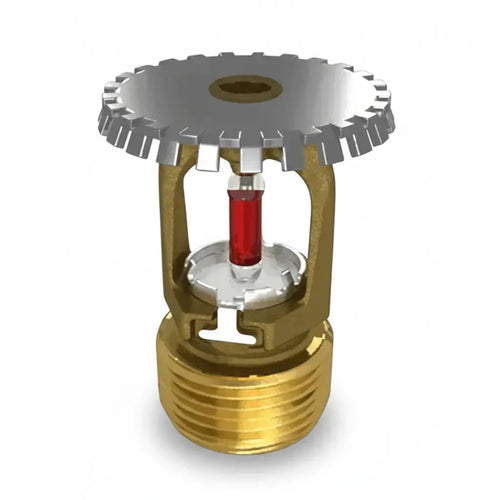


Dry Pendent Sprinkler Heads Explained
A sprinkler over a freezer doorway, loading dock canopy, or unheated vestibule is not the place for guesswork. Dry pendent sprinkler heads are built for exactly these conditions, where the branch line stays in a heated area but the sprinkler itself has to protect a space exposed to freezing temperatures. When the application is right, they solve a specific problem cleanly. When the specification is off by even a few details, they can create inspection issues, poor fit, or replacement delays.
What dry pendent sprinkler heads do
A dry pendent sprinkler extends from wet piping in a heated space into an area that can drop below 40 degrees F. The barrel keeps water out of the exposed section until the sprinkler operates. That design helps prevent trapped water in the cold zone, which is the basic reason these sprinklers are used in the first place.
The concept is straightforward, but the product selection is not always simple. Barrel length, inlet configuration, escutcheon style, temperature rating, finish, and listing details all matter. On retrofit work, the job gets tighter because you may be matching an existing opening, a finished ceiling condition, or a listed assembly requirement.
Where dry pendent sprinkler heads are commonly used
Most buyers run into dry pendent models on projects where a standard pendent sprinkler would leave water exposed to freezing conditions. Common examples include walk-in coolers, freezers, canopies, loading docks, exterior entry areas, and unheated warehouses with conditioned piping above the ceiling.
There is a practical difference between a cold room and a room that is just occasionally cool. If the protected area can freeze, the dry configuration becomes a code-driven and operational decision, not a preference. On the other hand, if the ambient conditions are controlled and there is no freezing risk, a standard wet sprinkler may be the better and more economical fit.
That is why application review matters. Contractors and facilities teams are usually balancing field conditions, AHJ expectations, and lead times all at once. Choosing the right sprinkler means looking at the actual environment, not just replacing what was there without checking the details.
How the assembly works
Dry pendent sprinklers use an internal seal at the inlet end of the barrel, located in the heated space. The barrel passes through the wall or ceiling into the colder area, and the deflector sits where discharge is needed. Under normal conditions, the exposed section remains dry. When heat at the sprinkler reaches its operating point, the sprinkler activates and water travels through the barrel to discharge from the deflector.
That basic design affects installation requirements. The connection point must remain in a heated area. The barrel length has to match the penetration depth and assembly. The slope and orientation requirements from the manufacturer also need to be followed so condensate or incidental moisture does not become a problem. These are not generic sprinklers where small field improvisations are harmless.
Key specification points to check before ordering
The most common ordering issue is barrel length. Dry sprinklers are made in specific lengths, and the correct dimension depends on the wall or ceiling build-up, fitting allowance, and the manufacturer’s measurement method. Different brands may reference length from different points, so matching by part number or published dimensions is safer than estimating from a tape measure alone.
Temperature rating is another detail that gets overlooked. In normal occupancies, ordinary temperature ratings may be appropriate, but near heat-producing fixtures, warmer ceiling pockets, or special-use environments, the correct rating needs to be confirmed. The finish may also matter for corrosion resistance or appearance, especially in customer-facing commercial spaces.
Thread size, K-factor, and response type are equally important. A replacement has to align with the system design and listing. Swapping in a different K-factor or response characteristic without design review is not a small change. It can affect hydraulic performance, spacing criteria, and code compliance.
Listing and code compliance are not side notes
For fire protection buyers, the real value in a dry pendent sprinkler is not just that it fits the opening. It has to be listed for the application, installed according to the manufacturer’s instructions, and aligned with the system design basis. That includes UL and FM considerations where required, along with NFPA 13 installation criteria.
This matters even more in cold-storage and specialty environments. Some dry sprinklers are intended for standard commercial conditions, while others are specifically suited to harsher or more controlled applications. Escutcheon requirements, combustible concealed space conditions, and exposure limitations can all affect which model is acceptable.
The trade-off is simple. A lower-cost substitute may look close on paper, but if it creates a listing conflict or forces field modification, it is not really a savings. For contractors trying to keep an inspection on schedule, trusted brand documentation and clear submittal data usually save more time than a marginal unit-price difference.
New installation versus replacement work
On new work, dry pendent sprinkler heads are easier to plan because the wall or ceiling assembly, penetration depth, and sprinkler schedule can be coordinated early. The design team can select the proper barrel length, match the escutcheon to the finish condition, and keep the heated-side fitting location where it belongs.
Replacement work is where most problems show up. An older sprinkler may have limited markings, discontinued finishes, or a barrel length that was selected around a field condition no one documented. If the original manufacturer and model are known, like-for-like replacement is often the cleanest route when permitted. If not, the replacement process should include a careful review of dimensions, listing information, and system compatibility.
For facilities teams, that means taking a failed or damaged dry sprinkler seriously before ordering. A quick visual match is not enough. Product photos help, but technical data and measurements matter more.
Common mistakes that slow down the job
One frequent mistake is treating all dry pendent sprinklers as interchangeable. They are not. Even if two models share the same general appearance, differences in barrel construction, minimum installed length, escutcheon assembly, or thermal characteristics can make one acceptable and the other wrong for the job.
Another issue is measuring only the exposed barrel and ignoring how the manufacturer defines overall length. That can lead to a sprinkler that arrives short, long, or unable to seat correctly within the assembly. The result is lost time, return handling, and sometimes an emergency reorder.
There is also the temptation to substitute based on availability alone. Fast fulfillment matters, especially when a damaged sprinkler is holding up occupancy or cold-room use, but availability should not override listing and design requirements. If the part needs to match a specific approved assembly or engineering basis, that still comes first.
Choosing brands and sourcing with confidence
Because dry sprinklers are specialized components, brand reputation carries real weight. Contractors and maintenance buyers usually prefer established manufacturers because the documentation is clear, replacement support is better, and the product is built around recognized listing standards. That reduces risk on both installation and inspection.
A dependable supplier also makes a difference. The right source should be able to help confirm basic product details, identify trusted brand options, and support quote requests for less common lengths or configurations. That matters on multi-site maintenance programs and on one-off repairs where time is tight. Fire Protection Parts serves this kind of buyer every day, with a catalog built around code-compliant components rather than off-brand substitutes.
When a dry pendent sprinkler is not the answer
There are cases where a dry pendent is not the right choice. If the piping itself is in a freezing environment, the issue may point to a dry pipe, preaction, or other system approach rather than just a different sprinkler. In some layouts, sidewall dry sprinklers or alternate protection methods may fit the space better.
It also depends on maintenance expectations. If the application is exposed to impact, washdown, corrosive conditions, or repeated temperature extremes, the sprinkler selection should account for those realities. A technically correct sprinkler that is poorly matched to the operating environment will create repeat service calls.
The best results usually come from slowing down just enough to verify the conditions, the listing, and the dimensions before the order is placed. That is especially true with dry pendent sprinkler heads, where one specialized part is doing a very specific job. A careful match protects the system, keeps the project moving, and avoids turning a cold-area detail into a costly callback.
If you are replacing or specifying one, the smart move is simple: buy the sprinkler that matches the application, not the one that only looks close.

