

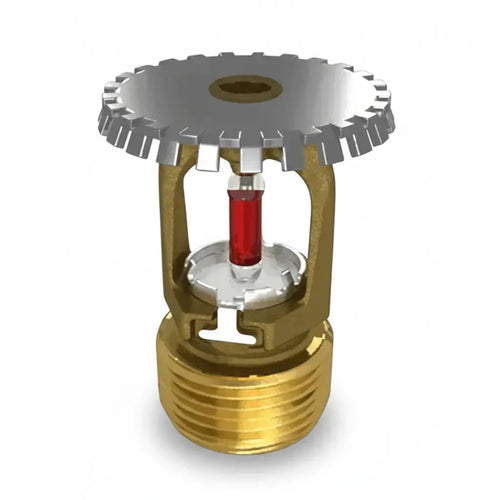


Fire Protection Parts for Commercial Buildings: A 2026 Procurement Guide
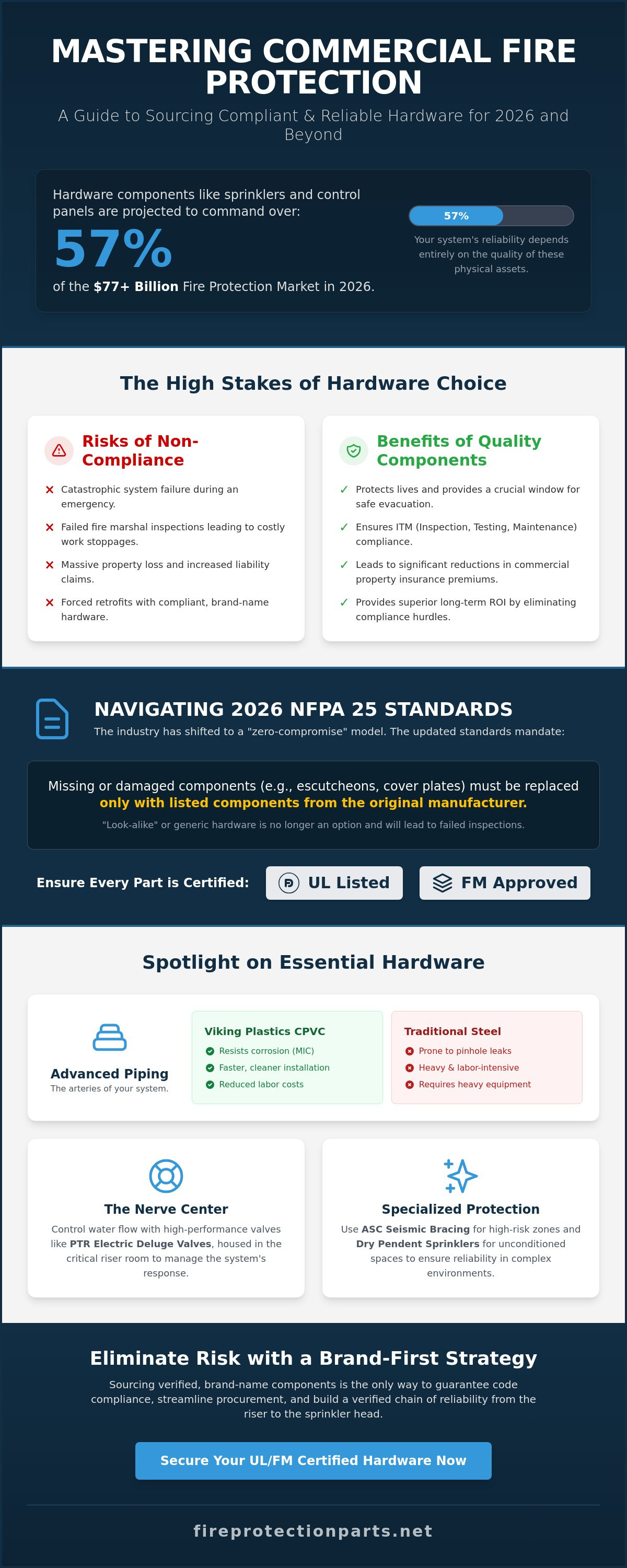
Hardware components like sprinklers and control panels are projected to command over 57 percent of the 77 billion dollar fire protection market in 2026. This data highlights a critical reality for facility managers: the reliability of your system depends entirely on the quality of your physical assets. You understand that a single non-compliant component can compromise an entire facility's safety and lead to failed inspections or, worse, system failure during an emergency. Sourcing the right fire protection parts for commercial buildings has become more complex as the 2026 NFPA 25 standards now mandate specific manufacturer-listed components for every replacement.
You shouldn't have to guess whether your hardware will meet these rigorous new requirements or arrive in time to meet your deadlines. This guide provides the expertise you need to master the complexities of sourcing code-compliant, high-performance hardware for any commercial facility. We will walk through an essential list of components, from PTR electric deluge valves to ASC seismic bracing, and show you how to secure UL/FM certified hardware without the typical supply chain delays. You'll gain the confidence to build a verified chain of reliability from the riser room to the sprinkler head.
Key Takeaways
- Understand the financial and safety risks of hardware failure and how the right components protect your facility’s bottom line.
- Identify the essential fire protection parts for commercial buildings required for code compliance, including high-performance Viking CPVC piping and PTR deluge systems.
- Learn how to protect high-risk zones and unconditioned spaces using specialized ASC seismic bracing and dry pendent sprinkler technology.
- Navigate the updated 2026 NFPA standards to ensure every piece of hardware carries the necessary UL Listing and FM Approval.
- Discover how a brand-first sourcing strategy eliminates the risk of low-quality substitutes and streamlines your procurement timelines.
The Critical Role of Fire Protection Parts in Commercial Safety
Commercial fire safety is often misunderstood as a collection of standalone devices like extinguishers or smoke detectors. In reality, it's a synchronized network of specialized hardware designed to perform under extreme stress. Procuring the correct fire protection parts for commercial buildings ensures this network doesn't fail when lives and assets are on the line. As we move through 2026, the industry has shifted toward a "zero-compromise" model where every component, from the riser room to the furthest sprinkler head, must meet verified performance standards.
High-quality components do more than just meet a code requirement; they act as a financial shield. System failures during an actual fire lead to catastrophic property loss and massive liability claims. Conversely, a well-maintained system utilizing brand-name hardware can lead to significant reductions in commercial property insurance premiums. The 2026 landscape of fire safety is defined by this move toward hardware reliability. With the global fire protection market projected to reach 77.39 billion dollars this year, the focus is squarely on the physical integrity of the equipment protecting our infrastructure.
Life Safety vs. Asset Protection
Commercial fire suppression serves a dual mandate: saving lives and preserving property. These goals are inextricably linked to component reliability. Active fire protection systems must trigger instantly to provide the necessary window for safe evacuation. In high-occupancy environments like office towers or retail hubs, "good enough" parts are a massive liability. If a backflow preventer fails or a pipe bursts due to poor material quality, the system's ability to buy time for occupants is lost. Reliability isn't an abstract concept; it's measured in the seconds saved during an emergency.
The Cost of Non-Compliance
Using uncertified or generic parts is a fast track to failed fire marshal inspections. Modern codes are increasingly specific. For example, the 2026 edition of NFPA 25 now requires that missing or damaged escutcheons and cover plates be replaced only with listed components from the original manufacturer. Cutting corners with "look-alike" hardware can lead to costly work stoppages and forced retrofits. Investing in durable, brand-name hardware like Viking CPVC or PTR deluge valves offers a superior long-term ROI by eliminating these compliance hurdles.
For the modern professional, ITM compliance is the documented adherence to the Inspection, Testing, and Maintenance protocols defined by NFPA 25 to guarantee that every system component functions as designed during a fire event. This process is only manageable when the fire protection parts for commercial buildings are sourced from reputable manufacturers that prioritize longevity and ease of maintenance.
Essential Hardware Categories for Commercial Suppression Systems
Building a reliable suppression system requires more than just a blueprint. It demands a deliberate selection of fire protection parts for commercial buildings that work in unison under pressure. The core of any system rests on three pillars: the distribution piping, the control valves that manage water flow, and the sprinkler heads that provide the final response. While traditional steel was once the default, modern facilities are moving toward high-performance materials that offer better longevity and easier installation. Choosing the right hardware today prevents the corrosion and mechanical failures that plague older systems tomorrow.
Advanced Piping Solutions
Viking Plastics CPVC is rapidly replacing traditional steel in many commercial applications. This transition is driven by its natural resistance to microbiologically influenced corrosion (MIC), which is a common cause of pinhole leaks in wet-pipe systems. Beyond durability, contractors benefit from massive installation efficiency. Since CPVC is lighter and requires no heavy threading equipment or welding, it reduces labor costs and speeds up project timelines. For a deeper look at technical specifications and application limits, consult our Viking CPVC fire sprinkler pipe guide.
The Nerve Center: Riser Room Components
The riser room is the system's nerve center. It houses critical backflow preventors that protect municipal water supplies from contamination. Managing this water requires precise control. Facility managers must choose between OS&Y (Outside Screw and Yoke) valves, which provide a clear visual indicator of the valve's position, or compact Butterfly valves for tight spaces. Monitoring hardware like flow switches and alarm valves ensure that the moment water moves, the building's alarm system is triggered. Adhering to NFPA standards is mandatory here to ensure these monitoring devices communicate correctly with the fire alarm control panel.
Secondary hardware is just as vital for maintaining system integrity. Items like escutcheons, head guards, and manufacturer-specified wrenches are essential for passing inspections. Per the 2026 NFPA 25 edition, missing or damaged plates must be replaced with listed components from the original manufacturer. Furthermore, a manufacturer-specified wrench for every sprinkler type must be kept on the premises. Keeping a stock of these fire protection parts for commercial buildings on-site prevents inspection failures and system downtime. You can browse our full inventory of certified hardware to find the exact matches for your system's specifications.
Specialized Components for Complex Building Environments
Standard suppression systems work well in climate-controlled offices, but complex environments like unconditioned warehouses, cold storage, and seismic zones demand specialized hardware. Choosing the right fire protection parts for commercial buildings in these scenarios isn't just about compliance; it's about the physical survival of the system itself. If a pipe freezes or a hanger snaps during a tremor, the entire safety network is rendered useless. You must match the hardware to the specific environmental risks of your facility to ensure unwavering reliability.
Specialized hardware often carries a higher price point, which can lead to procurement hesitation. However, the cost of a single burst pipe or a system failure during a minor seismic event far outweighs the initial investment. High-performance hardware like the PTR electric deluge VXD or specialized dry valves are engineered for longevity in extreme conditions. They eliminate the doubt that comes with generic alternatives. When you secure these specialized fire protection parts for commercial buildings, you're buying the assurance that your facility is prepared for its unique challenges.
Seismic and Structural Support
ASC seismic bracing is a non-negotiable requirement in earthquake-prone regions. These systems utilize all-thread rod and specialized hangers to keep piping secured during intense structural movement. Without these restraints, the lateral forces of a tremor can easily shear pipe connections or pull hangers from the ceiling. Local building codes dictate the requirements for rigid versus flexible bracing configurations based on the building's design. Ensuring your system remains operational during structural stress is a key focus of the U.S. Fire Administration and its fire prevention strategies for commercial infrastructure.
Freezing Temperature Protection
Protecting unconditioned spaces like parking garages or loading docks requires a departure from standard wet-pipe configurations. Dry pendent sprinklers are the functional remedy for these cold zones because they keep water away from the freezing air until the moment of activation. To keep these systems functional, dedicated air compressors for sprinkler systems are essential. These compressors maintain the internal air pressure that holds the dry pipe valve closed. For wet systems that may face occasional cold snaps, utilizing NFPA-compliant anti-freeze for fire protection provides a necessary layer of security. This prevents the catastrophic pipe bursts that occur when water expands into ice inside your distribution lines.
Navigating Compliance: NFPA Standards and Certification
Compliance isn't a suggestion; it's a mandate for survival. Using uncertified fire protection parts for commercial buildings creates a chain of liability that can bankrupt a business after a fire event. Verification is your only defense against system failure. In the commercial sector, this means strictly adhering to UL Listing and FM Approval. UL focuses on the fundamental safety and performance of a component, while FM Approval signifies that the hardware meets the rigorous property loss prevention standards required by many high-end insurers. If a part lacks these stamps, it doesn't belong in your building.
Understanding the hierarchy of NFPA codes is equally critical for procurement managers. NFPA 13 governs the initial installation of sprinkler systems, while NFPA 13R specifically addresses low-rise residential occupancies. However, for facility managers, NFPA 25 is the most vital document. It dictates the standards for inspection, testing, and maintenance (ITM). Every replacement part you source must maintain the original system's hydraulic calculations. Swapping a high-performance head for a generic alternative can disrupt water distribution patterns and leave your assets vulnerable. You can order UL/FM certified components today to ensure your facility remains fully compliant.
How to Verify a Fire Protection Part Before Purchase
Don't wait for an inspector to find a deficiency. Follow this four-step procurement framework to verify every component before it arrives at your job site:
- Locate the UL/FM Stamp: Physically inspect the component housing for the embossed certification marks. This is the primary proof of performance.
- Cross-Reference Datasheets: Match the model number on the part with the manufacturer's technical data sheets. Ensure the specifications align with your system's design.
- Confirm Technical Ratings: Verify the temperature rating and K-factor for sprinkler heads. These must match the original design to maintain fire suppression effectiveness.
- Check Occupancy Approval: Ensure the material, such as Viking CPVC, is approved for your specific building occupancy and hazard classification.
Maintaining ITM Standards
The 2026 edition of NFPA 25 has introduced stricter requirements for component replacement. Missing or damaged escutcheons and cover plates must now be replaced with listed components from the original manufacturer. You can no longer use "universal" fit-all parts that haven't been tested with your specific sprinkler heads. Additionally, you're now required to keep a manufacturer-specified wrench for every sprinkler type on the premises. These small hardware details are often the difference between a passed inspection and a costly violation. Sourcing exact-match fire protection parts for commercial buildings preserves the integrity of your system and ensures that annual and five-year inspections proceed without delay.
Streamlining Procurement with Fire Protection Parts
The traditional method of hunting through multiple catalogs and calling various local suppliers is no longer viable for modern contractors. Efficiency is the new standard. A one-stop digital storefront eliminates the friction of sourcing specialized fire protection parts for commercial buildings. By centralizing your procurement, you reduce the risk of clerical errors and ensure that every component arrives with the necessary certifications. This streamlined approach allows your team to focus on system integrity rather than tracking down backordered hardware across multiple vendors.
Eliminating "cheap substitutes" is the most effective way to safeguard your facility's future. A brand-first sourcing strategy ensures that every piece of hardware, from ASC seismic bracing to air compressors, meets a verified baseline of quality. Generic parts often fail during the stress of a fire or seismic event. Choosing professional-grade hardware provides a functional remedy to the risk of system failure. Expert support is also available to help identify complex components, ensuring you never order the wrong head or wrench for your specific system. Your procurement process should be as reliable as the systems you install.
Why Brand Reliability Matters
The legacy of names like Viking and PTR in the fire suppression industry is built on decades of proven performance. When you install Viking Plastics CPVC or a PTR electric deluge VXD, you're investing in a history of reliability. Standardized parts from these manufacturers simplify future maintenance and repairs because the specifications are consistent across product lines. We act as a mission-driven partner rather than a simple vendor. Our goal is to provide the peace of mind that comes from knowing your fire protection parts for commercial buildings are the best available in 2026. This commitment to excellence removes the guesswork from safety compliance.
Actionable Procurement for Facility Managers
Effective facility management requires a proactive approach to inventory. Start by auditing your current stock for 2026 compliance, specifically checking for the manufacturer-listed wrenches and escutcheons required by the latest NFPA 25 standards. Setting up a recurring order schedule for high-turnover ITM parts, such as anti-freeze or replacement head guards, prevents last-minute panics before an inspection. Our specialized search tools allow you to identify the exact sprinkler head or wrench you need by cross-referencing model numbers and K-factors. Taking these steps today ensures your system remains operational and code-compliant. You can secure your facility with code-compliant commercial fire protection parts today to eliminate the doubt from your fire safety strategy.
Secure Your Facility for the Years Ahead
Effective fire suppression isn't just a regulatory requirement; it's a commitment to long-term safety and financial stability. You've seen how the 2026 NFPA standards prioritize specific, manufacturer-listed hardware to maintain system integrity. Sourcing the right fire protection parts for commercial buildings is the final step in eliminating the doubt that comes with generic substitutes. By choosing professional-grade components, you ensure your facility is prepared for both routine inspections and actual fire events. Reliability is built one part at a time.
We are here to act as your mission-driven partner in safety. Our inventory features UL Listed and FM Approved components from industry leaders like Viking and PTR. We understand the urgency of ITM compliance, which is why we prioritize fast shipping to keep your projects on schedule. Don't leave your property's safety to chance with unverified hardware. You can shop our full catalog of commercial fire protection parts today to find the exact hardware your system requires. Take the lead on your building's safety and move forward with the confidence that only high-performance hardware provides.
Frequently Asked Questions
What are the most common fire protection parts required for commercial buildings?
Sprinkler heads, control valves, backflow preventors, and piping systems like Viking CPVC are the most common components. Additionally, riser room essentials like alarm valves and flow switches are necessary for system monitoring. These fire protection parts for commercial buildings form the backbone of a code-compliant suppression system. Having these items on hand prevents delays during routine maintenance.
How do I know if a fire sprinkler head is UL Listed or FM Approved?
You can identify these certifications by locating the embossed UL or FM stamp on the sprinkler head's deflector or frame. Every certified component undergoes rigorous testing to ensure it meets specific safety and performance criteria. Cross-referencing the model number with the manufacturer’s technical data sheet will provide final verification of its listing status and operational limits.
Can I use CPVC pipe in a commercial fire sprinkler system?
Yes, Viking Plastics CPVC is approved for use in many commercial applications, provided the building occupancy and hazard classification meet NFPA guidelines. It is particularly valued for its corrosion resistance and ease of installation compared to traditional steel. Always verify that the specific CPVC brand is UL listed for the intended commercial use before you begin the procurement process.
What is the difference between a standard response and a quick response sprinkler head?
The primary difference lies in the sensitivity of the thermal element and how fast it activates. Quick response heads have a thinner glass bulb or a smaller heat-sensing element designed to activate earlier in a fire's development to enhance life safety. Standard response heads are typically used in larger commercial spaces where asset protection is the primary goal of the system.
How often should commercial fire protection parts be inspected or replaced?
Inspection frequencies are governed by NFPA 25 and vary significantly by component. For instance, gauges should be inspected monthly or quarterly, while some sprinkler heads require testing or replacement every 10 to 50 years. Maintaining a steady supply of fire protection parts for commercial buildings ensures you can replace failing components immediately following a deficiency report to maintain compliance.
Why is seismic bracing required for fire sprinkler systems in some buildings?
Seismic bracing, such as ASC seismic bracing, is required to prevent the distribution piping from swaying or breaking during an earthquake. Lateral and longitudinal braces keep the system secured to the building's structure, ensuring the pipes don't shear at the joints. This is a mandatory requirement in high-risk seismic zones to maintain system functionality during and after a tremor.
What type of antifreeze is safe for commercial wet-pipe sprinkler systems?
You must use a factory-premixed, NFPA-compliant antifreeze solution specifically listed for fire protection systems. Non-listed antifreeze can be flammable or damage the internal components of the system. Using the correct antifreeze for fire protection prevents pipes from bursting in unconditioned spaces while ensuring the solution doesn't interfere with fire suppression when the system activates during an emergency.
Where can I find replacement wrenches for older fire sprinkler heads?
Replacement wrenches must be sourced from the original manufacturer to ensure a precise fit that won't damage the sprinkler head during maintenance. The 2026 edition of NFPA 25 requires a specific wrench for every sprinkler type to be kept on the premises. You can find these specialized tools by matching the sprinkler head's Identification Number with the manufacturer’s authorized hardware catalog.

