



How to Install a Water Motor Gong: A Safe, Step-by-Step Guide
A water motor gong can be mounted correctly and still fail to sound if it isn’t properly connected to the sprinkler alarm-water path. Learning how to install a water motor gong means treating it as part of the complete alarm arrangement, not as an isolated bell.
It’s sensible to be cautious: incompatible components, a poor connection, or an uncontrolled test can lead to leaks, unwanted alarms, or uncertainty about whether protection has been restored. This guide explains where the gong fits, what qualified fire sprinkler personnel should verify, and how to confirm operation safely. You’ll learn the installation sequence, key compatibility checks, and why the manufacturer’s instructions, locally adopted requirements, and authority having jurisdiction matter. Qualified personnel should handle testing and any work that affects the sprinkler system. Return the system to service only after the required alarm functions have been verified.
Key Takeaways
- Understand how alarm water drives a water motor gong and how the gong differs from the sprinkler that initiates water flow.
- Before installation, match the gong model and connection details to its manufacturer instructions and the approved system drawings.
- Learn how to install a water motor gong as part of the complete alarm path, with qualified sprinkler personnel following approved procedures.
- Compare water-driven and electric alarms by how they operate, what they depend on, and how they’re maintained.
- Use the approved test method to verify the gong, water discharge, alarm path, and connected monitoring before the system is returned to service.
What a Water Motor Gong Does in a Fire Sprinkler Alarm System
A water motor gong is a mechanical audible alarm connected to a sprinkler system’s designated alarm-water route. When water flows through that route, it powers a mechanism that sounds an exterior bell. Connection details vary by model, so use the manufacturer’s documentation for the specific gong.
A water motor gong converts water flowing through a designated sprinkler alarm connection into an audible warning at the building exterior. It doesn’t detect a fire or open a sprinkler. A sprinkler responds to heat and opens; the resulting water flow can activate the system’s alarm arrangement. The gong is one possible part of that arrangement, alongside other devices that signal or report waterflow.
How the gong turns alarm water flow into sound
In broad terms, alarm water passes from a designated sprinkler-system connection to the gong’s water-driven motor. The water turns an internal mechanism, which moves a striker against the bell. This produces a local audible warning without relying on an electric motor to ring the gong. For broader context on how sprinklers and system components work together, see this overview of a fire sprinkler system.
The route varies by system design. Alarm water may pass through components such as a valve assembly or retarding chamber before reaching the motor. After driving the mechanism, water exits through the gong’s discharge route. The approved drawings and the specific model’s instructions define the intended connections and routing. Don’t copy a connection layout from another installation based on appearance alone.
Where the gong fits in the sprinkler alarm arrangement
The gong is a notification device, not the initiating sprinkler or the device that monitors the system. Where included in the design, an alarm check valve helps route water to an alarm connection when the system flows. A waterflow switch detects flow and can send an electrical signal. Monitoring equipment can receive or relay that signal according to the building’s alarm arrangement. These components may work alongside the gong, but they perform different functions.
Think of the arrangement as connected but not interchangeable: the sprinkler responds to heat, the alarm-water path carries flow to the mechanical motor, and the gong sounds when that flow operates its mechanism. A separate switch or monitoring connection may communicate the event electrically. The gong’s discharge must also follow the approved design so water can exit without creating an unintended leak or obstructing the mechanism.
This distinction matters when planning how to install a water motor gong. The work integrates a device into the intended alarm path; it isn’t simply a matter of mounting a bell on an exterior wall. This guide supports qualified sprinkler-system work but doesn’t replace approved plans, applicable local requirements, or the manufacturer’s instructions. Before work begins, verify the valve arrangement, device model, and discharge routing.
What to Verify Before Installing a Water Motor Gong
Before work begins, confirm that the gong, alarm connection, and planned route match the approved system design. A component that appears to fit may still be unsuitable for the system’s operating conditions or connection arrangement. Treat model identification and document review as safety checks, not paperwork. If the drawings, site conditions, and manufacturer instructions don’t agree, resolve the discrepancy through the project’s authorized process before proceeding.
Check model compatibility and approved system documents
Start with the gong’s exact manufacturer, model, and current installation instructions. The International Fire Suppression Alliance’s overview of Water Motor Alarms offers useful context, but it doesn’t replace model-specific requirements. Compare the manual with the approved drawings. Confirm that the connection size, orientation, operating conditions, and specified accessories match the design. Don’t use another model’s instructions or judge compatibility by appearance alone.
Next, trace the intended alarm-water source on the drawings. Confirm where the alarm connection begins, how the piping is routed, and where the gong’s water outlet is directed. Check that the planned arrangement matches the valve assembly and any associated components shown in the design. A route that looks convenient in the field isn’t a substitute for the approved path.
- Model: Verify the identification label and use the matching, current manufacturer documentation.
- Connections: Compare the specified inlet, outlet, orientation, and accessories with the drawings and manual.
- Route: Trace the alarm piping from its designated connection to the gong, then confirm the discharge destination.
- Installation conditions: Check mounting position, exposure, service access, and supporting structure against documented requirements.
Plan safe access, impairment controls, and materials
Before disturbing any part of the system, coordinate the work through the site’s established fire protection impairment procedures. Confirm who authorizes the work, which safeguards are required, and how affected parties will be notified under site policy. Never leave required protection impaired without authorized controls. Prepare only the piping, fittings, supports, and other materials specified by the approved plans and the gong manufacturer.
Inspect the intended location for secure support, practical access, and a discharge path that won’t create an avoidable hazard. Keep the gong accessible for servicing, and arrange its outlet as required by the design and manual. If walls, obstructions, exposure, or existing services prevent the planned layout, stop and obtain an approved resolution rather than improvising a reroute.
Before work is released, identify the locally adopted requirements, the authority having jurisdiction’s applicable direction, and any project approvals. Requirements can vary by location and system design, so don’t assume a familiar detail applies everywhere. These checks help qualified personnel determine how to install a water motor gong using approved documents instead of guesswork. For project planning, fire protection system components can be considered alongside the documented system requirements.
Water Motor Gong vs. Electric Alarm: Which Arrangement Fits?
A water motor gong and an electric alarm can both provide audible warning, but they operate differently and depend on different parts of the system. The right arrangement isn’t a matter of choosing the device that seems simpler. The system design, device listing, approved plans, and authority having jurisdiction (AHJ) determine what’s acceptable for a specific installation.
Use this comparison to understand the functional differences, then verify the project documents before selecting or changing an alarm arrangement:
| Consideration | Water motor gong | Electric alarm |
|---|---|---|
| Operating principle | Alarm-water flow drives a mechanical motor that sounds the gong. | An electrical signal operates an approved audible notification device. |
| Dependencies | Requires the designated alarm-water connection, suitable flow through the motor, and a correctly arranged discharge. | Requires electrical power and compatible initiating, signaling, and notification equipment. |
| Placement | Location and piping must meet the model’s documented requirements and approved design. | Location and wiring depend on the approved fire alarm and sprinkler system design. |
| Maintenance focus | Check the mechanical device, water path, mounting, and discharge arrangement as specified. | Check the device, power, wiring, and associated signaling or monitoring equipment as specified. |
What a water motor gong depends on
A gong sounds only when the alarm-water route delivers suitable flow to its motor. That depends on the intended system connection, correctly installed piping, secure mounting, and the manufacturer’s specified operating and discharge conditions. A bell mounted in a convenient spot won’t provide reliable notification if the water path or outlet is incorrectly arranged. Sound is the result of the complete installation, not the bell alone.
What an electric alarm depends on
An electric alarm relies on electrical power and compatible initiating and signaling equipment. Depending on the approved design, a waterflow device may trigger a signal that operates local notification or communicates with monitoring equipment. The functions and connections vary by system. Don’t assume an existing electrical device can replace a gong, or vice versa, without documented design approval.
Neither type is universally superior. A water motor gong is driven by alarm water, while an electric alarm depends on its electrical and signaling arrangement. Either device may fail to perform its intended function if its supporting connections, placement, or system interfaces are wrong. A building may also use more than one notification method as part of its approved arrangement, so treat the devices as potentially complementary, not automatically interchangeable.
Before deciding how to install a water motor gong, compare the exact device documentation with the approved drawings and applicable project requirements. Confirm what initiates the alarm, where notification is required, and how any signal reaches monitoring equipment. The AHJ’s requirements and locally adopted rules may affect which arrangements are permitted. Don’t retrofit or remove an alarm device based only on a general comparison; any system change must align with its approved design.
How Qualified Installers Mount and Connect a Water Motor Gong
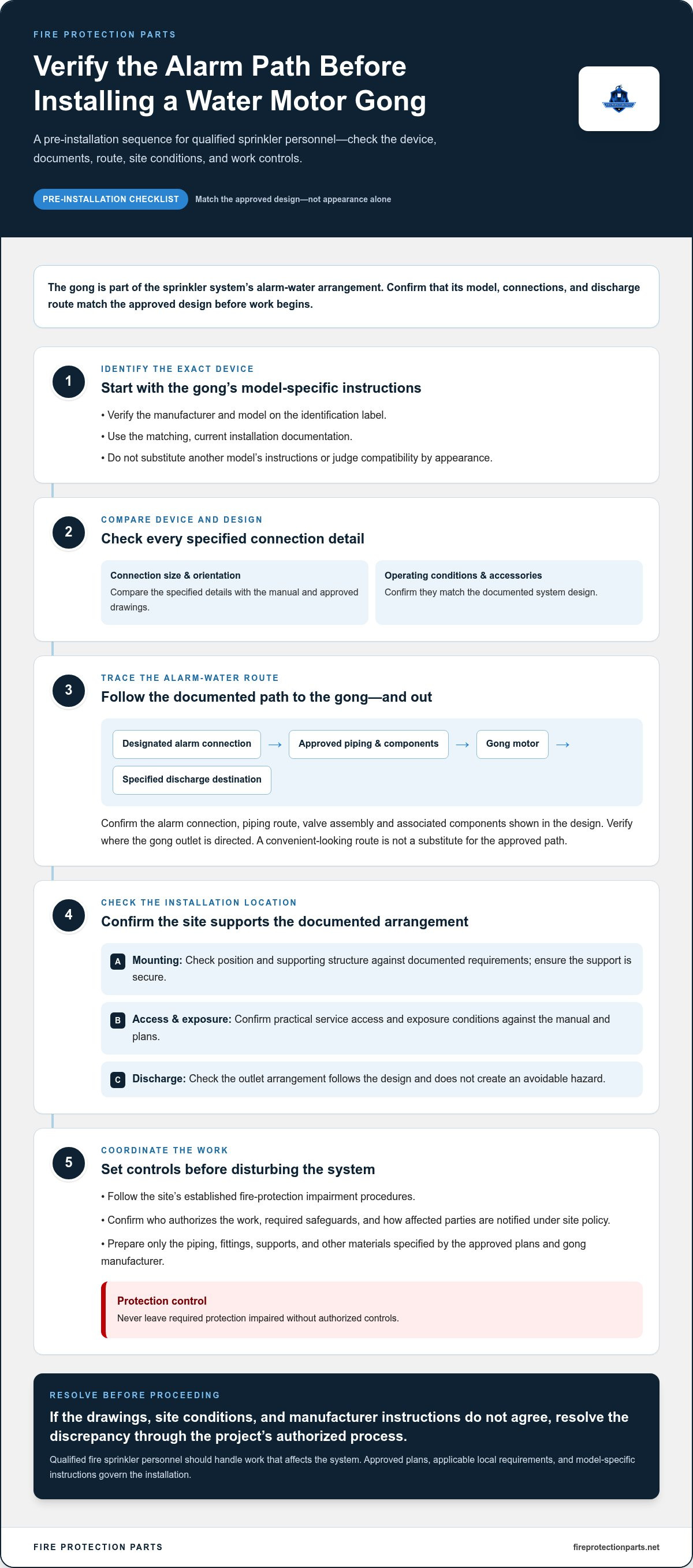
Qualified fire sprinkler personnel should install the gong using the approved system drawings, applicable site procedures, and the exact model’s current manufacturer instructions. Treat the gong, alarm piping, and discharge as one assembly. A mounting location that looks convenient or a connection that appears to fit isn’t enough to establish a correct installation.
Use this sequence as a planning framework, not a substitute for model-specific steps. If field conditions conflict with the approved arrangement, pause and resolve the discrepancy through the project’s authorized process. Perform operational testing and system restoration in the next stage.
Mount the gong and prepare its alarm-water connection
First, coordinate authorized impairment controls through the site’s fire protection procedures. Confirm that the work is approved and required safeguards are in place before disturbing system components. Never leave required protection unknowingly impaired. Then verify the mounting point, assembly orientation, connection location, and piping route against the drawings and model instructions.
- Confirm the work area. Check that the specified mounting surface and supports can secure the assembly. Preserve service access and protect the gong from likely impact or unsuitable exposure.
- Position the gong. Mount and orient it as the manufacturer directs. Keep the mechanism clear of nearby equipment, building features, and other obstructions that could interfere with operation or access.
- Prepare compatible components. Use the pipe, fittings, supports, and connection materials specified by the approved design and model documentation. Don’t substitute components based only on similar appearance or nominal size.
Connect the alarm line and complete installation checks
With the assembly securely mounted, connect the designated alarm-water line according to the approved arrangement and the gong instructions. Follow the specified connection orientation and installation method. Support and protect the route from damage, and don’t force components into alignment. If the connection doesn’t match the documented arrangement, stop rather than adapting it in the field without approval.
- Connect the designated line. Verify that the source and route match the drawings, and that each joint and component is installed as specified.
- Route the discharge. Direct the outlet as required by the manufacturer and approved design. Keep it unobstructed and position it to avoid unintended water damage or a hazard to people or equipment.
- Review the completed installation. Check mounting security, connection integrity, alignment, pipe support, access, and outlet clearance. Confirm the assembly matches the plans before proceeding to controlled testing.
This sequence explains how to install a water motor gong at a high level. The exact method depends on the device and approved system arrangement; don’t treat a generic guide as authorization to alter piping or bypass project controls. For component sourcing related to sprinkler system work, browse fire protection system components.
How to Test, Document, and Return the Gong System to Service
Installation isn’t complete until qualified fire sprinkler personnel verify the alarm arrangement using the gong manufacturer’s approved test method and the site’s procedures. Testing must be controlled. Before starting, confirm that the test won’t create an uncontrolled impairment, unsafe water discharge, or confusion for occupants and monitoring personnel. Notify relevant site contacts and monitoring parties as required by the approved procedure.
Perform a controlled functional test
Follow the exact model instructions and approved site method. Don’t assume a generic test duration or procedure applies. Before testing, responsible personnel should understand how the test is initiated, where discharge will go, and how the system and connected alarm functions are expected to respond.
- Confirm test controls. Check that the test is authorized, the discharge route is clear, and required notifications or impairment controls are in place.
- Observe the alarm path. Verify that the test operates the gong and produces audible notification. Check the water discharge and confirm the alarm-path functions required by the approved system.
- Check connected monitoring, where applicable. Confirm that the intended signal is received or reported according to the system design and test procedure.
- Address any failure. Record abnormal sound, absent discharge, leakage, or a missing signal. Follow the manufacturer’s troubleshooting instructions and site process before correcting the issue or repeating the test.
A gong that sounds doesn’t, by itself, prove that every connected alarm function worked. Evaluate each required part of the arrangement against its documented acceptance criteria. If a result is unclear or a deficiency remains, maintain the system status under the site’s authorized impairment controls and promptly escalate to qualified fire protection personnel.
Document results and return the system to service
After the required functions have been verified and deficiencies resolved, qualified personnel should return affected components to their normal operating condition as directed by the approved procedure. Confirm the restoration status, notify relevant parties, and close any site impairment process. Don’t report the system as restored while a required function remains unverified or a component remains out of its intended position.
Keep a clear record of the installed gong model, work completed, test method, observed results, deficiencies and corrective actions, notifications, and final restoration status. This gives facility staff and future service personnel a useful account of what changed and what was verified. For related context on component work and repairs, review fire protection parts and hardware for system repairs. Coordinated sourcing also matters; sprinkler system components online can help professionals consider compatible system components.
Knowing how to install a water motor gong includes recognizing when verification is incomplete. If testing reveals a failure that qualified personnel can’t resolve under the approved procedure, keep the issue visible, follow site impairment controls, and arrange prompt attention. A documented, verified return to service is the final step in protecting the system’s intended alarm function.
Move Forward With a Verified System Plan
Use your project’s approved documents to turn the next step into a clear, coordinated plan. Before ordering components or scheduling work, match the required equipment to the system design and assign installation and verification to qualified fire sprinkler personnel. That’s the practical difference between knowing how to install a water motor gong and ensuring the complete alarm arrangement is ready to perform.
Fire Protection Parts is an online retailer specializing in fire protection hardware and suppression-system components. Its product range supports contractors, facility managers, and residential fire protection needs. For components that fit your broader system-sourcing requirements, browse fire protection parts and system components.
Keep the focus on compatibility, documented requirements, and confirmed operation. Explore Fire Protection Parts’ fire protection system components to support your project’s equipment-sourcing needs, then leave installation and testing to qualified personnel.
Frequently Asked Questions
What does a water motor gong do on a fire sprinkler system?
A water motor gong provides a local audible indication that water is flowing through the sprinkler system’s alarm connection. It doesn’t detect heat, open a sprinkler, identify the exact location of a fire, or automatically summon responders. Its sound can alert people nearby to investigate according to the building’s emergency procedures. Whether it operates alongside electrical notification or monitoring depends on the system’s approved arrangement.
Can I install a water motor gong myself?
No. Qualified fire sprinkler personnel familiar with the system design and impairment controls should handle installation. Even a seemingly simple change can affect alarm piping or leave required protection unavailable if the system isn’t managed properly. If you’re planning work, provide the installer with the gong’s model information, current instructions, and applicable system documents. Don’t loosen, reroute, or test live sprinkler components as a DIY project.
Where should a water motor gong be mounted?
Mount it only in the location and orientation shown in the approved design and the exact model’s instructions. For example, a proposed exterior wall may seem accessible but still conflict with the specified alarm-line route, discharge direction, or service-clearance needs. The location should allow the intended alarm to be heard while keeping the mechanism accessible and protecting the assembly from damage or unsuitable exposure.
How do you test a water motor gong after installation?
Qualified personnel use the manufacturer-approved test method and the site’s procedures. Before testing, coordinate notifications and make sure the discharge won’t create a hazard, such as water flowing onto an occupied walkway. Observe the gong and the alarm functions required by the system design, including monitoring signals where applicable. Record failures and follow the manual before attempting corrective work or another test. Don’t improvise a test.
Why is my water motor gong not sounding?
A gong may stay silent if alarm water isn’t reaching its motor, the designated alarm path is obstructed, an isolation point is in the wrong position, or the mechanism is damaged or stuck. A blocked strainer or an issue with the valve assembly may also affect flow. Don’t dismantle the device or alter valves to troubleshoot. Treat a failed alarm as a system deficiency and have qualified personnel investigate promptly.
Does a water motor gong need electricity to operate?
No. The gong’s mechanical sound is produced by water driving its motor, so the gong itself doesn’t need electrical power to ring. However, the broader sprinkler alarm arrangement may include an electric waterflow switch, notification devices, or monitoring equipment that relies on power. A gong sounding doesn’t confirm those separate functions are operating. Check the system design to understand which alarm signals depend on electricity.
How often should a water motor gong be tested?
Follow the applicable adopted requirements, site testing procedures, and the gong manufacturer’s instructions; don’t assume one interval applies to every system. The required schedule can depend on the system and local direction. Facility personnel should use the documented testing program and retain results so missed or failed tests are visible. If the schedule is unclear, have the responsible fire protection professional resolve it before relying on an assumed interval.

