



Industrial Fire System Components That Keep Systems Ready
A sprinkler system can appear intact from the floor while a worn valve trim seal, improperly rated pressure switch, or mismatched fitting creates a serious problem at inspection or during an emergency. Industrial fire system components must work together as an engineered, listed, and properly installed assembly. For contractors, facility teams, and procurement buyers, the right part is not simply one that fits. It must match the system design, operating environment, applicable code requirements, and manufacturer instructions.
Industrial facilities place unusual demands on fire protection equipment. High ceilings, process hazards, freezing areas, corrosive atmospheres, large water supplies, and continuous operations all affect component selection. A replacement that looks equivalent may change pressure ratings, thread compatibility, temperature response, supervisory monitoring, or approval status. That is why dependable sourcing starts with accurate identification and a clear understanding of the system it serves.
The Core Industrial Fire System Components
A complete industrial fire protection system is a coordinated network rather than a single product category. The exact configuration depends on whether the building uses wet pipe, dry pipe, preaction, deluge, foam-water, standpipe, fire pump, or a combination of systems. Most installations rely on several core groups of components:
- Water supply equipment includes fire pumps, controllers, tanks where required, suction and discharge piping, test headers, and backflow prevention assemblies.
- Control and alarm valves manage water flow, isolate portions of the system, provide supervision, and initiate alarms when sprinklers operate.
- Piping and fittings carry water or foam solution through mains, risers, branch lines, drops, and drains. This category includes grooved, threaded, flanged, and CPVC products where permitted by the application.
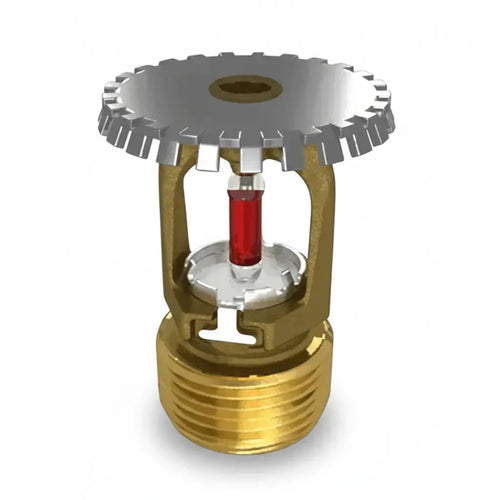
- Sprinklers and discharge devices apply the extinguishing agent. Selection may involve upright, pendent, sidewall, dry pendent, ESFR, extended-coverage, open nozzle, or specialty sprinkler designs.
- Air and supervisory equipment supports dry and preaction systems through air compressors, air maintenance devices, pressure switches, trim assemblies, and releasing interfaces.
- Detection, notification, and releasing devices connect fire alarm functions to suppression operation, including waterflow switches, tamper switches, pressure switches, smoke or heat detection, and control panels.
Start With the System Type, Not the Part Number
When a component fails or a project requires material quickly, it is tempting to begin with the item name. A better starting point is the system type and its design conditions. A waterflow switch for a wet system, for example, does not solve the same problem as a pressure switch used on a dry valve. Likewise, a standard pendent sprinkler cannot automatically replace a dry pendent sprinkler simply because the thread size and K-factor look similar.
For each purchase, verify the manufacturer, model number, nominal size, connection type, pressure rating, temperature rating, finish where relevant, and listing or approval requirements. Also confirm whether the part is intended for new installation, repair, inspection testing, or retrofit work. Existing systems often contain legacy equipment with specific trim arrangements or compatible replacement requirements.
This process matters especially for valves, backflow preventers, fire pump accessories, and alarm interfaces. A valve may have the correct pipe size but the wrong end connection, supervisory arrangement, or pressure rating. A backflow assembly may meet a plumbing need but not the project specification or local fire authority requirement. Fire pump components need careful review because they operate within a larger pump, controller, and water-supply arrangement.
Listings, Approvals, and Code Compliance Are Not Interchangeable
Buyers often use “UL/FM” as shorthand for quality and acceptance, but listed or approved equipment must still be applied correctly. A component's certification, system compatibility, installation instructions, and project documents all matter. A listed sprinkler has limitations tied to its orientation, coverage, temperature classification, ceiling configuration, and hazard application. An approved valve may require a specific trim package and installation method.
NFPA standards provide the technical framework for many industrial fire protection systems, while adopted building codes, insurance requirements, project specifications, and the authority having jurisdiction can add requirements. The applicable standard may include NFPA 13 for sprinkler systems, NFPA 20 for fire pumps, NFPA 24 for private fire service mains, NFPA 25 for inspection, testing, and maintenance, and NFPA 72 for fire alarm and signaling functions. The correct requirement depends on the work scope.
The practical rule is simple: do not treat a product listing as a substitute for design review. For a like-for-like repair, verify the original equipment and replacement documentation. For a retrofit or system modification, involve the responsible fire protection professional and confirm AHJ expectations before material is ordered or installed.
Where Component Selection Commonly Goes Wrong
The most expensive errors are often small substitutions made under schedule pressure. A fitting selected without confirming its approved use can hold up an inspection. A sprinkler replacement with a different response characteristic can alter the basis of design. A lower-cost air compressor may not provide the required capacity or pressure control for a dry system.
Environmental conditions deserve equal attention. Corrosion-resistant sprinklers, coatings, and compatible pipe materials may be necessary in food processing, chemical handling, marine-adjacent, washdown, or high-humidity locations. Freezing exposure calls for a properly designed dry, preaction, or antifreeze approach, not an improvised field solution. High-temperature process areas may require sprinkler temperature ratings beyond standard ordinary-temperature selections.
Availability is also a real trade-off. Stocked standard parts can speed a repair, but specialized valves, foam equipment, dry sprinklers, and manufacturer-specific trim may require more lead time. When uptime and inspection deadlines matter, identify critical spare parts before the system needs them. Keeping approved replacements for gauges, switches, sprinklers, valve trim items, and air-system wear parts can reduce avoidable downtime.
Build a Better Purchasing Process for Repairs and Projects
A disciplined purchasing process protects both the schedule and the system. Start by collecting photos of nameplates, existing trim, sprinkler markings, and connection details. Include the building area served, system type, pipe size, pressure information, and reason for replacement. These details help a supplier distinguish between similar products that are not interchangeable.
For larger projects, separate common material from application-specific equipment. Pipe, fittings, hangers, gauges, and standard valves may be straightforward once specifications are confirmed. Fire pumps, backflow devices, foam components, dry valves, preaction equipment, and detection interfaces usually deserve a closer technical review. A custom quote can be particularly useful when a bill of materials includes multiple manufacturers, nonstandard sizes, or specialized approvals.
Brand consistency can help when replacing proprietary or manufacturer-specific assemblies. Trusted manufacturers such as Viking, Reliable, General Air Products, Potter, Zurn Wilkins, and Ames offer established product lines for different portions of a fire protection system. However, consistency should never override approved compatibility. The governing documents and manufacturer instructions remain the final reference.
Maintain Components Before They Become Emergency Purchases
Industrial facilities benefit from treating replacement parts as part of inspection and maintenance planning, not only as emergency purchases. Inspection findings can reveal deteriorated gauges, missing escutcheons, damaged sprinklers, inaccessible valves, leaking trim, impaired supervisory devices, or corrosion affecting system reliability. Addressing these items promptly is generally less disruptive than waiting for a failed test or a facility outage.
Coordinate replacement work with required impairment procedures, notification protocols, and restoration testing. A component can be correct on paper and still create risk if a valve is left unsupervised, a system is not returned to service, or alarm signals are not verified after work is complete. Documentation should show what changed, why it changed, and how the system was tested afterward.
Reliable fire protection depends on details that are easy to overlook until they matter. Select industrial fire system components by verified application, not appearance or price alone, and give your team the information needed to keep every repair, retrofit, and installation moving with confidence.

