



NFPA 13 Installation Materials That Fit the Job
A sprinkler installation can be delayed by one overlooked coupling, an incompatible fitting, or a sprinkler that does not match the approved design. NFPA 13 installation materials are not simply a purchasing category. They are a coordinated group of listed and compatible components that must perform as part of a complete fire sprinkler system.
For contractors, facilities teams, and procurement buyers, the practical goal is clear: source the exact materials called for by the project documents, verify their listings and ratings, and avoid substitutions that create approval issues, rework, or long-term service problems. Price matters, but a lower-cost component is no bargain if it cannot be accepted by the authority having jurisdiction, the insurer, or the installing contractor.
Start With the Approved System Design
NFPA 13 establishes requirements for the installation of automatic fire sprinkler systems, but it does not turn every material with a familiar name into an acceptable substitute. The approved plans, hydraulic calculations, specifications, applicable code edition, manufacturer instructions, and authority having jurisdiction all affect what can be installed.
Before building a material order, confirm the system type and scope. A wet-pipe tenant improvement has different needs than a dry system in an unheated warehouse, a preaction system protecting a data room, or a retrofit connecting to existing steel pipe. Material selection also changes with occupancy classification, design density, ceiling construction, sprinkler orientation, corrosion conditions, and available water supply.
This is why a material takeoff should be reviewed as a system, not as disconnected line items. Pipe, fittings, couplings, valves, sprinklers, hangers, and monitoring devices all need to align with the design basis. If a specified item is unavailable, the replacement decision should be evaluated by the designer, contractor, and AHJ as appropriate - not made at the counter based on appearance alone.
Pipe and Fittings Must Match the Application
Steel pipe remains common in commercial sprinkler work because it is durable, familiar to installers, and available in configurations suited to many system types. Depending on the project, the specification may call for black steel, galvanized steel, Schedule 10, Schedule 40, threaded pipe, grooved pipe, or another listed piping arrangement.
The pressure rating and joining method matter as much as pipe diameter. Grooved systems can improve installation speed and simplify access for future modifications, but the grooved couplings, gaskets, fittings, and pipe-end preparation must be suitable for the service conditions. Threaded systems require correct thread engagement and compatible fittings. Welded connections require qualified procedures and attention to field conditions. Each method has its place; the right choice depends on the listed system arrangement and the project specification.
CPVC pipe and fittings can be appropriate in certain light-hazard occupancies and other applications allowed by their listings and installation instructions. They should never be treated as a universal replacement for steel. Temperature exposure, compatibility with lubricants and chemicals, support spacing, sprinkler compatibility, and required protective measures can all control whether CPVC is acceptable. When CPVC is specified, use the listed pipe, fittings, cement, and accessories intended to work together.
Do Not Mix Components by Assumption
A fitting may have the correct nominal size but still be wrong for the installation. Ratings, end configurations, material composition, listing limitations, gasket grade, and manufacturer compatibility can differ. This is particularly relevant when combining grooved components, specialty couplings, flexible sprinkler drops, and repair fittings.
For repair work, identify what is already installed before ordering. Measure actual pipe size, determine the existing joining method, confirm the system pressure, and inspect for corrosion or damage that may affect the repair scope. A quick field verification can prevent a return shipment and an avoidable outage extension.
Sprinklers Are Design Components, Not Decorative Hardware
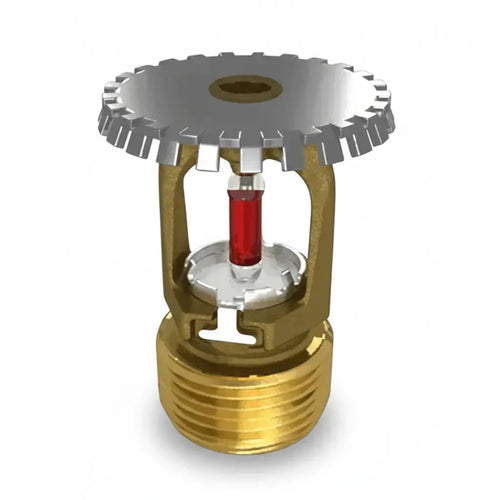
Sprinklers are selected according to more than finish and thread size. Temperature rating, response type, K-factor, orientation, coverage type, listing, installation environment, and deflector location all affect performance. A standard-response upright sprinkler is not automatically interchangeable with a quick-response pendent, and an ordinary-temperature sprinkler may be inappropriate where elevated ambient temperatures are expected.
Pay close attention to the sprinkler schedule on the plans. It should identify the manufacturer, model or series, K-factor, temperature classification, finish, thread size, and required escutcheon or guard where applicable. For existing systems, replacement sprinklers should be selected carefully, especially when the original sprinkler is older, specialized, recalled, or installed in a corrosive environment.
Dry pendent sprinklers deserve additional review because barrel length, ceiling construction, freezer or unheated-area conditions, and the dry-system arrangement all affect selection. Ordering by visible length alone can produce a sprinkler that does not place the deflector at the required elevation or does not match the intended installation details.
Hangers, Bracing, and Fasteners Carry Real Responsibility
Support materials are easy to underestimate because they are rarely the most visible part of a finished sprinkler system. Yet pipe support, restraint, and seismic bracing directly affect system integrity. Hanger rods, rings, clamps, beam attachments, inserts, trapeze components, sway braces, and fasteners must be sized and installed for the pipe and load they support.
NFPA 13 requirements, approved plans, and the building structure determine support locations and attachment methods. Do not assume that any rod hanger or beam clamp is acceptable because it physically fits. The attachment must be suitable for the structural element and load, while listed assemblies should be installed within their stated limitations.
Seismic bracing is especially project-specific. Brace components, angles, fasteners, structural attachments, and spacing must work as a coordinated assembly. A collection of individually familiar parts does not automatically equal a compliant brace installation. Where seismic design applies, follow the engineered details and product instructions closely.
Valves, Supervisory Devices, and Drain Materials Need Coordination
Control valves, check valves, alarm valves, dry valves, backflow assemblies, inspectors test connections, drains, and supervisory switches are operational components. Their pressure ratings, orientation, trim requirements, and monitoring provisions need to match the system design. A valve that is technically rated for pressure may still be unsuitable if it lacks the required listing, supervision arrangement, or connection configuration.
Make sure trim packages are complete. A common source of jobsite delay is receiving the main valve but not the necessary gauges, switches, retard chamber components, drain fittings, test connection parts, or compatible adapters. For dry and preaction systems, coordinate the valve assembly with air maintenance equipment, accelerators or exhausters where specified, and the fire alarm interface.
Drainage deserves the same attention. Main drains, auxiliary drains, drum drips, condensate drainage, and test connections must be installed where required and arranged for safe, practical discharge. In cold environments, poor drainage details can create recurring maintenance problems and freeze damage.
A Practical Procurement Check Before Ordering
For larger jobs, organize the material review around these five questions:
- Does each item match the approved drawings, specifications, and current addenda?
- Is the component listed and rated for its intended fire protection service?
- Are connected components compatible by manufacturer instruction, joining method, and pressure rating?
- Have installation accessories been included, such as gaskets, bolts, escutcheons, guards, trim, hangers, and seismic hardware?
- Is there a clear plan for substitutions, lead times, phased deliveries, and field changes?
Plan for Availability Without Compromising Compliance
Lead times can influence material strategy, especially for specialty valves, dry sprinklers, corrosion-resistant products, custom lengths, and less-common fittings. The answer is not to replace specified components with whatever is available. The better approach is to identify long-lead materials early, confirm acceptable alternates through the proper approval process, and stage common materials around the installation sequence.
Fire Protection Parts supports contractors and commercial buyers with recognized fire protection brands, everyday installation components, and sourcing assistance for specialized applications. When requesting a quote, provide the bill of materials, system type, required quantities, pressure ratings, manufacturer preferences, and delivery deadline. Better information at the start produces a more accurate order and fewer field surprises.
The best material package is the one that arrives complete, installs as designed, and supports reliable system performance for years after the inspection tag is signed.

